How Much Can A 4runner Tow – The Real Numbers
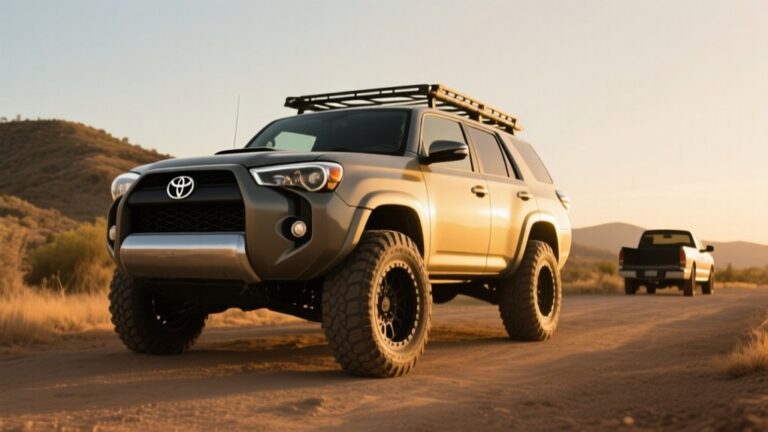
You can tow up to 6,000 pounds with a 2024 Toyota 4Runner, depending on the trim and powertrain. Gas models and some trims like TRD Off-Road support the highest towing capacity.
Hybrids, despite having higher torque, max out at about 5,800 pounds.
The 4Runner’s strong 4.0L V-6 engine, built-in towing hardware, and stability features help ensure reliable performance.
To figure out trailer compatibility, towing impacts, and how to get the most out of your vehicle’s capabilities, there’s more technical info to explore.
Key Takeaways
- The 2024 Toyota 4Runner tows up to 5,000 pounds across all trims with integrated towing hardware included.
- Gas-powered 2025 4Runner models can tow up to 6,000 pounds with 326 horsepower and 400 lb-ft torque.
- Hybrid variants offer a towing capacity around 5,000 to 5,800 pounds, with higher torque but slightly lower max tow weight.
- The 4Runner can tow travel trailers up to 20 feet, dual jet skis, mid-size boats, or compact horse trailers.
- Towing near max capacity requires proper hitch setup, weight distribution, and use of brake controllers for safety and performance.
How Much Towing Capacity Does the 2024 Toyota 4Runner Have?
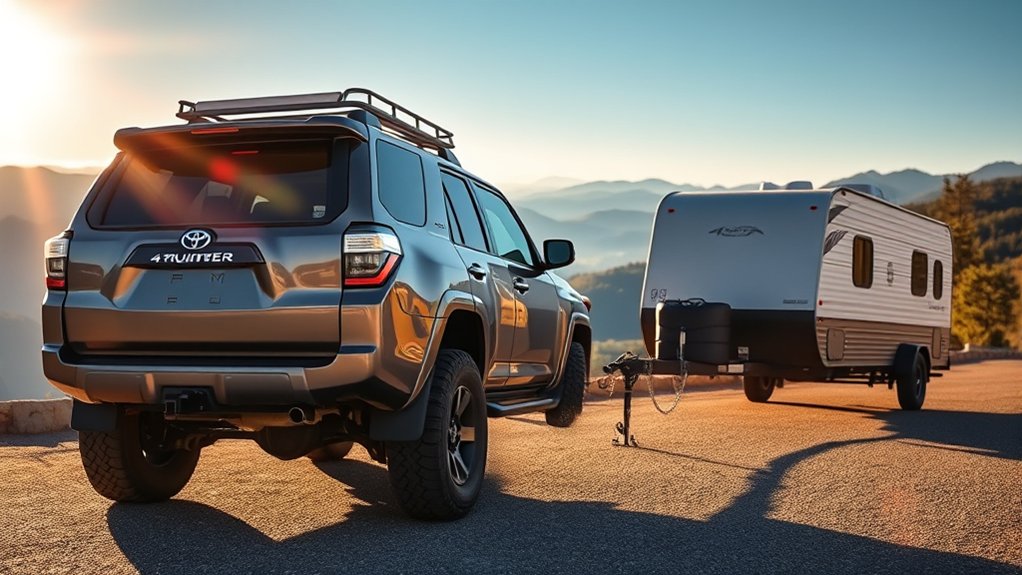
The 2024 Toyota 4Runner can tow up to 5,000 pounds across all trim levels. That makes it a solid choice for hauling various loads without worrying about different trims.
Every 4Runner comes with an integrated towing receiver hitch and wiring harness that has both four-pin and seven-pin connectors. This setup makes attaching trailers quick and straightforward.
All-terrain tires come standard, which helps with traction and stability during towing, especially in different driving conditions. Overall, the 2024 4Runner’s towing system blends durable hardware with reliable performance.
It’s a well-rounded option for those who need a capable and efficient towing vehicle.
Towing Capacity Differences by 4Runner Trim and Powertrain
When it comes to towing capacity for the 2025 4Runner, it really depends on the trim and the powertrain you choose. Gas models can tow up to 6,000 pounds, which is pretty impressive, while the hybrid versions are limited to around 5,000 pounds. So, if towing is a big part of your plans, those gas models might be the way to go.
Certain trims like the TRD Off-Road and Limited tend to have higher tow ratings compared to others like the Platinum and TRD Pro. Knowing these differences can really help you pick the right 4Runner for your towing needs. It’s all about matching the right trim with what you need to tow!
Trim-Based Tow Ratings
Three key trim groups define the 2025 Toyota 4Runner’s towing capabilities, each with distinct maximum ratings. The TRD Off-Road, TRD Off-Road Premium, and Limited trims support a maximum towing capacity of 6,000 pounds.
Meanwhile, the Platinum, TRD Pro, and Trailhunter trims are rated slightly lower at 5,800 pounds. All trims use the same 4.0L DOHC V-6 engine, providing consistent base power across the range.
However, models with the i-FORCE MAX hybrid powertrain have a maximum towing capacity of 5,800 pounds, reflecting differences in powertrains. Always check the door-jamb label for exact ratings, as configurations can affect these numbers.
Understanding these trim-based towing differences helps you match your towing needs accurately to your Toyota 4Runner trim.
Gas Vs Hybrid Tow
Comparing gas and hybrid 4Runner models shows clear differences in towing capacity, which are closely tied to their powertrain designs. The gas-powered Toyota 4Runner can tow up to 6,000 pounds on certain trims, while the hybrid, with the i-FORCE MAX system, is rated at 5,800 pounds because of design limits. The hybrid trades some towing power for better efficiency, gaining about 4 extra MPG in the city.
Key differences include:
- The gas engine generally offers higher peak towing capacity across trims like TRD Off-Road, Premium, and Limited.
- The hybrid i-FORCE MAX combines a 2.4L turbocharged engine with electric motors, boosting torque but limiting maximum towing.
- Both powertrains come with Trailer Sway Control, which helps keep your trailer stable no matter which engine you choose.
Knowing these differences can help you pick the 4Runner that’s best suited for your towing needs.
Tow Limits By Grade
Each 2025 Toyota 4Runner trim has specific towing limits you should consider before hitching a trailer.
The TRD Off-Road, TRD Off-Road Premium, and Limited trims can tow up to 6,000 pounds. Meanwhile, the Platinum, TRD Pro, and Trailhunter trims are rated slightly lower at 5,800 pounds.
Importantly, the tow rating doesn’t change between gas-powered models and the hybrid within the same trim. However, the hybrid option limits towing to 5,000 pounds compared to higher capacities for gas models.
Always verify the vehicle’s tow rating on the door-jamb label to ensure accuracy. Configurations and grades can affect the official towing capacity, so it’s best to double-check.
This helps you match your towing needs with your Toyota 4Runner’s capabilities.
Gas vs. Hybrid 4Runner: Which Has Better Towing Capacity?
How does the towing capacity of the gas-powered 2025 Toyota 4Runner compare to its hybrid version? The gas model can tow up to 6,000 pounds, which is more than the hybrid, known as i-FORCE MAX, that maxes out at 5,000 pounds. This difference mainly comes down to cooling and battery limits in the hybrid system.
The gas 4Runner offers 326 horsepower and 400 lb-ft of torque, while the hybrid provides 465 lb-ft of torque but has a slightly lower towing capacity. Both versions come with integrated towing receiver hitches and wiring harnesses with four-pin and seven-pin connectors.
Keep in mind, towing capacity can vary depending on the trim level. Generally, gas-powered trims are rated higher for towing than hybrid trims.
What Trailers Can the 4Runner Tow Safely?
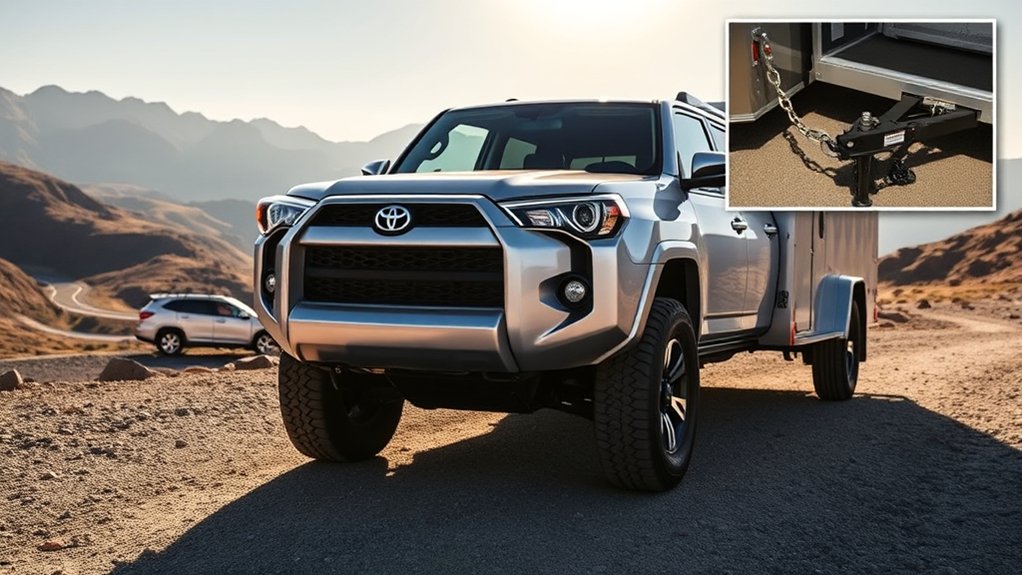
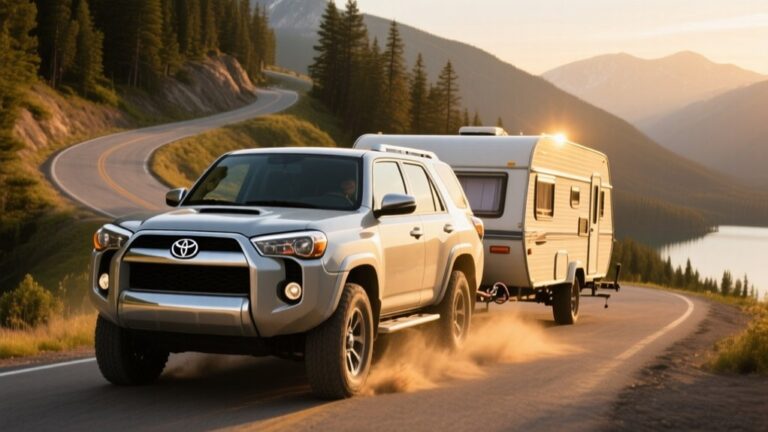
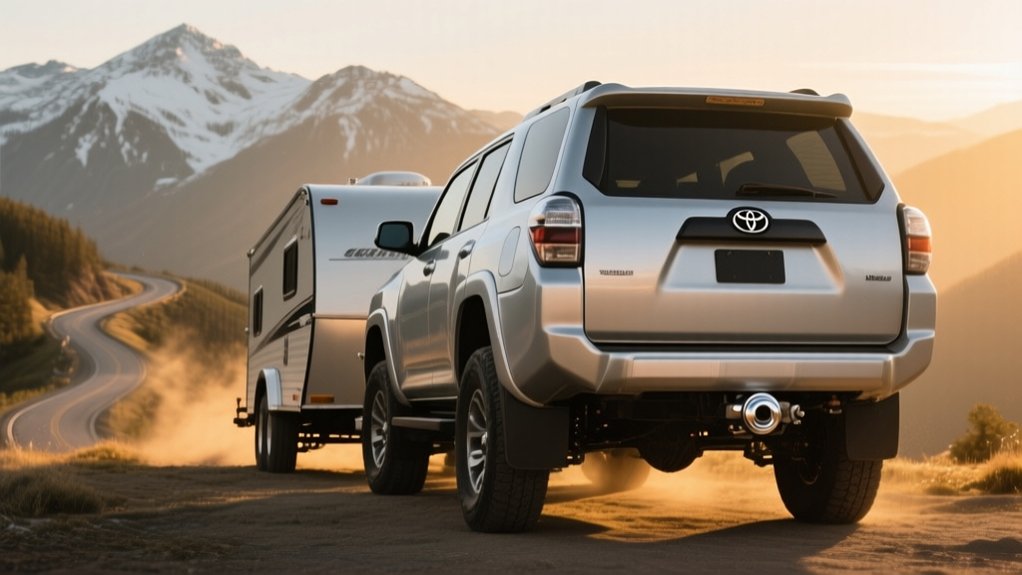
With a maximum towing capacity of 6,000 pounds in the gas-powered 2025 Toyota 4Runner, you can confidently haul a range of trailers and recreational vehicles. The 4Runner’s towing capacity supports travel trailers up to 20 feet, dual jet skis, and compact horse trailers, making it versatile for various needs.
Here’s a quick overview:
| Trailer Type | Typical Load |
|---|---|
| Travel Trailer | Up to 20-foot camper |
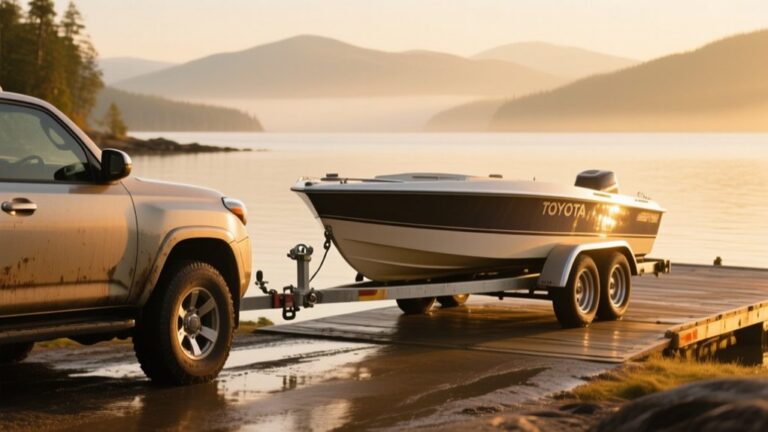
| Recreational Vehicles | Dual jet skis or mid-size boat |
| Off-road Gear | Pair of ATVs or dirt bikes |
| Equestrian | Compact horse trailer for 1-2 horses |
This capability ensures the Toyota 4Runner is great for camping, water sports, off-road adventures, and transporting horses without exceeding safe limits.
How Towing Affects the 4Runner’s Off-Road Capability
Although the 2025 Toyota 4Runner’s rugged body-on-frame design supports towing up to 6,000 pounds, hauling close to that limit can impact its off-road ability. When towing, you’ll notice changes in how it handles, especially on rough terrain.
The Trailer Sway Control system helps keep things stable, but proper weight distribution and hitch setup are still crucial. Towing can lead to a few key issues that affect off-road performance:
- Ground clearance drops with extra weight, making it harder to clear obstacles.
- The added load shifts the weight balance, which can hurt traction and stability.
- The suspension and drivetrain face more stress, which can reduce overall stability.
Knowing these factors helps you tow smarter so you don’t compromise the 4Runner’s well-known off-road prowess and stability.
Must-Have Equipment and Upgrades for Safe Towing
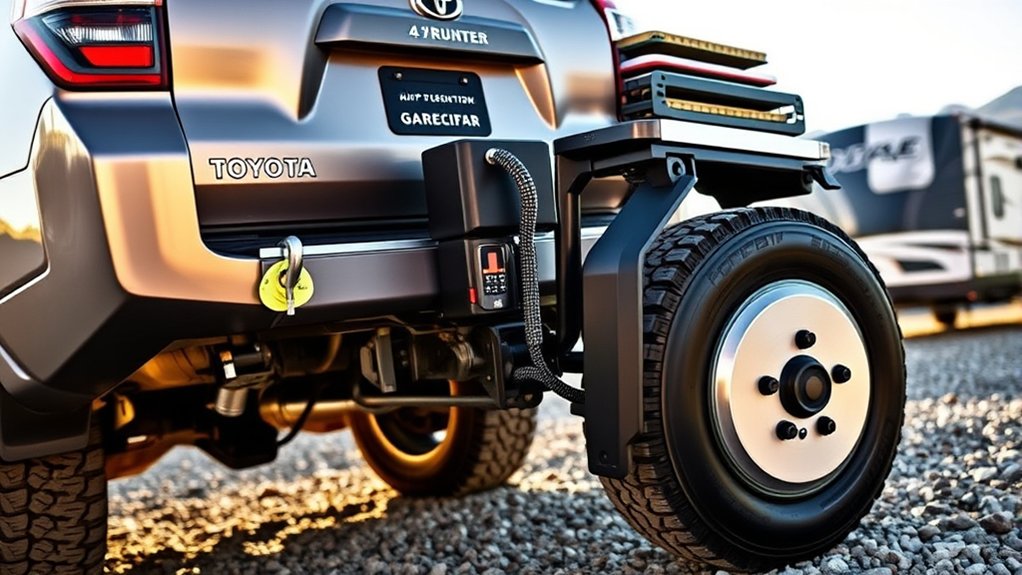
To tow safely with your 4Runner, it’s a good idea to have a weight-distributing hitch that matches your load—especially if you’re hauling over 5,000 pounds. This will help keep everything balanced and make your towing experience much smoother.
Also, upgrading to load-rated tires and checking your tire pressure regularly can really make a difference. Properly inflated tires and the right tires for heavy loads help keep your vehicle stable and under control, so you can feel confident on the road.
And don’t forget about the trailer brake controller from Toyota. It’s designed to improve braking performance when towing, which is super important for safety and reducing wear on your vehicle. All these upgrades work together to make towing safer and more manageable.
Essential Hitch Components
A weight-distributing hitch is key for towing heavier loads because it spreads the trailer’s weight across your 4Runner’s axles. This helps improve stability and control while you’re on the road.
To get the most out of your Toyota 4Runner’s towing capacity safely, focus on these essential hitch components:
- Hitch Receiver: Make sure it’s rated for your specific towing capacity. This guarantees it’s strong enough and compatible with different trailers.
- Integrated Trailer Brake Controller: Important for trailers over 1,000 pounds. It syncs the braking between your vehicle and trailer, making stops safer and more effective.
- Safety Chains: These act as a backup connection in case the hitch fails, preventing the trailer from disconnecting while you’re driving.
While load-rated tires can boost towing performance, they’re a separate upgrade and will be covered later. Prioritize these components to ensure your towing setup is secure and stable.
Tire And Brake Upgrades
When towing heavy loads with your Toyota 4Runner, upgrading your tires and brakes is crucial for safety and control. Load-rated tires that match the 6,000-pound towing capacity help boost stability and handling.
A brake controller ensures effective stopping power, especially when towing trailers over 1,000 pounds. Proper tire pressure maximizes performance and reduces uneven wear.
A weight-distributing hitch balances the load, improving handling and relieving suspension stress. Trailer sway control adds extra stability, especially on hills and windy roads.
How the 4Runner’s Towing Capacity Compares to Competitors
How does the 2024 Toyota 4Runner’s towing capacity compare to its midsize SUV rivals? The 4Runner leads with a maximum towing capacity of 6,000 pounds, thanks to its durable body-on-frame design.
The 2024 Toyota 4Runner tops midsize SUVs with a robust 6,000-pound towing capacity.
Here’s how it stacks up against the competition:
- The Ford Bronco can tow up to 3,500 pounds, which is much lower than the 4Runner’s capacity.
- Jeep Wrangler’s towing ranges from 3,500 to 5,000 pounds depending on the setup, still below the 4Runner’s max.
- Both the Chevy Traverse and Honda Passport top out at 5,000 pounds, matching the previous limits of the 4Runner but not the new one.
This shows the 4Runner’s towing capacity is superior among midsize SUVs, thanks to its tough chassis design.
Tips to Maximize Your 4Runner’s Towing Performance
To maximize your 4Runner’s towing performance, focus on key factors that impact stability and safety. First, check your Toyota 4Runner’s towing capacity on the door-jamb label since ratings can vary by model.
Equip a quality weight-distributing hitch to improve balance and control, especially when hauling loads over 1,000 pounds. Use the integrated trailer brake controller to boost stopping power and braking accuracy.
Keep your tire pressure consistent to reduce blowout risks and improve handling when towing. Upgrading to load-rated tires designed for towing will also help ensure durability and performance during heavy loads.
These adjustments work together to optimize your towing experience, protect your vehicle’s structure, and give you better trailer control on the road.
Frequently Asked Questions
How Often Should I Service My 4runner When Towing Regularly?
You should service your 4Runner every 5,000 miles or every six months, whichever comes first, when towing regularly. This helps keep it running smoothly by dealing with the extra wear on the transmission, brakes, and tires.
Make sure to check the transmission fluid levels, brake condition, and tire pressure during each service. These are key to keeping your vehicle safe and reliable while towing.
Also, don’t forget to inspect your towing equipment, including the hitch and wiring. Catching issues early can prevent failures and safety problems when hauling heavy loads.
What Type of Trailer Hitch Is Best for the 4runner?
You’ll want a weight-distributing hitch for the 4Runner, especially if you’re hauling heavier loads. It helps balance the trailer’s weight, which improves stability and control.
Pair it with a hitch rated at or above 6,000 pounds to safely match your 4Runner’s capacity. For conventional trailers, a ball mount is a good choice. For larger or specialized trailers, consider a fifth-wheel hitch.
This setup ensures you get the best towing performance and safety out of your vehicle.
Can the 4runner Tow on Steep Mountain Roads Safely?
Yes, you can tow safely on steep mountain roads with a 4Runner if you follow proper procedures. Its 4.0L V6 engine and body-on-frame design give you the power and stability you need.
The Trailer Sway Control system actively helps keep things steady, and optional four-wheel drive improves traction on slopes. Just make sure you stay within the 6,000-pound towing capacity and use the right trailer hitch equipment.
This will help you tow safely and perform well on those challenging mountain roads.
How Does Towing Impact the 4runner’s Fuel Efficiency?
Towing with your 4Runner is like asking it to carry a weighted backpack uphill—your fuel efficiency takes a noticeable hit. Expect a drop of 2-3 mpg because of increased engine load and aerodynamic drag.
The gas engine’s 16-19 mpg dips under towing stress, while the hybrid’s torque helps but limits towing capacity. Maintaining proper tire pressure and using load-rated tires can ease fuel consumption losses during towing.
Are There Any Warranty Considerations When Towing With a 4runner?
Yes, you need to consider warranty terms when towing with your 4Runner. The basic warranty covers 36 months or 36,000 miles but doesn’t include towing damage unless caused by defects.
The powertrain warranty lasts 60 months or 60,000 miles and covers stressed components. If you exceed the rated towing capacity of 6,000 pounds for gas models, you risk voiding your coverage.
For hybrids, the high-voltage battery has a 10-year or 150,000-mile warranty. Always follow the manufacturer’s guidelines and keep up with regular maintenance to protect your warranty.
Conclusion
Think of your 2024 Toyota 4Runner as a skilled mountain guide, knowing exactly how much weight it can safely carry without losing footing.
By understanding its towing capacity across trims and powertrains, you guarantee your journey stays stable and controlled.
Equip your 4Runner properly, and it’ll handle towing challenges much like a guide traversing steep trails, balancing power and safety.
Master these details, and your towing experience will be as precise and reliable as the 4Runner itself.