Can A 4runner Tow A Boat – Safety & Facts
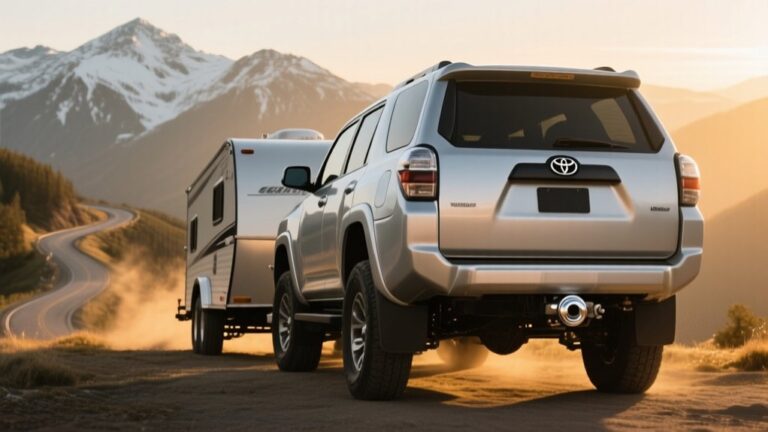
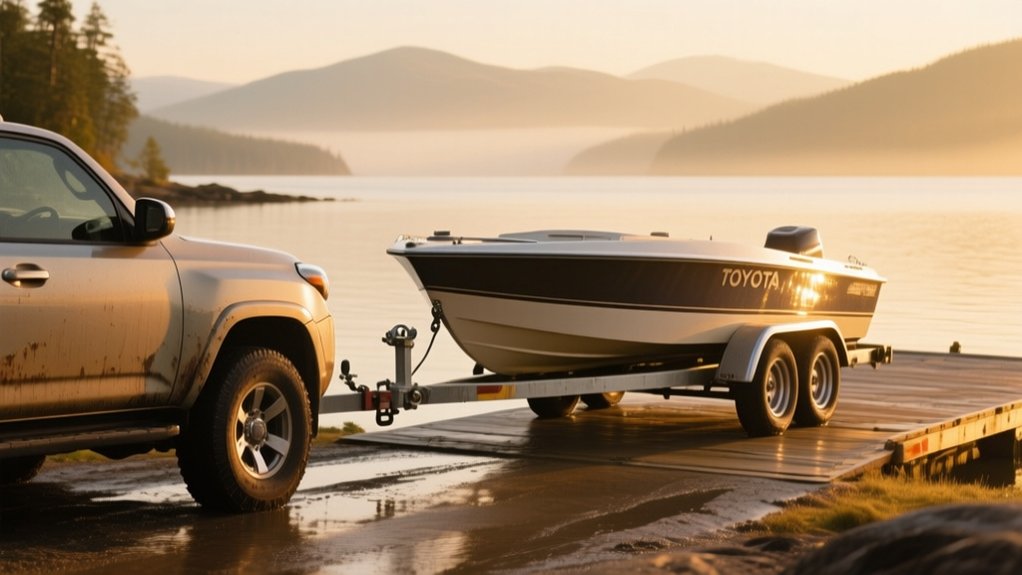
You can tow a boat with your Toyota 4Runner as long as you stay within its 5,000-pound towing limit and keep the tongue weight between 5-8% of the trailer’s total weight for stability.
It’s also important to use a brake controller and consider a sway control hitch, especially for trailers over 3,000 pounds. These help keep your tow safe and smooth.
Proper weight distribution and safety gear will help prevent sway and mechanical strain.
Learning these essentials guarantees safer, smoother towing every trip.
Key Takeaways
- The Toyota 4Runner can tow boats up to 5,000 pounds, matching its maximum towing capacity safely.
- Maintaining a tongue weight of 5-8% of the trailer’s weight ensures stable handling and braking.
- Using a brake controller and sway control hitch enhances towing safety and stability, especially for heavier boats.
- Always weigh the boat, trailer, gear, cargo, and fuel to ensure the total towing weight stays within limits.
- Conduct a pre-towing checklist including safety chains, tire pressure, load distribution, and brake controller tests before each trip.
How Much Can a Toyota 4Runner Tow Safely?
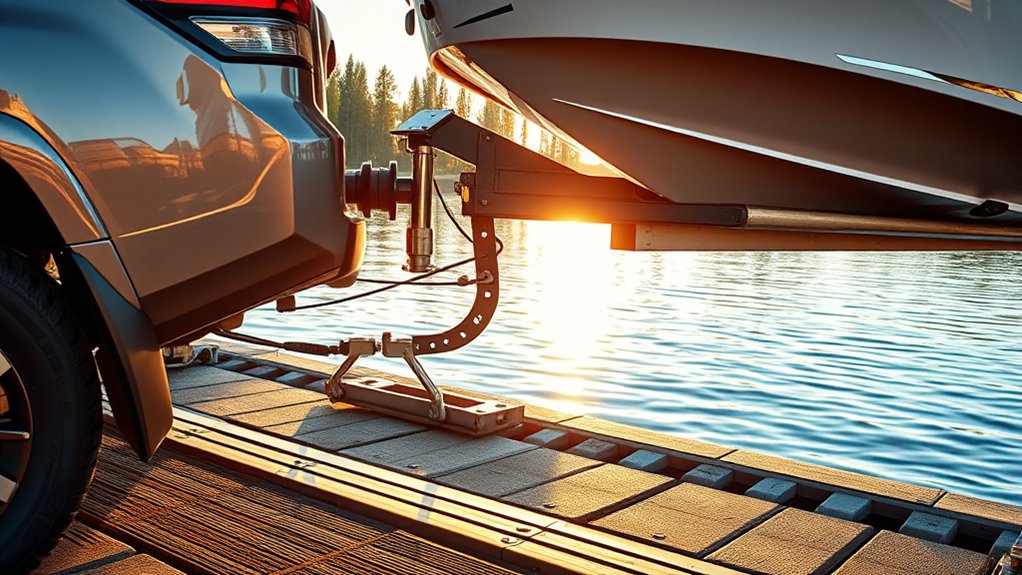
How much can a Toyota 4Runner tow safely? The 4Runner has a maximum towing capacity of 5,000 pounds, so it’s capable of pulling a travel trailer or boat within that limit.
The Toyota 4Runner can safely tow up to 5,000 pounds, perfect for travel trailers or boats.
You should keep the tongue weight between 5-10% of the trailer’s total weight to stay stable on the road. Its 4.0-liter V6 engine delivers 270 horsepower, providing reliable power for towing.
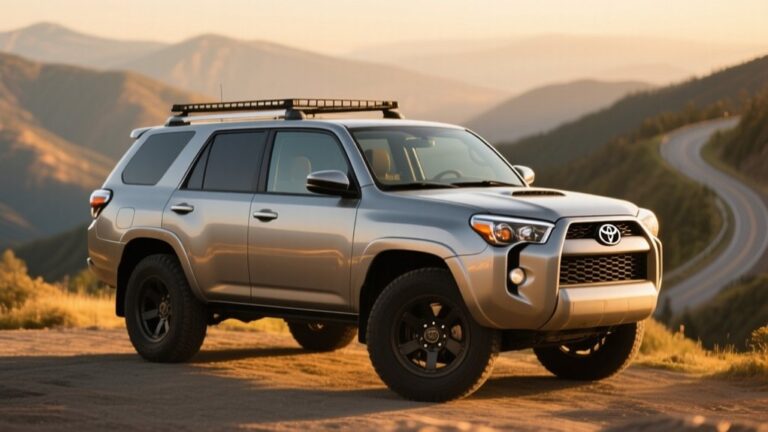
While the vehicle’s roof rack adds extra cargo space, it’s important not to overload it since too much weight can affect towing balance. To tow safely, make sure your load is balanced, use a proper brake controller, and consider a sway control hitch.
Regular maintenance and following Toyota’s recommended towing service intervals are key. This will help ensure consistent performance and safety when hauling heavy loads.
What Affects Your 4Runner’s Ability to Tow a Boat?
Your 4Runner’s ability to tow a boat really comes down to a few important factors. First off, managing the tongue weight is key. You want it to be around 5-8% of the trailer’s total weight—that helps keep everything stable while you’re driving.
Another thing to keep in mind is how the trailer’s weight is distributed. Proper weight distribution is super important for safe handling, especially when you’re making turns or driving on bumpy, uneven roads.
And don’t forget, it’s crucial to stay within your vehicle’s maximum towing capacity. Pushing beyond that can strain your 4Runner’s mechanical parts and affect its performance, which you definitely want to avoid.
Tongue Weight Importance
Although towing capacity is essential, tongue weight is just as important for your 4Runner’s ability to tow a boat safely and efficiently. The ideal tongue weight should be between 5-8% of your trailer’s total weight, usually staying under 400 lbs for optimal performance.
Keeping this balance improves stability, handling, and braking, while also preventing rear squat. Too much tongue weight can reduce control, so it’s important to monitor it regularly. Using a weight distribution hitch can help spread the load evenly across your 4Runner and trailer, making towing smoother.
Additionally, pay attention to the trailer’s cross-sectional area and make sure the ball height is correct. Proper tongue weight management directly impacts your towing experience and safety, so take the time to get it right.
Trailer Weight Distribution
Managing tongue weight properly sets the foundation for effective trailer weight distribution, which plays a major role in your 4Runner’s towing performance.
You should aim for a tongue weight that’s 5-8% of your total trailer weight to maintain ideal stability.
This balance reduces swaying and improves handling, making your towing experience safer.
Since your 4Runner can tow up to 5,000 pounds, it’s important to carefully assess the combined weight of the boat and trailer.
Overloading can compromise safety, increase liability, and even void insurance coverage.
Using sway control hitches alongside proper tongue weight adjustments further boosts towing stability, especially on uneven terrain.
Prioritizing these factors will help you tow your boat confidently and safely with your 4Runner.
Vehicle Towing Capacity
When towing a boat with your 4Runner, several key factors influence its ability to handle the load safely and effectively. The Toyota 4Runner can tow up to 5,000 pounds, but what really matters is how you manage the vehicle and equipment. Consider these points:
- Engine power: The 4Runner’s 270-horsepower V6 engine supports a wide range of towing scenarios.
- Weight distribution: Proper tongue weight of about 5-8% guarantees stability on the road.
- Towing gear: Using quality brake controllers and sway control hitches improves safety and handling.
- Vehicle condition: Keeping your 4Runner and towing equipment in good shape is essential for reliable performance.
How to Calculate Your Boat and Trailer Weight
Calculating your boat and trailer weight starts with weighing your boat alone, then adding the trailer’s weight along with any gear or fuel onboard. You can use a scale at home or visit a public weigh station to get an accurate measurement.
Once you have these numbers, add them together to find the total towing weight. Keep in mind that your Toyota 4Runner can tow up to 5,000 pounds, so your combined boat and trailer weight must stay within this limit.
Accurately knowing this weight guarantees you don’t overload your vehicle, which helps maintain safe towing conditions. Always include any cargo or fuel, as these add to the total weight and impact your towing setup.
Why Proper Weight Distribution Matters When Towing a Boat With Your 4Runner
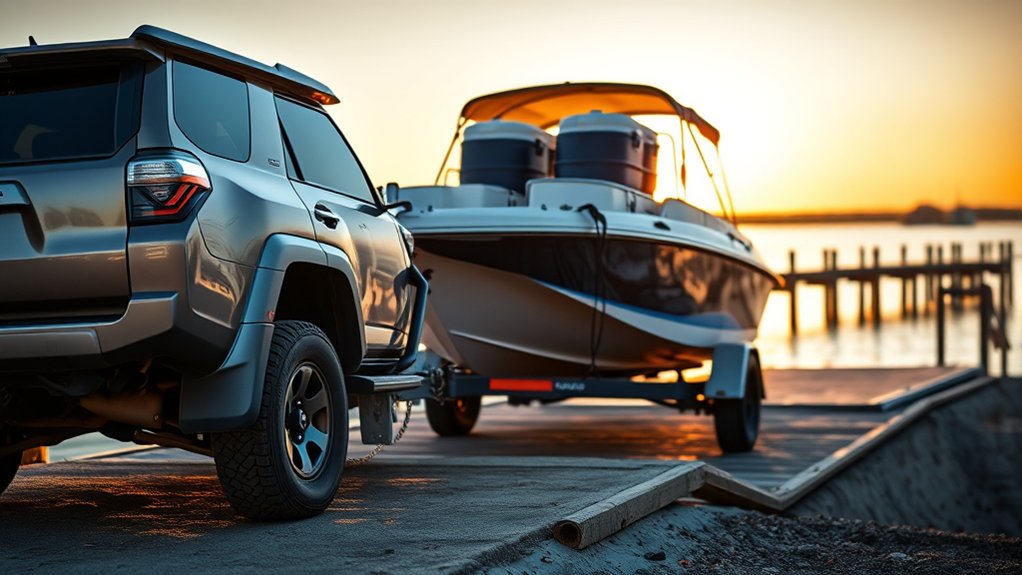
When you’re towing a boat with your 4Runner, it’s really important to get the weight distribution right. Ideally, the tongue weight should be about 5-8% of the total trailer weight. This helps keep everything stable and makes the ride safer.
Balancing the load properly is key—if it’s too heavy or uneven, you might experience swaying or difficulty steering. To make things easier and safer, using a weight distribution hitch can really help improve control and keep the towing experience smooth.
Tongue Weight Importance
Although towing a boat might seem simple, it’s really important to keep the right tongue weight on your 4Runner for safe and stable handling. Aim for a tongue weight between 5-8% of the trailer’s total weight, usually under 400 lbs.
Getting this balance right improves towing stability and helps reduce trailer sway. It also makes braking more efficient, so stops are safer. Plus, it gives you better control during sudden maneuvers.
Maintaining proper tongue weight helps you handle inclines and uneven terrain more confidently. Failing to do so can hurt your 4Runner’s performance and increase the risk of accidents.
Load Balance Techniques
Because proper weight distribution directly impacts your 4Runner’s stability and control, you need to carefully balance the load when towing a boat. Aim for a tongue weight that’s 5-8% of the total trailer weight to reduce sway and improve braking.
Distribute the weight evenly across the trailer to avoid overloading your 4Runner’s rear axle, which can lead to unsafe driving conditions and potential damage. Remember, the combined weight of your boat, trailer, and gear must stay within the 4Runner’s 5,000-pound towing capacity.
Using a weight distribution hitch can help improve towing performance by leveling your vehicle and spreading the weight across all axles. Applying these load balance techniques helps ensure safer towing and better control on the road.
Impact On Stability
Proper weight distribution directly affects your 4Runner’s stability and control when towing a boat. Make sure the tongue weight stays between 5-8% of the trailer’s total weight—ideally under 400 lbs for a 4,700 lbs boat.
Keeping the load balanced helps prevent sway and uneven handling. If the load is off, you run the risk of trailer sway, which can be dangerous during turns or sudden stops.
Proper distribution keeps your vehicle handling safe and within its limits. Focus on placing heavier items near the trailer axle and keeping the tongue weight within recommended levels.
Using sway control hitches can help counteract sway forces. Also, avoid exceeding your 4Runner’s towing capacity without making necessary adjustments.
Good weight distribution means safer, more controlled towing every time.
What Safety Gear Do You Need for Towing a Boat?
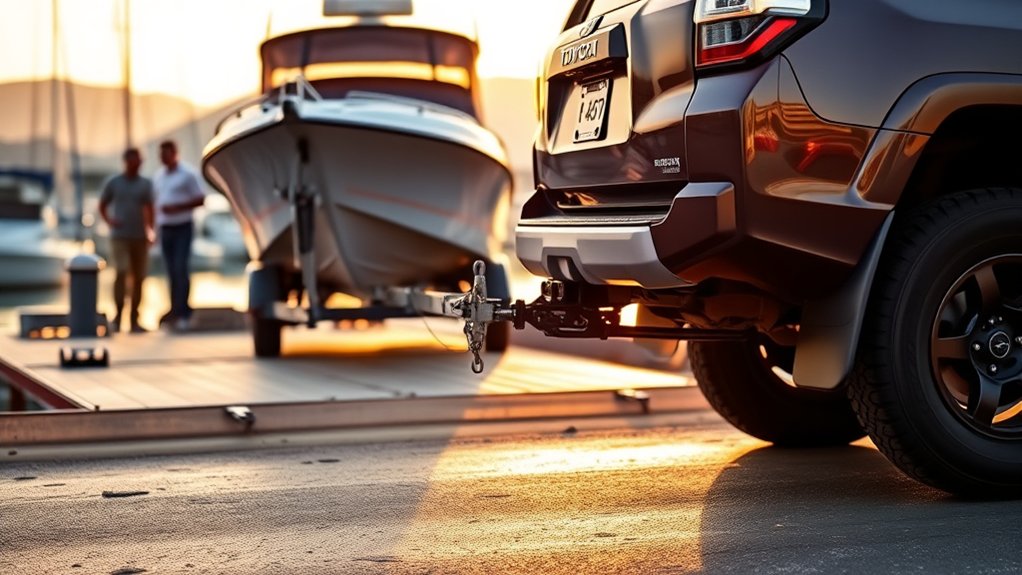
A reliable brake controller is one of the most important pieces of safety gear you need when towing a boat, especially if your load exceeds 5,000 lbs. It helps manage stopping power effectively and reduces strain on your vehicle’s brakes.
A reliable brake controller is crucial for managing stopping power when towing loads over 5,000 lbs.
You should also use sway control hitches to improve stability and minimize trailer sway. Maintaining a tongue weight between 5-8% of the total trailer weight is essential for balanced towing and control.
Always connect safety chains as a backup between your 4Runner and the trailer, providing extra security if the hitch fails. Before heading out, regularly check tire pressure and guarantee proper load distribution.
These steps collectively help you tow safely and confidently.
How to Use a Brake Controller for Safe Towing
Using a brake controller effectively can really improve your towing experience by syncing your trailer’s brakes with your 4Runner’s braking system. This coordination helps make stops smoother and keeps you safer on the road.
To use a brake controller safely, start by adjusting the gain based on your trailer’s weight. Usually, a setting of 4 is a good starting point. Make sure the controller is installed securely to avoid any braking issues.
Before you hit the road, test the controller with a controlled stop and adjust the responsiveness if needed. Regularly check for wear and make sure all electrical connections are tight.
Remember these key steps:
- Set gain based on your trailer’s weight
- Confirm the controller is securely installed
- Test its functionality before each trip
- Inspect it regularly for wear and secure wiring
How to Choose and Use a Sway Control Hitch
When towing heavier loads like boats, choosing the right sway control hitch can really help with your trailer’s stability by reducing side-to-side movement.
You’ll find two main types: friction-based hitches, which use resistance to dampen sway, and dual-cam systems that provide more advanced control.
For trailers over 3,000 pounds, a sway control hitch is highly recommended to keep everything stable and safe.
Proper installation is essential—it needs to be mounted level with the trailer and adjusted to match the trailer’s weight.
Make sure to regularly check your hitch for wear and keep it well-lubricated so it works properly.
Towing Mistakes You’ll Want to Avoid
Although towing with your Toyota 4Runner can be simple, making certain mistakes can affect safety and how well your vehicle performs. To have a safe towing experience, avoid these common errors:
Towing with your Toyota 4Runner is easy—just avoid key mistakes to ensure safety and optimal performance.
- Going over the 5,000-pound towing limit can lead to accidents and legal trouble.
- Not getting the right tongue weight can cause swaying. Keep it between 5-8% of your trailer’s weight.
- Forgetting to use a brake controller, especially with heavy loads or on downhill slopes, can be dangerous.
- Skipping safety gear like sway control hitches or ignoring proper tire pressure on both the vehicle and trailer can cause issues.
Also, make sure to load your trailer evenly. This helps you stay in control and reduces stress on your 4Runner.
When Should You Upgrade Your 4Runner or Towing Equipment?
Towing safely means knowing the limits of your Toyota 4Runner and its equipment. If you often tow near the 5,000-pound limit, it’s a good idea to upgrade for better stability and safety, especially on rough terrain or with heavier loads.
Consider installing a weight distribution hitch to evenly spread the trailer’s weight across your axles, which helps with handling. If you notice rear squat or instability, adding Sumo Springs or a sway control system can give you better control.
Regular maintenance of brakes and towing gear is crucial when dealing with larger trailers. And if you plan to tow significantly heavier boats or trailers, upgrading to a newer 4Runner with improved towing features might be necessary for safe and reliable performance.
Frequently Asked Questions
Can a 4runner Tow a Pontoon Boat Safely?
Yes, you can safely tow a pontoon boat with your 4Runner, as long as the total weight stays within its 5,000-pound towing capacity.
Make sure the tongue weight is 5-10% of the trailer’s weight, and use a sway control hitch for better stability.
You should also install a quality brake controller and regularly check your 4Runner’s brakes and suspension to maintain safe towing performance.
How Does Altitude Affect 4runner Towing Performance?
Towing at high altitudes is like climbing a steep hill with a heavy backpack—your 4Runner’s engine has to work harder because the air is thinner. This means it loses power and struggles more than usual.
Your acceleration drops and towing capacity decreases, making it tougher to get moving. Plus, your transmission faces extra stress, which can lead to overheating if you’re not careful.
Is It Legal to Tow a Boat Without Trailer Brakes?
Yes, in many places, you can tow a boat without trailer brakes if the total weight stays below about 3,000 to 4,000 pounds.
But keep in mind, laws vary by state. Some places require brakes on trailers over a certain weight, no matter what kind of vehicle you’re using.
It’s always best to check your local regulations before towing to make sure you’re following the rules and staying safe.
Also, towing without trailer brakes can make stopping harder and might impact your insurance coverage.
What Maintenance Should I Perform After Towing a Boat?
After towing a boat, think of your 4Runner as a seasoned traveler needing care. You should check the trailer’s brakes and lights to keep the journey safe.
Inspect engine oil and transmission fluid to prevent overheating. Clean and examine the hitch and ball for wear, ensuring a solid link.
Don’t forget tire pressure and condition on both vehicle and trailer. Finally, visually confirm weight distribution to maintain balance and control.
Can I Tow a Boat With a Roof Rack on My 4runner?
You shouldn’t tow a boat using your 4Runner’s roof rack. Roof racks aren’t built to handle the weight or stress of towing and can affect your vehicle’s stability and safety.
Instead, use a proper hitch that matches your 4Runner’s towing capacity and follow your owner’s manual guidelines. This helps ensure the load is balanced and secure.
Conclusion
You can tow a boat safely with your Toyota 4Runner, but keep in mind its max towing capacity is usually around 5,000 pounds.
It’s important to stay under this limit for better control and safety on the road. Proper weight distribution and gear like brake controllers and sway control hitches make a big difference.
Avoid common mistakes, and upgrade your setup when needed to keep every trip smooth and secure.