Is A 4runner A Truck – Fact Check
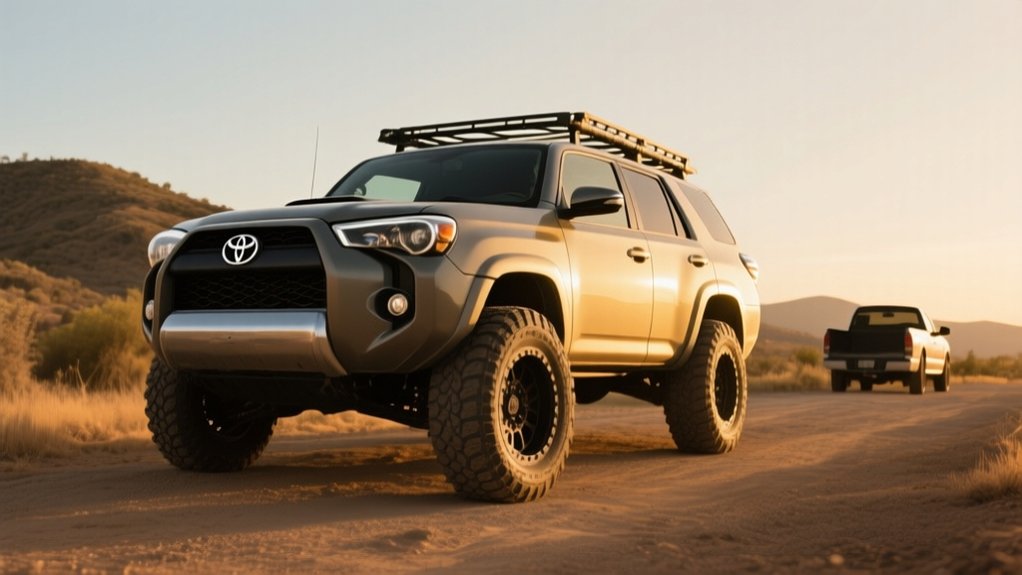
If you’re wondering whether a 4Runner is a truck, it’s important to know it’s actually classified as an SUV.
While it shares a truck-like body-on-frame design and offers strong off-road capabilities, the 4Runner prioritizes passenger comfort and versatility over heavy hauling.
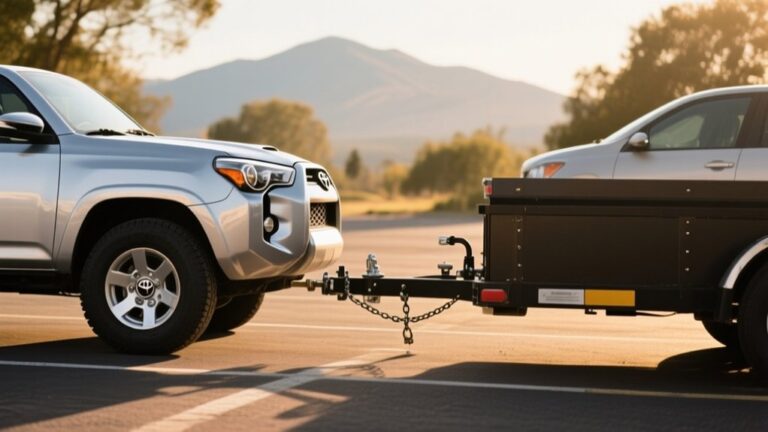
Its towing capacity maxes out around 5,000 lbs, which is less than many trucks.
You’ll find it blends rugged durability with family-friendly features, making it unique in its class and worth a closer look.
Key Takeaways
- The Toyota 4Runner is classified as a midsize SUV, not a traditional truck, despite its rugged features.
- It uses body-on-frame construction, a characteristic typically associated with trucks for durability and off-road capability.
- The 4Runner’s towing capacity is up to 5,000 lbs, which is strong for an SUV but less than many trucks.
- It prioritizes passenger comfort and cargo versatility, blending SUV family-friendly traits with truck-like toughness.
- Advanced off-road features and a powerful V-6 engine enhance its ruggedness, setting it apart from typical SUVs.
What Makes a Truck Different From an SUV?
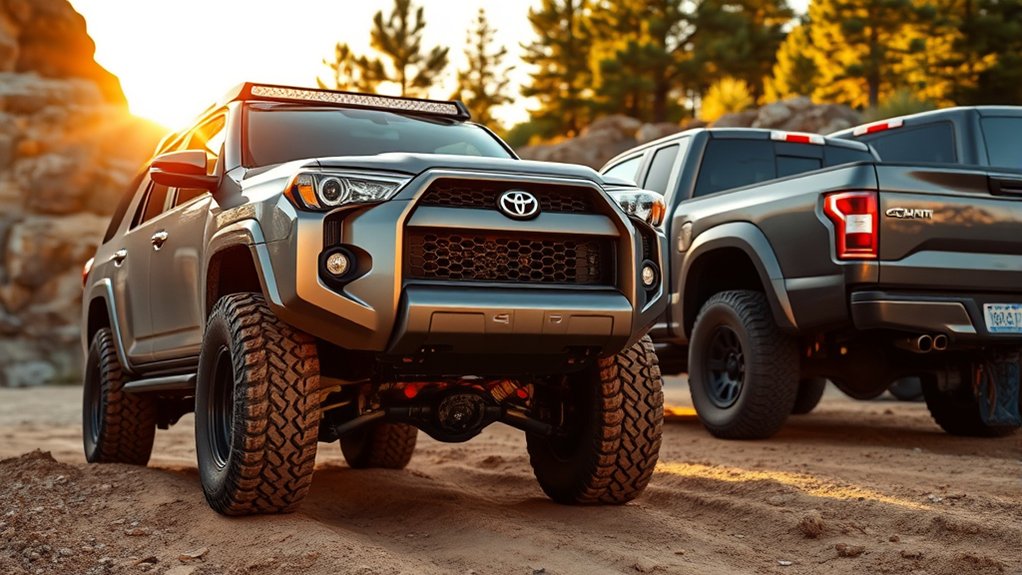
Although trucks and SUVs may look similar at first glance, they serve different purposes and have distinct designs. Trucks, often built with body-on-frame construction, focus on hauling and towing heavy loads with a separate cargo bed.
You’ll find higher payload and towing capacities in trucks, sometimes exceeding 7,000 lbs. In contrast, SUVs usually top out around 5,000 lbs. SUVs like the TRD Pro prioritize passenger comfort and off-road capabilities, offering enclosed cabins with upscale materials and advanced infotainment.
Trucks emphasize utility with straightforward interiors designed for function. In the market, trucks are mainly used as commercial vehicles, while SUVs appeal more to families and adventure seekers as versatile, multipurpose vehicles.
Trucks prioritize practical utility for work, while SUVs cater to families and adventurers with versatile comfort.
Understanding these differences helps clarify why trucks and SUVs meet different needs, even if some features overlap.
Why the 4Runner Is an SUV, Not a Truck
Because the Toyota 4Runner combines body-on-frame construction with a fully enclosed cabin and separate cargo area, it clearly fits the SUV category rather than that of a traditional truck.
Unlike trucks, which have open beds for hauling, the 4Runner prioritizes passenger comfort and cargo versatility. This makes it ideal for families and recreational outings.
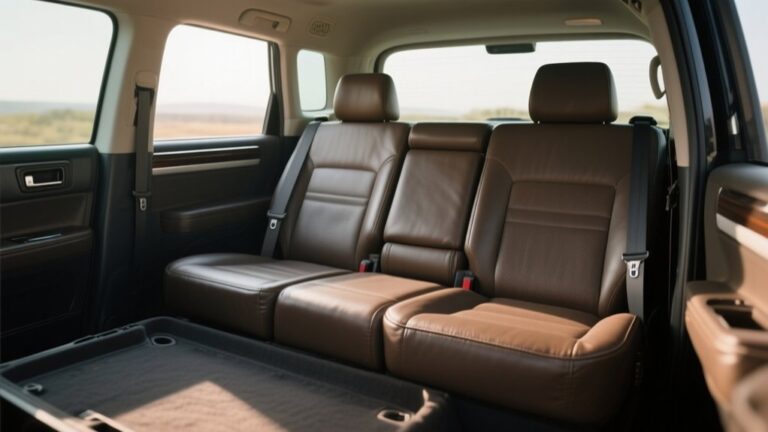
It offers seating and interior amenities designed to accommodate multiple passengers, which is typical of SUVs.
While trucks focus on towing and hauling heavy loads, the 4Runner emphasizes off-road capability. It’s equipped with advanced four-wheel drive systems and rugged durability.
Its towing capacity of up to 5,000 pounds supports recreational activities, but it doesn’t change its classification.
All these design and functional elements together define the 4Runner as an SUV, not a truck.
The 4Runner’s Body-On-Frame Construction Explained
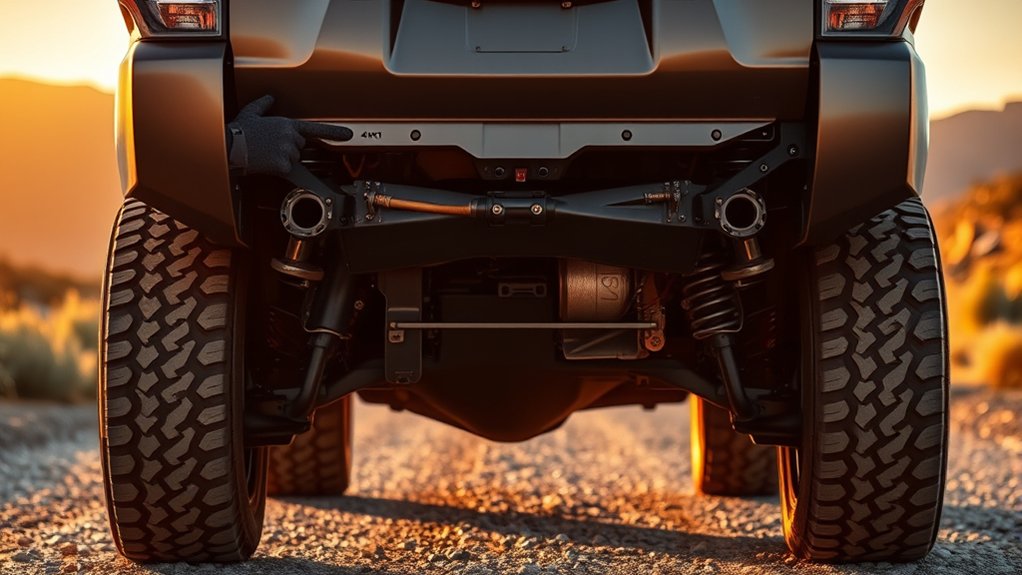
One key feature that sets the Toyota 4Runner apart from many modern SUVs is its body-on-frame construction. This design makes the 4Runner more durable and is a big reason why it performs well in rugged environments.
When you choose a 4Runner, you benefit from a robust frame that handles tough terrains better than unibody SUVs.
It also comes with skid plates that protect essential undercarriage components during off-road adventures.
The 4Runner is known for its proven longevity, with about 90% of models from the past decade still on the road today.
It holds a unique place in the market as one of the few remaining SUVs using body-on-frame construction.
This building method ensures the 4Runner stays strong and reliable, setting it apart from most modern SUVs designed today.
How the 4Runner’s Off-Road Features Set It Apart
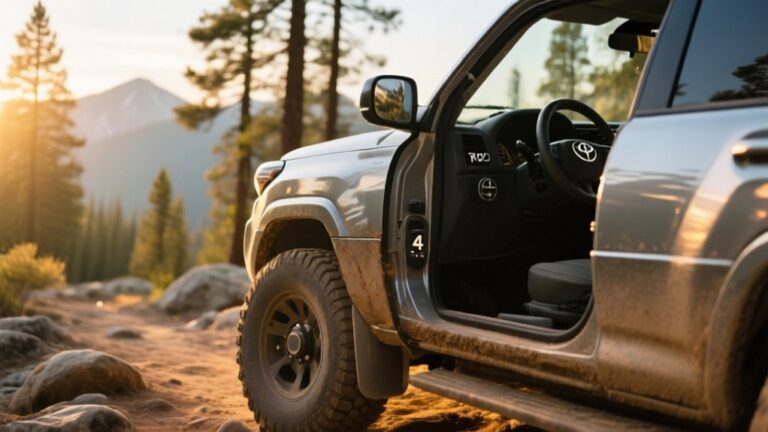
The 4Runner’s rugged body-on-frame design provides a solid base for off-road adventures, but it’s the specialized features that really set it apart. You’ll enjoy a standard 4.0-liter V-6 engine that delivers 270 horsepower and 278 lb-ft of torque, giving you strong performance on tough terrain.
Advanced tech like hill assist and available crawl control help you stay in control over steep or uneven surfaces. Skid plates protect vital components underneath, and high ground clearance allows you to clear obstacles without worry.
If you opt for the TRD Off-Road or TRD Pro trims, you’ll get multi-terrain select and a locking rear differential. These features boost traction and handling across a variety of surfaces, making the 4Runner a truly capable and reliable off-road SUV.
4Runner Towing and Payload Compared to Trucks
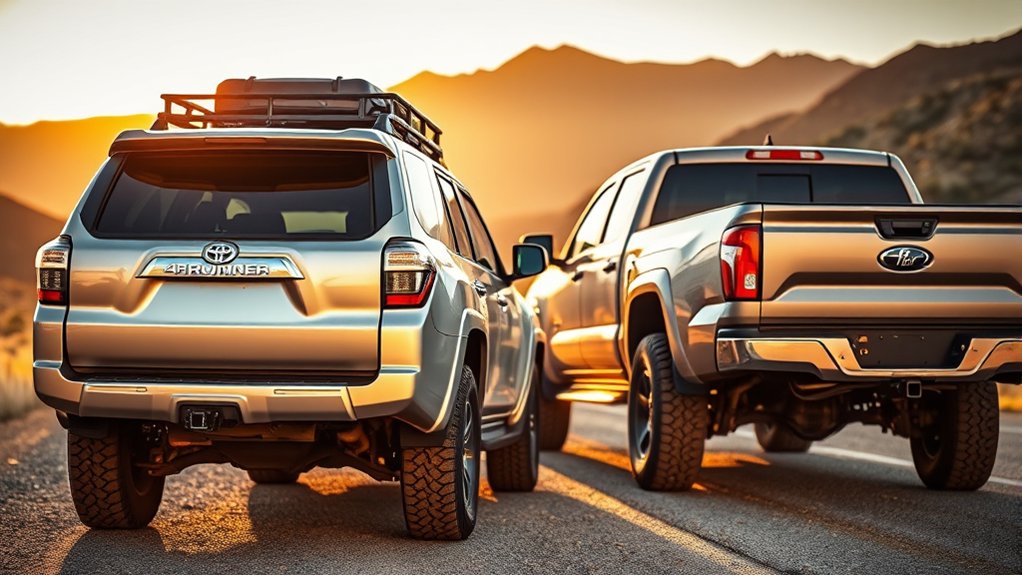
You can tow up to 5,000 pounds with a Toyota 4Runner, which is pretty good and puts it on par with some midsize trucks when it comes to hauling small trailers or gear. It’s definitely capable for many towing needs, especially if you’re not dealing with really heavy loads.
But when it comes to payload capacity, the 4Runner usually maxes out around 1,200 pounds, which is often less than what traditional trucks can handle. So, if you need to carry a lot of gear or heavy loads inside the vehicle itself, a truck might be a better option.
Towing Capacity Comparison
When comparing towing capacities, the Toyota 4Runner can handle up to 5,000 lbs, making it competitive among many mid-size trucks. However, it’s not quite as capable as some models like the Toyota Tacoma, which can tow up to 6,800 lbs.
Here’s a clear comparison to help you evaluate:
- The 4Runner’s 5,000 lbs towing capacity is good for recreational use and moderate hauling needs.
- Many mid-size trucks can tow more, as they’re built for heavier loads.
- The 4Runner focuses more on off-road ability rather than maximum towing power.
- Full-size trucks beat both in towing capacity, reflecting their heavier-duty design.
Payload Versus Trucks
Understanding how the Toyota 4Runner’s payload capacity stacks up against trucks reveals important differences in design and functionality. The 4Runner’s payload typically ranges from 1,500 to 2,000 lbs depending on the trim, which is less than many full-size trucks that often exceed 2,000 lbs.
While you can tow up to 5,000 lbs with the 4Runner, its body-on-frame SUV platform prioritizes off-road capability over maximum cargo capacity. Unlike trucks with open beds, the 4Runner offers a rear cargo area that’s versatile but limits payload functionality.
If you’re comparing it to dedicated pickups like the Toyota Tundra or Ford F-150, you’ll find their payload and towing capacities generally surpass the 4Runner’s. This reflects their design focus on heavy-duty hauling and work tasks.
Inside the 4Runner: Comfort and Passenger Features
Inside the 4Runner, several features come together to provide a comfortable and adaptable environment for both drivers and passengers. You’ll find thoughtful design elements that improve every ride.
- The driver’s seat adjusts in 8 ways and offers heating and ventilation options, ensuring comfort in any weather.
- Fold-flat second-row seats provide flexibility, so you can easily switch between passenger space and cargo capacity.
- Optitron instrumentation delivers clear, easy-to-read gauges, helping you monitor vehicle performance without distraction.
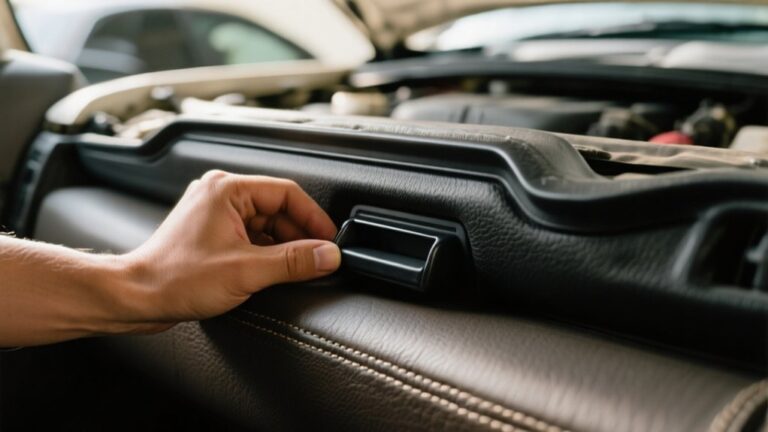
- Premium interior materials like SofTex® and leather, available on select trims, add a touch of luxury, while an optional power moonroof brings in natural light and openness.
These features combine to create a versatile and inviting interior, making the 4Runner perfect for daily commutes or adventurous trips.
Did the 4Runner Ever Function as a Truck?
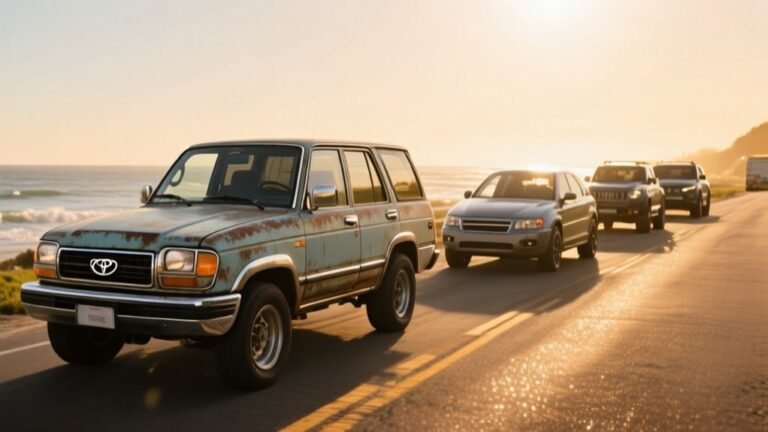
Although the Toyota 4Runner has always been classified as an SUV, its roots are closely tied to trucks. The first-generation 4Runner, introduced in 1984, was built on the Toyota Hilux pickup truck platform, sharing many structural parts and a tough build.
This early model even had a removable fiberglass top, giving it a truck-like look and function. Even with those truck origins, the 4Runner was primarily designed for passenger use, balancing off-road ability with comfort.
Over time, it evolved into a distinct SUV and moved away from its pickup roots. While it can tow loads similar to trucks, the 4Runner has never been a traditional truck. It’s always been classified as a passenger-focused SUV throughout its history.
How Consumers See the 4Runner: Truck or SUV?
While the 4Runner has always been classified as an SUV, many people find themselves wondering if it feels more like a truck or an SUV. This confusion comes from its rugged design and capabilities, which blur the lines between the two.
Here’s why folks see it both ways: It’s officially a midsize SUV with body-on-frame construction, a trait usually found in trucks. Its off-road toughness also makes it feel sturdier than your average SUV.
Plus, it can tow up to 5,000 pounds, which is similar to some trucks. Many owners also use it for both family trips and rugged adventures, showing its versatility.
With a towing capacity of 5,000 pounds, the 4Runner blends toughness with family-friendly versatility.
All these features combine to shape your view, making the 4Runner a pretty unique vehicle in its class.
Why the 4Runner Sometimes Feels Like a Truck on the Road
You’ll notice the 4Runner feels more like a truck on the road because of its body-on-frame construction and a powerful 4.0-liter V-6 engine that delivers 270 horsepower. This setup not only makes it more durable but also boosts its towing capacity, letting you haul up to 5,000 pounds.
The 4Runner’s high ground clearance and rugged design give it a commanding presence, traits usually associated with trucks rather than typical SUVs. Features like hill assist and descent control improve its off-road performance, emphasizing that tough, truck-like feel.
When you drive a 4Runner, these elements combine to give you a driving experience that mixes SUV comfort with the toughness and utility of a truck. This is especially true on challenging terrains or when handling heavy-duty tasks.
Frequently Asked Questions
What Is the Fuel Economy of the Toyota 4runner?
The Toyota 4Runner gets about 16 mpg in the city and 19 mpg on the highway. If you opt for the four-wheel-drive model, expect a combined fuel economy of around 17 mpg.
Its 23-gallon tank provides a good driving range, but keep in mind, its fuel efficiency isn’t as high as many midsize SUVs because of its rugged, body-on-frame design.
Your actual mileage can vary depending on how and where you drive.
How Does the 4runner’s Maintenance Cost Compare to Trucks?
Think of maintaining your 4Runner like tending a sturdy garden; it demands regular care but rarely surprises you with wild expenses. Your yearly maintenance costs usually stay around $500 to $600, similar to what you’d spend on a mid-sized truck.
Routine services like oil changes and brake replacements typically cost about $50 to $80. Thanks to shared parts and a reliable design, you won’t see much higher repair bills compared to many trucks.
What Are the Safety Ratings of the Toyota 4runner?
You’ll find the Toyota 4Runner has excellent safety ratings, including a 5-star overall score from the NHTSA for some model years. It consistently earns “Good” marks in IIHS crash tests, showing it’s quite crashworthy.
The 4Runner’s body-on-frame design, multiple airbags, stability and traction control, plus Toyota Safety Sense features like pre-collision systems and lane departure alerts, all work together to keep you and your passengers well protected.
Does the 4runner Have Hybrid or Electric Versions?
Wondering if the 4Runner offers hybrid or electric versions? It doesn’t. Toyota sticks with a traditional 4.0-liter V-6 engine for the 4Runner, delivering 270 horsepower and 278 lb-ft of torque.
While Toyota incorporates hybrid tech in models like the RAV4, the 4Runner remains gasoline-powered only. If you’re looking for a hybrid SUV from Toyota, you’ll want to investigate other options since no electric or hybrid 4Runner exists yet.
What Are the Most Popular Color Options for the 4runner?
The most popular 4Runner colors you’ll find are Classic Silver Metallic, Midnight Black Metallic, and Super White, offering timeless versatility.
If you want something modern and rugged, Lunar Rock and Magnetic Gray Metallic are great choices.
Keep in mind, Toyota updates their palette seasonally, and some colors, like those on the TRD Pro, are exclusive.
Neutral tones still dominate sales, but more adventurous buyers are increasingly drawn to brighter shades like Cavalry Blue.
Conclusion
You might think the 4Runner is a truck because it’s built tough with body-on-frame construction and serious off-road capabilities. But it’s actually an SUV.
It offers passenger comfort and versatility that trucks usually don’t. Its towing and payload capacities aren’t on the same level as true trucks.
While it can feel like a truck on rugged terrain, calling it one is like saying a cheetah is just a fast housecat. It’s a different, specialized vehicle type altogether.