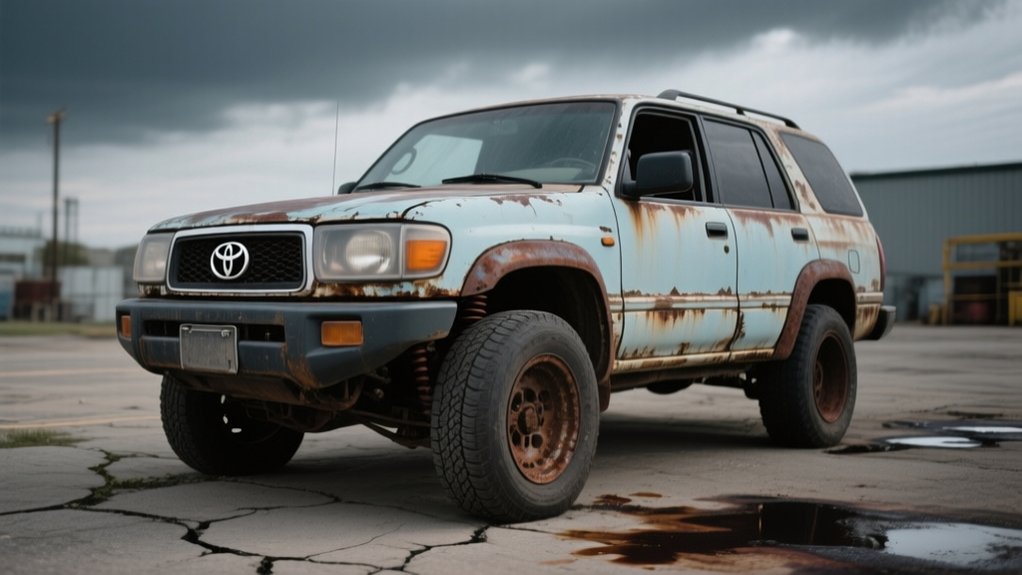
What Year 4runner To Avoid – The Full Story
You should avoid 2003-2005 Toyota 4Runners because of serious rust issues and head gasket failures that can affect safety and reliability.
The 2004 model also has notable dashboard cracking.
The 1990-1995 models face head gasket leaks and suspension wear.
The 2010 year risks brake problems like warped rotors.
Rust and neglect impact many older models, so thorough inspections and maintenance history are a must.
Keep exploring to find out which models offer better reliability and value.
Key Takeaways
- Avoid 2003-2005 Toyota 4Runners due to severe rust issues compromising frame integrity and safety.
- Steer clear of 2004 models with frequent dashboard cracking from sun damage.
- Be cautious with 1990-1995 3.0L V6 models prone to head gasket failures and coolant leaks.
- The 2010 model may suffer from warped brake rotors and loose brake pedals, affecting stopping power.
- Always verify thorough maintenance records to avoid problems linked to neglect across all model years.
Which Toyota 4Runner Years Have the Most Problems?
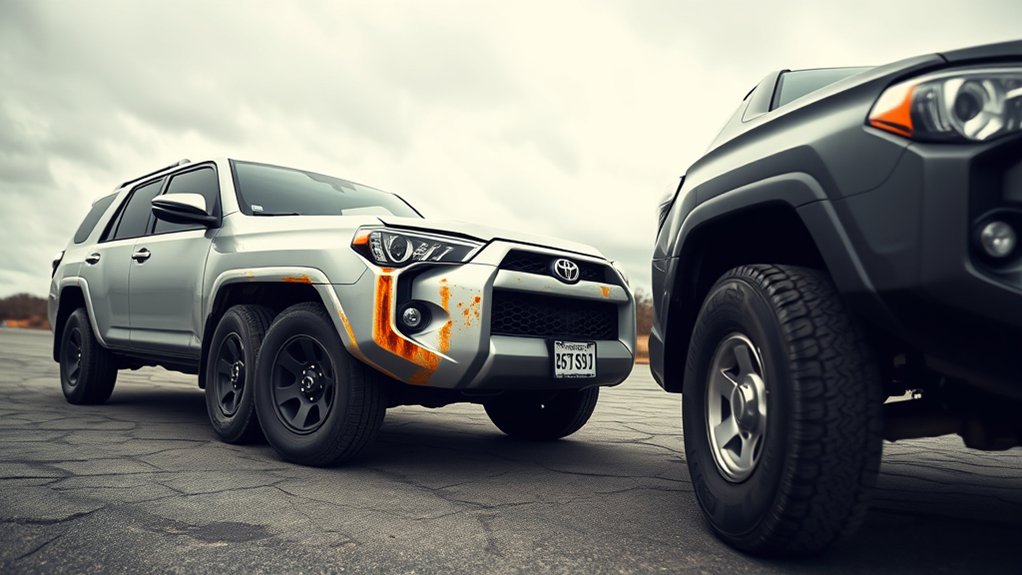
When evaluating which Toyota 4Runner years have the most problems, models from 2003 to 2005 stand out because of frequent rust issues and head gasket failures. These years see over 400 complaints reported annually.
These 4Runners are notorious for rust problems that can weaken the frame and lead to costly repairs. Head gasket failures in these models can also cause serious engine damage if not fixed quickly.
Beyond 2003-2005, the 2001-2002 models also face significant rust issues, which hurt their reliability and off-road ability.
Even earlier, the 1990-1995 second-generation 4Runners with 3.0L V6 engines often suffer from head gasket issues and suspension sagging. Knowing these problematic years can help you make a smarter choice when buying a used 4Runner.
Why Avoid 2003-2005 4Runners: Rust & Engine Issues
The 2003-2005 Toyota 4Runner models have a bad reputation mainly because of rust and engine problems that can make them unreliable. These years are known for serious rust issues, with over 400 complaints each year, often affecting the frame and undercarriage.
Head gasket failures happen often too, which can cause major engine damage if not fixed early. The 2004 model is also known for cracked dashboards, adding cosmetic and functional problems.
If you’re thinking about buying a 2003-2005 4Runner, be careful. Unless you’ve done thorough inspections and repairs for rust and head gasket issues, these models could end up costing you a lot in repairs and won’t last as long.
Many buyers steer clear of these years to avoid unexpected expenses and reliability issues.
Problems With the 2010 Toyota 4Runner Model Year
Although the 2010 Toyota 4Runner marked the start of the fifth generation, it came with notable braking system problems you should be aware of before buying. Common issues include problems with the brake rotor, which often warped, causing steering wheel vibrations during braking.
Owners also reported a loose brake pedal and strange noises, making driving less safe and repairs more expensive. These early setbacks led to lower J.D. Power scores compared to later models.
Here are the main concerns with the 2010 Toyota 4Runner:
- Warped brake rotors causing uneven braking and vibrations
- Loose brake pedal reducing driver confidence
- Persistent abnormal braking noises leading to costly repairs
These problems can overshadow the vehicle’s overall potential, making it less appealing than later, more reliable versions.
Mechanical Flaws in 1990-1995 Second-Gen 4Runners
If you’re looking at older 4Runner models, keep in mind that the 1990-1995 second-generation versions have some common mechanical issues. One of the main problems is head gasket failures, which can lead to coolant leaks and serious engine damage if not fixed promptly.
These 4Runners are also prone to rust, especially in areas with harsh winters and lots of road salt. Over time, this can weaken key structural parts and cause long-term problems. The power steering system is another weak spot, often developing leaks that make steering less responsive and lead to costly repairs.
Suspension wear is pretty typical too, causing the vehicle to sag and negatively affect ride quality and handling. Overall, these mechanical flaws mean you’ll need to do a thorough inspection and probably some maintenance before buying one.
How Rust Affects Older Toyota 4Runner Models
When you consider older Toyota 4Runner models, rust is a major concern, especially for those from the early 2000s. Rust issues are common in 4th generation 4Runners (2003-2009), often showing up around 150,000 miles and weakening the frame.
Rust frequently appears in early 2000s 4th gen Toyota 4Runners, often after 150,000 miles, compromising the frame.
This problem also affects second-generation models (1990-1995), which can lower safety and resale value. If you’re looking at these older vehicles, be on the lookout for severe rust spots on the frame and undercarriage.
Rust can make the vehicle less safe, especially in areas with harsh winters and lots of road salt. Extensive rust damage can also significantly reduce resale value.
Regular inspections are key to assessing rust severity and making sure your 4Runner stays reliable and safe for years to come.
Most Reliable Toyota 4Runner Generations for Longevity
When you’re looking for a reliable 4Runner, it’s all about picking the generations known for lasting a long time and staying durable. The fifth generation really shines because it tends to have fewer powertrain problems, making it a solid choice for longevity. On the other hand, the third generation’s 3.4L V6 engine has a proven track record for endurance, so it’s definitely worth considering.
Of course, how you take care of your 4Runner plays a big role in how long it lasts. Regular maintenance and proper care can really help you get the most out of whichever generation you choose. So, understanding what these models need and staying on top of repairs will keep your 4Runner running smoothly for years to come.
Generation Reliability Overview
Although Toyota 4Runners have a reputation for durability, not all generations are equally reliable and long-lasting. When you’re comparing different models, you’ll notice some years stand out as the best, while others are better to avoid.
The fifth generation (2010-2024) is a top pick, with few powertrain issues and solid mechanical performance. It’s considered one of the most reliable options for longevity.
The third generation (1996-2002) also scores well, mainly thanks to its dependable 3.4L V6 engine. It’s known for lasting a long time with minimal problems.
On the other hand, the second generation (1990-1995) tends to be problematic. Head gasket failures are common here, making it one of the years to steer clear of if reliability is your priority.
Knowing these differences can help you make a smarter choice when selecting a Toyota 4Runner that meets your reliability expectations.
Engine Longevity Factors
Because engine longevity depends heavily on design and maintenance, some Toyota 4Runner generations clearly outperform others in durability. For example, the third generation’s 3.4L 5VZ-FE engine (1996-2002) is praised for reaching over 250,000 miles when cared for properly.
Likewise, the fifth generation’s 4.0L 1GR-FE engine (2010-present) offers minimal powertrain failures, reflected in strong J.D. Power scores (83/100+ in 2012, 2017, 2021). If you’re shopping for a used car, these models tend to have fewer owner complaints related to engine longevity.
Conversely, the second generation (1990-1995) struggles with systemic head gasket failures and rust, resulting in less reliability. Knowing these factors helps you avoid models prone to costly problems and ensures better long-term durability in your 4Runner choice.
Maintenance Impact on Durability
To get the most out of your Toyota 4Runner, regular maintenance is key. It directly affects how long your vehicle will last, so staying on top of it is essential.
Well-maintained 4Runners, especially the 3rd Generation with its reliable 3.4L V6 and the 5th Generation models, often go beyond 250,000 miles. Neglecting maintenance can cause problems like the lower ball joint failures seen in early 4th Generation models.
Here’s why maintenance really matters:
- It helps prevent costly repairs by catching issues early.
- It keeps the engine and powertrain healthy, boosting longevity.
- It preserves resale value through thorough service records.
What to Check When Buying a Used Toyota 4Runner
When buying a used Toyota 4Runner, you should carefully inspect several key areas to avoid costly repairs and ensure reliability. Start by reviewing maintenance records to confirm proper engine and transmission care.
Check the dashboard for cracking, especially in 2004 models, which can indicate neglect or harsh conditions. Rust is critical in older models like 2003 to 2005, as it affects safety and value.
Be aware of head gasket issues in 1990-1995 3.0L V6 engines. Make sure to test the brakes thoroughly, especially in 2010 models, which are prone to rotor warping.
| Aspect | Model Years | What to Look For |
|---|---|---|
| Rust | 2003-2005 | Structural damage, frame rust |
| Dashboard Cracking | 2004 | Cracks indicating sun damage |
| Maintenance Records | All | Consistent servicing history |
| Head Gasket | 1990-1995 (3.0L V6) | Signs of leaks or overheating |
| Brake Performance | 2010 | Warped rotors, pedal looseness |
Which Reliable Toyota 4Runner Years Command Higher Prices?
After figuring out which 4Runner model years to be cautious about, you might wonder which ones are worth paying extra for today. Some Toyota 4Runner models stand out as the best used options, offering reliability and strong resale value, even if they can be pricey to repair at times.
The 2020 model is a prime example, with an average price of around $42,028. It’s in high demand and known for its durability.
The 2017 version, rated 88 out of 100 by J.D. Power, offers a solid TRD lineup and tends to be competitively priced.
Then there’s the 2012 model, scoring 83 out of 100, valued for its sturdy mechanics and fewer early issues.
Frequently Asked Questions
How Does the 4runner’s Fuel Economy Compare Across Different Years?
You’ll notice the 4Runner’s fuel economy improves gradually over the years but remains modest. Early 1990-1995 models with the 3.0L V6 average around 15-19 MPG.
Fourth-generation versions from 2003-2009 bump that to roughly 16-20 MPG, offering a slight boost in efficiency. The fifth generation, from 2010 to 2024, holds steady at about 17-21 MPG.
Keep in mind, heavier designs and occasional mechanical issues, like early 2010 braking problems, can affect real-world efficiency.
Are There Major Transmission Issues in Any 4runner Model Years?
You won’t find major transmission issues plaguing Toyota 4Runners—ironic for a truck that’s tough as nails. Sure, early ’90s models with the 3.0L V6 might show age-related wear, but widespread failures are rare.
Even rust-prone 2003-2005 editions don’t suffer transmission woes. The 5th-gen’s 4.0L V6 shines with reliability, making transmission trouble a non-issue.
Just keep up with maintenance, and your 4Runner’s gearbox should stay solid for miles.
What Are Common Interior Features Missing in Early 4runner Models?
In early 4Runner models, you’ll often miss modern conveniences like air conditioning, power windows, and power locks. The dashboard is basic, with limited instrumentation and fewer safety features.
Audio systems lack CD players, Bluetooth, or auxiliary inputs, so your entertainment options are limited. Climate controls are manual rather than digital, and interior materials focus more on durability than comfort or luxury.
You won’t find the refined features common in newer models.
How Do Aftermarket Modifications Affect 4runner Reliability?
You’d think aftermarket mods would make your 4Runner invincible, right? In reality, they often compromise reliability. Lift kits increase wear on ball joints and bushings, while oversized tires strain brakes, causing premature rotor warping.
Engine and exhaust tweaks might not match factory specs, reducing performance. If you want your 4Runner to stay durable, keep modifications carefully balanced and aligned with the original design to avoid costly repairs down the road.
Is There a Difference in Off-Road Capability Among 4runner Generations?
Yes, you’ll notice differences in off-road capability across 4Runner generations. Early models from 1984 to 1995 are lightweight and have solid axles, making them great for rugged terrain.
Later generations strike a balance between comfort and performance. The third generation (1996-2002) stays durable, so it’s still quite capable off-road.
The fourth generation (2003-2009) adds more power but can sometimes sacrifice reliability. The fifth generation (2010-present) features advanced off-road tech like crawl control, making it ideal for serious adventures while still offering modern comfort.
Conclusion
When buying a Toyota 4Runner, avoid rust-prone 2003-2005 models. These years are known for corrosion issues that can lead to costly repairs later on.
Steer clear of the problematic 2010 year, which has some known reliability concerns. It’s better to look at other model years for a more dependable ride.
Watch for mechanical flaws in early ’90s versions. These older models can have issues with engines and transmissions if not properly maintained.
Prioritize reliability by choosing well-maintained, later-generation 4Runners. They’re generally known for longevity and durability, making them a smarter investment.
Make sure to check thoroughly for rust, engine problems, and overall condition. A detailed inspection can save you from surprises down the road.
By knowing what to avoid, what to inspect, and which years hold value, you’ll make a smarter, safer investment. A good 4Runner can last for many miles if you pick the right one.