What Is A 4runner – Quick Answer
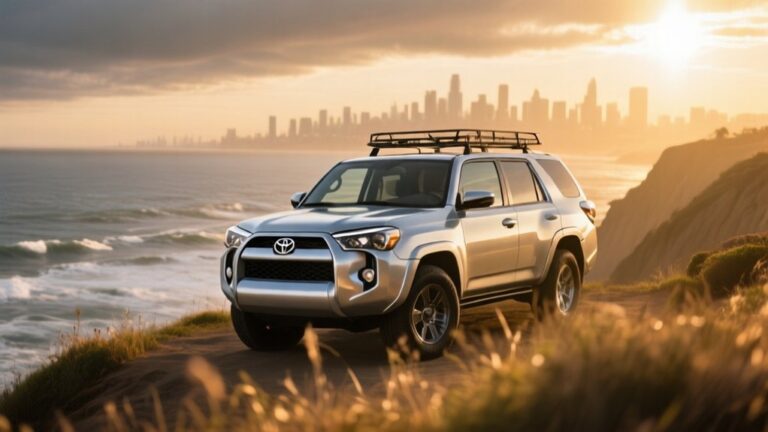
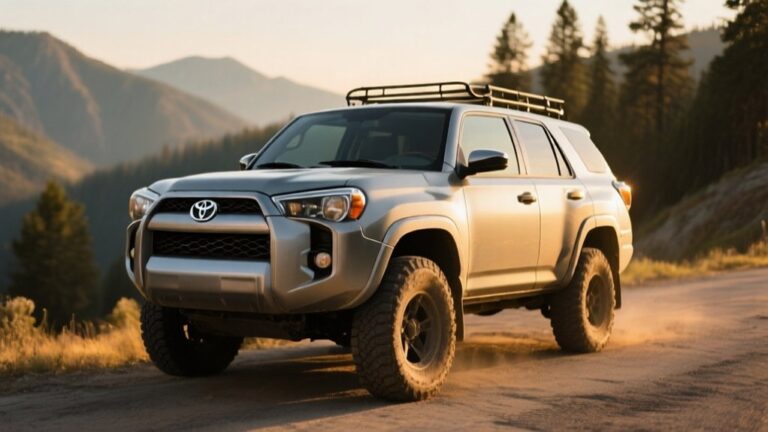
A Toyota 4Runner is a midsize SUV with a durable body-on-frame design, built for rugged use and reliable off-road performance.
You’ll find it offers strong towing capacity and spacious interiors, making it great for adventure or family trips.
While it might not be the most fuel-efficient vehicle out there, its reliability and high resale value really stand out.
Its unique design leads to mixed classifications as either an SUV or a truck, depending on your state.
Check out more to learn about its features and what ownership is like.
Key Takeaways
- The Toyota 4Runner is a midsize SUV built on a durable body-on-frame design ideal for off-road and towing.
- It offers rugged performance with features like 4WD, Multi-Terrain Select, and Crawl Control for outdoor adventures.
- Fifth-generation models (2010-2024) dominate the market, known for modern safety features and refined interiors.
- Known for reliability, many 4Runners surpass 200,000 miles, maintaining strong resale value and accident-free histories.
- Regional classifications vary; some states register it as a truck due to its design, affecting insurance and owner perceptions.
What Makes the Toyota 4Runner Unique Among SUVs
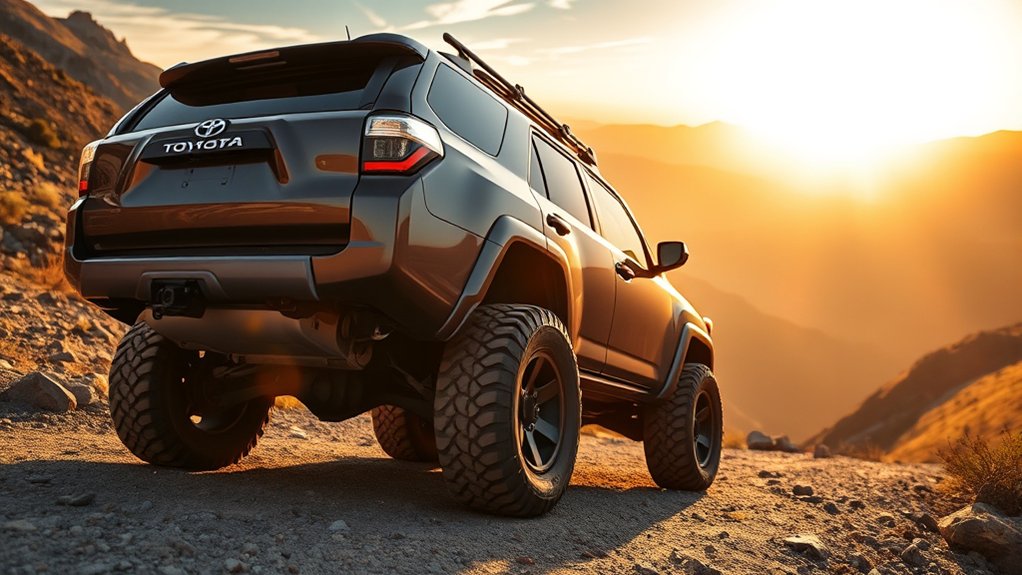
Although many SUVs focus on comfort and on-road performance, the Toyota 4Runner stands out because it’s built on a body-on-frame design, which gives it superior off-road capabilities. As a midsize SUV, the 4Runner combines ruggedness with practicality, making it ideal for adventure seekers.
You’ll appreciate its reputation for reliability—76% of listings in Los Angeles report accident-free histories, which exceeds national averages. Fifth-generation models, built from 2010 to 2024, make up 73% of available inventory, reflecting their blend of modern safety features and proven durability.
The 4Runner’s resale value remains strong, with average prices around $25,672 in Los Angeles. Older fourth-generation models are also competitively priced. This combination of toughness, reliability, and value makes the Toyota 4Runner truly unique among midsize SUVs.
How the 4Runner’s Body-on-Frame Design Boosts Durability
The Toyota 4Runner’s distinctive body-on-frame construction plays a key role in its durability and off-road capabilities. Unlike unibody SUVs, this design gives it a sturdy frame that handles tough terrain and heavy use with ease.
This setup means less flex in the frame, which helps the 4Runner maintain better handling and stability during challenging drives. It’s built to handle the rough and rugged, whether you’re on fire roads around Los Angeles or exploring further.
The durable construction also boosts towing capacity, so you can confidently haul gear or trailers without worry. For anyone looking for a reliable SUV, the 4Runner’s body-on-frame build promises longevity and strong resale value.
Durable construction enhances towing power and ensures long-lasting reliability with strong resale value.
In short, the 4Runner’s design is a big part of its toughness, making it perfect for outdoor adventures and demanding conditions.
Key Features That Define the 4Runner’s Off-Road Capability
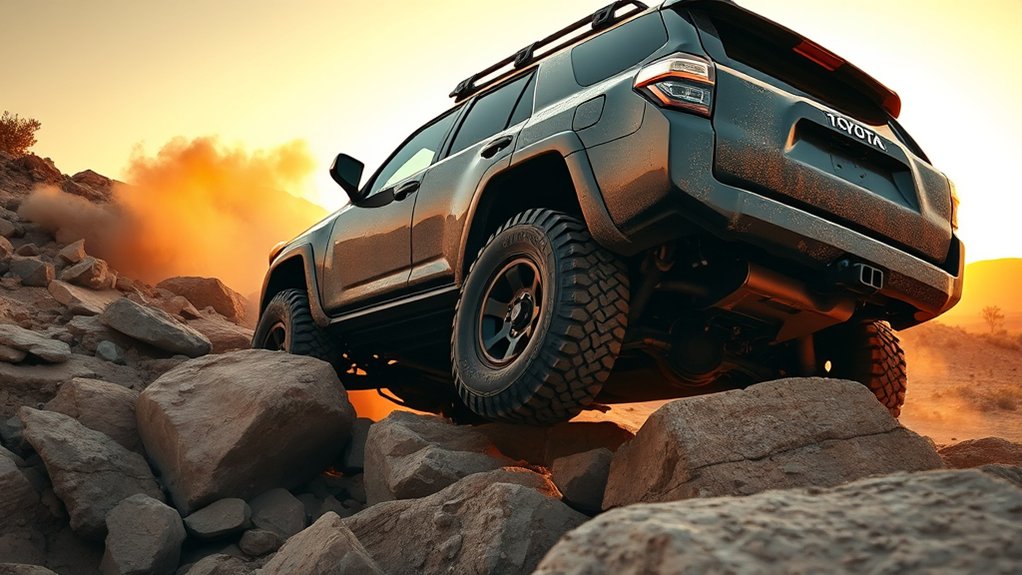
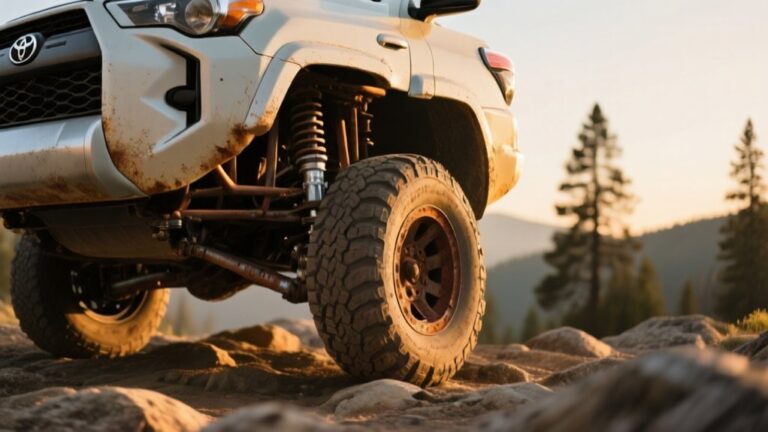
When you tackle tough trails or slippery surfaces, the Toyota 4Runner equips you with features designed to improve control and performance. Its body-on-frame construction boosts durability, making it ideal for rugged terrain. The robust 4WD system offers superior traction on snow, mud, and loose rock, ensuring stability in challenging conditions.
Multi-Terrain Select lets you adjust settings to optimize grip and handling across various surfaces. Crawl Control manages throttle and brakes on steep or uneven paths, reducing driver effort. High ground clearance combined with favorable approach and departure angles helps you navigate obstacles without damage.
Plus, the 4Runner’s reliable powertrain, capable of surpassing 200,000 miles with proper maintenance, makes it a dependable choice for serious off-road enthusiasts.
Is the 4Runner a Car or a Truck? Clearing Up the Confusion
Off-road features like body-on-frame construction and robust 4WD often make people wonder if the Toyota 4Runner is a car or a truck.
Technically, it’s classified as a midsize SUV, but its truck-based design sets it apart from typical SUVs built on unibody frames.
You might hear owners call it a truck because of its rugged build and off-road capabilities.
This isn’t just casual talk—some states, like Missouri, officially register 4Runners as trucks, reflecting regional classification differences.
The terminology varies a lot depending on local rules and personal opinions.
So, while it looks more like a car on the surface, its structure and capabilities are more in line with trucks.
That makes its classification a bit of a gray area.
How 4Runner Generations Affect Design and Performance
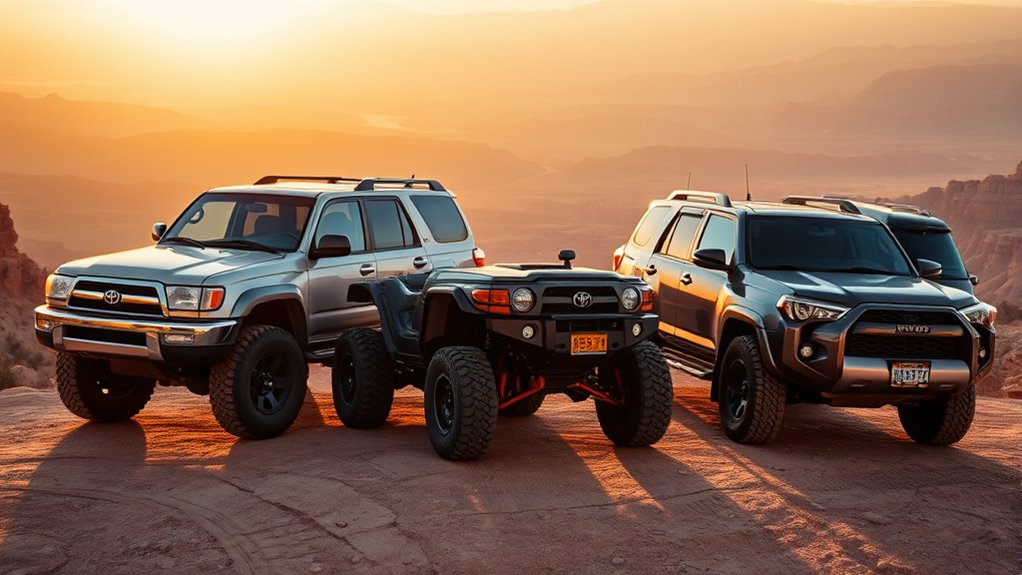
You’ll see that each 4Runner generation has its own unique design tweaks. For example, earlier models really emphasize that rugged, body-on-frame look, perfect for off-road adventures. But as you move to the fifth generation, the design becomes a bit more refined, with added tech features that make it feel more modern and comfortable.
When it comes to performance, things have also shifted over the years. The earlier 4Runners were all about durability and off-road capability, but newer models strike a better balance by offering smoother rides, more safety features, and improved comfort. These changes help the 4Runner stay in tune with what drivers need today and how market trends are evolving.
Generation Design Changes
Five generations of the Toyota 4Runner have shaped its design and performance, each adapting to changing consumer demands and technological advancements. You’ll notice the third generation introduced a more SUV-like design, moving away from the truck-like look. The fourth focused on reliability and affordability, appealing to budget-conscious buyers. The fifth emphasizes modern safety and a refined interior while keeping the durable body-on-frame construction.
| Generation | Key Design Focus |
|---|---|
| Third (1996-2002) | SUV-like styling |
| Fourth (2003-2009) | Reliability, affordability |
| Fifth (2010-2024) | Safety, interior refinement |
Each generation brings design changes that reflect evolving needs without sacrificing ruggedness.
Performance Evolution Over Time
As the Toyota 4Runner has gone through its generations, its performance and design have kept up with changing needs. Early models had a rugged, truck-like look focused on durability and off-road ability.
By the fourth generation (2006-2009), it became known as a reliable, affordable SUV that balanced toughness with cost-effectiveness.
The fifth generation (2010-2024) brought a sleeker, modern style with new tech and safety features. Engine power improved a lot, with a strong V6 that boosts towing and overall performance.
Off-road capabilities also advanced, with features like Multi-Terrain Select and Crawl Control to help keep traction and control in tough conditions.
Each generation shows Toyota’s dedication to blending comfort, reliability, and better performance.
Why the 4Runner Is So Reliable for Long-Term Ownership
Because the Toyota 4Runner combines tough construction with reliable engineering, it’s one of the most dependable midsize SUVs for long-term ownership. Many models even surpass 200,000 miles with proper care, showing just how durable they are.
The fourth-generation 4Runners (2006-2009) are especially affordable and dependable. They typically cost around $11,010 even with higher mileage, making them a smart choice for budget-conscious buyers.
In markets like Los Angeles, about half of the available 4Runners have over 100,000 miles but still remain competitively priced thanks to their sturdy build. Plus, many have accident-free histories, adding to their trustworthiness.
Key reasons the 4Runner is so reliable include its proven longevity, with many models going well beyond 200,000 miles. The fourth-generation models strike a good balance between affordability and durability.
A high percentage of these vehicles are accident-free in resale markets, which boosts their resale value. The 2015-2017 models and TRD Pro variants tend to hold their value particularly well.
Who Should Buy a Toyota 4Runner? Key Buyer Profiles
Understanding who benefits most from owning a Toyota 4Runner helps clarify why it remains a popular choice.
If you’re an outdoor enthusiast or weekend warrior, the 4Runner’s body-on-frame build and off-road capabilities suit your adventurous lifestyle perfectly.
Reliability seekers will value models like the fourth generation (2006-2009), known for lasting performance at reasonable prices.
Reliability seekers appreciate the fourth generation 4Runner (2006-2009) for its lasting performance and value.
Long-term owners benefit from strong resale value, making it a wise investment if you plan to keep your vehicle for years.
Families needing towing capacity and spacious interiors will find the 4Runner practical for their needs.
However, if you mainly drive in urban settings or prioritize fuel economy, you might want to explore alternatives, as the fifth generation averages only 17-19 mpg combined.
How Regional Factors Shape 4Runner Ownership and Classification
You’ll see that regional factors, like state registration rules, can really impact how your 4Runner is officially classified. For example, in Missouri, it might be labeled as a truck. These differences also affect the terms people use when talking about their vehicles, which can influence how owners see and describe their 4Runners.
Getting a handle on these regional variations can help explain why 4Runner communities often have different opinions about what the vehicle really represents. It’s pretty interesting how local rules and language shape the way we think about our trucks!
State Registration Variations
While the Toyota 4Runner is widely recognized as an SUV, how your state classifies it for registration can vary quite a bit. These differences can impact your insurance rates, registration fees, and even how you see the vehicle yourself.
For example, Missouri registers the 4Runner as a truck because of its body-on-frame design, but that isn’t the case everywhere. Knowing these variations can help you anticipate costs and understand legal requirements.
Some states focus on the 4Runner’s truck-like capabilities when deciding its classification. This can influence both the registration fees and insurance premiums you pay.
It can also be confusing because the 4Runner’s design blends features of both SUVs and trucks. Local laws often shape how owners feel about their vehicle’s identity and how it’s discussed in the community.
Regional Terminology Differences
Because regional customs and regulations vary, the terminology used to describe the Toyota 4Runner often changes from place to place.
In Missouri, for example, the 4Runner is classified as a truck for registration, which influences how locals describe it.
You might hear it called a truck or an SUV depending on where you live, reflecting local laws and customs.
This variation shapes how owners discuss the vehicle’s capabilities and classification.
Community conversations often reveal misunderstandings rooted in these differing terms, highlighting the importance of regional context.
These factors contribute to a diverse set of terminologies among 4Runner enthusiasts, showing how local regulations and cultural norms directly affect the language used to define this versatile vehicle.
Impact On Owner Perceptions
Owner perceptions of the Toyota 4Runner vary widely depending on regional classifications and local terminology. How you see and talk about your 4Runner often depends on where you live and how authorities classify the vehicle.
For example, in Missouri, it’s registered as a truck, which influences how owners identify their vehicle. This regional difference affects owner perceptions in a few ways.
Confusion can happen when people use terms like “truck” and “SUV” interchangeably. Local regulations also shape how you classify and register your 4Runner.
Community discussions often reflect these classifications, which impacts how owners see themselves. Regional experiences create unique feelings toward the vehicle within enthusiast groups.
Understanding these factors helps explain why the 4Runner’s classification and ownership experience can be so different across areas.
Frequently Asked Questions
What Is the Fuel Economy of the Toyota 4runner?
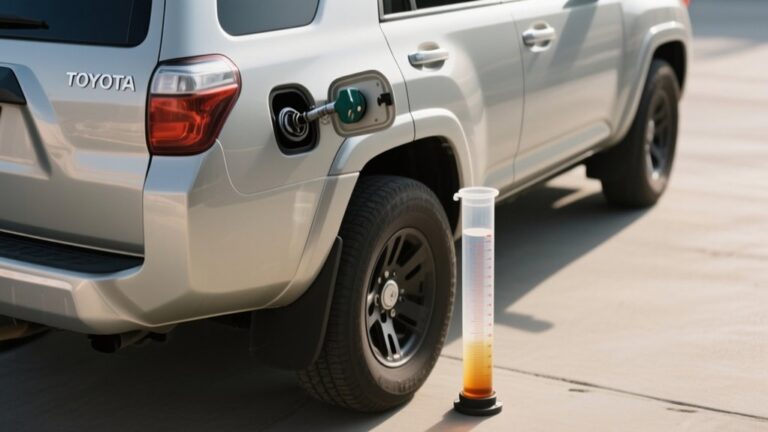
You’ll find that the Toyota 4Runner’s fuel economy ranges from about 15 to 19 miles per gallon, depending on the generation.
The fifth-generation models average 17-19 mpg combined, while older ones hover around 15-18 mpg. If you’re eyeing the 2025 hybrid variant, it promises a significant jump to 24-27 mpg, but it’s not widely available yet.
Keep in mind, fuel costs can be higher compared to hybrids or smaller crossovers.
How Much Cargo Space Does the 4runner Offer?
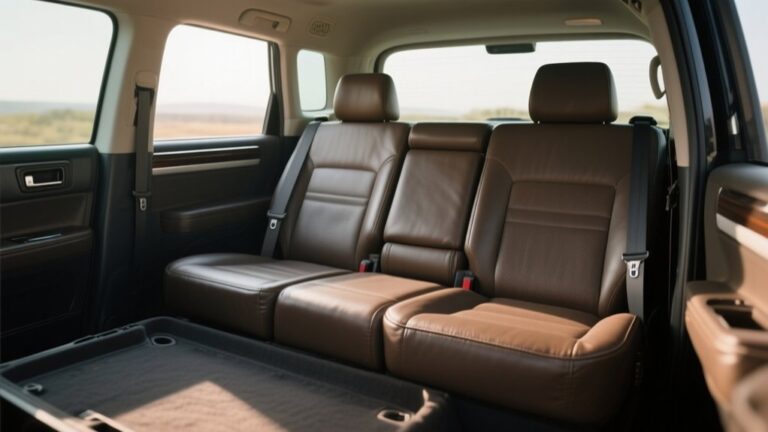
You get a generous 47.2 cubic feet of cargo space behind the second row in the 4Runner, perfect for your gear. Fold those seats down and it expands to 89.7 cubic feet, letting you haul larger items with ease.
The sliding rear cargo deck supports up to 440 pounds, making loading simple. Plus, with tie-downs and a 120V outlet, the 4Runner’s cargo area is rugged and versatile for all your adventures.
What Safety Features Come Standard in the 4runner?
You get Toyota Safety Sense P standard in the 4Runner, which includes pre-collision systems, lane departure alert, and adaptive cruise control.
It comes with multiple airbags—front, side, and curtain—to protect everyone inside. The vehicle stability control system helps keep you steady on tricky terrain.
You’ll also have a rearview camera for easier parking, plus a high-strength body structure that’s built to absorb impacts and keep you safe during crashes.
Can the 4runner Tow a Trailer or Boat?
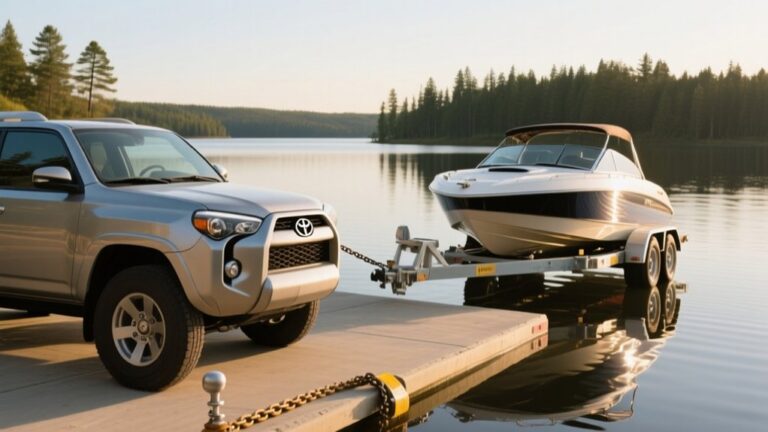
Absolutely, you can confidently hitch a trailer or boat to the 4Runner. It’s built with a strong V6 engine and a body-on-frame design that can comfortably handle up to 5,000 pounds.
You’ll find a standard tow hitch receiver, and there’s an optional towing package that enhances braking and cooling for those tougher loads. Just remember to keep up with maintenance and follow towing guidelines to ensure smooth, safe trips every time.
What Are the Maintenance Costs for a Toyota 4runner?
You can expect to spend between $400 and $700 annually on maintenance for a Toyota 4Runner. Routine services like oil changes and tire rotations usually cost around $100 to $150 every 5,000 to 7,500 miles.
Major repairs, such as timing belt or brake system work, might run from $500 to $1,200, especially on older models. Parts like brake pads average $150, and a full set of tires costs about $800.
Conclusion
You might see the Toyota 4Runner as either a rugged truck or a versatile SUV, but it’s really both—blending durability with comfort. Its body-on-frame design offers truck-like toughness, while its off-road features provide SUV agility.
Whether you want adventure or daily reliability, the 4Runner stands out. Understanding its generations and regional appeal helps you decide if it fits your needs.
It’s a smart choice for long-term ownership and varied lifestyles.