What Is Vsc Trac On Toyota 4runner – Here’s the Answer
The VSC TRAC system on your Toyota 4Runner helps you stay in control on slippery or tricky terrain by managing wheel traction and vehicle stability.
It uses sensors to adjust engine power and apply brakes to specific wheels, helping prevent spin and making driving safer.
If the VSC TRAC light comes on, it could mean there’s a sensor fault or an engine issue.
You can temporarily turn it off with the VSC OFF button, but understanding how it works is key to safer driving in tough conditions.
Knowing what causes warning lights and how to fix them can make a big difference.
It’s always good to be familiar with how your vehicle’s systems function to ensure you stay safe out on the road.
Key Takeaways
- VSC TRAC on a Toyota 4Runner is a Vehicle Stability Control Traction system that improves traction and vehicle stability on slippery surfaces.
- It uses sensors to monitor wheel speed and steering angle, applying brakes and adjusting engine power to prevent wheel spin.
- The VSC TRAC light indicates system activation or problems, often caused by faulty sensors or emission system issues.
- Pressing the VSC OFF button disables traction control temporarily, useful for getting unstuck by allowing wheel spin.
- Regular system checks and diagnostics with an OBD-II scanner help maintain optimal VSC TRAC functionality and driving safety.
What Does VSC TRAC Mean on a Toyota 4Runner?
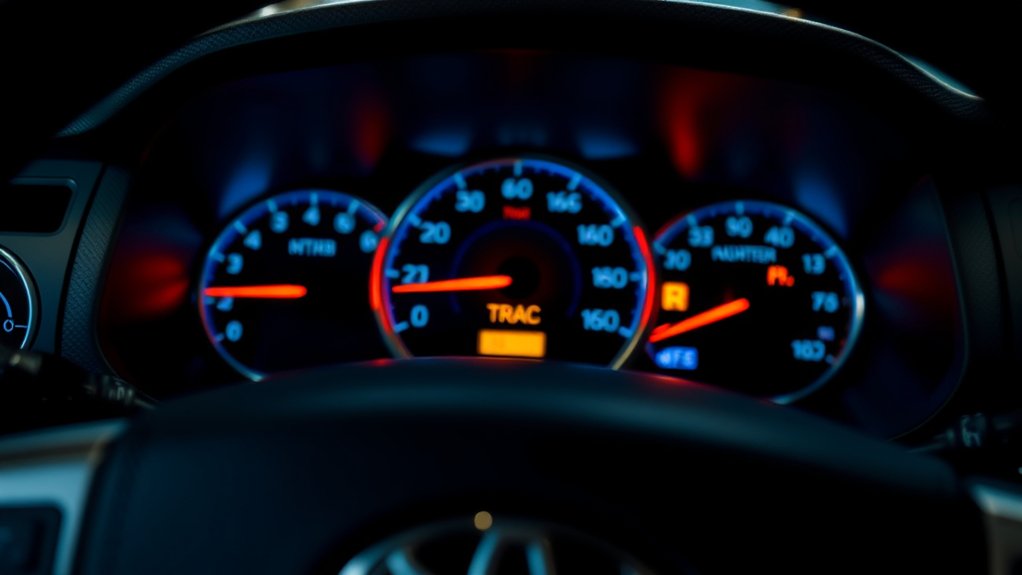
When you see VSC TRAC on your Toyota 4Runner’s dashboard, it means the Vehicle Stability Control Traction system is active. This system helps you stay in control during slippery or sharp turns.
VSC TRAC works by applying brakes to specific wheels and adjusting engine power to prevent wheel spin and improve traction. The dashboard light will turn on when the system is actively working or if there’s a malfunction.
Your 4Runner’s VSC TRAC system uses sensors like wheel speed and steering angle to keep an eye on how the vehicle is responding. It constantly monitors your driving to help you stay safe.
If the VSC TRAC light stays on for a while, it’s a sign that you should get your vehicle checked out. It could mean there’s an issue with the engine, brakes, or other related parts that needs attention.
Knowing what this system does can help you recognize when your vehicle needs service, keeping you safe on the road.
Why Does My VSC TRAC Light Turn On?
Why does your VSC TRAC light turn on in your Toyota 4Runner? The VSC TRAC light indicates there’s a problem with the vehicle’s stability control system. It’s often linked to engine performance issues or sensor faults.
Problems like faulty wheel speed sensors, brake pedal switches, or issues with the ABS system can cause this warning to appear. Emission-related problems, especially with catalytic converters or O2 sensors, might also trigger it.
To find out exactly what’s causing the light, you’ll need an OBD-II scanner. It reads the engine codes that can point to the specific problem making the VSC TRAC light come on.
| Possible Cause | Impact on Vehicle |
|---|---|
| Faulty Wheel Speed Sensor | Affects vehicle stability control |
| Engine Performance Issues | Triggers VSC TRAC light activation |
| ABS System Malfunction | Disrupts traction and braking systems |
Common Causes of VSC TRAC and VSC OFF Light Activation

You might notice the VSC TRAC and VSC OFF lights come on, and usually, it’s because of some sensor problems. Things like wheel sensors or the brake pedal switch can sometimes be the culprits. These sensors tell your car how to maintain stability, so if they’re acting up, it can trigger those warning lights.
Other times, issues with the emission system—like a faulty catalytic converter—can also cause these lights to turn on. When that happens, it might disable the stability control system to protect your vehicle. Knowing these common causes can really help you figure out what’s going on quickly and get it sorted out.
Sensor Malfunctions
Although the VSC TRAC and VSC OFF lights can come on for various reasons, sensor malfunctions are among the most common in a Toyota 4Runner. Wheel speed sensors are crucial for the vehicle’s stability control system and often fail or give inaccurate data, which triggers these warning lights.
Malfunctioning brake pedal switches can also cause issues with the VSC system. Using aftermarket sensors might lead to compatibility problems, so sticking with factory-installed sensors is the best way to ensure reliable performance.
Additionally, failing camshaft position or oxygen sensors can affect engine operation, which indirectly impacts the VSC TRAC system’s function. To prevent the VSC TRAC light from coming on repeatedly, it’s a good idea to regularly inspect and replace any worn or faulty sensors.
Keeping your sensors in good shape helps your 4Runner’s stability control work properly, making your drive safer and more reliable.
Emission System Issues
When emission system components like the catalytic converter or oxygen sensors malfunction, they can trigger the VSC TRAC and VSC OFF warning lights on your Toyota 4Runner. These issues, such as a faulty catalytic converter or failing O2 sensors, disrupt engine performance and emissions control, causing these alerts.
A loose or malfunctioning gas cap can also cause a small leak in the evaporative emission system, setting off related warning codes. Faulty parts like the charcoal canister can contribute to the problem as well.
When these emission system faults occur, the Vehicle Stability Control system may disable itself as a precaution. To pinpoint the exact cause, it’s best to perform regular diagnostic checks.
These checks help identify specific emission-related issues, making it easier to resolve the VSC TRAC and VSC OFF light activation quickly and effectively.
How to Diagnose and Fix Common VSC TRAC Warning Light Problems
Start by using an OBD-II scanner to get diagnostic trouble codes that point to the cause of the VSC TRAC warning light on your Toyota 4Runner. These tools help identify issues like faulty wheel speed sensors or brake pedal switches.
If the check engine light is also on, it usually indicates related engine or emissions problems that can affect the VSC TRAC system. Once you’ve pinpointed the problem, replace any faulty parts with factory OEM components to ensure proper fit and function.
Regularly check your warning lights and address any check engine codes quickly to prevent further issues. By following these steps, you can effectively diagnose and fix common VSC TRAC warning light problems, helping keep your vehicle stable and safe.
Why Fixing the Check Engine Light Clears VSC TRAC Warnings
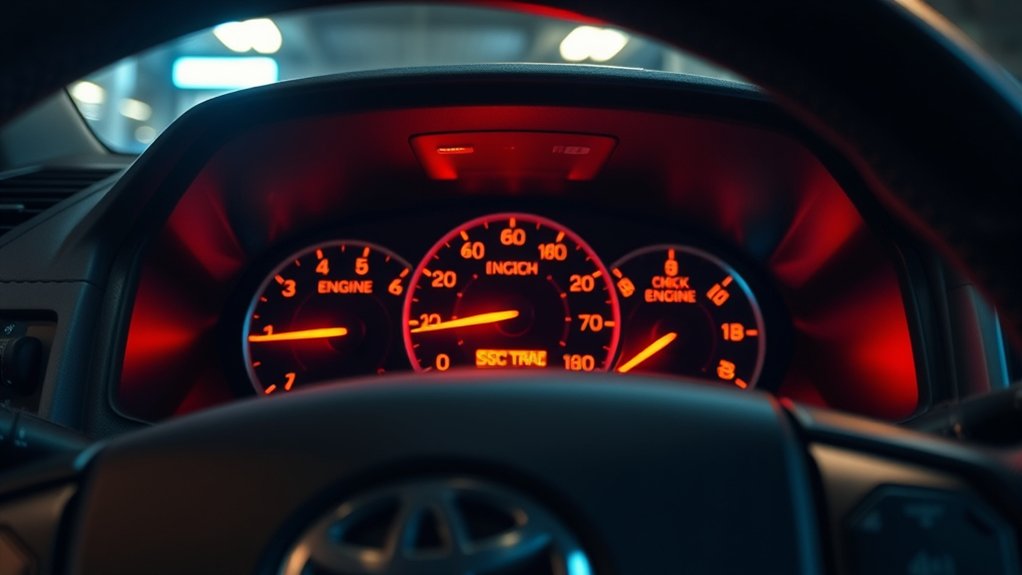
Since the VSC TRAC system depends on accurate engine data to work properly, any issue that triggers the Check Engine Light (CEL) can also cause VSC TRAC warnings to pop up.
When the CEL lights up, it usually means there’s a problem with engine components like sensors or emissions. These issues can cause the stability control system to turn off as a safety measure.
By diagnosing and fixing the engine problems that caused the CEL, you enable the VSC TRAC system to reset itself. This reset clears the warnings and gets the stability control back in working order.
Checking the diagnostic trouble codes (DTCs) related to the CEL is key. Fixing these codes directly helps restore the VSC TRAC system’s performance, showing how closely engine health and stability control are linked.
Using the VSC Off Button Safely
You know, the VSC Off button is handy when you’re dealing with tricky conditions like mud or snow. If you just press it once, it turns off the traction control, which can help if your wheels are spinning too much.
But if you hold the button down for about three seconds, it disables both the stability and traction controls altogether. Just a heads-up, though—it’s a good idea to turn these systems back on once you’re out of those tricky spots. You can do that by pressing the button again or simply restarting your engine for the best safety and control.
Purpose Of VSC Off
Although the Vehicle Stability Control (VSC) system is important for keeping your vehicle stable and maintaining traction during normal driving, there are times when turning it off can actually help you control the vehicle better. The VSC Off button is useful in certain low-traction conditions like snow, mud, or loose gravel.
When you activate it, VSC is temporarily disabled, which can help you regain traction if both front wheels get stuck. This allows you to rock the vehicle free from obstacles more easily. Keep in mind, turning off VSC doesn’t replace safe driving practices and should only be used in these specific situations.
The TRAC OFF indicator light will show when VSC is off. To turn it back on, simply press the button again or restart your engine. Doing so reactivates all your vehicle’s safety features, ensuring you’re protected while driving.
When To Use
When driving in low-traction conditions like snow or mud, pressing the VSC Off button can temporarily disable the Vehicle Stability Control system to help you regain mobility.
You should use the VSC Off button in low-traction situations where wheel spin is needed, like when your vehicle is stuck and both front wheels lose grip.
By turning off Traction Control, the system allows the wheels to spin freely, which can help you get out of tough spots.
To activate it, just press and release the button. The TRAC OFF light on your dashboard will come on to let you know it’s off.
Reactivating Safety Systems
Since turning off the Vehicle Stability Control (VSC) and Traction Control (TRAC) systems can affect your driving safety, it’s important to know how to turn them back on properly. The VSC OFF button lets you disable these systems temporarily, but reactivating them ensures your Toyota 4Runner’s safety features work as they should.
To do this safely, simply press the VSC OFF button again to turn TRAC and VSC back on. Then, restart the engine—this automatically reactivates both systems.
Next, check your dashboard indicators to make sure TRAC and VSC are active. It’s also a good idea to consult your Owner’s Manual for any model-specific instructions or precautions.
Always remember to reactivate these systems as soon as possible after use. This helps maintain optimal vehicle control and safety while you’re on the road.
How VSC TRAC Helps You Stay in Control
Because slippery surfaces can cause your wheels to lose traction, VSC TRAC actively prevents wheel spin by adjusting engine power and applying brakes to specific wheels. This system improves vehicle stability by using sensors to detect wheel slip and respond instantly.
When driving in low-traction conditions like snow, mud, or gravel, VSC TRAC helps you stay in control by optimizing traction and preventing loss of grip. It works alongside the ABS to keep braking effective and stable, even on uneven surfaces.
If the VSC TRAC indicator lights up, it might mean the system is disabled or there’s a problem affecting vehicle stability. Relying on VSC TRAC gives you more confidence, knowing your Toyota 4Runner will help you stay in control when conditions get tough.
Frequently Asked Questions
Can VSC TRAC Issues Affect My Vehicle’s Fuel Efficiency?
Yes, VSC TRAC issues can affect your vehicle’s fuel efficiency. When the system activates often or malfunctions, it makes the engine work harder to keep traction, which lowers your miles per gallon.
If sensors or switches are faulty, the system might intervene unnecessarily, further decreasing fuel economy. Keeping the VSC TRAC system well-maintained and fixing problems quickly helps it only engage when needed.
This way, you can help optimize your vehicle’s fuel efficiency and avoid wasting fuel on unnecessary interventions.
Is VSC TRAC System Maintenance Costly?
Maintenance for the VSC TRAC system can sometimes seem steep, but it varies widely. You might face minor fixes like replacing a faulty gas cap, which won’t break the bank.
However, complex repairs, especially involving sensors or catalytic converters, can get pricey, reaching thousands. To keep costs controlled, you should act promptly on warnings and use free diagnostics at local auto parts stores.
Staying proactive helps prevent costly complications down the road.
Does VSC TRAC Work in All Driving Conditions?
VSC TRAC doesn’t work perfectly in all driving conditions. It helps you stay in control on slippery roads by adjusting engine power and braking individual wheels, but in extreme situations like deep snow, mud, or loose gravel, it might struggle.
You’ll still need to rely on your driving skills and adapt to the terrain. So, while VSC TRAC does improve safety, it’s not a guaranteed fix for every challenge you face on the road.
Can Aftermarket Modifications Disable the VSC TRAC System?
You might be surprised, but yes, aftermarket modifications can disable your VSC TRAC system. Changes to suspension, brakes, or wheel sensors often interfere with its function, triggering warning lights.
Altering ride height or wheel size can confuse wheel speed sensors, which are critical for VSC TRAC. Even installing performance chips might disrupt the system’s operation.
To avoid issues, always consult a professional or your vehicle’s manual before modifying your 4Runner’s components.
How Does VSC TRAC Interact With ABS Brakes?
VSC TRAC works closely with ABS by using wheel speed sensors to keep an eye on traction and stability. When it detects wheel slip, VSC TRAC selectively applies brake pressure to individual wheels to help you stay in control.
Meanwhile, ABS prevents the wheels from locking up during braking. This teamwork helps you stay stable and maintain traction, especially on slippery surfaces or during sudden maneuvers.
All of this combined enhances your overall driving safety, giving you more confidence behind the wheel.
Conclusion
Understanding the VSC TRAC system on your Toyota 4Runner isn’t just a minor detail. It’s like having a safety net that stops your SUV from turning into a runaway rollercoaster.
When that light flickers on, it’s screaming for your attention. Ignoring it? That’s basically inviting chaos.
So, by diagnosing and fixing these warnings promptly, you’re not just maintaining your vehicle. You’re ensuring control, safety, and peace of mind every time you hit the road.