How Much Does It Cost To Lift A 4runner – Quick Facts
You can expect to spend between $500 and over $3,000 to lift your 4Runner, depending on the quality of the lift kit and the parts included.
Basic body or leveling kits start around $130, while premium suspension kits can go over $2,000.
Installation usually costs $500 to $1,500, depending on labor rates and how complex the job is.
You’ll also need extra parts like shocks and brake lines for safety and better performance.
Keep exploring to find more details about cost factors and different installation options.
Key Takeaways
- Lift kits for a 4Runner range from $130 for basic body lifts to over $3,400 for advanced suspension kits.
- Professional installation typically costs between $500 and $1,500, requiring 7 to 8 hours of labor.
- Labor rates vary from $110 to $180 per hour, significantly impacting total installation expenses.
- Additional parts like shocks, brake lines, and alignment services add $100 to $300 in costs.
- DIY installation saves money but demands mechanical skills, tools costing up to $862.50, and attention to safety.
What Does Lifting a 4Runner Involve?
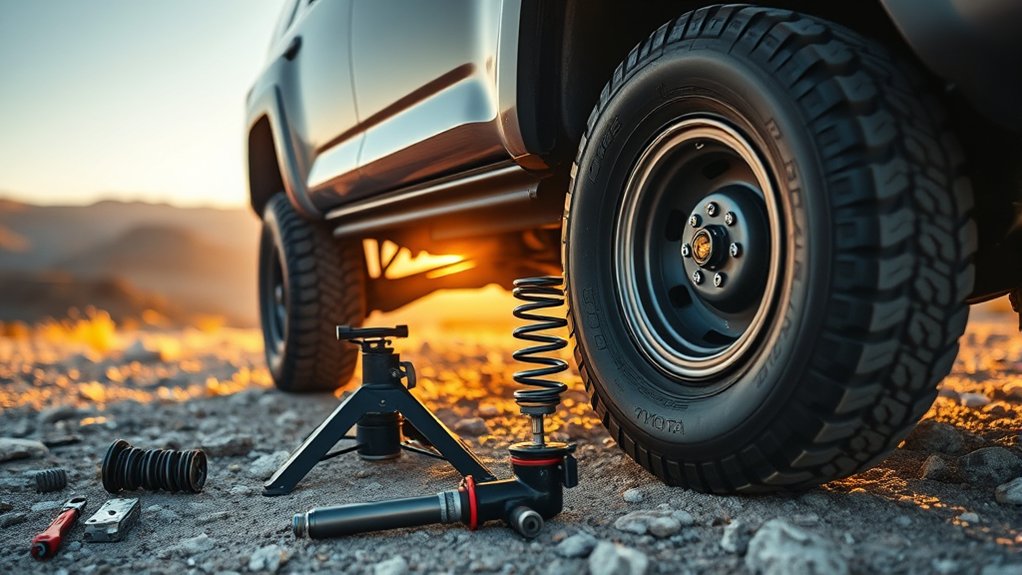
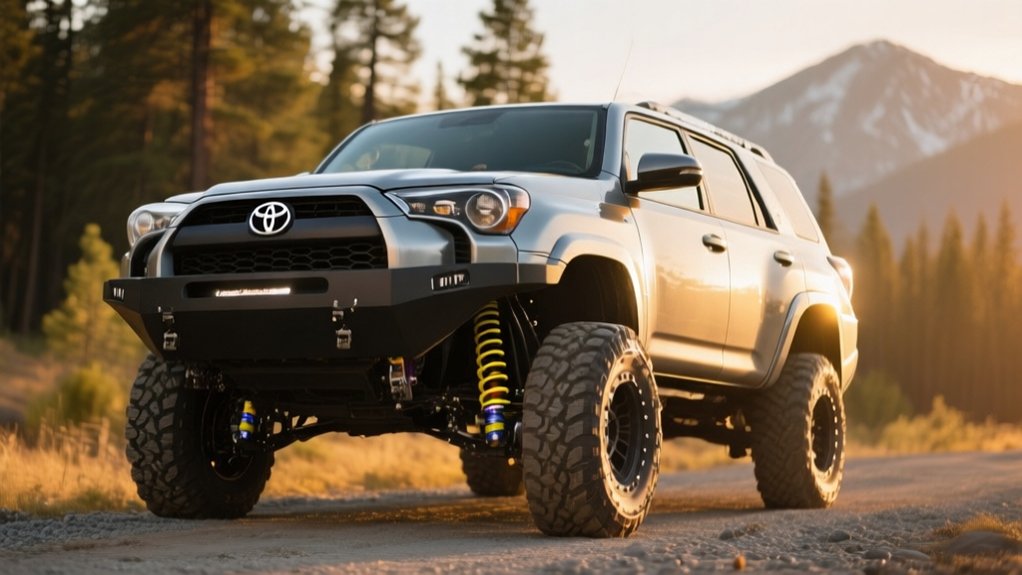
When you decide to lift a 4Runner, you’ll need to replace or modify key suspension parts like shocks and springs to raise the vehicle’s ride height.
Lifting a 4Runner requires upgrading suspension components like shocks and springs to increase ride height.
There are various lift kits available that suit different lift heights and driving needs.
To install a lift kit, start with a thorough vehicle inspection, then remove the stock suspension parts.
Next, install the new lift kit components, making sure everything fits correctly.
The whole process usually takes about 7 to 8 hours.
After installation, a final alignment and safety inspection are essential for peak performance.
Keep in mind, some lift kits might need custom modifications or extra alignment services to get the best results.
How Much Do 4Runner Lift Kits Cost?
Choosing the right lift kit for your 4Runner depends not only on the ride height and performance you want but also on your budget. Lift kits can range from just $130 for basic body lifts to over $2,000 for high-quality suspension kits like Dobinson’s, which boost off-road capabilities.
Installation fees usually add between $500 and $1,500. These costs depend on labor rates that vary from $110 to $180 an hour and how complex the shop’s work is.
Some shops offer flat-rate pricing, while others charge by the hour. Keep in mind, installation costs cover labor only and might not include extras like alignments or custom modifications.
Knowing these expenses ahead of time helps you plan your lift kit upgrade better. It allows you to find the right balance between cost and the performance improvements you’re after for your 4Runner.
What Additional Parts Are Needed for Lift Kits?
When you lift your 4Runner, there are a few more parts you’ll want to consider to keep everything running smoothly. Upgraded shocks are a must since they handle the extra height and rougher terrain better. You’ll also need extended brake lines to ensure your braking system works properly and safely with the increased suspension height.
On top of that, alignment adjustments are really important to keep your vehicle tracking straight and prevent uneven tire wear. Don’t forget about additional hardware like sway bar links, which help maintain stability and handling after the lift. All these parts work together to make sure your lifted 4Runner performs reliably and smoothly wherever you take it.
Essential Suspension Components
Three key suspension components you’ll need for most lift kits include upgraded shocks, springs, and the necessary hardware to handle the increased height and maintain ride quality. Suspension lift kits often require additional parts like bump stops, sway bar links, and upper control arms to guarantee proper fitment and safety.
Dobinson’s 1 to 3.5 inch kits may also need longer brake lines and adjustable control arms if custom modifications are involved. Pre-assembled kits usually include all essential parts, minimizing installation issues.
| Component | Purpose | Notes |
|---|---|---|
| Upgraded Shocks | Improve ride quality | Handle increased height |
| Springs | Support vehicle weight | Maintain suspension geometry |
| Upper Control Arms | Correct suspension angles | Needed for certain lift heights |
| Bump Stops | Prevent suspension damage | Often required with lifts |
Alignment And Hardware
Upgrading your suspension components is only part of getting your 4Runner ready for a lift. Proper alignment is really important after installation, usually costing between $75 and $150 to make sure your vehicle handles well and your tires wear evenly.
Along with the alignment, you’ll probably need some specific hardware upgrades. New shocks and springs designed for the lift kit can add $300 to $800 to your costs. Extended brake lines might also be necessary for higher lifts, costing $50 to $150.
Upgraded control arms can range from $200 to $600 depending on quality. You might also need bump stops or sway bar links, which could add another $100 to $300.
Keep these hardware and alignment costs in mind to make sure your 4Runner lift is safe and works properly.
How Much Does 4Runner Lift Kit Installation Cost?
How much you’ll pay to install a lift kit on your Toyota 4Runner depends on a few factors like labor rates and how complex the job is. Installation costs usually range from $500 to $1,500.
Labor rates vary by region but typically fall between $110 and $180 an hour. Since the job usually takes about 7 to 8 hours, labor alone can cost around $862.
You might also need to pay for alignment services or extra parts, especially if you’re going for custom modifications. If you have the tools and skills, doing it yourself can save some money, though you’ll need to invest in tools, which could cost up to $862.50.
Knowing these costs helps you plan your budget for lifting your 4Runner, whether you decide to hire a professional or do it yourself.
What Factors Affect 4Runner Lift Kit Costs?
Because several variables influence the price, understanding what factors affect 4Runner lift kit costs can help you budget effectively. The type of lift kits you choose plays a major role, as different kits vary in components and complexity.
Installation labor rates also impact costs greatly, ranging from about $110 to $180 per hour depending on your location. Complex installations or custom modifications can increase the price further.
Additional expenses may come from necessary alignments and extra parts required during installation. If you opt for a DIY installation, you can save on labor but must invest in quality parts and tools to avoid costly mistakes.
Being aware of these factors guarantees you make informed decisions when lifting your 4Runner.
How to Budget for Hidden and Long-Term Lift Costs
After considering the initial costs of lift kits and installation, you should also prepare for hidden and long-term expenses. Installation fees usually range from $500 to $1,500, with extra costs for alignment and parts adding another $100 to $300.
Lifted 4Runners tend to need more maintenance because of increased wear on suspension parts. So, it’s wise to budget for future repairs to avoid surprises down the road.
If you decide to do the lift yourself, don’t forget to include tool costs, which can be up to $862.50 for the basics. Also, lifting your 4Runner might decrease your fuel efficiency by 2-3 MPG, which adds up over time.
Being aware of these ongoing costs helps you plan your budget realistically and prevents unexpected expenses after the initial lift kit purchase and installation.
Professional vs DIY 4Runner Lift Kit Installation: Which Is Best?
Professional installation costs typically fall between $500 and $1,500. It’s a good option if you want the job done right and safely because you’re paying for expertise. However, it does come with a higher price tag.
If you’re handy and have some experience, going the DIY route can save you quite a bit of money. Just keep in mind, it’ll take some time, the right tools, and careful attention to detail. Otherwise, you might end up making mistakes that cost you more in the long run.
Cost Comparison
Choosing between professional and DIY installation of a 4Runner lift kit often comes down to cost, time, and skill level.
In a cost comparison, professional installation typically runs from $500 to $1,500, based on labor rates of $110 to $180 per hour for about 7-8 hours of work.
On the other hand, DIY installation saves you money since tool costs usually stay under $862.50, but it requires mechanical skills and more time, especially if you’re unfamiliar with the process.
While professional installation guarantees efficiency, it may come with extra expenses like alignment adjustments or additional parts.
Ultimately, your choice depends on whether you value the time and expertise professionals bring or prefer saving money by doing it yourself.
Safety And Expertise
While lifting your 4Runner yourself can save money, it demands strong mechanical skills and specialized tools to guarantee safety. Compressing springs during installation is particularly hazardous, making professional installation a safer option.
Professionals typically charge between $500 and $1,500 but bring experience, quality assurance, and warranties on labor, offering peace of mind. DIY installations might save you money but require an investment of around $862.50 in tools and carry the risk of errors without recourse.
Although local forums like Tacomaworld provide valuable guidance, they can’t replace the expertise professionals offer. For ideal safety and reliable results, professional installation is often the best choice, especially if you’re unsure about handling complex mechanical tasks yourself.
How Do Labor Rates Impact Lift Installation Prices?
Because labor rates vary greatly by location and shop reputation, they play an essential role in determining the overall cost of installing a lift on your 4Runner. Typically, labor rates for lift installation range from $110 to $180 per hour, with the installation of a lift kit requiring about 7 to 8 hours.
This means you can expect labor costs between $770 and $1,440 on average. Some shops offer flat-rate pricing, which can make budgeting easier. For example, in Colorado, labor rates hover around $125 per hour, slightly above the national average.
If you’re considering a DIY approach, you can save on labor costs, though you’ll need to invest in tools, which might cost under $862.50. Understanding labor rates helps you plan your lift installation budget accurately.
Comparing Costs Among Popular 4Runner Lift Kit Brands
When you’re looking at lift kits for your 4Runner, you’ll see that prices can really vary depending on the brand and what’s included. Some kits are all about giving you a smooth ride and lasting durability, while others are designed to boost off-road performance or improve on-road handling. It’s important to understand these differences so you can pick the right kit that fits both your needs and your budget.
Brand Price Differences
Although lift kits for the Toyota 4Runner vary widely in price, you can find options that fit different budgets and performance needs. Price differences among popular brands reflect varying quality and features.
Old Man Emu kits, often considered the gold standard, come at a higher cost but deliver superior ride quality and durability. Dobinson’s lift kits offer a mid-range price starting around $500, focusing on comfort and off-road capability.
Eibach provides balanced performance with competitive pricing between $500 and $1,500. For serious off-road enthusiasts, Icon Vehicle Dynamics kits exceed $2,000, featuring advanced technology and premium components.
Meanwhile, basic lift kits are available for under $200 but may lack the refinement found in higher-priced options. Understanding these price differences helps you select a kit that meets your needs and budget.
Included Components Comparison
Several key components set apart popular 4Runner lift kits, impacting their price and performance. Dobinson’s kits, ranging from $500 to $1,500, usually include shocks and springs, giving you good value with the essentials.
Old Man Emu focuses on high-quality engineering, with complete systems costing between $1,000 and $2,000. They often feature advanced suspension parts for better durability and performance.
Icon Vehicle Dynamics offers premium options starting around $1,500. These kits include customization options and upgraded components for improved off-road ability.
Eibach’s more affordable kits, priced from $300 to $1,200, strike a balance between cost and performance. They come with the basics but lack some of the premium features found in higher-end kits.
For serious off-roading, Total Chaos Fabrication’s suspension kits start at $3,400. They feature advanced engineering and top-tier components, which is reflected in the higher price.
Affordable Alternatives to Full 4Runner Suspension Lifts
Three affordable alternatives can effectively raise your 4Runner without the high cost of a full suspension lift. Instead of investing in expensive full kits, consider these budget-friendly options:
- Leveling Kits: These kits give you a 1-2 inch lift and typically cost between $130 and $400. They’re a popular, affordable substitute for full suspension lifts.
- Body Lifts: Priced similarly to leveling kits, body lifts raise your vehicle’s height without changing the suspension. They offer increased ground clearance at a lower cost.
- Tire and Wheel Upgrades: Upgrading to larger tires and adjusting your wheel offset can boost ground clearance with minimal suspension work. This often saves you money too.
You can often install these yourself, which cuts down on labor costs and allows you to customize your lift to fit your budget and needs.
Frequently Asked Questions
How Does Lifting a 4runner Affect Fuel Efficiency?
Lifting your 4Runner decreases fuel efficiency by about 2-3 miles per gallon. You’ll notice this because the added height and bigger tires increase aerodynamic drag and rolling resistance.
Your vehicle’s higher center of gravity also affects driving dynamics, making it less efficient. As a result, you’ll spend more on fuel, especially during city driving with frequent stops and starts.
Can Lifting a 4runner Impact Vehicle Warranty Coverage?
Yes, lifting your 4Runner can impact its warranty coverage. Since Toyota doesn’t offer factory lift kits, any modifications you make are considered aftermarket.
This means parts of your warranty could be voided if the lift causes damage. However, the Magnuson-Moss Warranty Act protects you from losing the entire warranty due to modifications.
It’s smart to check with your dealer and review your warranty terms before lifting to understand any potential coverage changes.
What Are the Safety Concerns After Lifting a 4runner?
You know what they say: “Better safe than sorry.” After lifting your 4Runner, you’ll notice a higher rollover risk because of the raised center of gravity.
Handling might also change due to altered suspension geometry, which can lead to alignment issues and uneven tire wear.
Stability control systems might not work as effectively, and crosswinds could make controlling your vehicle more challenging.
Make sure to regularly inspect your suspension parts to keep your ride safe and reliable.
How Does a Lift Affect 4runner’s Handling and Ride Quality?
A lift affects your 4Runner’s handling by raising its center of gravity, which can increase body roll and reduce stability during sharp turns.
You’ll likely notice a stiffer ride and altered suspension geometry, causing changes in alignment and uneven tire wear.
While off-road performance improves with better ground clearance, your on-road comfort and maneuverability might decrease.
Are There Legal Restrictions on Lifted 4runners in Certain States?
Yes, several states have strict rules about lifted 4Runners. They often limit lift heights to between 2 and 6 inches.
Some states also require additional modifications like longer brake lines or suspension adjustments. You’ll need to pass safety inspections and follow emissions rules too.
Before lifting your vehicle, check your local laws carefully. This way, you can avoid fines or registration issues. Staying informed helps keep your ride legal and road-ready.
Conclusion
Lifting your 4Runner can totally change its look and boost its off-road skills, but costs can vary a lot. You might find affordable DIY kits or go for more expensive professional installs.
Doing it yourself can save money, but professional work ensures precision and peace of mind. Balancing quality parts with labor costs is really key.
In the end, whether you go budget-friendly or choose a premium setup, knowing these factors helps you make a smart choice that fits your goals and your wallet.