What Is Dac In 4runner – What to Know
Downhill Assist Control (DAC) in your 4Runner helps you keep a steady, controlled speed on steep descents under 25 mph by automatically managing braking.
You activate it in 4L mode, and the system handles the braking so you can focus on steering. This improves traction and stability on uneven terrain.
While DAC doesn’t increase torque, it boosts safety when going downhill.
Understanding how it works with other drive modes can make your off-road experience more confident and controlled.
Key Takeaways
- DAC stands for Downhill Assist Control, which helps maintain a steady, controlled speed on steep descents by automatically applying brakes.
- It activates in 4L mode below 25 mph, allowing the driver to focus on steering while DAC manages braking for traction and stability.
- DAC works best at speeds between 10-25 mph, preventing wheel slip and loss of control on rugged or slippery downhill terrain.
- Unlike other drive modes, DAC controls downhill speed but does not directly increase torque or traction on the 4Runner.
- Regular maintenance of brakes and tires is essential to ensure DAC functions effectively and safely during off-road driving.
What Is Downhill Assist Control (DAC) in the Toyota 4Runner
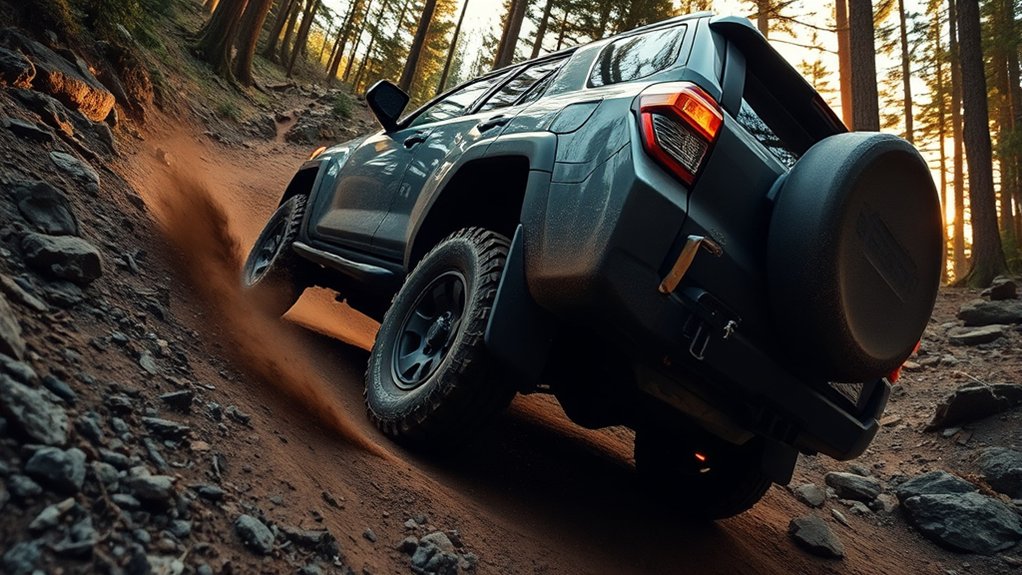
When you’re tackling steep slopes in your Toyota 4Runner, Downhill Assist Control (DAC) helps you keep a steady speed without constantly pressing the brakes. The system automatically applies the brakes at controlled intervals, so you can focus on steering.
It’s designed for off-road adventures and works best at speeds under 10-25 mph. DAC is perfect for rough, uneven terrains, managing braking force precisely to improve traction and stability.
This helps prevent wheel slip and loss of control, especially on slippery or loose surfaces. It reduces the risk of skidding or sudden speed changes, giving you more confidence on steep descents.
With Downhill Assist Control, you can descend steep declines safely and steadily. It maximizes your off-road performance and safety by maintaining control without needing to brake constantly.
Activating DAC: When and How to Use It
You should turn on DAC when you’re going down steep or rugged terrain, especially if you’re moving pretty slowly—like below 25 mph. It’s pretty straightforward: just shift into 4L mode and press the DAC button. Once you do that, the system takes over and manages your speed for you.
That way, you can just concentrate on steering your vehicle safely, while DAC handles the braking to keep everything under control during the descent.
When To Activate
Although going down steep or slippery terrain can be tricky, activating Downhill Assist Control (DAC) helps you keep a steady, controlled speed without having to brake constantly.
You should turn on DAC when you’re facing rough, steep, or slippery declines where maintaining traction is really important. It works best at low speeds—around 5 to 20 mph—giving you smooth braking and better stability.
To activate DAC, shift into 4L mode for maximum torque and traction, then press the DAC button. The system will automatically control braking, so you can focus on steering instead of speed.
Using DAC at the right moments makes your downhill drive safer and easier by improving grip and preventing wheels from locking up.
Operating DAC Correctly
Since maintaining control on steep descents demands careful attention, using Downhill Assist Control (DAC) correctly can make a big difference. To activate DAC in your 4Runner, press the DAC button on the dashboard while driving downhill in 4L mode, which guarantees ideal torque and traction.
The system works best at speeds below 10-25 mph, automatically managing the brakes to keep your speed steady without you needing to press the brake pedal. By using the vehicle’s anti-lock braking system, DAC helps you stay in control on uneven terrain, making your descent smoother.
Remember to turn off DAC on less steep declines or flat surfaces. This helps keep your vehicle running efficiently and prevents unnecessary brake use, ensuring your 4Runner handles well in all conditions.
How DAC Improves Traction and Speed Control on Descents

One key way DAC improves your 4Runner’s performance on descents is by automatically managing speed through precise braking. This system keeps your vehicle steady on steep, off-road slopes, preventing uncontrolled acceleration. By operating under 10-25 mph, DAC maintains traction on loose or uneven terrain, so you can focus on steering instead of speed control.
| Feature | Benefit | Off-Road Impact |
|---|---|---|
| Automatic Braking | Keeps your speed steady | Prevents wheel slip |
| Low Speed Range | Perfect for steep descents | Boosts traction control |
| Driver Focus | Less braking effort | Easier obstacle navigation |
With DAC, you get consistent traction and speed control on descents, making tough off-road drives safer and easier to handle.
Safety Benefits of DAC in the Toyota 4Runner
When you engage Downhill Assist Control (DAC) in your Toyota 4Runner, the system actively manages braking to keep your speed steady on steep descents, improving your control and safety. DAC automatically applies brakes to prevent uncontrolled acceleration, reducing the risk of skidding or losing traction during a descent.
This feature is especially helpful in off-road conditions where terrain can be unpredictable. By letting DAC handle speed management, you can focus more on steering, which is vital for maneuvering rocky or slippery slopes safely.
The system works at speeds up to 20 mph, making it versatile for various off-road descents. Overall, DAC boosts safety by minimizing accidents and ensuring stable, controlled descents in challenging environments.
DAC vs. Other 4Runner Drive Modes: What’s Different?
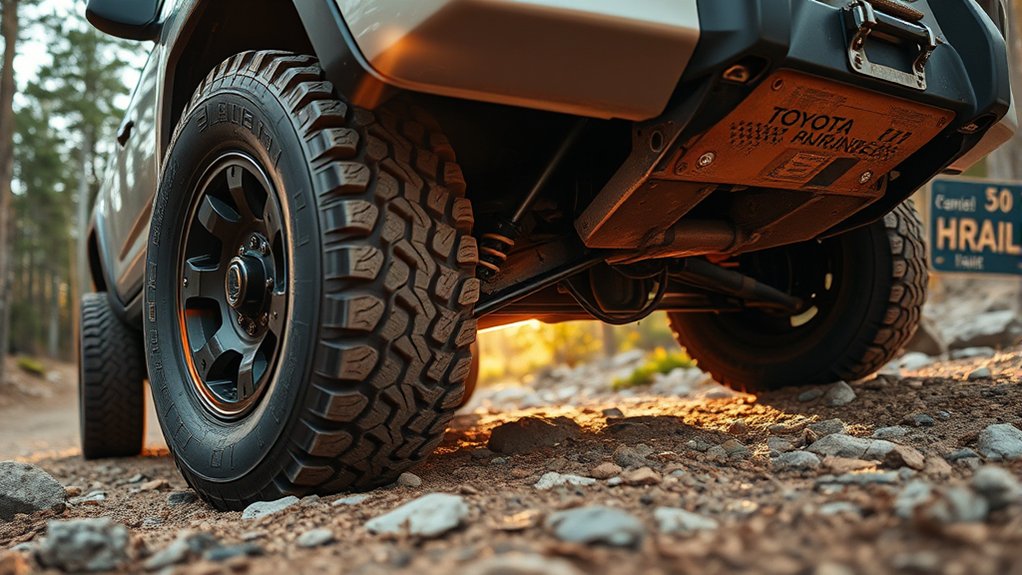
You’ll see that DAC is all about keeping your speed in check when you’re going downhill, whereas 4H and 4L are more about managing power to get better traction. So, while 4H is great for slippery surfaces and 4L is designed for really tough terrain, DAC focuses on keeping your 4Runner steady on steep descents without you having to constantly brake. Knowing how these modes differ really helps you pick the right one depending on what kind of driving you’re doing.
DAC Functionality Explained
The Downhill Assist Control (DAC) system in your 4Runner offers a special function that makes it different from other drive modes like Four-High (4H) and Four-Low (4L). DAC is focused on downhill control by automatically managing braking to keep your speed steady on steep descents.
This means you can focus on steering without worrying about manually braking, which makes driving safer and easier. Especially when off-roading, DAC kicks in at lower speeds—usually between 10 and 25 mph—to prevent unwanted acceleration on rough terrain.
Unlike 4H and 4L, which improve traction and torque, DAC’s main role is to help with braking for safer downhill driving. Using DAC reduces the risk of losing control, making tough descents more manageable and secure.
Comparing 4H, 4L
Understanding how DAC differs from other 4Runner drive modes like 4H and 4L helps clarify when to use each setting. All three can improve off-road performance, but they work quite differently.
4H (Four-High) boosts traction on slippery surfaces at speeds up to 55 mph, giving you balanced control and maneuverability. It’s great for light off-road conditions and on-road driving.
4L (Four-Low) is all about maximum torque for slow, technical terrain like steep climbs or crawling. It limits your speed to around 10-25 mph to help you tackle tough terrain.
DAC (Downhill Assist Control) is different. It manages brake pressure to keep your speed steady on steep descents. This lets you focus on steering without worrying about braking too hard.
Unlike 4H and 4L, DAC doesn’t affect torque or traction directly. Instead, it helps you stay controlled on downhill slopes. Knowing these differences helps you pick the right mode for your off-road adventures.
Clearing Up Common Myths About DAC
How exactly does Downhill Assist Control (DAC) work in your 4Runner, and what common misunderstandings should you avoid? DAC helps keep a steady speed on steep declines by automatically applying brakes, so you can focus on steering.
But there are some myths out there. DAC isn’t meant for flat roads or high speeds because that can damage the drivetrain and reduce traction. Remember, DAC only activates in 4L mode and works best below 25 mph. It’s mainly designed for off-road situations.
Practical Tips for Using DAC During Off-Road Adventures
Now that you know when and why to use DAC, applying it effectively during your off-road adventures can make a big difference. DAC ensures a controlled descent, so you can focus on steering without worrying about braking.
Here are some practical tips to get the most out of it:
- Engage DAC in 4L mode before tackling steep declines to improve traction and stability.
- Keep your speed between 10 and 25 mph so the system can regulate braking accurately on rough terrain.
- Regularly check your 4Runner’s manual to understand DAC’s limitations and proper activation steps.
Frequently Asked Questions
Does DAC Affect Fuel Efficiency in the 4runner?
Yes, DAC can affect fuel efficiency in your 4Runner. When you use it on steep descents, it helps control speed without excessive braking, which may save fuel by reducing accelerator use.
However, if you activate DAC on flat or gentle slopes, it can lower fuel efficiency since the system works unnecessarily. Overall, DAC’s impact on fuel economy is minimal during everyday driving but beneficial for controlled, fuel-conscious off-road descents.
Can DAC Be Used on Paved Roads Safely?
Imagine trying to use snow tires on a sunny highway. It just doesn’t fit the conditions.
You shouldn’t use DAC on paved roads because it can cause unwanted braking and acceleration, disrupting your 4Runner’s normal handling.
While DAC is great off-road, on smooth pavement it may wear your driveline and reduce stability.
For safety and smooth driving, switch DAC off when you’re on paved surfaces.
Is DAC Available on All Toyota 4runner Models?
No, DAC isn’t available on all Toyota 4Runner models. You’ll mainly find it on those with the Off-Road and TRD Off-Road packages starting from 2010.
If you have a TRD Pro model, DAC comes standard, giving you top-tier off-road assistance. Lower trims usually don’t include this feature, so check your specific model’s package if downhill control is important to you.
Does DAC Require Special Maintenance or Servicing?
No, DAC doesn’t require special maintenance beyond your regular vehicle servicing.
You should keep your brake system in good shape since DAC depends on it to control downhill speed. Staying on top of software updates can also improve DAC’s performance.
During routine checks, have the hydraulic systems and sensors inspected to make sure everything works smoothly.
Finally, understanding the DAC manual helps you use it properly and avoid unnecessary brake wear.
How Does DAC Interact With the 4runner’s ABS System?
DAC works closely with your 4Runner’s ABS by automatically modulating brake pressure during downhill descents. When the ABS detects wheel slip, DAC adjusts braking force to prevent lock-up and keep traction.
This coordination lets you focus on steering while the system controls your speed and stability on steep or slippery terrain. Basically, DAC uses ABS sensors and brake control to improve safety and control without extra driver input.
Conclusion
If you think downhill driving is a breeze, wait until you try DAC in your 4Runner. It’s like having a mini pilot controlling your descent!
This feature isn’t just helpful; it’s a game-changer that keeps you safe and in control on steep slopes. Ignoring DAC? You might as well be driving blindfolded.
So, activate it, trust it, and conquer every rugged trail with confidence and precision like a pro.