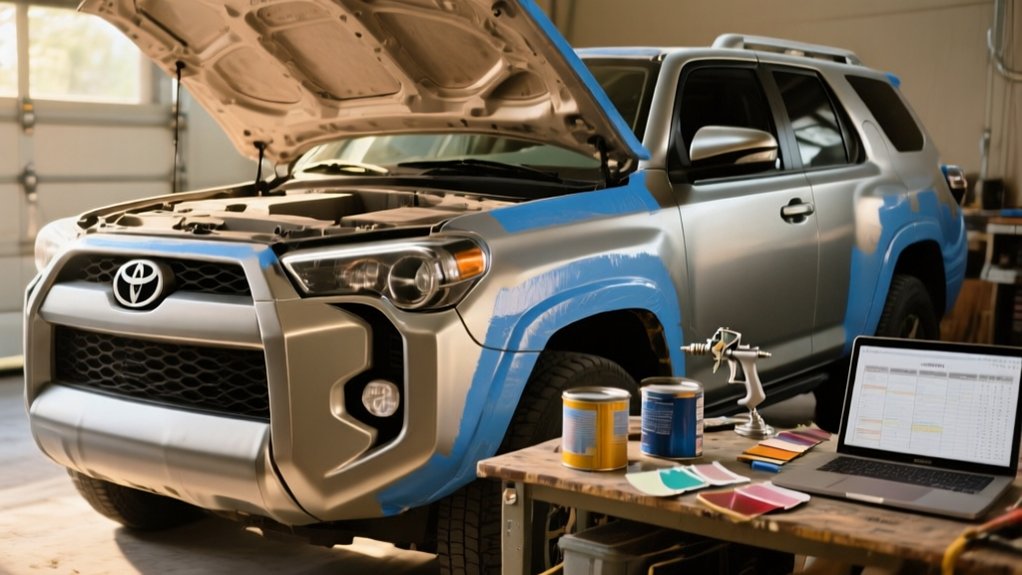
How Much Does It Cost To Paint A 4runner – Full Breakdown
You’ll spend between $1,000 and $5,000 to paint your Toyota 4Runner, depending on paint type, surface prep, and finish quality.
Solid colors usually cost less, while specialty hues or multi-stage finishes can bump up labor and material costs. Adding clear coats or ceramic protection will raise the price further.
Damage repairs and intricate trims also impact the overall cost.
Whether you choose to do it yourself or hire a professional, understanding these factors helps you plan your budget.
The details below break down what influences your final price.
Key Takeaways
- Painting a Toyota 4Runner typically costs between $1,000 and $5,000 depending on paint type and job complexity.
- Basic single-stage paint jobs start around $1,000, while premium multi-stage finishes can exceed $4,000.
- Specialty colors and complex features like TRD Pro hues increase costs by $1,000 or more due to materials and application.
- Surface preparation, including sanding, masking, and rust repair, adds several hundred dollars to labor and material costs.
- Additional coatings like ceramic protection range from $1,000 to $3,000, with dealer markups potentially raising prices further.
Typical Cost To Paint a Toyota 4Runner
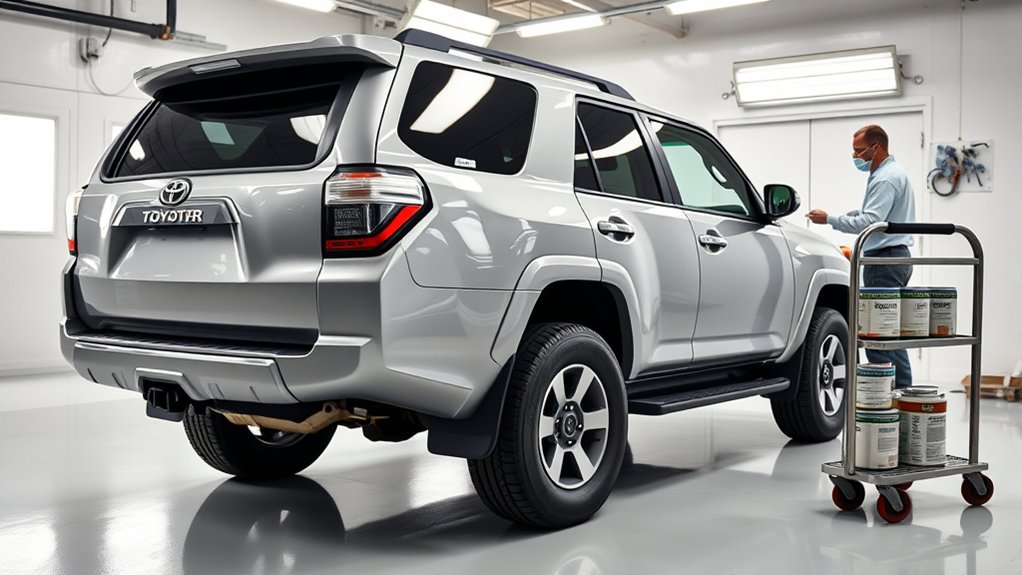
Although costs vary widely, painting your Toyota 4Runner typically runs between $1,000 and $5,000, depending on the paint quality and labor involved. Basic single-stage paint jobs start near $1,000, while premium multi-stage finishes can go over $4,000.
Painting your Toyota 4Runner ranges from $1,000 for basic jobs to over $4,000 for premium finishes.
Specialty colors like TRD Pro hues need more complex materials and precise application, which can increase the cost. Prep work such as sanding, masking, and priming adds several hundred dollars, especially if you have aftermarket bumpers that need detailed masking or minor repairs before painting.
Applying a clear coat improves durability and costs an extra $500 to $1,000. The total cost really depends on the paint type, the condition of your vehicle, and any additional parts like aftermarket bumpers that make the process more complicated.
Knowing these variables can help you get a better idea of what to expect and plan your budget for your 4Runner’s paint job.
Key Factors Affecting 4Runner Paint Cost
When you’re thinking about painting your 4Runner, one of the first things to consider is the type of paint you want. Solid colors tend to be cheaper, while specialty finishes like those TRD Pro shades can cost a bit more. It’s also important to think about the condition of your vehicle’s surface. If there’s rust or any damage, you’ll need some prep work like sanding and repairs, which can take extra time and add to the cost.
And don’t forget about the clear coats or additional protective layers. They help make the paint last longer and look better over time, but they do come with an extra price. So, all these factors—paint type, surface prep, and extra coatings—really influence the overall cost of painting your 4Runner.
Paint Type Selection
How does your choice of paint type affect the overall cost of painting a 4Runner? Picking between solid colors and specialty hues like TRD Pro can make a big difference in your expenses.
Specialty colors usually need two or three coats and more labor, which can increase costs. Features like black trim or textured cladding also add complexity, raising material and labor needs.
Higher-grade paints cost more but offer better durability, so you can enjoy your 4Runner on the trails longer without frequent touchups.
| Paint Type | Cost Range | Durability |
|---|---|---|
| Solid Colors | $500 – $1,000 | Moderate |
| Specialty Colors | $1,000 – $2,000+ | High |
| Custom Finishes | $1,500 – $3,000+ | Very High |
Choosing the right paint is about balancing your budget with a finish that lasts.
Surface Preparation Needs
Selecting the right paint type sets the foundation for your 4Runner’s finish, but the quality of that finish heavily depends on proper surface preparation. This phase ensures paint sticks well and lasts longer, which affects both cost and durability.
Key factors to consider include surface cleaning and repair. Removing dirt, sanding, and fixing dents or scratches take extra labor and materials, increasing costs. High-quality primers improve adhesion and resistance to rust but come at a higher price.
Component removal or masking is also important. Detaching or protecting bumpers, mirrors, and trim needs skill and time, adding to labor costs. Addressing rust or body damage before painting involves specialized techniques that impact the total price.
Proper preparation is essential for a flawless, long-lasting finish on your 4Runner.
Additional Coating Options
Why choose additional coatings for your 4Runner’s paint job? These coatings not only enhance the look but also boost durability and protection. Clear coats or specialized finishes can add between $200 and $1,000 to your total cost, depending on the quality.
Opting for custom or premium colors, like TRD Pro shades, might increase the price by $1,000 or more. For even better protection, ceramic coatings are available, usually costing between $1,000 and $3,000. They provide resistance to scratches and fading.
Labor costs depend on the vehicle’s condition and whether primer or base coats are needed, typically ranging from $50 to $150 per hour. Additional hardware like fender flares or blackout trim can add another $500 to $1,000, significantly impacting your overall paint job expense.
How Paint Quality and Type Influence Pricing
When you’re picking out solid colors for your 4Runner, you’ll generally save some money compared to opting for more specialized shades like those found on TRD Pro models. It’s kind of like choosing a simple outfit versus something with a little extra flair — the basics tend to be more budget-friendly.
On the other hand, if you go for higher-quality paints with metallic or pearlescent finishes, expect to see the price go up. Those finishes require more intricate application processes, which make the whole thing a bit more costly. So, understanding these differences can really help you find the right balance between looking good and staying within your budget.
Paint Types Comparison
Although you might focus mainly on choosing the right color, the type and quality of paint you pick can really impact your overall cost. Different paint types have varying levels of complexity, durability, and finish, which affect both materials and labor.
Standard paints like single-stage enamel or acrylic usually cost between $500 and $1,000. They give decent coverage but don’t have the most advanced finishes.
Premium paints such as metallic or pearl finishes tend to range from $1,500 to $5,000 because they require specialized materials and application techniques.
Adding a clear coat to protect the base paint and boost gloss can cost anywhere from $300 to $1,000 depending on the layers and quality you choose.
Choosing the right paint balances your budget with the look and durability you want for your 4Runner’s finish.
Quality Impact On Cost
Several factors related to paint quality and type directly influence the cost of painting your Toyota 4Runner. Choosing premium paint options, like specialized TRD Pro colors, can add hundreds or even thousands to your total expense because of their complexity and rarity.
Solid colors usually cost less. The application method also impacts the price. Multi-stage processes involving a base coat and clear coat require more labor and materials, which increases costs compared to single-stage paints.
Thorough surface preparation, including primer sanding, is essential and may raise expenses. Customization options like flares and blackout trim also add to the cost because of extra paint and installation work.
Understanding these factors helps you anticipate how paint quality and type will affect your overall painting budget.
Why Clear Coats Matter for Your Paint Job
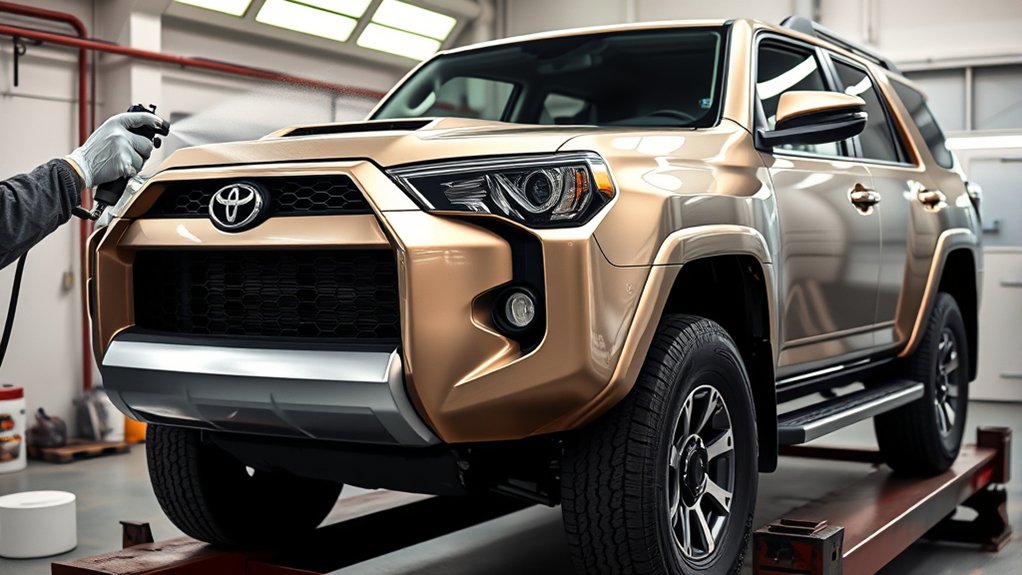
Because the clear coat acts as a protective barrier over your 4Runner’s base paint, it plays a key role in shielding the surface from UV rays, scratches, and environmental contaminants. Applying it properly helps your paint last longer and keeps its vibrant look.
Skipping the clear coat speeds up paint degradation, leading to fading, chipping, and dullness. It’s an important step to make sure your paint stays in great shape.
Here’s why clear coats matter:
- Protection – Shields against UV damage, scratches, and the elements.
- Aesthetic Improvement – Adds a glossy finish that deepens your color and boosts visual appeal.
- Durability – Extends the life of your paint by preventing early wear.
For the best results, apply the clear coat only after the base paint has fully cured. This ensures proper adhesion and a smooth, high-quality finish.
How Labor and Prep Work Affect Painting Expenses
Applying a clear coat protects your 4Runner’s paint and enhances its look, but getting that perfect finish really depends on labor and prep work. Labor costs usually range from $500 to $2,000, depending on how complex the job is and the quality you want.
Prep work, like sanding and priming, adds another $300 to $800. The whole process can take from 1 to 2 days for basic jobs, or up to a week for more extensive work.
High-quality materials and special techniques can also increase the total cost. Keep in mind that clear coats help protect your paint and give it that sleek, finished appearance.
Understanding Costs of Paint Protection Packages
You’ll notice that paint protection packages from dealers can be pretty pricey, sometimes reaching close to $4,000 for a full ceramic coating on a 4Runner. It’s a good idea to take a step back and really look at what you’re paying for versus the long-term benefits these services might offer.
When you compare dealer offers to DIY options, it’s important to understand the real costs involved. This way, you can make a smarter decision that balances your budget with how well the paint will be protected over time.
Paint Protection Cost Analysis
When choosing paint protection packages for your 4Runner, it’s important to understand the cost differences so you can make a smart choice. Prices can vary a lot depending on the level of protection and materials used, so budgeting carefully helps prevent surprises.
Here are some key cost factors to keep in mind:
- Basic Paint Protection Film: Usually costs between $500 and $1,500. It offers an affordable way to shield your vehicle’s surface.
- Ceramic Coatings: This is a premium option, often priced around $3,995 or more. It provides better durability and long-term protection.
- Maintenance Costs: Regular upkeep and reapplications add ongoing expenses, affecting your overall vehicle care budget.
It’s also a good idea to compare providers since the quality of application and materials can make a big difference in value. By looking at these factors, you can find a paint protection package that fits your budget and meets your needs.
Dealer Package Markups
Several dealers mark up paint protection packages quite a bit, sometimes charging as much as $3,995 for treatments like ceramic coatings or sealants. These prices often beat what independent detailers charge for similar services, so it’s smart to compare costs before you buy.
Dealer packages usually bundle multiple services, but their markup doesn’t always mean better quality or longer-lasting protection. Keep in mind that paint protection add-ons rarely boost your vehicle’s resale value enough to cover the extra cost, especially since trade-in taxes vary by state.
Before you make a decision, do some research on local regulations and consider if the dealer’s premium is worth it. Knowing about these markups helps you make smarter choices and avoid paying too much for paint protection on your 4Runner.
Value Versus Expense
Although paint protection packages can seem costly upfront, understanding their true value means looking at both the expense and the benefits they offer. These packages, ranging from $1,000 to over $4,000, vary based on materials like ceramic coatings or clear bras and how complex the application is.
To figure out if the cost makes sense, consider a few things. First, think about how long your 4Runner’s finish will last with protection, which can reduce the need for repainting. Next, labor costs and the size of your vehicle can influence the total price.
You should also think about long-term savings through maintained resale value and avoiding costly repairs down the road. While some dealers charge nearly $4,000, there are good alternatives that balance cost and protection.
Choosing the right package ensures your investment helps keep your vehicle looking great and maintains its value efficiently.
Painting Costs for 4Runner Off-Road Hardware and Flares
Because off-road hardware and flares involve complex shapes and durable materials, painting them on your 4Runner can add several hundred dollars to your total cost. These parts need specialized prep and application techniques to ensure good paint adhesion and resistance to tough conditions.
Solid color finishes are generally more affordable, but TRD Pro colors with unique formulas tend to cost more. Textured black cladding, common on off-road trims, can scuff easily, so expect higher maintenance costs for frequent touch-ups.
Custom flare designs are more complex, requiring extra labor and precise painting, which can raise costs further. Investing in professional-grade products and expertise guarantees durability, but it also means your budget should cover these technical needs for a quality, long-lasting finish.
How 4Runner Repairs Affect Painting Costs
When you’re planning to paint your Toyota 4Runner, think about any repairs that might be needed since they’ll affect the overall cost. Fixing damage to rocker panels, bumpers, roof rails, and mirrors before painting is important because these repairs often need extra labor and materials.
Prepping the surface with primer sanding or reapplying the base coat can also influence how much you’ll spend. Keep in mind these key factors:
- Repair extent: The more damage there is, the more work needed, which can boost costs.
- Material needs: Replacing parts or using fillers increases expenses.
- Clear coat application: Doing it right ensures a quality finish and can impact the total price.
Should You DIY or Hire a Professional Painter?
How much should you invest in painting your 4Runner yourself versus hiring a professional? DIY painting saves on labor costs but requires a lot of time for prep, application, and drying.
Mistakes can be costly to fix, so consider whether you have the skills and patience. Professionals typically charge between $1,000 and $5,000, depending on the paint quality and job complexity.
They have access to better materials and equipment, which results in a durable, high-quality finish. Their service usually includes thorough prep work, multiple coats, and a clear coat for extra protection.
This makes the paint last longer and look better. For small touch-ups, DIY might be enough, but a full repaint really benefits from a professional’s experience.
Ultimately, think about your technical ability, how much time you can dedicate, and the finish quality you want. That will help you decide if you should do it yourself or hire a pro.
Tips To Get Accurate Repair Estimates and Avoid Overpaying
Although getting your 4Runner painted can be costly, you can avoid overpaying by getting multiple estimates from reputable shops and carefully comparing their prices and services.
To get accurate repair estimates, follow these tips:
- Request a detailed cost breakdown that covers labor, materials, clear coating, polishing, and any extra fees so you understand the full scope.
- Check the quality of paints and materials used; cheaper options might save money upfront but could lead to higher repair costs later.
- Ask about warranties on the paint job to ensure coverage for touch-ups, and be cautious of upsells like expensive paint protection that may not be necessary for you.
Frequently Asked Questions
How Long Does a Full Paint Job on a 4runner Typically Take?
A full paint job on your 4Runner usually takes about 1 to 3 weeks. This includes prep work, applying the base coat, and finishing with a clear coat.
Weather can slow things down because it affects drying times, so there might be some delays. If your vehicle needs rust repair or bodywork, that will add extra time.
Staying in touch with your painter helps you keep track of progress and adjust your expectations as needed.
Can I Change My 4runner’s Color Without Affecting Resale Value?
You can change your 4Runner’s color without drastically affecting resale value if you choose a popular color—over 60% of buyers prefer factory finishes.
Use high-quality paint and have it applied by professionals. Document the process thoroughly to reassure buyers about the quality and care put into the job.
Avoid choosing uncommon colors that might limit the car’s appeal. Also, check local market trends to ensure the color fits regional preferences.
This way, you can customize your vehicle while minimizing potential depreciation.
What Types of Paint Finishes Are Best for Off-Road Durability?
For off-road durability, you’ll want acrylic urethane or polyurethane finishes because they resist UV rays, chemicals, and harsh conditions really well.
Textured coatings add extra scratch and chip protection, making them perfect for rugged terrain.
While matte finishes look cool, they require more upkeep since dirt and scratches show up more easily.
Adding a ceramic coating can give your paint extra protection by repelling dirt and water, helping your 4Runner’s finish stay intact during tough off-road adventures.
Are There Eco-Friendly Paint Options Available for 4runners?
You can paint your 4Runner with eco-friendly options that are better for the environment.
Water-based and low-VOC paints cut down on harmful emissions without sacrificing durability or color quality.
Some paints even incorporate recycled materials and sustainable processes, helping you reduce your carbon footprint.
Look for certified eco-friendly products or specialized shops to make sure your vehicle’s makeover meets green standards while still performing well.
How Often Should I Repaint My 4runner to Maintain Appearance?
You should repaint your 4Runner every 5 to 10 years to keep it looking good and protect the body.
Things like harsh weather, UV rays, and off-road adventures can make the paint wear out faster. Regularly check for fading, chipping, or scratches.
Washing and waxing your vehicle often helps extend the paint’s life and delays the need for a repaint.
If you notice any damage, address it quickly to prevent rust and costly repairs. This keeps your 4Runner looking sharp and well-protected longer.
Conclusion
Think of painting your 4Runner like tuning a fine instrument—every detail, from prep work to clear coats, shapes the final harmony.
Skimping on quality or labor is like playing out of tune, leading to costly fixes down the road.
By understanding key factors and choosing wisely between DIY and professionals, you guarantee your 4Runner’s paint job hits the perfect note.
This way, you protect both its appearance and value without overspending.