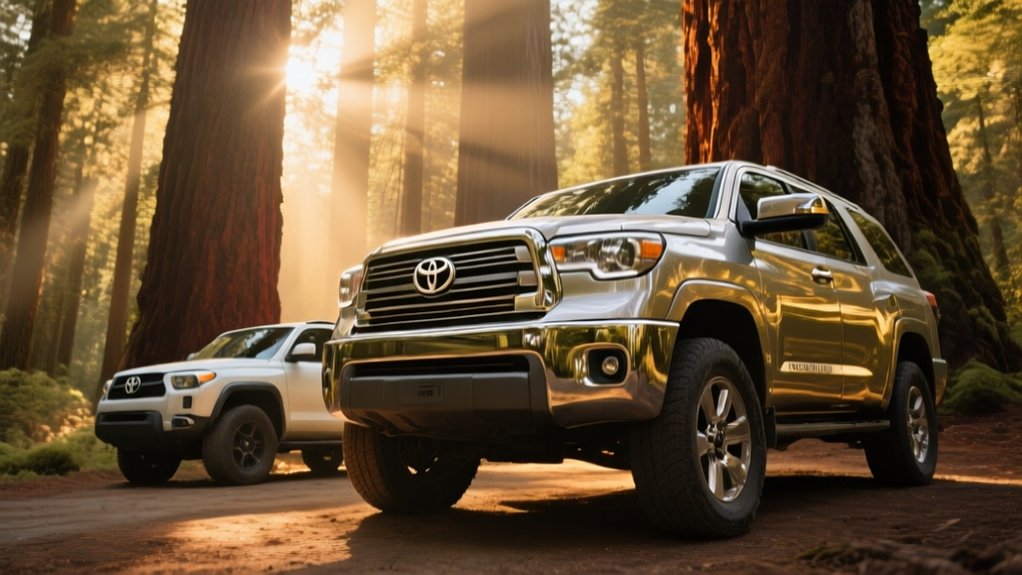
Is The Sequoia Bigger Than The 4runner – Fact Check
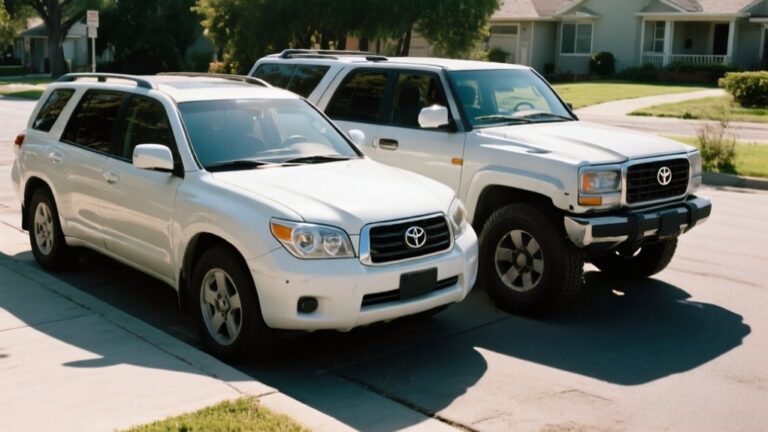
Yes, the Sequoia is definitely bigger than the 4Runner in almost every key dimension.
You’ll notice it’s longer, wider, and taller, offering more interior space and cargo capacity.
The Sequoia’s V8 engine and higher towing capacity also set it apart.
However, the 4Runner’s smaller size makes it easier to maneuver, especially in tight urban areas.
If you want to understand how these differences impact your driving and lifestyle, keep exploring the details.
Key Takeaways
- The Sequoia is a full-size SUV, significantly larger than the midsize 4Runner in overall dimensions.
- Sequoia offers more interior space and legroom across all seating rows compared to the 4Runner.
- Cargo capacity in the Sequoia reaches about 120.1 cubic feet, exceeding the 4Runner’s maximum of 89.7 cubic feet.
- The Sequoia is longer, wider, and taller, providing more passenger comfort and road presence than the 4Runner.
- The 4Runner’s smaller size enhances urban maneuverability, but the Sequoia is definitively bigger in size and space.
Sequoia Vs 4Runner: Which Is Larger Overall?
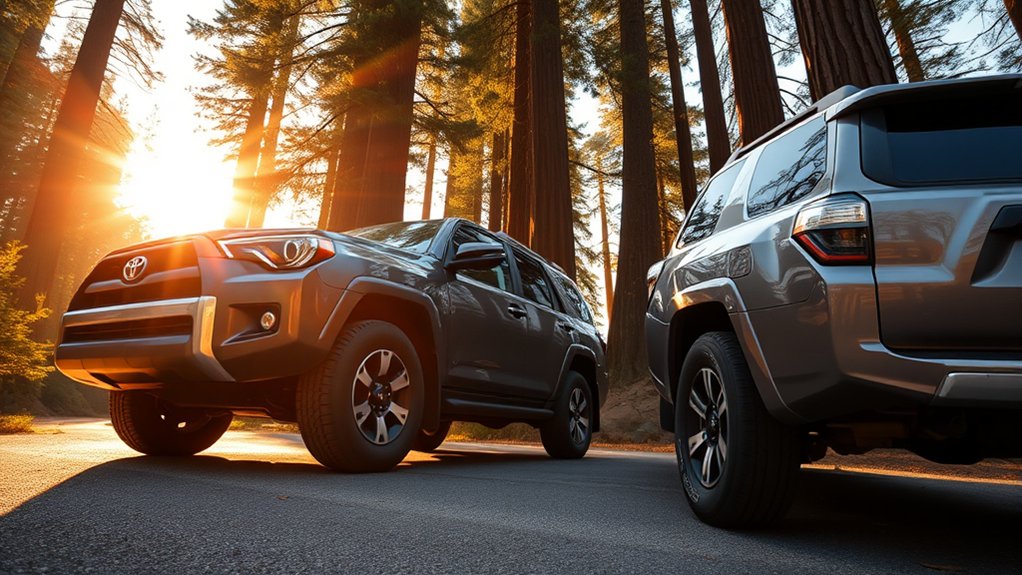
When comparing the Toyota Sequoia and the 4Runner, which one is larger overall? The Sequoia clearly leads in size, offering a more spacious and commanding presence.
The Toyota Sequoia stands out with its larger size and spacious, commanding presence compared to the 4Runner.
It’s designed as a full-size SUV, while the 4Runner fits into the midsize category. This difference affects interior volume, cargo capacity, and passenger comfort.
If you need more room for passengers or gear, the Sequoia provides extra space to stretch out and store belongings. But the 4Runner’s smaller size makes it more maneuverable.
That can be a big advantage in urban areas or off-road adventures. Knowing these differences helps you choose which SUV fits your needs best based on size and practicality.
Exterior Dimensions Compared: Length, Width, Height
Understanding the overall size difference between the Sequoia and 4Runner helps set the stage for a closer look at their exterior dimensions. When you compare length, width, and height, you’ll see clear differences that affect parking, maneuverability, and road presence.
Here’s how they stack up:
- Length: The Sequoia is longer, which gives it more cargo space outside the cabin.
- Width: It’s also wider, so parking in tight spots might be a bit more challenging.
- Height: The Sequoia stands taller, giving it a more commanding look on the road.
- Ground Clearance: The 4Runner often has better ground clearance, making it more capable off-road.
Interior Space and Passenger Comfort Compared
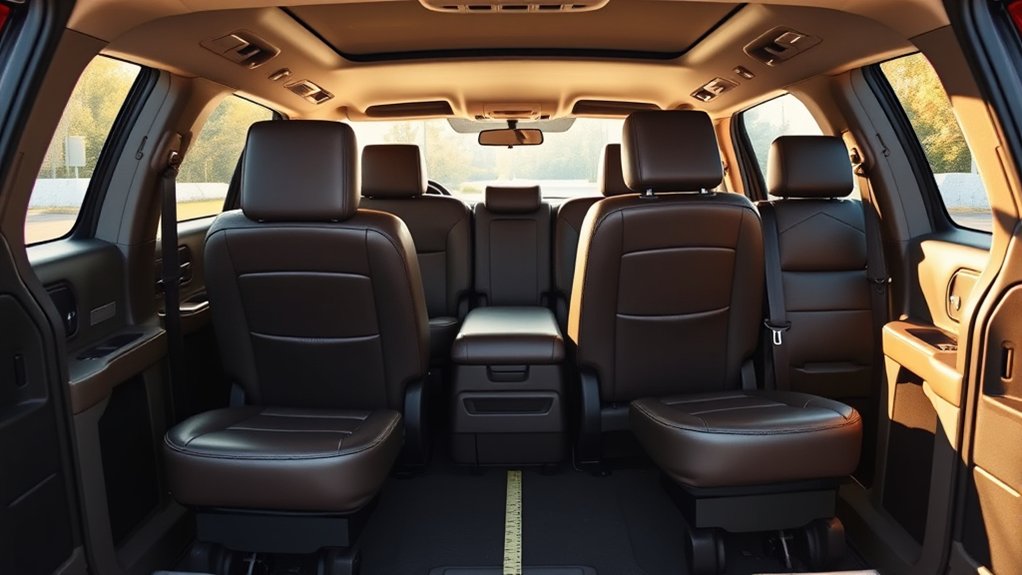
How does the interior space of the Sequoia compare to that of the 4Runner with respect to passenger comfort? The Sequoia offers more overall interior volume, giving you generous legroom and headroom across all three rows.
You’ll find the seats more spacious, making long drives more comfortable for everyone. The 4Runner, while still comfortable, has a slightly tighter third row that might feel cramped on longer trips.
Both vehicles have supportive seats, but the Sequoia’s cabin feels more open, which boosts passenger comfort. Plus, it offers better climate control options and a quieter cabin insulation.
If you’re looking for roomy seating and a relaxed environment for multiple passengers, the Sequoia clearly has an edge over the 4Runner in interior space and comfort.
Cargo Capacity: Sequoia Vs 4Runner
When it comes to cargo capacity, it’s all about looking at the interior space and how much you can actually fit in each SUV. Both the Sequoia and 4Runner have fold-down seats, which is pretty handy because it expands their storage space. But, honestly, the overall utility can vary a lot between the two.
Getting a sense of these differences is key when you’re trying to pick the right vehicle for your hauling needs. So, if you need maximum space for bigger loads, the Sequoia might be the better choice. However, if you’re after something more compact but still versatile, the 4Runner could do the trick.
Interior Space Comparison
While both the Toyota Sequoia and the 4Runner offer plenty of cargo space, their capacities vary a lot. This can influence how much gear or luggage you can carry. The Sequoia gives you more room, especially when the seats are folded down, making it better for larger loads.
The 4Runner, being more compact, works well for everyday errands and moderate cargo needs. It’s easier to park and maneuver in tighter spots.
Here’s a quick look at their interior space differences:
- Sequoia has more rear-seat legroom, which means passengers stay more comfortable.
- The cargo area behind the third row in the 4Runner is smaller than in the Sequoia.
- Sequoia’s third-row seats fold flat, so you get expanded cargo space.
- The 4Runner’s interior feels more compact but is easier to handle in tight spaces.
Maximum Cargo Volume
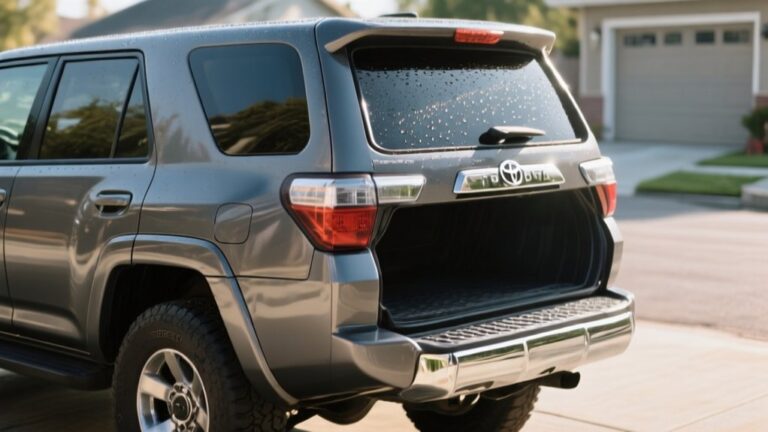
Beyond passenger comfort and overall interior space, the maximum cargo volume directly affects how much you can haul with either vehicle. The Toyota Sequoia offers a generous maximum cargo volume of about 120.1 cubic feet when the rear seats are folded down, giving you plenty of room for larger items.
In comparison, the Toyota 4Runner provides up to approximately 89.7 cubic feet of cargo space under similar conditions. This means the Sequoia can handle bulkier loads, making it better if you often transport large gear or luggage.
However, the 4Runner’s slightly smaller cargo volume might be easier to manage in urban or off-road settings. Ultimately, your choice depends on whether you want maximum hauling capacity or easier maneuverability with moderate cargo needs.
Fold-Down Seat Utility
Both the Sequoia and 4Runner have versatile fold-down seat options that boost their cargo space and flexibility. When you fold down the rear seats, both SUVs significantly increase their cargo area, making room for larger items.
The Sequoia’s seats fold flatter, creating a more level loading surface. This makes it easier to load bulky gear. The 4Runner’s seats also fold easily but may leave a slight incline instead.
Keep these points in mind when thinking about utility:
- Sequoia’s flat-fold seats maximize space for bulky or fragile items
- 4Runner’s split-fold design lets you carry both passengers and cargo
- Both models feature quick-release mechanisms for quick, easy folding
- The Sequoia offers a bit more cargo length with seats folded down
Ultimately, your choice depends on whether you prefer a flat load floor or easier seat operation.
Engine Power and Towing: Sequoia Vs 4Runner
If you’re trying to figure out which SUV packs more punch, you’ll definitely want to look at the engine specs of the Sequoia and the 4Runner. They each have their own strengths, so it’s good to see how they compare in terms of power.
Towing capacity is another big factor, especially if you’re planning to haul heavy loads on a regular basis. So, let’s take a closer look at how each one performs when things get demanding.
Engine Specifications Comparison
When comparing the engine specs of the Sequoia and the 4Runner, you’ll notice some key differences in power and towing that match their different roles. The Sequoia is built for heavier-duty tasks, while the 4Runner is more about versatility and off-road fun. Here’s a quick summary:
The Sequoia has a strong V8 engine that provides higher horsepower and torque.
The 4Runner uses a V6 engine, which is more focused on fuel efficiency and agility.
Sequoia’s engine size supports heavier loads and longer trips.
The 4Runner’s engine is great for everyday driving and moderate towing needs.
Knowing these differences helps you pick what’s right based on whether you want more power or better efficiency. These specs show the Sequoia’s strength and the 4Runner’s practical versatility.
Towing Capacity Differences
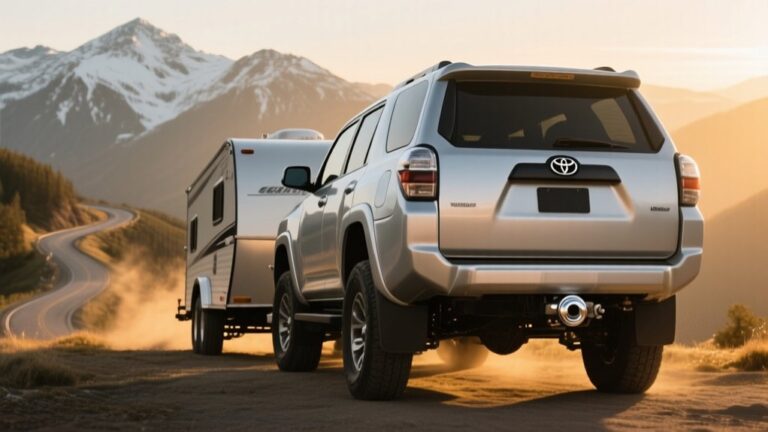
The differences in engine power between the Sequoia and the 4Runner directly impact their towing capacities, which can be an important factor based on your hauling needs. The Sequoia, with its more powerful V8 engine, typically offers a higher towing capacity—around 7,400 pounds—making it better suited for heavy trailers or boats.
In contrast, the 4Runner, equipped with a V6 engine, has a lower towing capacity, usually about 5,000 pounds. This is enough for lighter loads like small campers or utility trailers. If you often tow heavy loads, the Sequoia’s stronger engine and bigger capacity might give you peace of mind.
However, for moderate towing needs, the 4Runner’s capacity is practical and efficient. It balances power with better fuel economy. Your choice depends on matching your towing demands with each vehicle’s capabilities.
Performance in Heavy Loads
Both the Sequoia and 4Runner perform reliably under heavy loads, but their engine power really makes a difference. When you’re hauling or towing, the Sequoia’s stronger V8 engine gives it an edge over the 4Runner’s V6.
This means smoother acceleration and better handling of tough tasks. Here’s what you need to know:
- Sequoia offers 381 horsepower compared to the 4Runner’s 270 horsepower.
- Towing capacity: Sequoia can handle up to 7,400 lbs, while the 4Runner tops out at 5,000 lbs.
- Engine torque: Sequoia produces 401 lb-ft, whereas the 4Runner has 278 lb-ft.
- Fuel efficiency drops more noticeably in the Sequoia when under heavy loads.
If you often tow or haul heavy items, the Sequoia’s extra power really makes it the better choice.
Off-Road Performance: Sequoia Vs 4Runner
Although the Sequoia and 4Runner share Toyota’s rugged DNA, their off-road capabilities cater to different types of adventurers. The 4Runner excels in maneuverability and technical trails, while the Sequoia offers stability and power on rough terrain. Choosing between them depends on your off-road priorities.
| Feature | Sequoia | 4Runner |
|---|---|---|
| Ground Clearance | 9.6 inches | 9.6 inches |
| Approach Angle | 30 degrees | 33 degrees |
| Off-Road Tech | Crawl Control, Multi-Terrain Select | Crawl Control, Multi-Terrain Select |
| Maneuverability | Larger turning radius | Smaller turning radius |
| Trail Focus | Heavy-duty, stability-focused | Agile, technical trails |
You’ll appreciate the 4Runner’s agility on tight trails, while the Sequoia’s bulk supports rugged stability.
Weight and Size: How They Affect Driving Experience
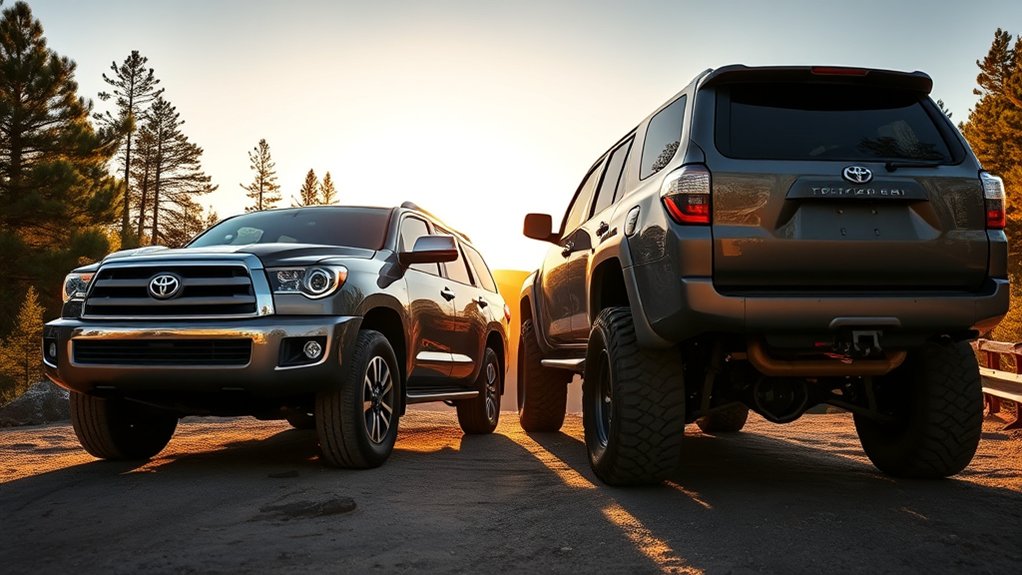
When you think about weight and size, you’ll see they really shape how each SUV handles both on and off the road. The Toyota Sequoia, being larger and heavier, provides a stable ride but might feel less agile in tight spots.
The 4Runner, being smaller and lighter, tends to be more nimble, especially when driving in the city or on winding roads. Knowing these differences can help you predict how the vehicle will behave in different situations.
The 4Runner’s smaller size and lighter weight make it ideal for city driving and winding roads.
Heavier weight can mean longer stopping distances and lower fuel efficiency. Larger size might make parking and maneuvering in crowded places more of a challenge.
Weight distribution also plays a role in ride comfort and stability, especially on uneven terrain. Meanwhile, size impacts interior space, affecting passenger comfort and cargo capacity.
Which SUV Fits Your Needs: Sequoia or 4Runner?
How do you figure out which SUV fits your lifestyle and needs? Start by thinking about space. The Sequoia gives you more room for passengers and cargo, which is great if you often carry family or lots of gear.
The 4Runner is smaller and easier to handle in city streets and tight parking spots. Next, consider your driving habits. If you want a tough off-road vehicle, the 4Runner’s rugged build shines. The Sequoia, on the other hand, is more about comfortable highway driving.
Fuel efficiency is another point. The 4Runner usually uses less fuel because it’s lighter. Lastly, think about your budget and maintenance costs. The Sequoia tends to be pricier upfront and to keep running.
Frequently Asked Questions
What Is the Fuel Economy Comparison Between Sequoia and 4runner?
You’ll find the 4Runner offers better fuel economy compared to the Sequoia. The 4Runner averages around 16-19 mpg in the city and 19-24 mpg on the highway, depending on the model.
The Sequoia, being larger and heavier, typically gets about 13-14 mpg in the city and 17-18 mpg on the highway.
How Do the Safety Features Differ in Sequoia and 4runner?
Picture yourself driving; the Sequoia offers advanced safety tech like adaptive cruise control and lane-keeping assist, giving you extra peace of mind.
The 4Runner, meanwhile, focuses on rugged reliability with standard features like a rearview camera and stability control but lacks some of the Sequoia’s driver aids.
You’ll find the Sequoia’s safety suite more extensive, while the 4Runner emphasizes essential protections suited for off-road adventures.
What Are the Warranty and Maintenance Costs for Both Vehicles?
You’ll find both the Sequoia and 4Runner offer a basic warranty of 3 years/36,000 miles and powertrain coverage of 5 years/60,000 miles.
Maintenance costs for the Sequoia tend to be higher because of its larger size and V8 engine, which means more spending on fuel and parts.
The 4Runner’s maintenance is usually more affordable, thanks to better fuel economy and lower repair expenses, making it a more cost-effective choice in the long run.
Which SUV Has Better Resale Value Over Time?
You might think the larger Sequoia holds its value better, but it’s actually the 4Runner that tends to have stronger resale value over time.
The 4Runner’s reputation for reliability and off-road capability keeps demand high in the used market. While the Sequoia offers more space, its higher fuel and maintenance costs can reduce its appeal.
Are There Significant Differences in Technology and Infotainment Systems?
Yes, there are notable differences in technology and infotainment systems between the two. The Sequoia has a larger touchscreen and more advanced driver-assist features.
The 4Runner, on the other hand, focuses on rugged reliability with simpler tech. If you want modern connectivity and convenience, the Sequoia’s system might be the better choice.
But if you prefer straightforward, durable tech for off-road adventures, the 4Runner’s setup could be more suitable.
Conclusion
When choosing between the Sequoia and 4Runner, think of them as two different tools in your garage—each built for specific tasks. The Sequoia is larger overall, offering more interior space and towing power.
The 4Runner shines in nimble off-road performance. Your decision depends on whether you prioritize size and comfort or agility and ruggedness.
Knowing your needs will help you pick the SUV that fits your lifestyle best.