Is The Highlander Bigger Than The 4runner – Straight Answer
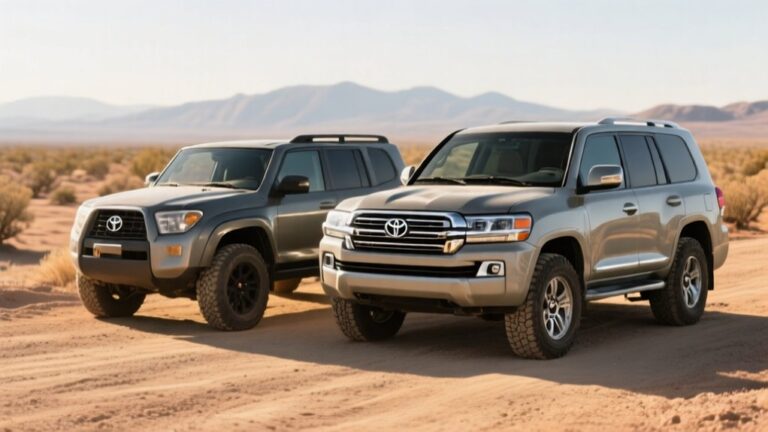
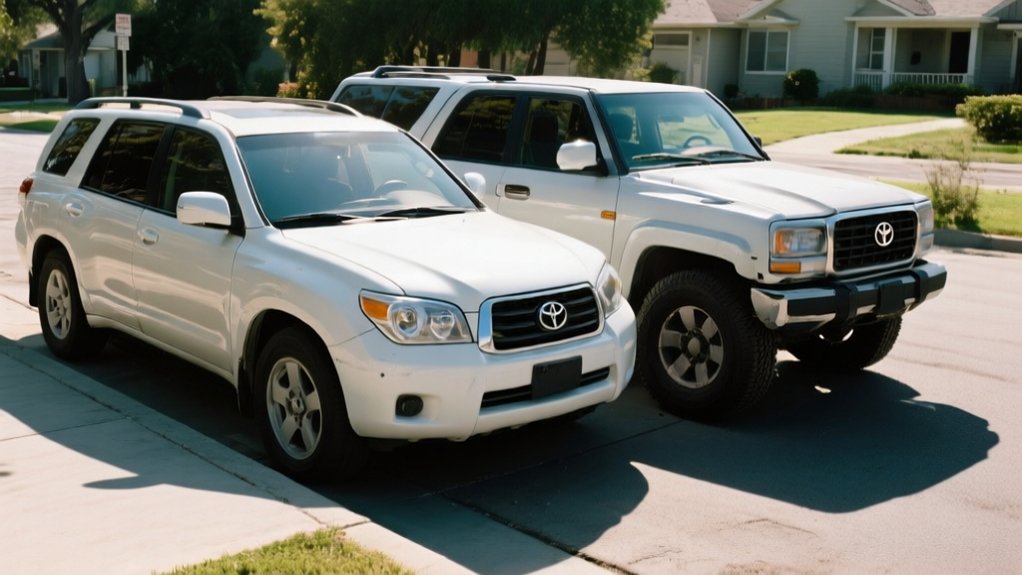
Yes, the 2025 Toyota Highlander is bigger than the 4Runner in key ways. It’s about 5 inches longer and slightly wider, giving you more shoulder room and overall space.
The Highlander also seats up to 8 passengers, compared to the 4Runner’s 5, and offers much more cargo capacity.
It’s designed for comfort and family use, while the 4Runner focuses on rugged off-road capability.
You’ll find more details on how these size differences impact your experience ahead.
Key Takeaways
- The 2025 Toyota Highlander is 4.7 inches longer than the 2025 Toyota 4Runner.
- Highlander is slightly wider, measuring 76 inches compared to 75.8 inches for the 4Runner.
- The 4Runner is taller at 71 inches, while the Highlander stands 68 inches tall.
- Highlander offers more passenger capacity, seating up to 8 versus 5 in the 4Runner.
- Highlander provides greater cargo space and overall interior volume than the 4Runner.
Overview of Highlander vs 4Runner Overall Size
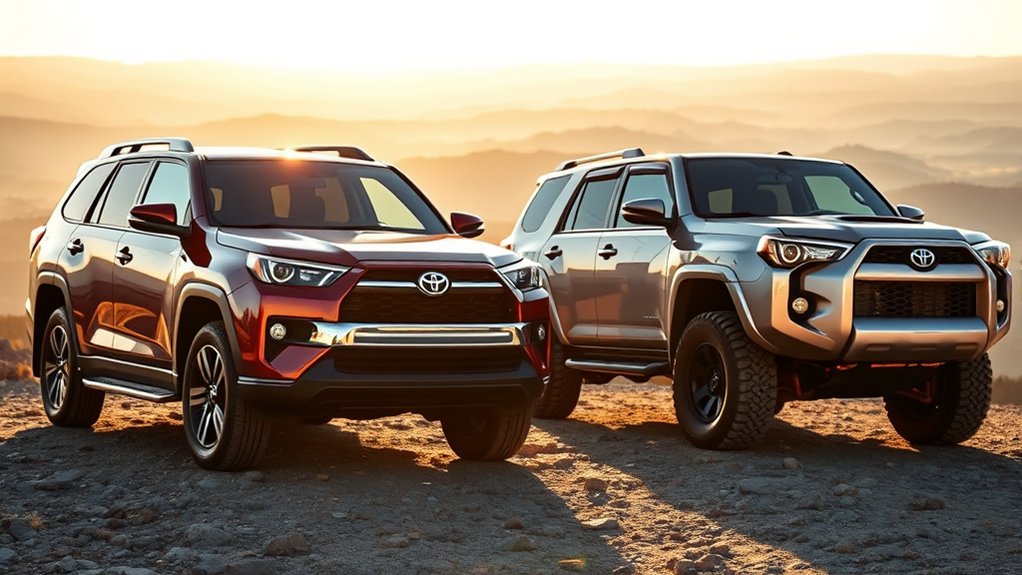
Although the 2025 Toyota Highlander is longer and slightly wider than the 4Runner, measuring 194.9 inches in length and 76 inches in width compared to the 4Runner’s 190.2 inches and 75.8 inches, the 4Runner stands taller at 71 inches versus the Highlander’s 68 inches. This height difference reflects the 4Runner’s rugged, off-road design, while the Highlander has a more streamlined, road-focused profile.
When it comes to cargo space, the Highlander offers a big advantage with a maximum of 2,387 liters, nearly double the 4Runner’s 1,206 liters behind the rear seats. If cargo capacity and a slightly larger footprint are priorities, the Highlander is the better choice.
However, the 4Runner’s increased height might appeal if you need more ground clearance or a commanding view.
Passenger Space Comparison
You’ll see that the Highlander can seat up to eight people, whereas the 4Runner is designed for five. That difference really highlights their different focuses when it comes to space and usability. The Highlander’s bigger interior means you get more room to stretch out and stay comfortable, especially on those longer journeys. Let’s take a closer look at how these differences impact overall comfort and how easy they are to use on a daily basis.
Seating Capacity Differences
The 2025 Toyota Highlander can seat 7 to 8 passengers, which is much more than the 4Runner’s capacity of up to 5. If you often travel with family or groups, the Highlander’s third-row seating is a big plus.
Its design focuses on giving you maximum passenger space without sacrificing comfort. The 4Runner, on the other hand, is built more for cargo and off-road adventures, with less room for passengers.
| Model | Seating Capacity | Key Passenger Space Feature |
|---|---|---|
| Highlander 2025 | 7 to 8 | Third-row seating for larger groups |
| 4Runner 2025 | Up to 5 | More cargo space, less passenger room |
| Dimensions | Length & Width | Highlander: 194.9″ x 76″ vs 4Runner: 190.2″ x 75.8″ |
Because of this difference, the Highlander is better suited if you need to carry more passengers comfortably.
Interior Dimensions Comparison
Passenger space is key when comparing the 2025 Toyota Highlander and the 4Runner, especially their interior dimensions. The Highlander provides more room, measuring 194.9 inches long and 76 inches wide, versus the 4Runner’s 190.2 inches in length and 75.8 inches in width.
This extra space means the Highlander can seat up to 8 passengers, while the 4Runner only seats 5. In terms of cargo, the Highlander offers 453 liters behind the third row and up to 2387 liters with seats folded down.
The 4Runner, which doesn’t have a third row, provides 1206 liters of cargo space behind its rear seats. Overall, the Highlander’s interior space and flexible cargo options make it a more spacious choice for both passengers and gear.
Passenger Comfort Features
Although both the 2025 Toyota Highlander and 4Runner come equipped with modern comfort features like touchscreen navigation and high-quality audio systems, the Highlander stands out by offering more spacious seating for up to 7 or 8 passengers compared to the 4Runner’s 5-seat capacity.
The Highlander’s longer length and lighter curb weight improve passenger comfort, providing a roomier interior and smoother ride. Cargo space also favors the Highlander, with 453 liters behind the third row, expandable to 2,387 liters.
In comparison, the 4Runner offers 1,206 liters behind its rear seats. Both SUVs include security service blocks with advanced safety and convenience technologies, but if passenger space and comfort are priorities, the Highlander clearly delivers a more accommodating experience for families or groups.
Differences in Seating Capacity Between Highlander and 4Runner
Since you might need to transport more people regularly, the 2025 Toyota Highlander offers seating for 7 to 8 passengers, which is much more than the 5-seat capacity of the 2025 Toyota 4Runner.
This makes the Highlander a better choice if you prioritize passenger space, especially for larger families. Its interior layout emphasizes comfort and versatility, allowing you to reconfigure seats to balance passenger and cargo space.
In contrast, the 4Runner is more focused on rugged off-road ability, providing less seating and a more utilitarian design. If maximizing seating capacity and flexible passenger arrangements are your priorities, the Highlander clearly has the edge over the 4Runner, making it a better fit for everyday transport needs.
Comparing Cargo Space: Highlander vs 4Runner
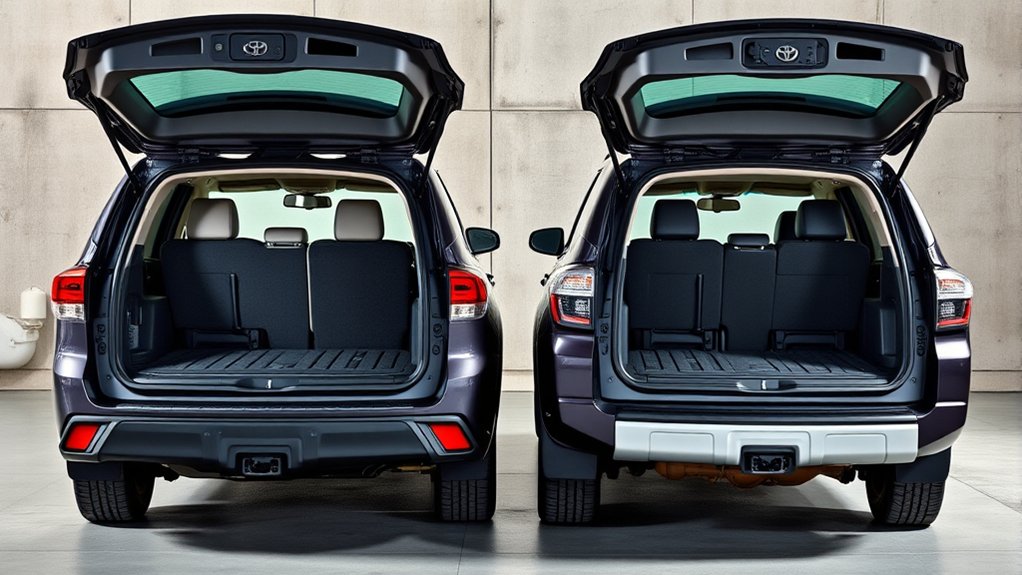
When you need plenty of cargo space for luggage, gear, or groceries, the 2025 Toyota Highlander really stands out. It offers 453 liters (16.0 cubic feet) behind its third row, which expands to a spacious 2,387 liters (84.3 cubic feet) with the seats folded down.
The Toyota 4Runner has 1,206 liters (42.6 cubic feet) behind its rear seats but doesn’t specify its total cargo capacity. The Highlander’s design focuses on versatile cargo space, making it perfect for families. In contrast, the 4Runner emphasizes ruggedness and off-road capability.
Comparing Exterior Dimensions (Length, Width, Height)
When you look at the exterior dimensions, the 2025 Highlander is a bit longer than the 4Runner, measuring in at 194.9 inches compared to the 190.2 inches. It’s also slightly wider, coming in at 76 inches versus the 4Runner’s 75.8 inches. But here’s an interesting twist—the 4Runner is actually taller, standing at 71 inches, while the Highlander is a bit lower at 68 inches. This difference in height really influences their overall presence and how spacious they feel inside.
Length Comparison Details
The 2025 Toyota Highlander is 4.7 inches longer than the 4Runner, measuring 194.9 inches compared to 190.2 inches.
This extra length gives the Highlander more interior space and the ability to seat up to eight passengers.
Both vehicles are midsize SUVs, but the Highlander’s extended length means better cargo capacity and overall comfort.
In contrast, the 4Runner’s shorter length emphasizes its rugged, off-road design, which helps with maneuverability.
If length alone is a factor, the Highlander is the better choice for more passenger or cargo space.
Knowing these size differences can help you pick the SUV that best fits your space and utility needs.
Width Differences Explained
How much does width really impact your choice between the 2025 Toyota Highlander and the 4Runner? When comparing width, the Highlander measures 76 inches, just slightly wider than the 4Runner’s 75.8 inches.
This small difference might not drastically affect everyday driving, but it does make the Highlander feel more spacious inside. A wider body usually means better shoulder room and passenger comfort. The Highlander seats up to eight, taking advantage of that extra space.
On the other hand, the 4Runner’s narrower width suits its rugged, off-road design. It’s easier to maneuver through tight trails or city streets.
Height Measurements Overview
Considering the slight width difference between the 2025 Toyota Highlander and 4Runner, you might also want to look at their height measurements to get a fuller picture of their exterior dimensions. The Highlander measures 68 inches in height, while the 4Runner stands taller at 71 inches. This difference affects not only the vehicle’s profile but also the passenger space experience inside.
Here’s a quick comparison:
- Highlander height: 68 inches — lower stance, potentially easier entry and exit.
- 4Runner height: 71 inches — taller, offering more headroom.
- Overall dimensions: Highlander favors length and width, enhancing passenger space with up to 8 seats versus the 4Runner’s 5.
Height plays a key role in balancing exterior size and interior comfort between these SUVs.
How Interior Design Affects How Spacious It Feels
Although both vehicles cater to SUV enthusiasts, the Highlander’s interior design focuses more on family comfort and flexibility. This directly influences how spacious it feels inside.
The Highlander’s versatile seating can fit up to eight passengers, with arrangements that make the most of the available space. Its layout offers better visibility and a clean, open feel.
Slightly longer and wider than the 4Runner, the Highlander doesn’t feel cramped, even with a lower height. Plus, its user-friendly tech and 11-speaker audio system add to the comfortable vibe.
On the other hand, the 4Runner’s utilitarian interior and five-seat setup limit the sense of space. Overall, the Highlander strikes a good balance between roominess and practicality, making it feel more spacious inside.
Which SUV Is Better for Families Based on Size?
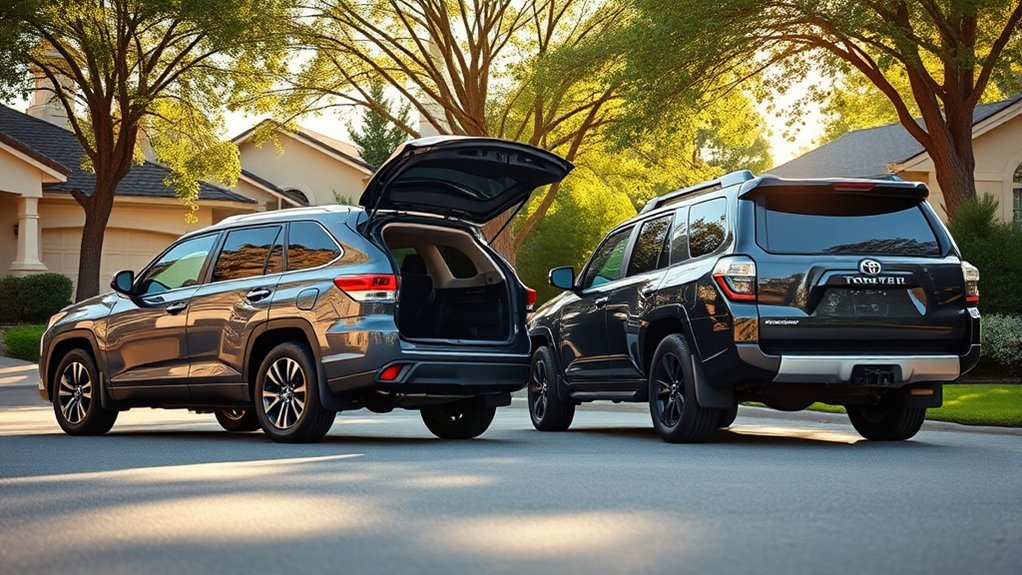
When you’re trying to decide between the Highlander and the 4Runner for your family, size really matters—especially when it comes to how many people you can fit. The Highlander can hold up to 8 passengers, which is great if you have a bigger family or like to carpool. On the other hand, the 4Runner only seats 5, so it might be better if you don’t need extra space all the time.
Cargo space is also something to think about. The Highlander gives you a lot more room behind the third row, and when you fold the seats down, the space opens up even more. This makes it easier to carry larger items or luggage for trips. Overall, understanding these size differences can really help you figure out which SUV is the better fit for your family’s needs.
Seating Capacity Comparison
If you need to seat up to eight passengers comfortably, the 2025 Toyota Highlander clearly has the advantage over the 4Runner, which only seats five.
When comparing seating capacity for family use, keep these points in mind:
- The Toyota Highlander has three rows of seats, making it perfect for bigger families or anyone needing extra space.
- The 4Runner’s two-row setup limits seating to five, which can be tight if you often travel with more people.
- The Highlander’s design balances passenger comfort with space efficiency, fitting well for family needs without sacrificing interior room.
Choosing between these SUVs really depends on your seating needs. The Highlander is better if you want to maximize passenger capacity.
Cargo Space Differences
Cargo space plays an essential role in choosing the right SUV for family needs, and the 2025 Toyota Highlander clearly outshines the 4Runner in this area. The Highlander offers 2,387 liters (84.3 cubic feet) of cargo space with the second and third rows folded, which is significantly more than the Toyota 4Runner’s 1,206 liters (42.6 cubic feet) behind the rear seats.
Even with all seats up, the Highlander provides 453 liters (16.0 cubic feet) of cargo space. That’s ideal for daily family gear. Its longer and wider dimensions contribute to a more spacious interior.
In contrast, the 4Runner seats fewer passengers and focuses more on rugged off-road use. So, if cargo space and family practicality matter most to you, the Highlander is the better choice.
How Highlander and 4Runner Size Affect Driving and Parking
Although the 2025 Toyota Highlander is longer and slightly wider than the 4Runner, measuring 194.9 inches in length and 76 inches in width compared to the 4Runner’s 190.2 inches and 75.8 inches, these differences can impact how you maneuver and park each vehicle. The Highlander’s larger size affects:
- Maneuverability: The extra length and width may make tight turns and navigating narrow streets more challenging.
- Parking: You’ll need a bit more space, especially in crowded lots or when parallel parking.
- Stability: The Highlander’s lower height, at 68 inches versus 71 inches for the 4Runner, can provide a steadier ride and better control during driving.
Considering size, maneuverability, and parking needs will help you pick the SUV that best fits your usual driving environment.
Size Impact on Highlander and 4Runner Fuel Efficiency and Performance
Because the 2025 Toyota Highlander is longer and wider than the 4Runner, you might think it would use more fuel. Surprisingly, it actually offers much better efficiency.
Despite being larger, the Highlander gets about 36 mpg in the city and 35 mpg on the highway. In comparison, the 4Runner gets around 16 mpg city and 19 mpg highway.
This better fuel economy is partly because the Highlander is lighter, weighing about 4,155 pounds versus the 4,400 pounds of the 4Runner. The size difference also affects how the vehicles perform.
The Highlander’s lighter weight helps with handling and acceleration, making it feel more nimble on the road. Meanwhile, the 4Runner’s heavier build, designed for off-road adventures, results in lower fuel efficiency and different driving characteristics.
Understanding how size impacts both vehicles can help you pick the one that best balances fuel economy and performance for your needs.
Final Verdict: Is the Highlander Truly Bigger Than the 4Runner?
How do the 2025 Toyota Highlander and 4Runner compare in size overall? The Highlander is longer and wider, but the 4Runner is taller and offers more cargo space. Here’s a closer look:
The 2025 Highlander is longer and wider, while the 4Runner is taller with greater cargo space.
- Length and width: Highlander measures 194.9 inches long and 76 inches wide. The 4Runner is 190.2 inches long and 75.8 inches wide.
- Height: The 4Runner stands taller at 71 inches, compared to Highlander’s 68 inches.
- Cargo space: The 4Runner provides 1,206 liters behind the rear seats, far exceeding Highlander’s 453 liters behind the third row.
Frequently Asked Questions
How Do the Highlander and 4runner Compare in Off-Road Capability?
You’ll find the 4Runner far superior in off-road capability compared to the Highlander. It’s built on a rugged body-on-frame chassis and offers higher ground clearance.
It includes features like skid plates and multi-terrain select, which help you handle rough terrain better. The available 4WD systems give you improved traction and control.
The Highlander, on the other hand, focuses on comfort and a smooth ride. That makes it less suited for serious off-road adventures.
What Are the Main Differences in Engine Options Between the Two SUVS?
Think of the Highlander’s engine as a smooth marathon runner, offering 264 horsepower with efficient 2.4 to 2.5-liter gas options and hybrid variants designed for economy.
In contrast, the 4Runner’s engine roars like a powerful sprinter, boasting up to 326 horsepower and 465 lb-ft torque in its hybrid version.
You’ll find rear- or all-wheel drive in the 4Runner, while the Highlander sticks to front- or all-wheel drive, emphasizing different strengths.
How Do Safety Features Differ Between the Highlander and 4runner?
You’ll find both the Highlander and 4Runner come with 8 airbags, but the Highlander offers more advanced safety tech like adaptive cruise control and lane-keeping assistance, which the 4Runner may lack as standard.
While crash test results are pending for both, the Highlander leans toward family safety features, whereas the 4Runner focuses on rugged off-road protection.
Both provide solid warranty coverage to back their safety claims.
Which SUV Offers Better Technology and Infotainment Systems?
Technology in these SUVs offers different features: the Highlander comes with an 11-speaker system and advanced navigation, great for smooth route planning. The 4Runner has a premium JBL audio setup and a slightly larger 12.3-inch touchscreen.
Both SUVs include wireless charging and smartphone integration with Apple CarPlay and Android Auto. If you care about navigation and a refined audio experience, the Highlander has the edge. But if you want a bigger display and JBL sound, the 4Runner is the way to go.
What Are the Price Differences Between the Highlander and 4runner Models?
You’ll find the 2025 Toyota Highlander starts at $50,510, while the 4Runner begins at $54,200, making the Highlander about $3,690 cheaper. Both have three trims, but the Highlander generally offers better value with more passenger space and features for the price.
If you want a spacious SUV without paying extra, the Highlander is the more economical choice compared to the 4Runner’s higher base price.
Conclusion
When comparing the Highlander and 4Runner, you’ll find the Highlander is slightly bigger in overall length and width, offering up to 19 cubic feet more cargo space. This makes it a better fit if you prioritize passenger comfort and storage.
However, the 4Runner’s taller height and rugged build cater to off-road enthusiasts. So, while the Highlander is generally bigger, your choice should depend on whether you value size for family use or rugged capability.