How To Engage 4wd On A Toyota 4runner – Easy Guide
To engage 4WD on your Toyota 4Runner, start by parking on level ground and shifting into neutral.
Use the transfer case lever or 4WD selector switch to pick 4-High or 4-Low, depending on the terrain you’re facing.
Engage 4H while driving up to 62 mph if you’re dealing with light off-road conditions or slippery surfaces.
For 4L, come to a complete stop, shift to neutral, then select low range for maximum torque.
Make sure to confirm activation through the dashboard indicators.
Following these steps will help ensure smooth operation and protect your system for the long run.
Keep exploring to master all the essential tips!
Key Takeaways
- Park on a level surface and shift the transmission into neutral before engaging 4WD.
- Use the 4WD selector switch or transfer case lever to choose 4H or 4L modes.
- Engage 4H while driving up to 62 mph on stable surfaces; stop completely before shifting into 4L.
- Confirm 4WD engagement by checking the dashboard indicator lights for proper mode activation.
- Avoid using 4WD on dry pavement and switch back to 2WD when driving conditions improve.
How To Prepare Your Toyota 4Runner For 4WD Engagement
Before engaging the 4WD system on your Toyota 4Runner, make sure the vehicle is parked on a level surface in a safe area to avoid accidents.
Next, shift the transmission into neutral to allow a smooth change between 2WD and 4WD modes without risking damage to the drivetrain.
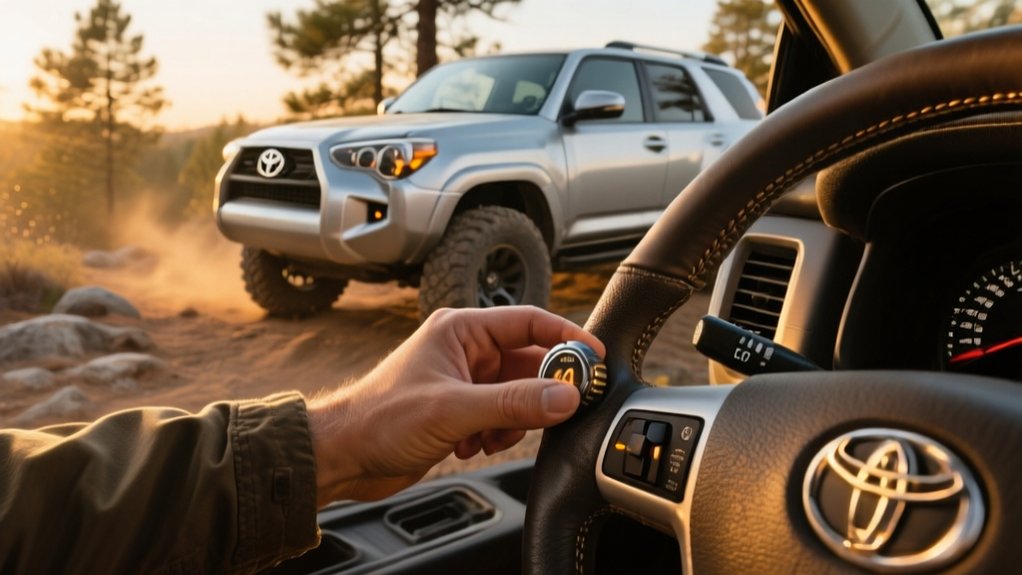
Use the 4WD selector switch to choose the right mode—either 4-High or 4-Low—based on your needs.
After making your selection, check that the dashboard indicators confirm proper 4WD engagement by ensuring all the necessary lights are on.
Always refer to your owner’s manual for model-specific instructions and recommendations to make sure you’re operating everything correctly.
Following these steps helps ensure a safe and smooth process for engaging 4WD and protects your 4Runner’s mechanical parts.
When And Why To Use 4WD On Different Surfaces
Although 4WD improves traction and control in tough conditions, you should turn it on only when needed based on the surface you’re driving on. Use 4WD on loose surfaces like sand, gravel, or mud to help with stability and prevent getting stuck.
It’s also important on wet or icy roads, where it helps reduce slipping and gives you better control. When off-road, like on rocky terrain or steep hills, 4WD spreads power more evenly and keeps the wheels in contact with the ground for safer driving.
But avoid using 4WD on dry, paved roads. It can cause unnecessary tire wear and might damage your drivetrain from binding. When the conditions get better, switch back to 2WD to save fuel and protect your vehicle’s mechanics.
Engaging 4WD correctly ensures your Toyota 4Runner performs well and lasts longer.
How To Engage 4H (High-Range 4WD) On Your Toyota 4Runner
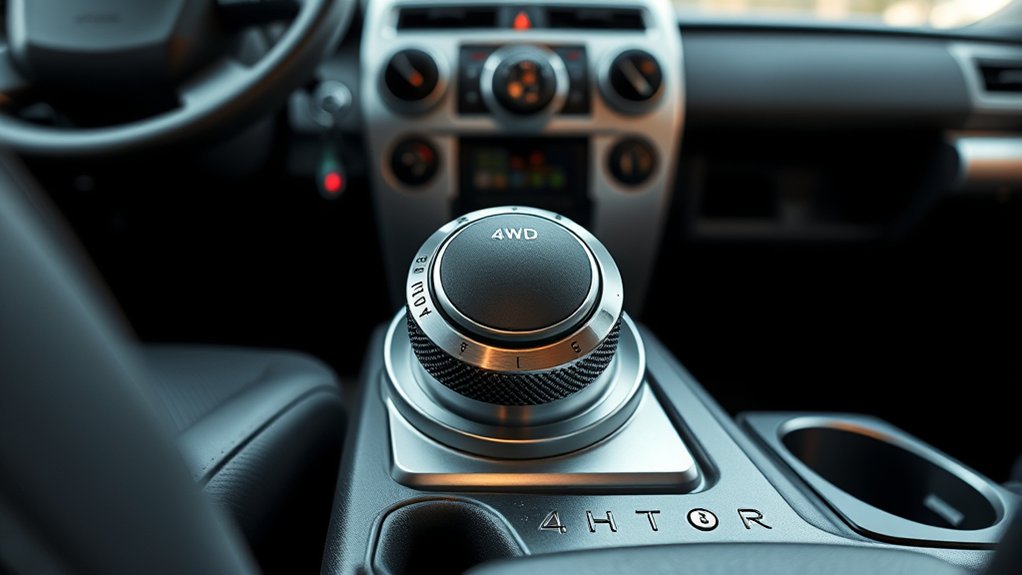
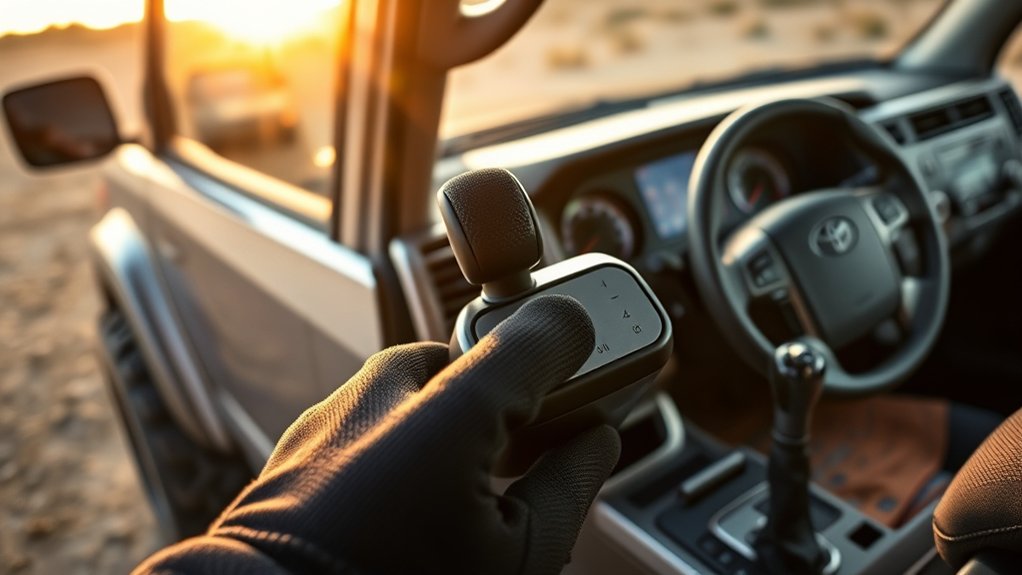
Find the transfer case lever, which is usually right between the front seats. To switch into 4H, just shift that lever into the 4H position. You can do this while you’re driving, as long as you’re on a stable and dry surface, and the speed is up to 62 mph. This helps give you better traction when you’re dealing with wet or slippery conditions.
Just a quick tip: use 4H when you’re driving through snow or light off-road trails. When you’re back on dry pavement, it’s best to switch back to 2WD to keep your drivetrain safe and happy.
Locating The 4WD Lever
When engaging 4H on your Toyota 4Runner, you’ll find the 4WD lever either on the center console or near the gear shift, depending on your model year. Older models typically have a manual lever, while newer ones use a rotary knob.
Before locating the lever, make sure your vehicle is in “Neutral” or “Park” to prevent any transmission damage. The 4WD lever or knob will be clearly marked with “4H” among other drive mode options.
Familiarize yourself with this control’s position so you can engage High-Range 4WD smoothly. When you reach for the lever or knob, you’ll feel a slight resistance or hear a click, signaling it’s engaged.
Always double-check by looking at the dashboard for the 4H indicator light. This confirms that the system is working correctly and you’re ready to go.
Engaging 4H Mode
To engage 4H (High-Range 4WD) on your Toyota 4Runner, start by bringing the vehicle to a complete stop or driving at a low speed below 60 mph. Locate the transfer case lever, usually on the center console or near the gear shifter, and shift it to the 4H position.
If your model uses a push-button system, press the 4WD button while the vehicle is in neutral or park. Confirm engagement by checking that the 4WD indicator light illuminates on the dashboard.
This verifies the system has properly activated the high-range four-wheel drive. Always consult your owner’s manual for any model-specific instructions or safety precautions before engaging 4H to avoid damage or improper use of the drivetrain system.
When To Use 4H
Engaging 4H mode properly depends on the driving conditions you encounter. You should activate 4H to improve traction and stability on slippery or loose surfaces. Here’s when to use 4H in your Toyota 4Runner:
- When driving on mud, snow, or gravel to prevent wheel slippage and keep control.
- At speeds below 62 mph (100 km/h), make sure to shift the transfer case lever to “4H” while driving straight.
- When you need better grip without sacrificing fuel efficiency noticeably, unlike low-range 4WD.
Remember to switch back to 2WD on dry pavement to avoid unnecessary tire wear and drivetrain strain. Using 4H correctly guarantees better performance and safety in tough conditions.
How To Shift Into 4L (Low-Range 4WD) For Tough Terrain
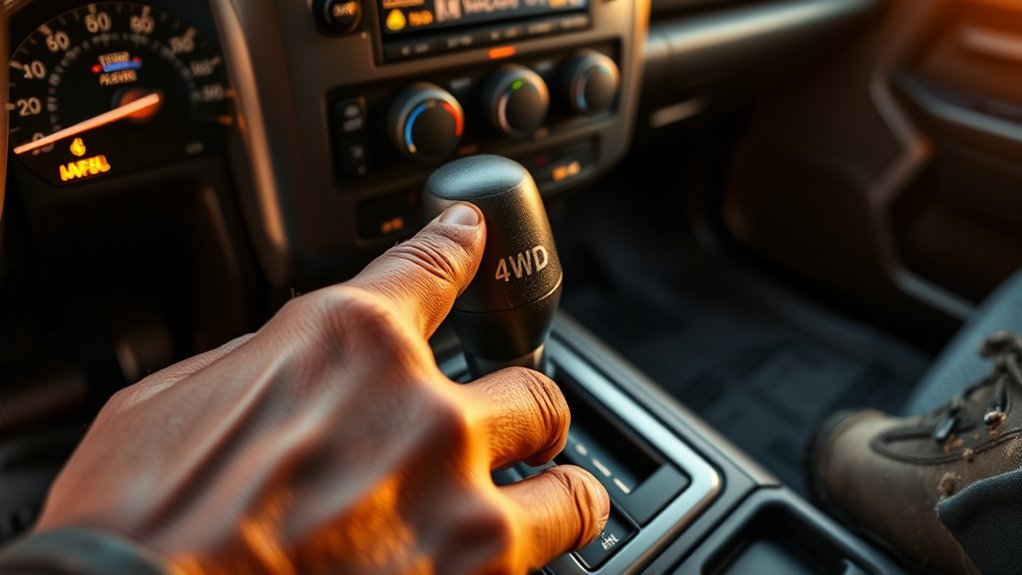
Although shifting into 4L (Low-Range 4WD) requires your vehicle to be at a complete stop, you’ll need to first place the transmission in neutral to guarantee smooth engagement.
Next, verify your 4Runner is already in 4WD mode by rotating the transfer case lever or using the electronic switch, depending on your model.
Ensure your 4Runner is in 4WD by turning the transfer case lever or using the electronic switch.
Once confirmed, shift the transfer case into 4L. This setting delivers increased torque and improved traction, perfect for tackling steep inclines, deep mud, or other tough terrain.
Avoid shifting into 4L while moving to prevent damage to the drivetrain. After you’ve cleared the challenging terrain, shift back to 2WD or 4H to keep your vehicle running smoothly.
Familiarize yourself with the dashboard indicators to confirm proper 4L engagement before proceeding.
Toyota 4Runner 4WD Indicators And Confirmation Steps
Check the dashboard indicators carefully to verify that your Toyota 4Runner’s 4WD system is properly engaged. The 4WD indicator light gives you real-time confirmation when you shift into 4H or 4L.
To make sure it’s engaged correctly, follow these steps: Verify the 4WD indicator light turns on after shifting the transfer case lever to 4H or 4L. If it doesn’t, the system might not be engaged properly.
Make sure the vehicle is stationary before shifting into 4L to avoid damaging the drivetrain. You can engage 4H at low speeds without issue.
If your vehicle has it, check the locking center differential indicator when activating it for better traction.
Always refer to your owner’s manual for specific instructions to keep your system working properly.
Common 4WD Mistakes To Avoid On A 4Runner
You definitely want to avoid engaging 4WD on dry pavement. It can cause drivetrain binding, which might lead to some serious damage. Plus, constantly using four-wheel drive when it’s not needed can hurt your fuel economy and wear out your tires faster. So, it’s best to switch back to 2WD once you’re back on stable, dry surfaces.
Before you shift into 4WD, always take a moment to assess the terrain. Making sure the conditions are right helps keep your system working properly and keeps you safe on the road. Better safe than sorry!
Incorrect 4WD Engagement
When engaging 4WD on your Toyota 4Runner, it’s important to avoid common mistakes to prevent damage and keep everything running smoothly. Incorrect 4WD engagement can lead to serious drivetrain and transmission problems. Keep these tips in mind.
First, don’t engage 4WD on dry pavement while turning. This can cause drivetrain binding and potentially damage components. It’s best to wait until you’re on a suitable surface.
Second, always shift into neutral before switching from 2WD to 4WD. Skipping this step can cause gear grinding and make engagement difficult. Take a moment to shift properly for a smoother process.
Finally, make sure to stop completely before engaging low-range 4WD. Engaging low-range while moving puts unnecessary strain on your transmission. Always come to a complete stop first for safe engagement.
Overusing Four-Wheel Drive
Although four-wheel drive boosts your Toyota 4Runner’s off-road ability, overusing it can lead to serious mechanical problems and lower efficiency.
Avoid engaging 4WD on dry pavement because it can cause drivetrain binding, tire wear, and potential damage. Use it only when necessary to prevent overheating critical parts and reduce fuel consumption.
Make sure your tires are properly inflated and matched. Mismatched tires put extra stress on the system, increasing the risk of malfunction.
Regularly check the transfer case and differential fluids to keep everything running smoothly and avoid failures.
Finally, get familiar with your 4Runner’s specific 4WD modes and choose the right setting for the terrain. This helps maximize system longevity and keeps your vehicle under control.
Ignoring Terrain Conditions
Properly engaging your Toyota 4Runner’s 4WD system requires more than just knowing when to use it; evaluating the terrain plays an essential role in maintaining control and preventing drivetrain issues. Ignoring terrain conditions can lead to traction loss or mechanical strain.
To avoid mistakes, follow these guidelines:
- Engage 4WD only on surfaces like rain-soaked roads, snow, or loose gravel to improve grip and control.
- Avoid using 4WD on dry pavement to prevent drivetrain binding and excessive wear caused by lack of wheel slip.
- Disengage 4WD when returning to normal driving to reduce tire wear and improve fuel efficiency.
How To Fix Common 4WD Engagement Problems
If you want to engage 4WD on your Toyota 4Runner without causing damage, make sure the vehicle is fully stopped before shifting. Start by checking that the 4WD switch or lever works properly, since faulty controls can stop it from engaging.
Look at your dashboard for warning lights that might indicate system issues. Then, inspect the transfer case fluid level and condition. Low or dirty fluid can often cause problems with engagement.
If the fluid is dirty or low, replace or top it off according to your owner’s manual. If issues still persist after these checks, consult the manual for troubleshooting tips or take your vehicle to a mechanic.
A professional can diagnose electrical or mechanical faults that might be causing the problem. Proper maintenance and careful operation will help keep your 4WD working reliably and avoid costly repairs.
Frequently Asked Questions
How Does 4WD Affect Fuel Efficiency on a Toyota 4runner?
Using 4WD on your Toyota 4Runner drops fuel efficiency by about 10-20% compared to 2WD. That’s because the engine has to work harder to power all four wheels, which increases drivetrain friction and weight.
You’ll notice you use more fuel, especially on dry, paved roads where 4WD isn’t really needed. To save on gas, only turn on 4WD when you’re off-road or on slippery surfaces where extra traction is a must.
Can Engaging 4WD Cause Damage if Used on Dry Pavement?
Yes, engaging 4WD on dry pavement can cause damage because it leads to drivetrain binding. When tires don’t slip, your differentials can’t compensate for the difference in wheel rotation, which strains components like the transfer case and axles.
This binding accelerates wear on tires and drivetrain parts. Always avoid using 4WD on dry surfaces unless your system has a center differential or an automatic mode designed for such conditions.
What Maintenance Is Required for the 4WD System?
You probably don’t want to ignore your 4WD system maintenance. It won’t fix itself, so regular care is essential.
Check and change the transfer case fluid every 30,000 miles to keep everything running smoothly. Also, inspect the front and rear differentials for fluid levels and condition, replacing the fluid if needed.
Don’t forget to examine actuators, vacuum lines, driveshaft, and CV joints for signs of wear or leaks. These parts are crucial for proper 4WD function.
Finally, rotate your tires every 5,000 to 7,500 miles. This helps keep everything balanced and ensures your system works properly.
Are There Any Aftermarket Upgrades for Toyota 4runner 4WD?
Yes, you can upgrade your Toyota 4Runner’s 4WD system with aftermarket parts. Consider upgraded differential locks for better traction, a high-performance transfer case for improved torque distribution, and skid plates to protect the undercarriage.
Installing a lift kit boosts ground clearance and approach angles. High-quality all-terrain tires also greatly improve grip and handling. These upgrades help boost off-road capability and durability.
They make tackling tougher terrain much easier and give your 4Runner more confidence off the beaten path.
How Does 4WD Differ From AWD in Toyota Vehicles?
You’ll find that 4WD in Toyota vehicles offers selectable modes, letting you manually engage power to all four wheels and access low-range gearing for tough off-road control.
AWD, on the other hand, automatically distributes power to wheels with traction. It’s designed for on-road use and doesn’t require driver input.
Toyota’s 4WD often includes locking differentials for better grip in slippery conditions.
This feature is typically not available in AWD systems, making 4WD more rugged and versatile.
Conclusion
Engaging 4WD on your Toyota 4Runner isn’t just a task. It’s your ticket to mastering the road less traveled.
Start by preparing your vehicle properly. Knowing when to switch between 4H and 4L is key to getting the best performance and safety.
Think of your 4WD system as a trusted co-pilot, ready to tackle any terrain with you.
Follow these steps precisely, and you’ll conquer challenges with confidence and control every time.