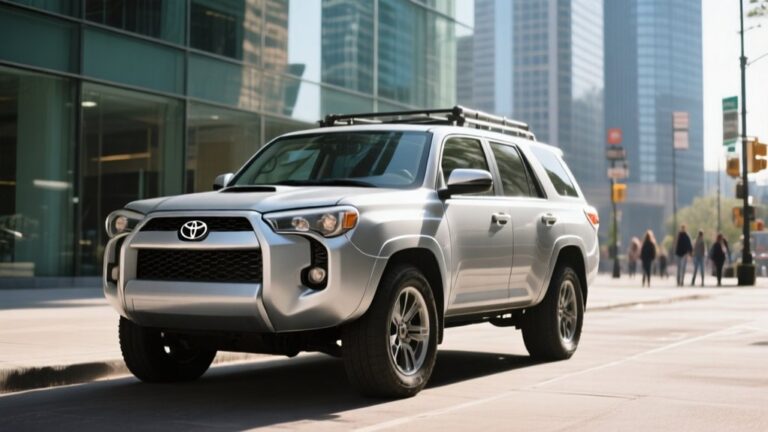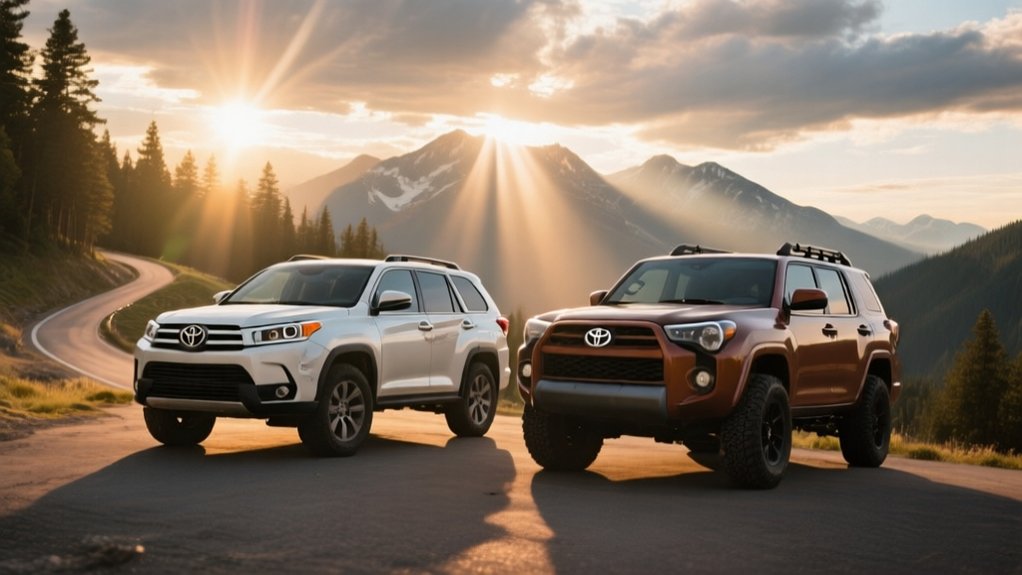
Which Is Better Highlander Or 4runner – Head-to-Head
Choosing between the Toyota Highlander and 4Runner really depends on your lifestyle.
You’ll want the Highlander if you care about fuel efficiency, family comfort, and spacious seating for up to eight passengers.
On the other hand, if you need tougher off-road capability, higher towing capacity, and rugged durability, the 4Runner is the way to go.
It features a body-on-frame design and advanced terrain features.
Both vehicles are reliable, so your choice comes down to comfort versus adventure.
Look into the details to see which one suits you best.
Key Takeaways
- Highlander offers better fuel economy and family-friendly interior space, seating up to 8 passengers comfortably.
- 4Runner provides superior towing capacity (6,000 lbs) and off-road capabilities with features like Multi-Terrain Select and Crawl Control.
- Highlander uses a 2.4L turbo FWD/AWD drivetrain focused on efficiency, while 4Runner’s RWD/4WD platform emphasizes power and rugged performance.
- Interior tech in Highlander is more advanced and spacious, whereas 4Runner prioritizes durability and rugged design for adventure seekers.
- Both vehicles are highly reliable, but Highlander suits daily commuters and families, while 4Runner appeals to off-road enthusiasts and heavy-duty users.
Which Toyota SUV Fits Your Driving Needs Best?
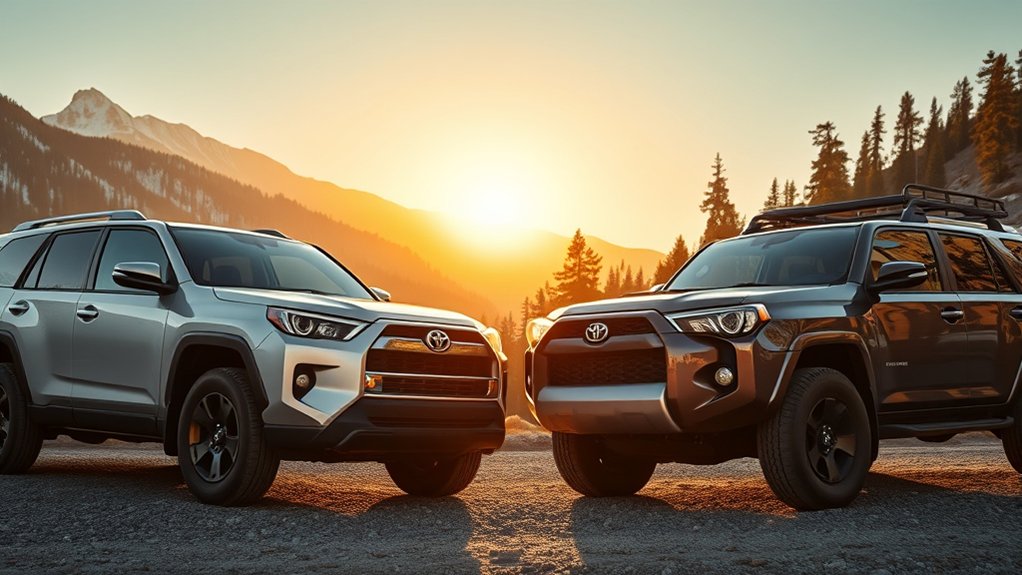
When deciding which Toyota SUV fits your driving needs best, think about how you’ll use the vehicle most.
The Toyota Highlander offers a good balance of fuel economy and interior space. It’s a strong choice if you prioritize daily commuting and family trips. Its EPA-estimated 22/29/25 MPG means efficiency without sacrificing comfort.
The Highlander’s three rows of seating can fit up to eight passengers. That makes it ideal for larger families.
With three rows of seating for eight, the Highlander is perfect for larger families.
If you need higher towing capacity, the 4Runner’s 6,000-pound capability beats the Highlander’s 5,000 pounds. It’s better suited for heavier loads.
Still, the Highlander’s spacious interior and advanced cabin features make it practical for everyday use. It’s especially great if fuel economy and passenger comfort matter most to you.
Engine Power and Fuel Efficiency Compared
You’ll see that the 4Runner has a bit more horsepower and torque, so it’s a solid choice if you’re looking for something with a bit more punch when it comes to performance. On the other hand, the Highlander really stands out with its better fuel economy, meaning you’ll get more miles per gallon during your daily drives. Comparing these numbers can help you figure out whether you want a vehicle that’s more powerful or one that’s more efficient with fuel — it all depends on what matters most to you.
Horsepower And Torque
Engine performance really sets the 2025 Toyota Highlander apart from the 4Runner. The Highlander’s 2.4-liter turbocharged engine puts out 265 horsepower and 310 lb-ft of torque, giving a good mix of performance and fuel efficiency. It gets an EPA-estimated 22/29/25 MPG (City/Highway/Combined).
Meanwhile, the 4Runner’s similar engine produces 278 horsepower and 317 lb-ft of torque. It offers a slight boost in power and torque for better performance but at the cost of lower fuel efficiency—20/26/22 MPG. If you’re after horsepower and torque for a more dynamic drive, the 4Runner has the edge.
But if fuel efficiency combined with decent performance is more important, the Highlander makes a better fit. Both vehicles cater to different needs through these performance differences.
Fuel Economy Comparison
Balancing power with fuel efficiency is a big factor when choosing between the 2025 Toyota Highlander and the 4Runner. The Highlander offers an EPA-estimated 22 MPG in the city, 29 MPG on the highway, and 25 MPG combined, thanks to its 2.4-liter turbocharged engine with 265 horsepower.
On the other hand, the 4Runner gets 20 MPG in the city, 26 MPG highway, and 22 MPG combined. It has a slightly more powerful 278-horsepower engine. While the 4Runner provides more horsepower and torque, its fuel economy isn’t as good as the Highlander’s.
Both SUVs have the same 17.9-gallon fuel tanks, but the Highlander’s better fuel economy makes it more efficient for daily driving. The 4Runner focuses more on power and off-road capability rather than saving fuel.
Towing Capacity and Drivetrain: Highlander vs. 4Runner
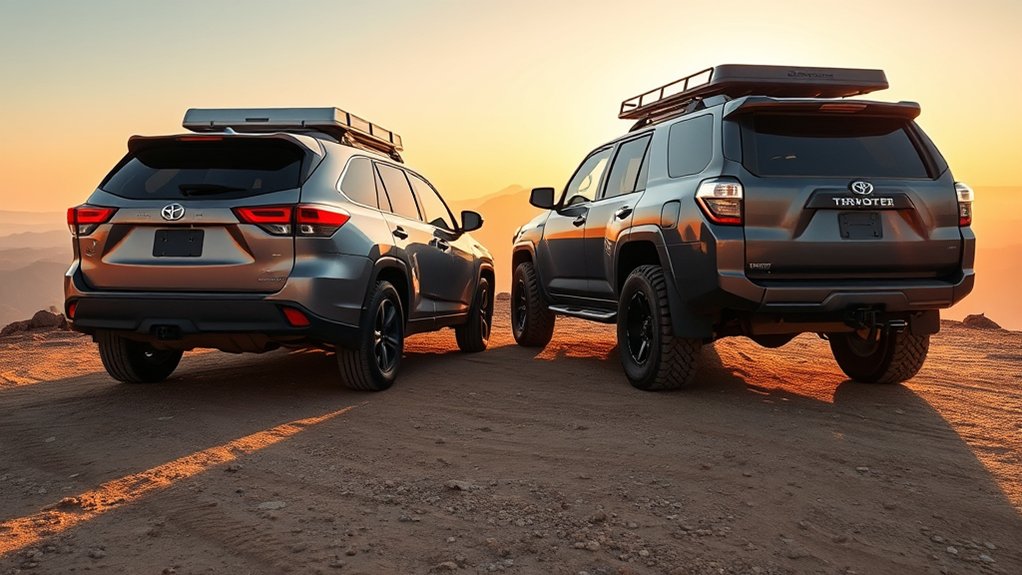
How much can each SUV handle in towing, and how does their drivetrain affect performance? The Highlander can tow up to 5,000 pounds, which is great for everyday family hauling. It offers front-wheel drive (FWD) with available all-wheel drive (AWD), giving a good balance of efficiency and traction.
On the other hand, the 4Runner can tow up to 6,000 pounds, making it better for heavier loads. It’s built on a rear-wheel-drive platform with optional four-wheel drive (4WD), which boosts off-road capability and towing strength.
If you need to tow more or plan to hit rough terrains, the 4Runner might be the better choice. Your decision should depend on your towing needs and whether you want off-road capabilities.
Seating Capacity and Interior Space Differences
When you’re looking at how many people these vehicles can seat, the Highlander can hold up to eight passengers thanks to its standard three-row setup. The 4Runner, on the other hand, usually seats five, but it also offers an optional third row that bumps it up to seven. If you’re thinking about cargo space, the Highlander has more room behind the third row, making it better for everyday family stuff. But if you fold down the seats, the 4Runner gives you a bit more maximum cargo space overall.
As for the interiors, the Highlander is really geared toward family comfort, with a focus on advanced features that make daily driving more enjoyable. The 4Runner keeps a rugged, utilitarian vibe inside, which makes it perfect for off-road adventures and rougher terrain.
Seating Capacity Comparison
Both the Toyota Highlander and 4Runner offer seating options that cater to different passenger needs. When comparing their capacities, the Highlander stands out with its standard three-row setup that can seat up to eight people.
The Toyota 4Runner usually seats five, but an optional third row can increase capacity to seven. This difference really impacts how much space and usability you get, especially for larger families.
The Toyota Grand Highlander, a bigger sibling, pushes these limits even further. Key points in this comparison include:
- Highlander offers 8 seats as standard; 4Runner seats 5 or 7 with the third row
- Both SUVs are 194.9 inches long
- The Highlander has more spacious third-row seating
- Passenger volume favors the Highlander for bigger groups
- The 4Runner’s third row is optional and less roomy than Highlander’s
Cargo Space Variations
Although the Toyota Highlander and 4Runner share the same overall length, their cargo space setups show different priorities. The Highlander’s three-row seating fits up to eight passengers, with 16 cubic feet of cargo space behind the third row.
In contrast, the 4Runner usually seats five, with an optional third row for seven. It offers 12.1 cubic feet behind the last row. When you fold the seats down, both SUVs max out around 84 to 90 cubic feet of cargo space.
The Highlander is more focused on practical family use, while the 4Runner emphasizes off-road capability. The 4Runner prioritizes ruggedness but still offers competitive cargo space for gear and equipment.
Interior Comfort Features
Anyone considering the Toyota Highlander or 4Runner will notice clear differences in interior comfort, especially when it comes to seating capacity and space. The Highlander seats up to eight people with three rows, while the 4Runner can seat five or seven with an optional third row.
In terms of interior space, the Highlander offers more room behind the third row, making it more comfortable for passengers. The 4Runner, on the other hand, has a slightly higher maximum cargo volume when the seats are folded down.
The Highlander’s cabin focuses on family comfort with premium upholstery, creating a more refined interior. The 4Runner keeps its rugged, off-road vibe, which appeals to adventure seekers.
Technology and Interior Features Compared
When comparing technology and interior features, the Toyota Highlander and 4Runner offer different experiences tailored to different priorities. The Highlander emphasizes advanced cabin tech and spacious seating, while the 4Runner focuses on rugged design elements.
Both models support wireless connectivity with Apple CarPlay® and Android Auto™ and offer similar upholstery options. The Highlander has an 8-inch touchscreen that can be upgraded to a 12.3-inch display, whereas the 4Runner’s touchscreen is 8 inches, upgradable to 14 inches.
The Highlander can seat up to 8 passengers, making it more family-friendly, while the 4Runner typically seats 5. The interior style of the Highlander is spacious and family-oriented, whereas the 4Runner has a rugged, off-road vibe.
Off-Road Capability of 4Runner and Highlander
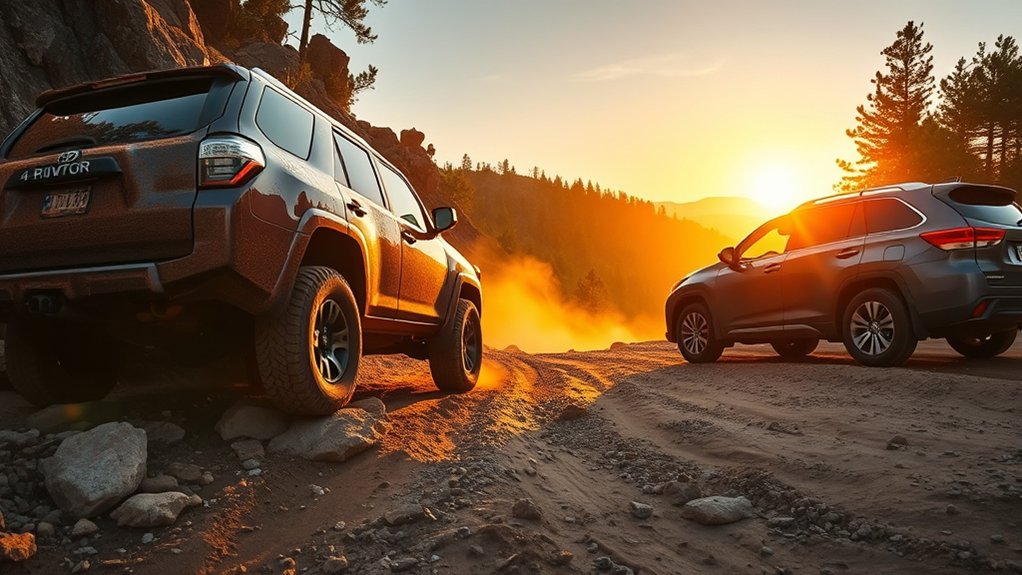
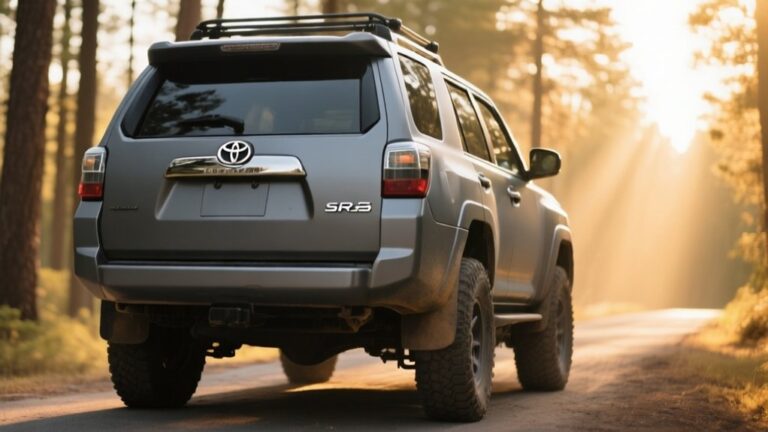
Beyond technology and interior comforts, you’ll find big differences in how the 4Runner and Highlander handle off-road challenges. The 4Runner really shines with better off-road capability thanks to its 10.1 inches of ground clearance, body-on-frame design, and features like Multi-Terrain Select and Crawl Control. The Highlander, on the other hand, offers only 8 inches of ground clearance and a unibody build, focusing more on comfort and fuel efficiency than tackling rugged terrain.
Key off-road differences include the 4Runner’s higher ground clearance, which helps with obstacle navigation. Its Multi-Terrain Select system improves traction on different surfaces. The Highlander is more about on-road comfort and versatility for families. The 4Runner’s TRD Pro trim even offers specialized off-road gear for serious adventures. Meanwhile, the Highlander’s drive modes are designed to make daily driving smooth, not extreme off-roading.
Reliability and Popularity Insights From Owners
Many drivers value reliability above all else, and both the 2025 Toyota Highlander and 4Runner deliver strong dependability, earning “Great” ratings from J.D. Power.
When comparing Highlander vs. 4Runner, the Highlander stands out with better fuel costs, achieving an EPA-estimated 22/29/25 MPG compared to the 4Runner’s 20/26/22 MPG.
This efficiency boosts owner satisfaction and has a positive impact on reliability and resale value over time.
Popularity insights show families favor the Highlander for its spacious three-row seating and tech features, while off-road enthusiasts prefer the rugged build of the 4Runner.
Both models need routine maintenance to stay durable in the long run.
Ultimately, your choice depends on whether you prioritize fuel economy and family comfort or off-road capability with a sturdy frame.
Frequently Asked Questions
What Are the Warranty Differences Between the Highlander and 4runner?
You won’t find any warranty differences between the Highlander and 4Runner. Both offer a 3-year/36,000-mile basic warranty and a 5-year/60,000-mile drivetrain warranty.
They also come with a 5-year unlimited-mile corrosion warranty and a 2-year unlimited-mile roadside assistance program. If you’re considering a hybrid, both cover hybrid components for 5 years with unlimited mileage.
How Do Insurance Costs Compare for Both Models?
You’ll usually pay less to insure a Highlander than a 4Runner. The Highlander’s family-focused design and advanced safety features help lower premiums.
In contrast, the 4Runner’s rugged build and off-road capabilities often raise insurance costs because of the increased risk. Repair expenses and theft rates also play a role, with the 4Runner generally costing more to fix.
Still, your personal driving history and location are big factors. It’s a good idea to get quotes for both to see what applies to you.
Which Model Has Better Resale Value After Five Years?
You’ll find the 4Runner holds better resale value after five years, typically retaining about 60% of its original price. Its rugged off-road appeal keeps demand high, especially among enthusiasts.
The Highlander, while reliable and family-friendly, usually retains around 55%. Though both are solid investments, if resale value matters most to you, the 4Runner’s niche market and durability give it a slight edge over the Highlander.
Are There Any Significant Differences in Cargo Storage Options?
Think of cargo space like a backpack—you want room for essentials but also comfort. The Highlander offers a more family-friendly layout with 16 cubic feet behind the third row, making it perfect for daily errands.
The 4Runner, on the other hand, packs more rugged cargo volume, especially behind the second row. Both vehicles max out similarly, but the 4Runner leans more toward utility.
Meanwhile, the Highlander prioritizes passenger comfort with flexible storage options, making it a great choice for family outings.
How Do Maintenance Costs Differ Between the Two SUVS?
You’ll find maintenance costs for the Highlander and 4Runner pretty similar since both share Toyota’s reliable, cost-effective design. Routine services like oil changes and tire rotations happen on similar schedules.
If you use the 4Runner for off-roading, specialized parts might increase expenses a bit. Meanwhile, the Highlander’s family-focused interior could lead to slightly higher wear and tear over time.
Conclusion
When choosing between the Highlander and 4Runner, it really depends on what matters most to you.
If you want better fuel efficiency and a smoother ride, the Highlander is a great pick.
For serious off-road adventures and rugged towing, the 4Runner really shines.
Remember, different strokes for different folks. Each SUV fits different needs.
By considering engine power, space, tech, and durability, you can find the Toyota SUV that matches your lifestyle and driving needs.