Can A 4runner Tow A Car – Find Out
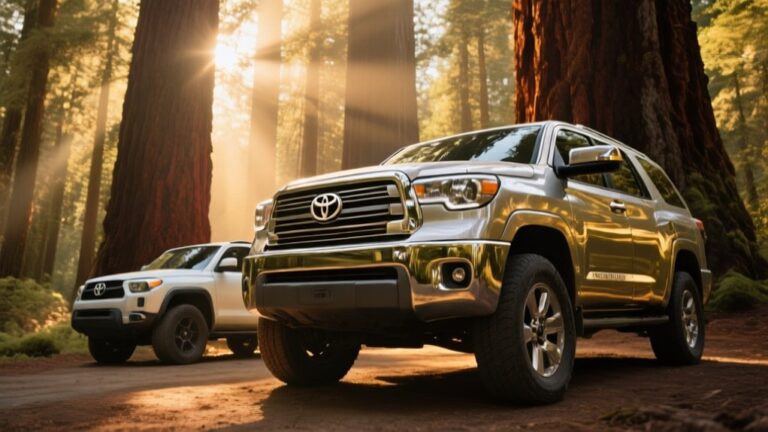
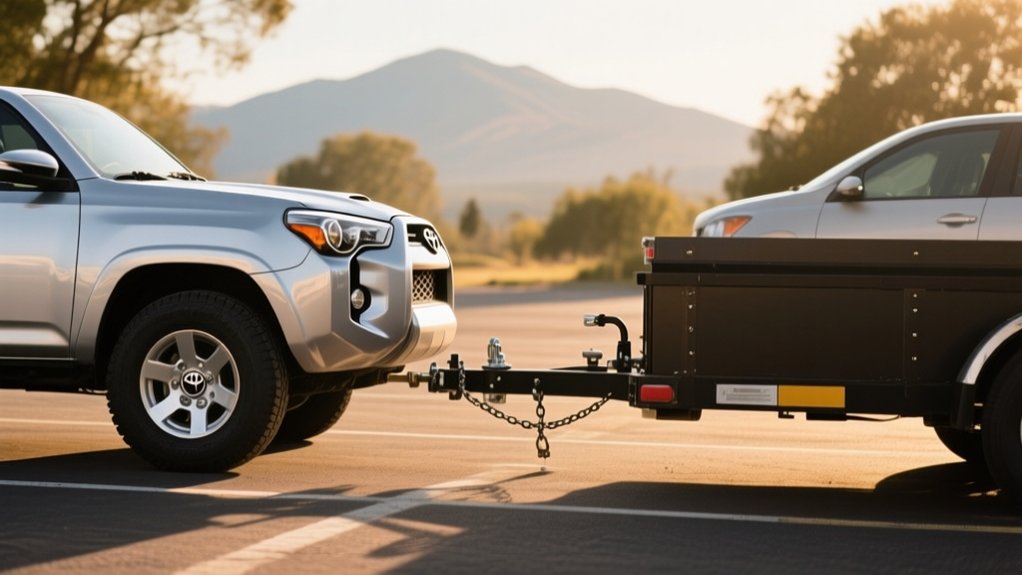
You can tow a car with your 4Runner as long as the combined weight stays within its towing capacity, which is usually around 5,000 pounds depending on your model and trim.
Smaller cars and lightweight trailers work best. You’ll want a Class III hitch for safety.
Always follow legal requirements, use proper equipment, and keep an eye on fluid levels and brake performance to avoid damage.
If you tow often or with heavier loads, understanding maintenance and upgrade options will help keep your 4Runner in good shape.
Key Takeaways
- A 4Runner can tow a car if the vehicle’s weight is under its maximum towing capacity of around 5,000 pounds.
- Always use a Class III or IV hitch receiver and a towing package with proper wiring for safety and legality.
- Follow local laws and safety measures, including chains, brake lights, and trailer brakes, when towing a car.
- Monitor transmission temperature and brake condition closely during and after towing to prevent damage and ensure safety.
- Consider upgrading towing equipment if regularly hauling loads near or above 5,000 pounds to avoid strain and wear.
How Much Can Your 4Runner Tow Safely?
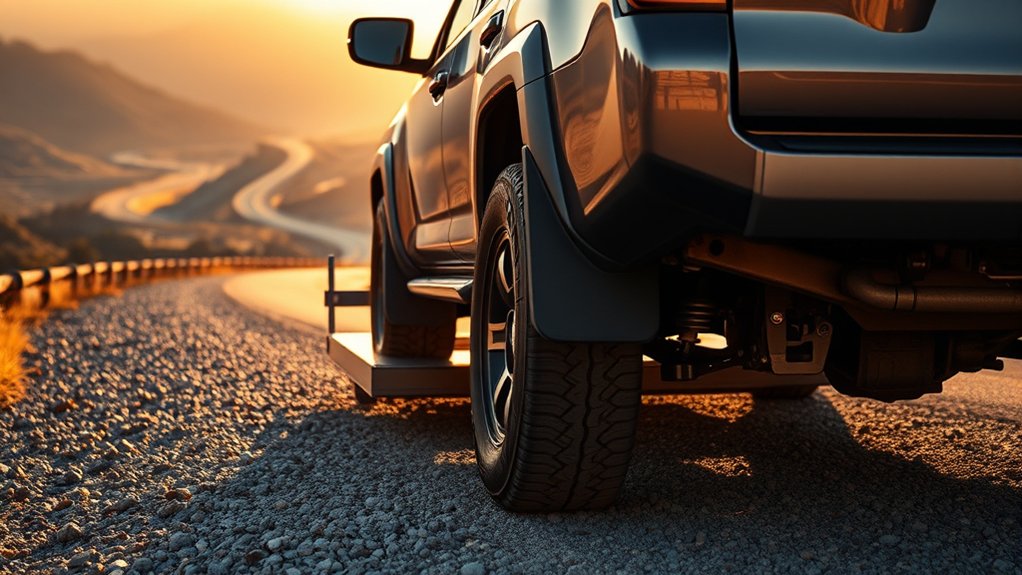
Although the Toyota 4Runner can tow up to about 5,000 pounds when properly equipped, it’s important to check your owner’s manual for the exact towing capacity of your specific model and trim. This can vary based on the year and configuration, so knowing your limits is really important.
Using the right hitch, usually a class III trailer hitch, ensures a secure attachment and safe towing. Exceeding the capacity can damage your vehicle and create unsafe conditions.
Regular maintenance is also key for safe towing. Checking your transmission fluid and brake condition before hitting the road helps keep everything running smoothly and prevents breakdowns.
Staying within the recommended towing limits, using the correct hitch, and keeping up with maintenance are the best ways to tow safely with your 4Runner.
What Types of Cars and Trailers Can a 4Runner Tow?
When you consider the Toyota 4Runner’s maximum towing capacity of around 5,000 pounds, you can tow a variety of vehicles and trailers that stay within this limit. This includes compact cars like the Toyota Corolla and smaller SUVs, as long as their weight is under the towing capacity.
The 4Runner is also great for towing lightweight trailers, such as pop-up campers or small travel trailers. Proper weight distribution is key to keeping everything stable and under control, so using a weight-distributing hitch is recommended.
Plus, the 4Runner’s towing package, which includes a 4-pin wiring harness, helps support trailer lighting for safer towing. By following these guidelines, you can confidently tow different vehicles and lightweight trailers without pushing past your 4Runner’s limits.
Legal Requirements for Towing With Your 4Runner
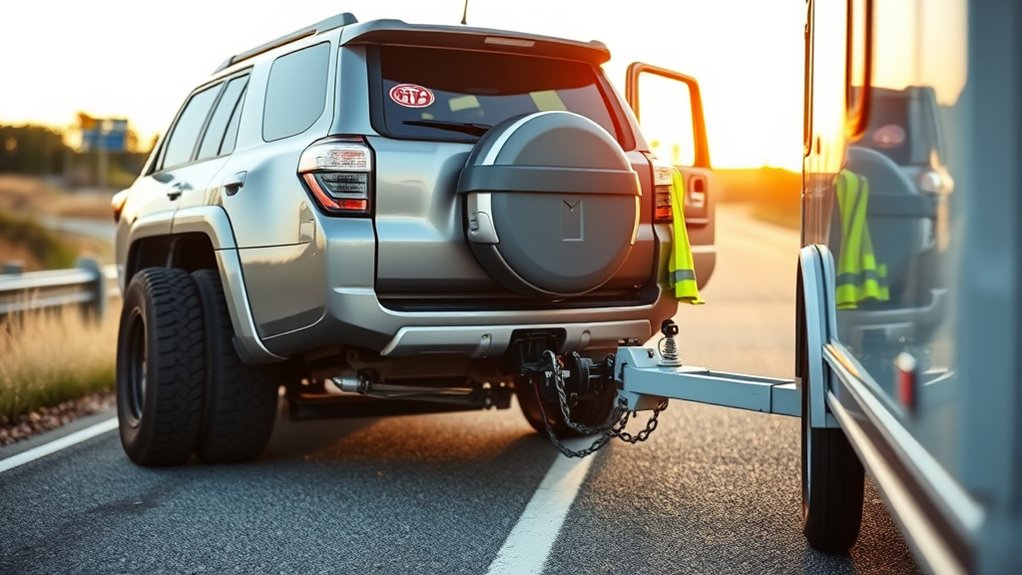
Before you tow with your 4Runner, it’s important to understand the legal requirements for your area and vehicle setup. Make sure you know your 4Runner’s towing capacity, which is usually between 5,000 and 6,000 pounds.
You also need to follow local laws about permits and registration. Ensuring proper weight distribution is key to avoiding handling issues and potential legal penalties.
Make sure you have safety measures like safety chains, brake lights, and trailer brakes in place. Confirm that your towing package is properly installed to stay compliant and safe while towing.
Essential Towing Equipment for the Toyota 4Runner
Understanding your 4Runner’s towing capacity and legal requirements is important, but having the right equipment makes all the difference for a safe and effective towing experience. To tow a car safely, you need to properly equip your Toyota 4Runner, keeping within its towing capacity of 5,000 to 5,300 pounds.
Essential towing gear includes a Class III or IV hitch receiver for strength and compatibility with heavier loads. Safety chains are crucial for securely attaching the trailer and ensuring you stay compliant with towing regulations.
A Class III or IV hitch and safety chains are vital for secure, regulation-compliant towing.
A brake controller is especially important if the towed vehicle has its own braking system. It helps provide smooth stops and better control, making your towing setup safer and more reliable.
This gear helps you maintain control and safety every mile you tow, giving you peace of mind on the road.
Preparing Your 4Runner: Fluids, Hitch, and Safety Checks
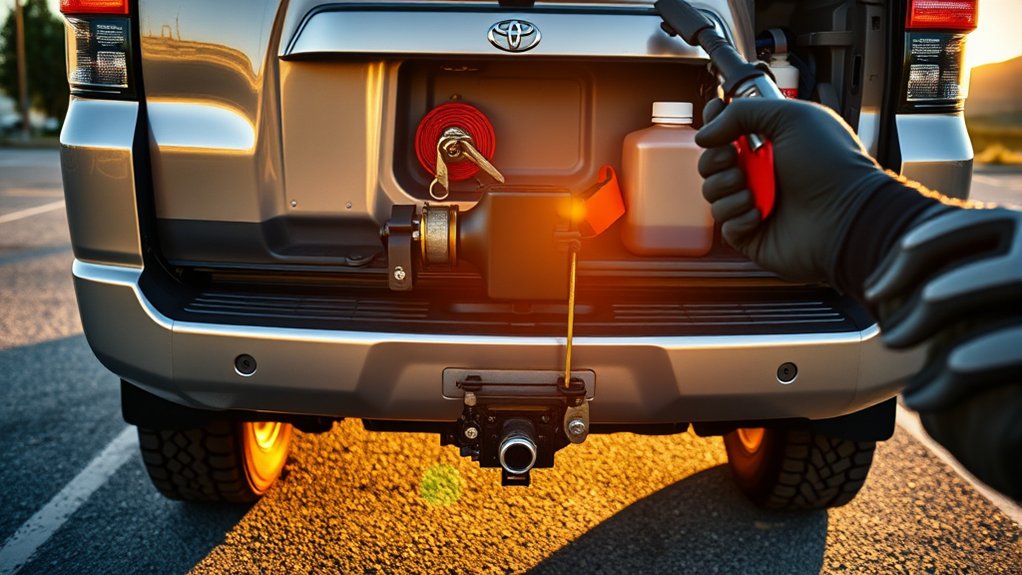
Although your Toyota 4Runner is built for towing, you should check and maintain critical fluids like transmission, differential, and transfer case fluids to prevent overheating and mechanical failure during heavy loads. Make sure the transmission fluid is at the right level and in good condition, since towing puts extra strain on it, especially on long trips.
Check and top off differential and transfer case fluids to keep your 4Runner running smoothly. Next, install a hitch that matches your vehicle’s towing capacity, ensuring it can safely support whatever you’re towing.
Finally, do thorough safety checks. Verify that trailer brake lights and turn signals work, and make sure safety chains are securely attached. Following these steps helps ensure safe, reliable towing and protects your 4Runner from unnecessary wear.
Hooking Up a Car Trailer to Your 4Runner
Three key steps guarantee you hook up a car trailer to your 4Runner safely and correctly. First, check your vehicle’s towing capacity to make sure it can handle the trailer’s weight.
Next, attach the trailer securely to the hitch receiver, making sure the safety chains are crossed beneath the hitch for added security.
Finally, connect the trailer lights to your 4Runner’s electrical system using the wiring harness included in the towing package. This ensures brake and signal lights work properly, which improves visibility and safety.
Also, double-check that the trailer’s weight is evenly distributed and inspect tire pressure and brakes before hitting the road. Following these steps helps you tow confidently and stay within your 4Runner’s limits.
Towing Driving Tips for the Toyota 4Runner
How can you guarantee a safe and controlled towing experience with your Toyota 4Runner? First, respect its towing capacity of up to 5,000 pounds and always use a weight-distributing hitch for better stability. This helps keep your vehicle steady on the road.
Monitor your transmission temperature closely. Avoid overheating above 200°F to prevent damage to your transmission. Keep an eye on the gauge, especially during long pulls or hilly terrain.
Use engine braking on downhill slopes to reduce brake wear and help you stay in control. It’s a simple trick that makes a big difference in safety.
Follow local laws, including safety chains and trailer brakes, to ensure everything stays secure. Staying compliant keeps you and others safe on the road.
| Tip | Reason |
|---|---|
| Use weight-distributing hitch | Improves stability and control |
| Monitor transmission temperature | Prevents overheating damage |
| Utilize engine braking | Reduces brake strain downhill |
Common Towing Challenges and How to Avoid Them
When you tow a car with your Toyota 4Runner, you’ll face specific challenges that require careful attention to avoid damage and keep things safe. First, never go over your 4Runner’s towing capacity, which is usually around 5,000 pounds. Overloading can stress the engine and brakes, leading to potential damage.
Next, use a weight distribution hitch to help balance the load. This reduces strain on your suspension and makes handling easier. Keep an eye on overheating issues by regularly checking your transmission and engine temperatures, especially during long trips or uphill drives.
Additionally, stick to a safe towing speed of around 55 mph. This helps prevent excessive heat buildup and keeps your vehicle stable. Addressing these common challenges ahead of time makes towing safer and more efficient, helping you avoid mechanical problems or unsafe driving situations.
Maintaining Your 4Runner After Towing Trips
After you’ve been towing, it’s a good idea to check your 4Runner’s fluid levels. This includes things like the differential oils and transfer case fluids. Keeping an eye on these helps ensure everything’s running smoothly and can prevent any long-term issues.
You’ll also want to watch the transmission temperature. Aim to keep it below 200°F to avoid overheating, which can happen after heavy towing. It’s a simple step that can really save you from bigger problems down the road.
And don’t forget to inspect your brakes carefully. Towing puts extra strain on them, so they can wear out faster. Taking a quick look to make sure everything’s in good shape can help keep your 4Runner safe and ready for your next adventure.
Fluid Level Checks
Regularly checking your 4Runner’s fluid levels is key to keeping it running smoothly after towing. Making sure all fluids are at the right levels helps prevent overheating and can extend your vehicle’s lifespan. Focus on these main areas:
- Transmission fluid: Towing often lowers this fluid, so check and top it off when needed. Usually, a change is recommended every 90,000 miles or sooner if you notice high heat.
- Transfer case fluid: After towing, verify this fluid. It usually only needs about a quarter quart refilled to keep everything running smoothly.
- Differential fluid: Inspect this and top it up with nearly half a quart if needed to maintain optimal performance.
Transmission Temperature Monitoring
Since towing puts extra strain on your 4Runner’s transmission, keeping an eye on its temperature is key to preventing overheating and maintaining performance.
When the transmission temperature exceeds 200°F, it signals overheating. Using a transmission temperature gauge during long or uphill trips helps you track heat levels.
Regularly check transmission fluid levels before and after towing to ensure everything’s running smoothly and to reduce wear.
If you tow often, think about changing the transmission fluid more frequently than the usual 90,000-mile interval to keep things running efficiently.
Managing airflow around the transmission and using engine braking on hills also helps control the temperature and avoid overheating.
Staying proactive with transmission temperature monitoring protects your 4Runner’s longevity and keeps your towing safe and reliable.
Brake System Inspection
Whenever you tow with your 4Runner, it’s important to inspect your brake system thoroughly to ensure safety and keep everything running smoothly. Towing puts extra strain on your brakes, which can lead to faster wear, so a detailed inspection after each trip is a good idea.
Focus on key areas like checking your brake pads and rotors for wear or damage caused by towing. Also, keep an eye on your brake fluid levels and replace the fluid if it’s discolored or has moisture in it.
Pay attention to brake temperature during long descents to prevent overheating and brake fade. Listen for any unusual noises and test how your brakes respond.
If you’re doing heavy or frequent towing, it’s wise to have a professional inspect your brake system. This helps ensure all parts stay in top condition, keeping you safe and reliable on the road.
When to Upgrade Your 4Runner for Heavier Towing
If you find yourself regularly towing loads close to or over your 4Runner’s 5,000-pound limit, it’s probably time to think about an upgrade. You’ll want to keep an eye out for signs like your engine working harder than usual, overheating, or your brakes wearing down faster. These are clues that your current setup might not be enough for the heavier loads.
Taking a good look at your towing needs and your vehicle’s capacity can really help you stay safe and make sure your 4Runner lasts a long time. If you’re pushing beyond its limits often, it might be worth considering a more powerful vehicle better suited for heavier towing.
Signs You Need Upgrade
Although your 4Runner is designed to tow up to around 5,000 pounds, you’ll want to think about upgrading if you’re regularly hauling heavier loads. Spotting the signs early helps keep your towing capacity and stability in check.
Here are three key signs you need an upgrade:
First, if you notice excessive rear sagging or your brakes aren’t performing well while towing, it’s a sign your suspension and brakes are overworked.
Second, if your transmission temperatures often go beyond safe limits during towing, it indicates your transmission might be struggling with the load.
Finally, if your 4Runner has trouble on steep inclines or long drives, it’s likely that the engine isn’t powerful enough for heavier towing needs.
Upgrading suspension parts or switching to a vehicle with a higher towing capacity can make your trips safer and more stable.
Assessing Towing Capacity
Understanding your 4Runner’s towing capacity is key before upgrading for heavier loads. The 6th gen 4Runner generally tows between 5,000 and 5,300 pounds, depending on the model and equipment.
Always check the Gross Vehicle Weight Rating (GVWR), which includes the vehicle’s weight, passengers, and cargo. This helps you avoid overloading your vehicle.
If you plan to tow heavier trailers regularly, consider upgrading to a heavier-duty hitch and adding a transmission cooler. These can boost performance and safety.
Don’t forget to keep your tire pressure in check and regularly inspect fluid levels like transmission and differential fluids.
Following the manufacturer’s towing guidelines is crucial to prevent damage or unsafe situations. Carefully consider these factors to see if your 4Runner needs an upgrade for your towing needs.
Frequently Asked Questions
Can a 4runner Tow in Snowy or Icy Conditions Safely?
Yes, you can tow safely in snowy or icy conditions with a 4Runner if you take proper precautions. Use weight distribution and sway control hitches to keep things stable.
Make sure the trailer’s brakes work well to improve stopping power. Keep your speed between 45-55 mph to avoid losing control.
Regularly check tire tread and pressure on both vehicles. These steps help you tow confidently in slippery weather.
How Does Towing Affect 4runner’s Fuel Efficiency?
Towing with your 4Runner can feel like dragging a small planet behind it, seriously hammering your fuel efficiency. You’ll often see your mileage drop by 20-30%, sometimes down to just 10-12 mpg from the usual 17-20.
The engine works harder, especially on hills or against wind, burning more fuel and risking overheating. Keep up regular maintenance like air filter and tire pressure checks to ease some of this strain and improve efficiency.
Can I Tow a Car With a 4runner on Unpaved Roads?
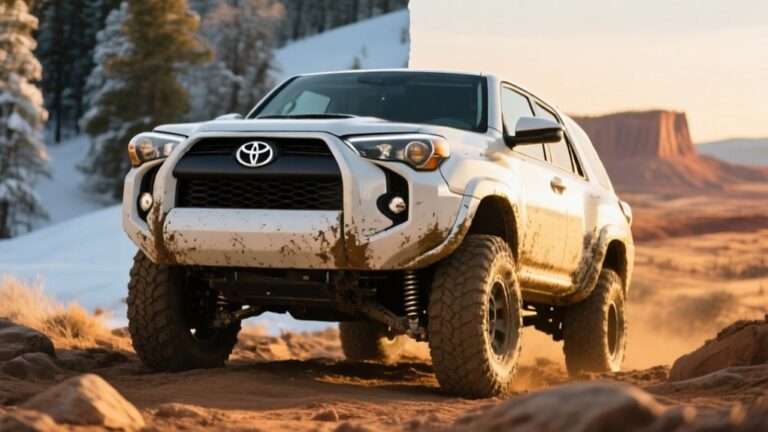
Yes, you can tow a car with a 4Runner on unpaved roads if it has the right towing package and stays within its 5,000-pound capacity.
Make sure to engage 4WD for better traction and drive slowly to stay in control. Check tire pressure and suspension settings before you start.
Also, regularly inspect your hitch and brake lights to ensure everything’s safe and working properly during your tow.
What Insurance Considerations Apply When Towing With a 4runner?
Picture yourself cruising down the highway, towing a car behind your 4Runner. You’ll want to check your insurance carefully to make sure it covers towing, including any damage to the towed vehicle.
Confirm if your policy includes trailer liability protection. Don’t forget to inform your insurer about your towing plans; failing to do so might risk coverage during accidents.
Consider adding specialized towing or roadside assistance plans for extra peace of mind.
Does Towing Void the 4runner’s Warranty?
Towing doesn’t automatically void your 4Runner’s warranty as long as you stay within Toyota’s recommended towing limits.
If you go over those limits or make modifications that cause damage, your warranty could be affected. Keep detailed records of your towing habits and maintenance to support any warranty claims.
Toyota may scrutinize issues related to towing, especially drivetrain or suspension problems, so following guidelines is essential to maintain coverage.
Conclusion
Towing with your 4Runner can be as smooth as a well-oiled machine when you respect its limits and prepare properly. Knowing its maximum towing capacity, equipping the right gear, and performing essential safety checks help you tow confidently and legally.
Remember, pushing beyond its capabilities is like sailing into a storm—risky and unnecessary. Maintain your 4Runner diligently after trips, and upgrade when heavier loads call. Your vehicle will thank you with lasting performance.