
How Many Gallons Is One Barrel of Oil? A Complete Guide with Key Facts
How many gallons is one barrel of oil? The answer is 42 gallons in the US.
This has been the official standard for crude oil barrels for many years. Knowing this helps you understand many oil-related numbers you see.
A 42-gallon barrel roughly weighs 300 pounds when full. That size made it easy for workers to handle in the early oil fields. It also balanced volume and weight for transport.
The 42-gallon measure dates back to the 19th century when oil began commercial production. Producers needed a consistent way to trade oil across regions. This standard stuck even as containers and methods evolved.
Remember that one barrel of crude oil often yields more than 42 gallons of refined products. Refining adds volume because lighter products form. So, the 42-gallon barrel refers to raw oil, not finished fuel.
Key Takeaways
- One barrel of oil always means 42 US gallons of raw crude oil.
- A full barrel weighs about 300 pounds, suitable for manual handling.
- Refined products from one barrel exceed 42 gallons due to volume gain.
- Gasoline makes up close to half of a barrel’s refined output.
- Diesel and heating oil total about a quarter of refined products.
- A 42-gallon barrel holds roughly 159 liters if you use metric units.
How Many Gallons Are in One Barrel of Oil?
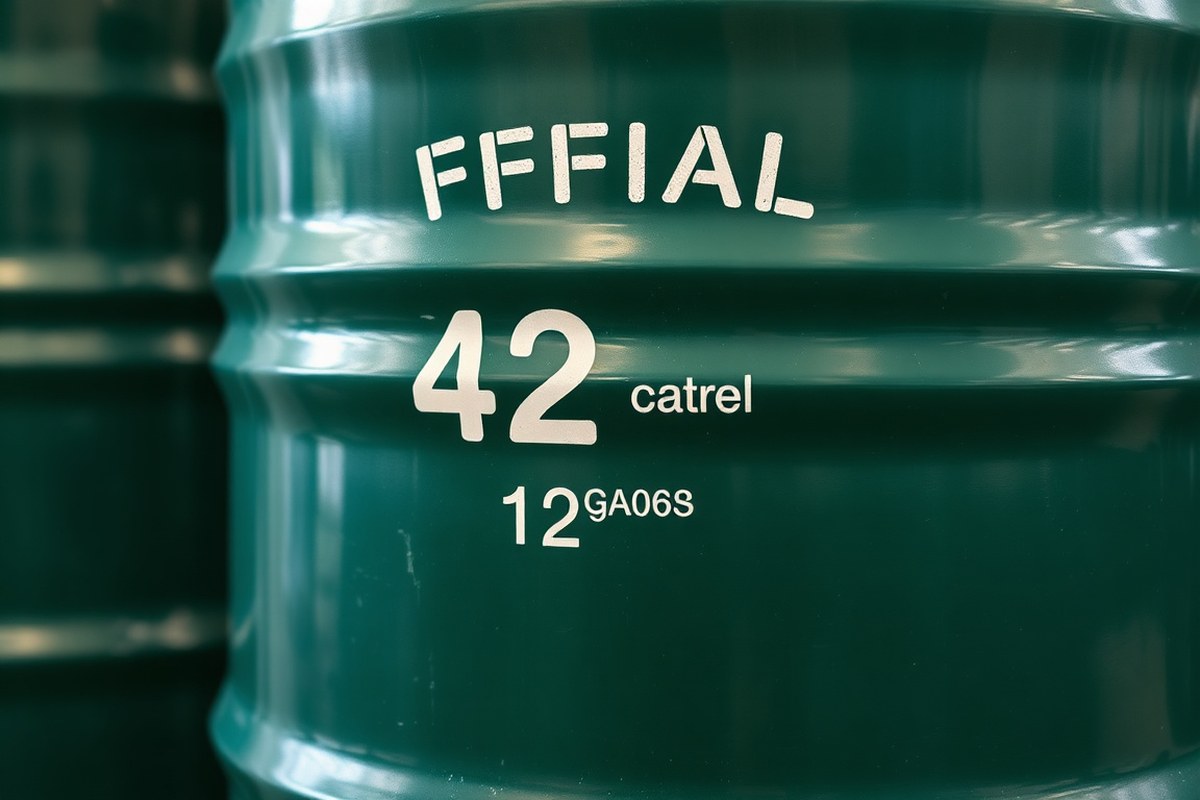
A standard barrel of oil in the US contains exactly 42 gallons. This volume is the official measure used throughout the American oil industry. When people say “one barrel of oil,” they mean 42 gallons of liquid petroleum.
Confusion happens because the size of a barrel can vary depending on what it holds. For example, wine or beer barrels often have different volumes.
But in oil trading and production, the 42-gallon barrel stays constant. It is commonly called the US oil barrel or petroleum barrel.
Why 42 gallons? This size was set during the 1860s in Pennsylvania’s oil fields. That volume balanced being heavy enough to transport easily while still manageable for workers to move.
A 42-gallon barrel weighs about 300 pounds when full, which two people can handle. Today, physical wooden barrels are not used for crude oil transport. But the 42-gallon unit remains the standard.
To picture it simply, imagine a large drum holding 42 gallons of liquid. That equals about 159 liters if you prefer metric units.
When you want to convert barrels into gallons, multiply the barrel number by 42. Multiplying gallons by about 0.024 gives you barrels, if you want to flip the conversion.
The 42-gallon volume is a key baseline for pricing oil. It also helps set refinery processing amounts. Reporting of oil quantities also uses this unit.
One barrel typically yields around 45 gallons of refined products due to expansion during processing. But before refining, you start with that fixed 42 gallons per barrel. Knowing this exact volume helps industry workers and buyers communicate clearly about oil quantities.
Why Is a Barrel of Oil Exactly 42 Gallons?

The 42-gallon barrel size became the standard for oil. It balanced volume and weight well for easy transport. This made moving oil simpler and more practical.
This size began during the Pennsylvania oil boom in the 1860s. The oil industry chose it for practical reasons, including ease of handling and shipping costs.
The Pennsylvania Oil Boom Context
The first major oil discovery in the United States was in Pennsylvania around 1859. This discovery triggered rapid growth in oil production and trade. Oil had to be stored and transported efficiently as demand grew quickly.
Before settling on a standard, oil was moved in various container sizes. Inconsistent barrel sizes made pricing and trade complicated. The oil business needed a clear standard to simplify selling and shipping across regions.
Wooden Whiskey Barrels as a Starting Point
Oil producers initially used wooden whiskey barrels for storing crude oil. These barrels held about 40 to 45 gallons. They were already widespread and easy to get from local cooperages.
Producers found 42 gallons was a practical middle ground. The barrel size was near whiskey barrels in volume. Workers found it easy to lift and handle.
That helped keep oil transport efficient. This size became the de facto standard by 1866.
Balancing Weight and Volume for Transport
The 42-gallon barrel size weighs about 300 pounds when filled with crude oil. This weight struck a balance between holding enough oil and being manageable by workers. Strong but typical horses and wagons could carry barrels safely without damage.
This balance reduced transport costs and worker injuries. Barrels needed to fit tightly on railcars and ships, so consistent sizing helped packing. The standardized barrel size also simplified accounting and ledgers.
Here is a simple step-by-step look at how the 42-gallon size became standard:
- Use whiskey barrels initially to hold crude oil during early drilling.
- Test different barrel sizes for oil volume and handling ease.
- Measure filled barrels for weight to ensure safe transport.
- Agree among producers and transporters on a uniform size.
- Settle on 42 gallons as the best mix of volume and weight.
- Create industry standards to use the 42-gallon barrels widely.
- Adopt this size officially by 1866 for oil commerce.
Keep barrels uniform in volume and weight to avoid shipping problems and disputes.
How to Convert Barrels to Gallons and Vice Versa
To convert barrels of oil to gallons, multiply the barrels by 42. To convert gallons back to barrels, multiply gallons by 0.02381 or divide by 42. These formulas work because one barrel equals exactly 42 US gallons.
Barrels to Gallons Conversion Formula
One oil barrel always equals 42 US gallons. This number comes from oil industry standards, making conversions straightforward. The formula is simple and looks like this:
Gallons = Barrels × 42
You multiply the number of barrels by 42 to get gallons.
Gallons to Barrels Conversion Formula
To convert gallons of oil into barrels, do the opposite of multiplying. You either multiply gallons by a small factor or divide by 42. The formula is:
Barrels = Gallons × 0.02381
Or use this equivalent:
Barrels = Gallons ÷ 42
Sample Worked Calculations
Here’s how to convert values both ways. Follow these steps to get accurate results. The steps work whether you do it by hand or use a calculator.
- Note down the number of barrels or gallons you want to convert.
- To convert barrels to gallons, multiply your barrel count by 42.
- When you have gallons, choose whether to multiply by 0.02381 or divide by 42.
- Use a calculator for precise decimal results if needed.
- Check your answer to ensure it makes sense. For example, 2 barrels equal 84 gallons.
Example 1: You have 5 barrels of oil. Multiply 5 × 42. This equals 210 gallons.
Example 2: You have 126 gallons. Divide 126 ÷ 42. The result is 3 barrels.
These simple formulas make conversions quick without confusion. Sometimes oil companies use conversion tables or online calculators. These tools instantly provide results for large numbers or mixed units.
| Barrels (bbl) | Gallons (US) |
|---|---|
| 1 | 42 |
| 2 | 84 |
| 5 | 210 |
| 10 | 420 |
What Products Come from One Barrel of Crude Oil?
One barrel of crude oil contains 42 gallons. This oil turns into many products.
About three-quarters become transportation fuels. Gasoline alone accounts for 20 gallons, or nearly half the barrel.
Alongside gasoline, diesel and jet fuel form the rest of the transportation fuels from one barrel. Kerosene is used for heating and cooking.
Residual fuels make up a small part. Each product serves different needs and markets.
| Refined Product | Volume per Barrel (gallons) | Percentage of Barrel |
|---|---|---|
| Gasoline | 20 | 45% |
| Diesel and Jet Fuel | 12.8 | 30.5% |
| Kerosene | 4 | 9% |
| Residual Fuels | 1 | 2% |
| Other Products | 4.2 | 10.5% |
Transportation fuels like gasoline, diesel, and jet fuel add up to about 32.8 gallons, or three-quarters of the barrel. The remaining products cover heating fuels and additives important for refining processes. These variations depend on the crude oil type and refinery setup.
Knowing this breakdown helps you understand fuel supply and prices. The balance between products changes when demand shifts.
This can change oil and gasoline prices. Gasoline and heating oil come from the same barrel.
Why Does Refining Increase the Volume Beyond 42 Gallons?
Refining crude oil increases volume because of processing gain. This happens as crude is split into lighter products like gasoline and diesel. These lighter products take up more space than the original crude oil.
The main reason is density change during refining. Crude oil is denser and heavier than most refined products.
When refiners break crude into lighter parts, the mass stays the same. The volume, however, grows during this process.
For example, 42 gallons of crude oil can yield about 45 gallons of refined products. The volume goes up because products like gasoline weigh less.
Gasoline, kerosene, and jet fuel all have lower density. The process physically expands the liquid volume under the same weight.
Refiners use distillation to separate crude oil into different fractions. The ASTM D86 standard guides distillation under atmospheric pressure to achieve this. Heating crude breaks it into components boiling at various temperatures, each with a specific density.
The API gravity scale measures how heavy or light petroleum liquids are compared to water. Lighter products have higher API gravity and thus expand volume compared to denser crude. This shift results in processing gain, boosting volume totals after refining.
Processing gain impacts how oil products are priced and supplied. More volume means more sellable fuel from the same crude batch.
However, this gain depends on crude quality and refinery setup. Heavy or sour crudes might show less gain or in rare cases, slight volume losses.
Not all refining leads to volume increases. Some upgrades like coking or cracking change the number of carbon atoms.
This alters mass or volume in different ways. But simple distillation usually causes volume to expand due to product density differences.
Keep in mind that processing gain varies by refinery and crude type. Do not expect the exact 3-gallon increase every time.
Differences Between US Gallons and Imperial Gallons in Oil Measurement
The US liquid gallon and the UK imperial gallon differ, which affects oil barrel measurements. One barrel of oil holds 42 US gallons but only about 34.97 imperial gallons. This difference matters for trade and conversion between countries using different gallon measurements.
The US liquid gallon equals 231 cubic inches. The imperial gallon is 277.42 cubic inches. Countries that use the imperial system, mainly the UK and some Commonwealth nations, apply imperial gallons.
The US and others use liquid gallons. This creates different volume values for the same barrel.
| Measurement Unit | Gallons per Oil Barrel | Cubic Inches per Gallon |
|---|---|---|
| US Liquid Gallon | 42 | 231 |
| Imperial Gallon (UK) | Approximately 34.97 | 277.42 |
For converting barrels to gallons, use 42 gallons per barrel in the US system and 34.97 gallons in the imperial system. Multiply barrels by 42 for US gallons or by 34.97 for imperial gallons. Calculations must match the gallon system used in your country or contract.
International oil trade usually applies US liquid gallons for standardization. The 42 US gallons per barrel is the global reference.
Knowing the difference avoids confusion when reading international reports or trading. Use conversion factors before making cross-border volume calculations.
How Much Does One Barrel of Oil Weigh?
A 42-gallon barrel of crude oil usually weighs about 300 to 350 pounds. The exact weight depends on the oil’s density or API gravity. API gravity measures how heavy or light the crude is compared to water.
Heavier crude oil has lower API gravity and weighs more per gallon. Lighter crudes have higher API gravity and weigh less.
For example, a heavy crude might weigh around 7.5 pounds per gallon. A light crude could weigh closer to 6.5 pounds per gallon.
Weight matters a lot when transporting and handling oil. Trucks, railcars, and ships have weight limits.
So knowing the oil’s weight helps avoid overloading. Accurate weight measurement also affects shipping costs and safety on the road or sea.
To get the barrel’s weight, multiply its volume by density. A barrel holds 42 gallons. Use crude’s density in pounds per gallon to finish the calculation.
For instance, 42 gallons times 7 pounds per gallon equals about 294 pounds per barrel. Different crude grades and temperatures change this calculation.
Temperature affects crude density too. Warm oil is less dense and weighs less. Cold oil is denser and heavier.
Transport companies change weights or volumes to keep measurements accurate. They base adjustments on temperature. This helps them stay safe during shipping.
How Is a Barrel Used in Oil Pricing and Trade?
The barrel is the standard unit used when pricing oil worldwide. Oil markets rely on this measure to keep contracts and trading clear and consistent. One futures contract on the NYMEX covers 1,000 barrels, making large trades more manageable.
WTI (West Texas Intermediate) and Brent are two main benchmarks. They are quoted per barrel in US dollars worldwide. These prices set the standard for oil markets everywhere.
WTI oil comes from the US and acts as a key price indicator for North America. Brent comes from the North Sea, influencing prices in Europe and other parts of the world. Both help set a baseline price for different oil types and grades.
Oil price changes per barrel directly affect fuel costs you see at gas stations. Crude oil typically makes up about 50% of diesel’s final price. So, when the barrel price rises, diesel and heating oil costs rise too.
If crude oil jumps $10 per barrel, diesel prices rise too. Diesel often goes up by several cents per gallon. This change quickly adds up for truckers and freight companies.
Traders, refiners, and governments use barrel pricing to set budgets and plan fuel supplies. Contracts specify price per barrel, so buyers and sellers understand their costs upfront. Using a clear unit stops confusion about oil type or amounts.
This helps global markets run properly without mix-ups. Everyone knows exactly what is being priced and shipped.
Watch WTI and Brent oil prices every day. This helps you guess when fuel costs will change near you. Knowing this keeps you better prepared for price swings.
How to Calculate Total Gallons from Multiple Barrels of Oil
To find how many gallons you get, multiply barrels by 42. Each barrel holds 42 gallons of oil. Multiply your barrels by this number to find gallons.
Each barrel always holds 42 US gallons. For example, 5 barrels equal 210 gallons because 5 times 42 is 210.
Step-by-Step Calculation for Small Volumes
You can easily convert a few barrels into gallons with a simple multiplication. This helps when you need exact numbers for small-scale uses like fuel purchases.
- Identify the number of barrels you want to convert.
- Remember that one barrel equals 42 gallons.
- Multiply the number of barrels by 42.
- Write down your result as the total gallons.
For example, if you have 5 barrels, multiply 5 by 42. That gives you 210 gallons. This method works for any small number, such as 10, 20, or 50 barrels.
Handling Large Volumes Efficiently
When you deal with hundreds or thousands of barrels, quick multiplication may take more time. Using mental shortcuts or a calculator makes the process easier.
For example, 100 barrels equal 4,200 gallons, while 1,000 barrels mean 42,000 gallons. Recognizing these round numbers helps track oil volumes fast during trading or inventory checks.
Using Conversion Tables for Quick Reference
Conversion tables are handy for common barrel volumes. They save you from calculating each time and reduce the chance of errors.
| Barrels | Gallons |
|---|---|
| 5 | 210 |
| 100 | 4,200 |
| 500 | 21,000 |
| 1,000 | 42,000 |
| 10,000 | 420,000 |
Use this table for fast checks during work or reports. It’s especially useful if you manage oil storage or shipments daily.
Step-by-Step Action Plan to Understand Oil Barrel Measurements
Use these steps to get a clear grasp of barrel-to-gallon conversions and related details.
- Day 1: Memorize that one barrel always equals 42 US gallons. It helps with all oil volume calculations.
- Day 2: Learn why 42 gallons became the standard size. Knowing this connects you to oil history.
- Day 3: Practice converting barrels to gallons and gallons back. Try these with real numbers to see how they work.
- Week 1: Review how refining changes a barrel’s volume. Know what extra products add gallons beyond 42.
- Week 1, End: Compare US gallons and Imperial gallons. Notice the different volumes when reading international reports.
- Week 2: Check the average weight of a barrel of oil. Understand this to estimate shipping or storage needs.
- Week 2, Midweek: Follow how barrels fit into oil pricing and trading. It clarifies news about market moves.
- Week 2, End: Calculate total gallons from a batch of barrels. This skill helps track oil quantities precisely.
Frequently Asked Questions
Is a Barrel of Oil 42 or 55 Gallons?
A barrel of oil contains exactly 42 US gallons. The 55-gallon drum is a container used for various liquids.
It is not the standard measure for crude oil. Crude oil uses other volumes for measurement.
How Much Gas Can Be Made Out of One Barrel of Oil?
One barrel of crude oil yields about 20 gallons of gasoline. This is nearly 45% of the products refined from that barrel.
How Much Will Gas Be If Oil Hits $200 a Barrel?
Gas prices depend on many factors beyond crude costs, so they won’t rise proportionally. Higher oil prices generally raise gas prices, but taxes and refining costs matter too.
How Long Do 400 Million Barrels of Oil Last in the World?
At about 100 million barrels used daily worldwide, 400 million barrels last 4 days. This shows how vast daily global oil demand is.
Why Do Some Countries Use Imperial Gallons for Oil Measurement?
Some countries use Imperial gallons, which are about 35 per barrel. This differs from the US standard of 42 gallons per barrel and affects volume comparisons.
Final Thoughts
One barrel of oil holds 42 US gallons by definition. That measure links to pricing and product volumes. Start by converting barrels into gallons when reading oil data to stay sharp.


