Is 4runner Awd Or 4wd – The Truth
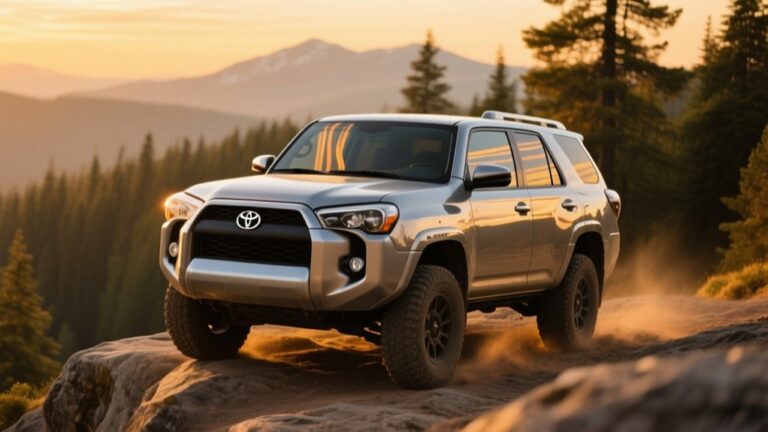
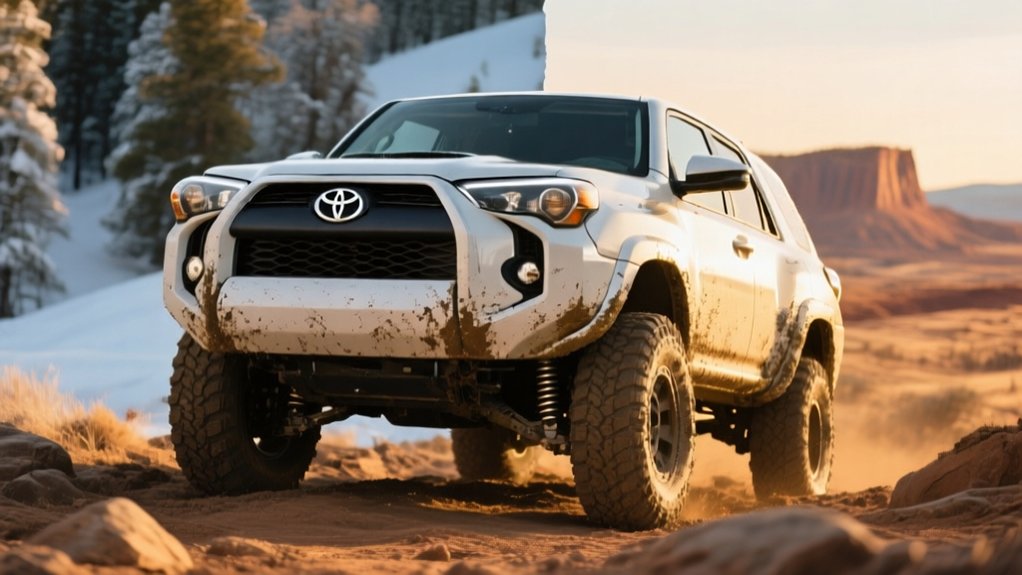
Your Toyota 4Runner has a part-time 4WD system, not AWD. This setup allows you to switch between 2WD and 4WD modes, giving you control for off-road conditions instead of continuous all-wheel traction.
It’s built for durability and tough terrain, unlike AWD systems that focus on smooth on-road driving. Using 4WD properly can improve stability and traction when you need it.
If you want to understand how this system works on different models and when to use it, keep exploring.
Key Takeaways
- The Toyota 4Runner primarily features a part-time 4WD system, not AWD, designed for manual engagement on off-road terrain.
- 4Runner’s 4WD includes selectable modes like 2WD, 4H, and 4L for varied driving conditions and enhanced off-road control.
- Some newer 4Runner models may offer full-time 4WD with a center differential but do not have traditional AWD systems.
- AWD systems provide automatic power distribution for on-road traction, while 4Runner’s 4WD prioritizes rugged off-road capability.
- Using 4WD only when needed protects the drivetrain, as AWD is better suited for everyday driving on paved or slippery roads.
What’s the Difference Between AWD and 4WD Systems?
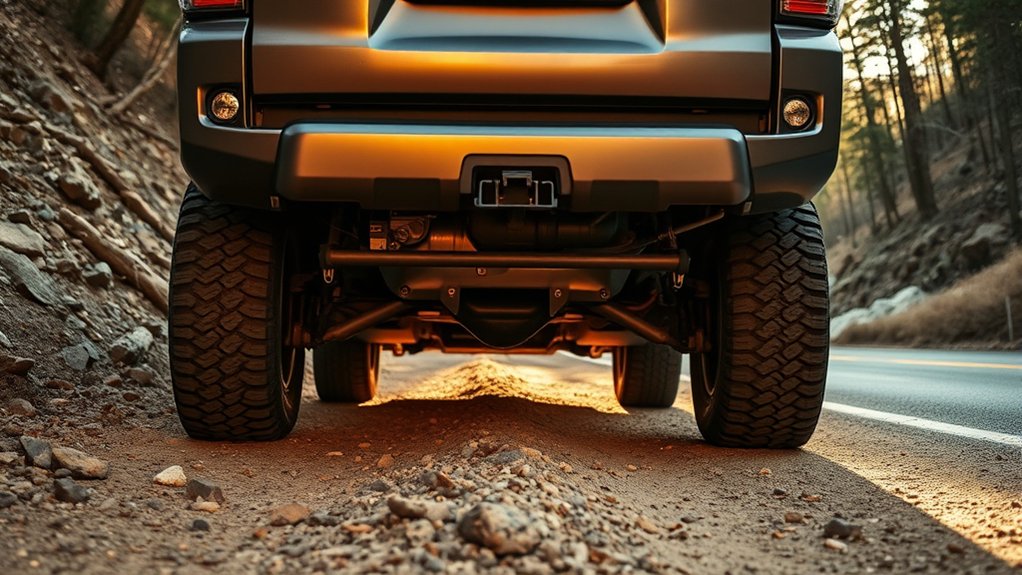
How do All-Wheel Drive (AWD) and Four-Wheel Drive (4WD) systems differ, and why does it matter? AWD automatically distributes power to all four wheels, improving traction on different surfaces without any input from you. It’s common in cars and crossovers, focusing on on-road performance and better fuel efficiency.
In contrast, 4WD usually needs you to manually engage it and is built for tough, off-road conditions. You’ll mainly find it in trucks and SUVs, often with a low-range gear for handling challenging terrain.
AWD systems use a center differential to manage differences in wheel speed between front and rear wheels, which helps with smooth on-road driving. 4WD systems don’t have this feature, making them better suited for off-road adventures.
Knowing these differences helps you pick the right drivetrain for your needs, whether you want everyday efficiency or serious off-road capability.
Toyota 4Runner’s Drivetrain Explained
Understanding the differences between AWD and 4WD helps explain why the Toyota 4Runner uses a part-time 4WD system designed for off-road use. You can switch between 2WD and 4WD modes, which gives you better traction when needed.
The system also includes a low-range gear for better control on tough terrain like steep hills or rocks. Some newer models offer a full-time 4WD with a center differential, which makes driving on different surfaces more stable.
| Feature | Benefit |
|---|---|
| Part-time 4WD | Engage only when needed |
| Low-range gear | Better control on rough terrain |
| Full-time 4WD | More stability on all kinds of roads |
This drivetrain is built for durability and capability, making it perfect for off-road enthusiasts like you.
Why AWD Is Rare in the 4Runner’s 4WD Lineup
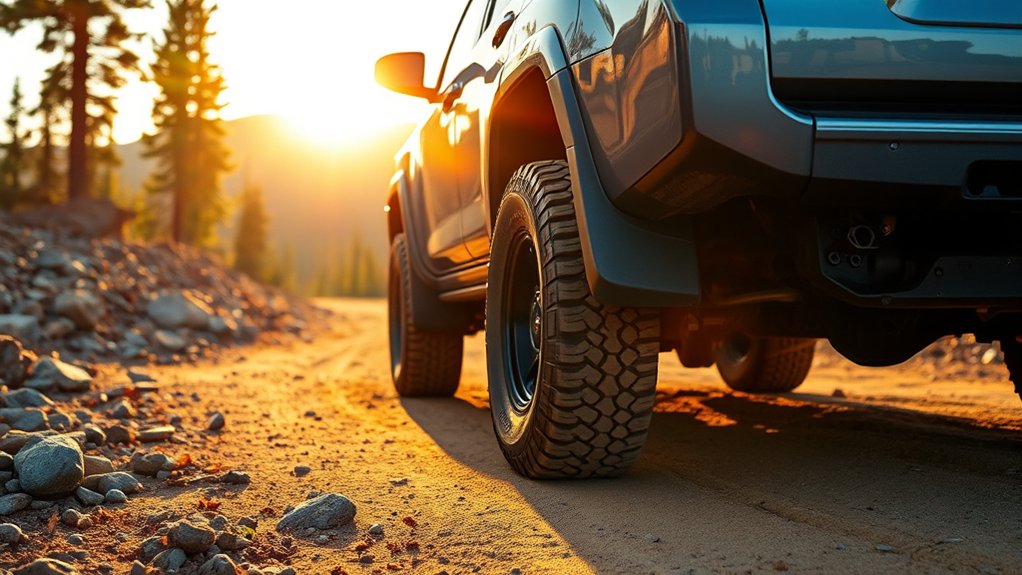
Although all-wheel drive (AWD) systems provide smooth power delivery for everyday driving, you rarely see them in the Toyota 4Runner lineup because this SUV emphasizes tough off-road performance.
The 4Runner mainly uses a part-time 4WD system that gives you better control and capability on rough terrain. Unlike AWD, which automatically adjusts power, the 4Runner’s 4WD lets you manually engage or disengage it based on the conditions.
The 4Runner’s part-time 4WD offers manual control for enhanced performance on challenging terrain.
This setup includes a low-range transfer case, making it ideal for steep or uneven surfaces. It focuses on durability and off-road readiness rather than on-road convenience.
Toyota wants the 4Runner to be versatile for tough environments, which is why AWD’s focus on all-weather traction isn’t a priority in this lineup.
How 4WD Works Across 4Runner Models
Most 4Runner models come with a part-time 4WD system, which means you can switch it on or off depending on what kind of terrain you’re dealing with. It’s pretty handy because you can turn it on when you need extra traction, like on muddy or snowy roads, and turn it off when you’re on regular pavement to save on fuel and reduce wear.
Some of the newer models even offer full-time 4WD. That’s great because it automatically adjusts to give you better grip and stability no matter the conditions—that means you don’t have to think twice about switching it on or off. Getting to know the differences between these systems can really help you understand the kind of performance and capability each 4Runner model has to offer.
4WD System Basics
Several Toyota 4Runner models come with a full-time 4WD system that boosts traction and stability on different terrains. It usually includes a two-speed transfer case, so you can switch between 2WD and 4WD modes depending on the driving conditions.
Some trims also have locking differentials, which send power evenly to both rear wheels. This feature improves off-road performance when you need maximum grip.
Additionally, certain 4Runners offer a multi-terrain select system. It lets you adjust settings for specific off-road challenges like mud, sand, or rocks.
Built to handle tough environments, the 4WD system in the 4Runner makes it a dependable choice for off-road enthusiasts who want control and versatility in difficult conditions.
Model Variations Explained
Three main 4WD system configurations appear across Toyota 4Runner models, each designed to meet different driving demands. Most 4Runners feature a part-time 4WD system, letting you switch between 2WD and 4WD to adapt to road conditions.
The TRD Pro trim offers a full-time 4WD system, improving traction for rugged terrain. All 4WD systems include a two-speed transfer case, giving you low-range gearing for tough off-road scenarios.
Some models also add locking differentials and multi-mode traction control to enhance off-road performance.
Benefits Of 4WD
Although both AWD and 4WD systems improve traction, the Toyota 4Runner’s 4WD setup offers clear advantages, especially for off-road and heavy-duty driving.
Here’s how the 4WD benefits you across different 4Runner models:
You get better traction on all kinds of terrains thanks to the full-time 4WD system, which outperforms standard AWD setups.
The low-range gear boosts torque and control, making tough off-road environments easier to handle.
Trim levels like the TRD Pro come with features such as crawl control and multi-terrain select, helping you adapt to challenging landscapes.
Plus, you can switch between 2WD and 4WD modes on-the-fly, so you’re ready for changing road conditions and rough terrains while hauling heavy loads.
This versatility makes the 4Runner a dependable choice for serious outdoor adventures.
How 4WD Enhances the 4Runner’s Off-Road Performance
When you engage the 4Runner’s part-time 4WD system, you can switch between 2WD and 4WD. This lets the vehicle adapt to different types of terrain challenges easily.
The locking center differential ensures power is evenly distributed, which boosts traction on slippery surfaces. Higher trims with full-time 4WD offer continuous stability during tough conditions.
The Multi-Terrain Select system fine-tunes traction for mud, sand, or rocks, helping you navigate tricky terrains smoothly. The 33-degree approach angle improves the 4Runner’s ability to climb steep inclines and rocky trails confidently.
Comparing Fuel Efficiency: 4WD vs AWD on the 4Runner
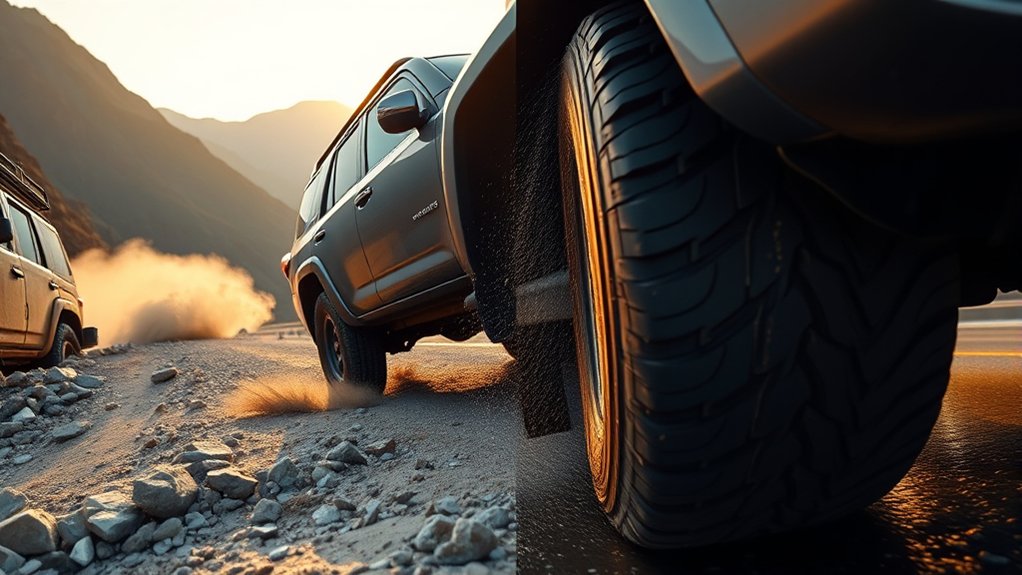
When you’re looking at fuel efficiency between 4WD and AWD on the 4Runner, you’ll find that part-time 4WD systems usually sip less fuel compared to full-time AWD setups. Of course, it really depends on where and how you’re driving. For off-road adventures, 4WD tends to be more efficient because it’s designed for tough terrain and can be turned on when needed. On the other hand, AWD offers better traction on mixed pavement and slippery roads, but it might use a bit more fuel because it’s constantly active.
Fuel Consumption Differences
Because the Toyota 4Runner uses a part-time 4WD system instead of full-time AWD, its fuel efficiency tends to be lower than many AWD vehicles. This difference comes from how the 4WD system is designed and what it’s meant for.
The 4Runner’s part-time 4WD adds extra weight and drivetrain drag, which reduces fuel economy. It gets about 17 MPG in the city and 21 MPG on the highway, making it less efficient than many of its AWD competitors.
AWD systems are built for continuous use on paved roads, so they usually use less fuel. The 4Runner’s engine size and overall weight also play a role in its higher fuel consumption.
Knowing these points helps explain why the 4Runner sacrifices some fuel efficiency for better off-road capability compared to AWD vehicles.
Impact on Driving Conditions
Although the Toyota 4Runner’s part-time 4WD system might reduce fuel efficiency compared to AWD, it offers big advantages for handling different driving conditions. It’s especially useful off-road or on slippery surfaces where better traction and stability are crucial.
Unlike AWD, which constantly powers all wheels and is mainly designed for on-road driving, the 4Runner allows you to switch between two-wheel and four-wheel drive modes. This gives you the flexibility to adapt to changing terrain.
Whether it’s snow, rain, or rugged trails, you can easily change drive modes to suit the situation. While AWD is more fuel-efficient for daily driving, the 4WD system provides better control when conditions get tough.
Long-Term Efficiency Costs
Understanding how the Toyota 4Runner’s part-time 4WD system impacts fuel efficiency over time helps you evaluate its benefits against potential costs. The 4WD system offers strong off-road capability but usually lowers fuel economy compared to AWD.
Here’s what to consider:
- Part-time 4WD in the 4Runner improves fuel efficiency when disengaged, unlike full-time AWD systems.
- 4WD averages around 17-19 MPG, while AWD can reach 18-23 MPG under similar conditions.
- AWD’s automatic power distribution boosts efficiency on paved roads, whereas 4WD is designed for rugged terrain.
- Regular maintenance of your 4WD system is essential; neglecting it can reduce fuel economy due to mechanical strain.
If daily fuel efficiency matters more, AWD might be the better choice. But if off-road capability is a priority, 4WD is worth the higher long-term costs.
Choosing 4WD or AWD for Your Adventures?
How do you decide between 4WD and AWD for your adventures? It really depends on where and how you drive.
If you often tackle rugged off-road trails, 4WD is your best bet. It offers maximum traction and torque with selectable modes, including low gearing for steep or slippery conditions.
The Toyota 4Runner’s part-time 4WD system lets you switch between 2WD and 4WD as needed, giving you flexibility for mixed terrain.
On the other hand, if your driving mainly involves paved roads with occasional wet or snowy weather, AWD might suit you better. It automatically distributes power to all wheels for stability and improved handling without you having to do a thing.
Think about your typical routes and conditions to choose the drivetrain that best matches your lifestyle and adventure plans.
Common Misconceptions About the 4Runner’s 4WD System
Why do so many drivers get confused about the 4Runner’s 4WD system? The truth is, there are some common misconceptions that make things unclear. Let’s clear those up with four key points.
First, not all 4Runner models have full-time 4WD. Only certain trims equipped with Multi-Terrain Select feature do.
Only select 4Runner trims with Multi-Terrain Select offer full-time 4WD capabilities.
Second, the system is part-time 4WD, so you can switch between 2WD and 4WD modes depending on the driving conditions.
Third, it includes a locking center differential that helps balance power between the front and rear wheels for better traction.
Finally, some models have a transfer case with low-range gearing, which boosts off-road performance.
How to Use Your 4Runner’s 4WD Safely
Engage your 4Runner’s 4WD system thoughtfully to protect its drivetrain and ensure peak performance. Only activate 4WD when necessary—using it on dry pavement can damage the drivetrain due to increased traction.
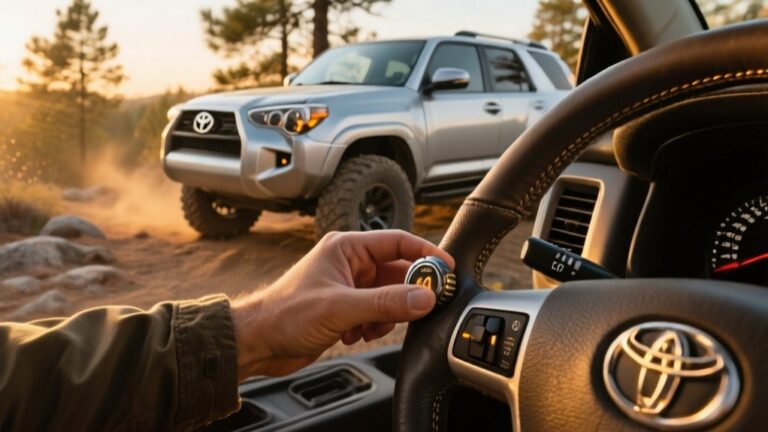
Know your 4WD modes: 4H is great for slippery roads, while 4L is best for off-road or steep terrain. Always come to a full stop before switching between 2WD and 4WD to prevent mechanical damage and ensure smooth changes.
Regularly check and maintain critical components like the transfer case and differential fluids to keep everything reliable. Before tackling tough terrain, practice engaging and disengaging 4WD in a safe area to build confidence and understand how your system works.
This careful approach helps you use your 4Runner’s 4WD safely and effectively.
Frequently Asked Questions
What Maintenance Does the 4runner’s 4WD System Require?
You’ll need to check the transfer case and differential fluid levels regularly, changing the transfer case fluid every 30,000 to 50,000 miles.
Inspect drive belts and hoses for wear during maintenance. Engaging the 4WD system periodically, even on dry roads, helps keep parts lubricated.
Don’t forget to maintain your tires—keep them properly inflated and evenly worn to ensure the 4WD system works effectively and prevents unnecessary strain.
Can I Switch Between 4WD and 2WD While Driving?
Sure, you can switch between 4WD and 2WD while driving—if you own the TRD Pro trim of the 2023 4Runner. For most other models, you’ll need to stop to avoid damaging the drivetrain because part-time 4WD systems aren’t designed for on-the-fly switching.
Always check your owner’s manual for exact instructions. Engaging 4WD on dry pavement can cause binding, so switch only in appropriate conditions to protect your vehicle.
How Does the 4runner’s 4WD Perform in Snow Compared to AWD?
You’ll find the 4Runner’s 4WD performs better in snow than typical AWD systems because you can engage it when needed, giving you more control. Its low-range gearing boosts torque and traction, helping you climb icy hills or get through deep snow.
Plus, the higher ground clearance prevents you from getting stuck easily. Unlike AWD, which works full-time, the 4WD lets you handle challenging winter terrain more intentionally and effectively.
Are There Specific Tires Recommended for the 4runner’s 4WD System?
You should go for all-terrain tires, as 75% of 4Runner owners prefer them for a good balance of on- and off-road performance.
Brands like Michelin, Goodyear, and BFGoodrich are popular choices because of their durability and traction.
Typical sizes range from 265/70R17 to 275/65R18, depending on your specific model.
Keeping the right tire pressure and tread depth is key to getting the most out of your 4WD system, especially when tackling rough or snowy terrain.
Does the 4runner’s 4WD Affect Towing Capacity?
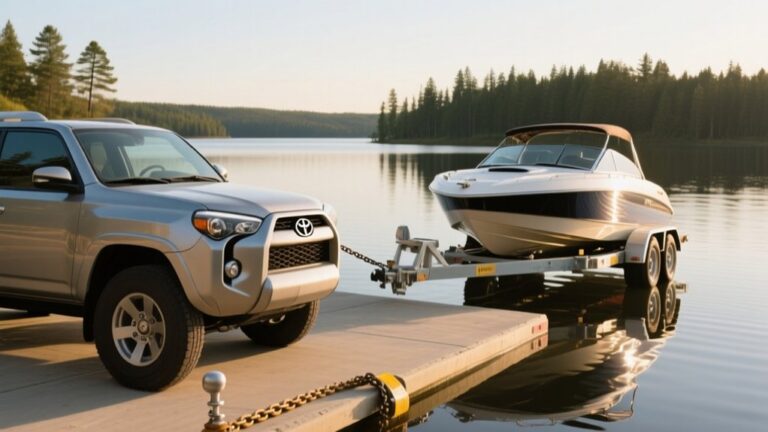
Yes, the 4Runner’s 4WD system can slightly affect towing capacity. You’ll notice that 4WD models usually tow a bit less than their 2WD versions because of the added drivetrain weight and complexity.
But you get better traction and stability, especially on rough terrain or slippery roads. So, while the max towing weight might be a little lower, the control and safety benefits of 4WD often make up for it.
Conclusion
Now that you know the 4Runner primarily uses a 4WD system designed for rugged off-road capability, isn’t it clear why AWD isn’t the focus? Its 4WD setup offers superior traction and control when you need it most, especially in tough conditions.
While AWD provides convenience for everyday driving, the 4Runner’s 4WD gives you the confidence to tackle challenging terrain.
So, choose based on your adventure style and driving needs.