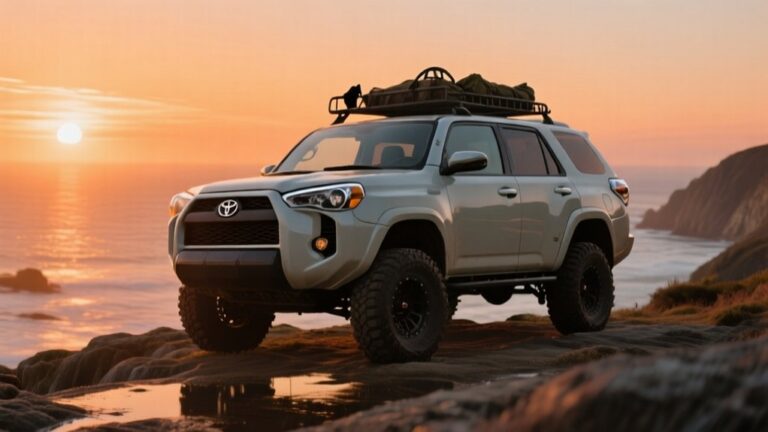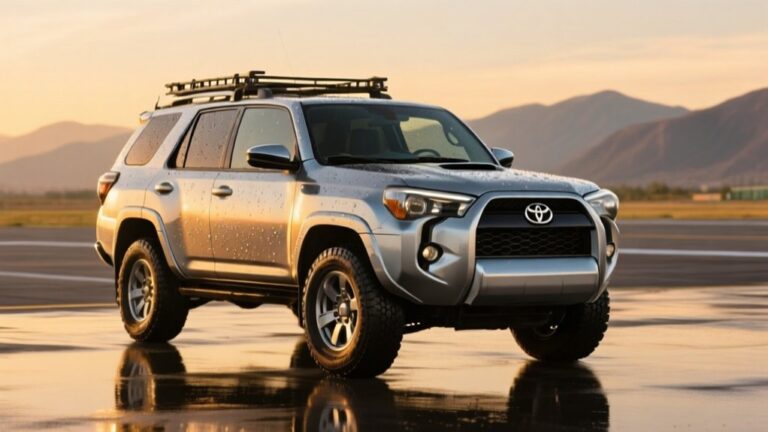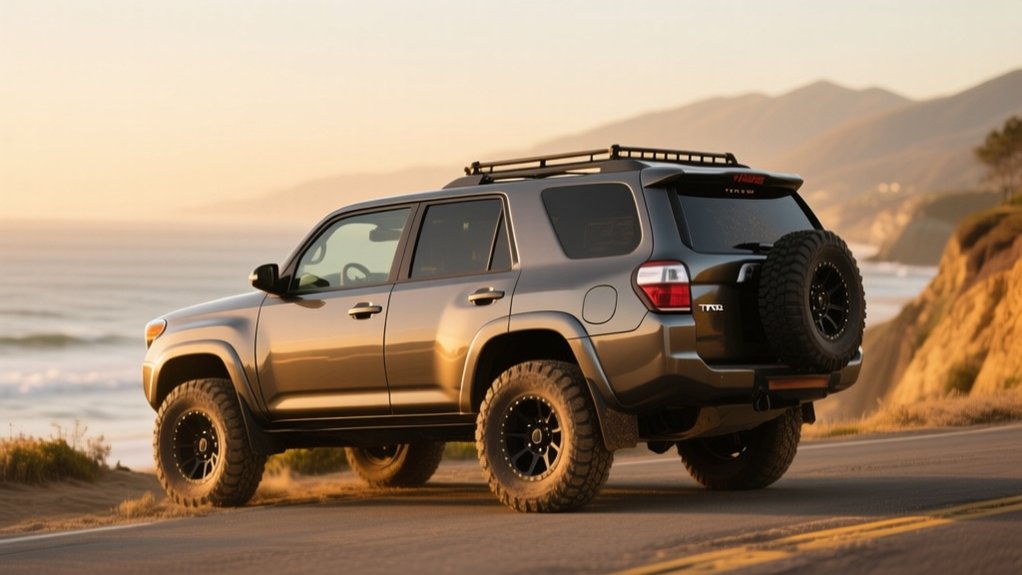
What Years Are 5th Gen 4runner – Simple Breakdown
The 5th generation Toyota 4Runner runs from 2010 to 2023, featuring a rugged body-on-frame design with a powerful 4.0L V6 engine.
A key update came in 2014 with a midcycle refresh that introduced the off-road-focused TRD Pro trim, along with improved suspension and styling upgrades.
Its durability and consistent features have kept it popular for over 15 years.
If you’re curious about what makes each model year different and why it remains a standout, more insights are on the way.
Key Takeaways
- The 5th Generation Toyota 4Runner was produced from 2010 to 2023.
- It features a durable body-on-frame design distinct from unibody SUVs.
- The 4.0 L V6 engine with 270 horsepower debuted with this generation in 2010.
- A midcycle refresh in 2014 introduced updated styling and the TRD Pro trim.
- Toyota Safety Sense was added as a standard feature starting in 2020 models.
5th Generation Toyota 4Runner Model Years
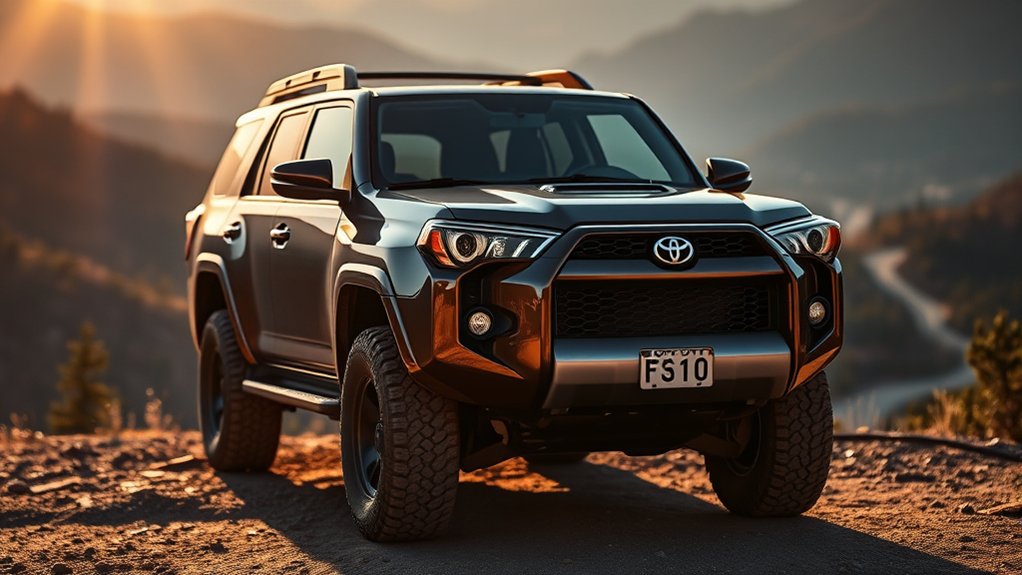
The 5th generation Toyota 4Runner, produced from 2010 to 2023, is the longest-running version of this model. It kept its signature body-on-frame design, setting it apart from many SUVs that moved to unibody styles.
Throughout these years, the 4Runner stuck with a 4.0 L V6 engine that delivers 270 horsepower and 278 lb-ft of torque. In 2014, Toyota gave it a midcycle refresh, updating the styling and adding the TRD Pro trim for better off-road performance.
Toyota focused on durability and ruggedness during this generation, making the 4Runner a reliable choice for adventure seekers. When looking at the 5th gen models, you’ll see a mix of refinement and proven, tough design.
2010-2023 5th Gen 4Runner Engine and Performance
The 5th Gen 4Runner comes with a 4.0-liter V6 engine that puts out around 270 horsepower and 278 lb-ft of torque. It’s paired with a 5-speed automatic transmission, which strikes a good balance between power and fuel efficiency. Whether you’re cruising on the highway or tackling rough trails, this setup is designed to handle both with ease.
Plus, if you go for the TRD Pro trim, you get some pretty cool tech features that boost performance in tough conditions. All in all, it’s a reliable and capable engine setup that makes the 4Runner a great choice for both daily driving and off-road adventures.
Engine Specifications Overview
Under the hood, the 5th Generation Toyota 4Runner (2010-2023) features a 4.0-liter V6 engine that delivers 270 horsepower and 278 lb-ft of torque. This single engine option defines the 4Runner’s powertrain, providing reliable performance for various driving conditions.
Paired with a 5-speed automatic transmission, it offers a good balance of performance and efficiency. It’s suitable for everything from daily commutes to tackling rugged terrain. The body-on-frame construction enhances durability and off-road capability.
While this overview doesn’t go into specific performance metrics, the engine’s design supports advanced off-road tech like Crawl Control and Multi-Terrain Select, which help optimize traction. Overall, these specs keep the 5th Gen 4Runner a dependable and tough SUV for drivers who want strength and versatility.
Performance and Capability
Five key factors define the 5th Gen 4Runner’s performance and capability, starting with its 4.0-liter V6 engine that produces 270 horsepower and 278 lb-ft of torque. This powertrain, combined with a body-on-frame construction, boosts durability and off-road ability beyond many unibody rivals.
You’ll also benefit from advanced off-road technologies like Crawl Control and Multi-Terrain Select, which optimize traction and stability on tough terrains. If you go for the TRD Pro trim, expect specialized off-road upgrades like reinforced suspension and skid plates built for rugged adventures.
The 4Runner supports a towing capacity of up to 5,000 pounds, making it versatile for hauling gear. Overall, the 5th Gen 4Runner balances strong performance with excellent off-road capability for everyday driving and outdoor exploration.
What You Need to Know About the 5th Gen 4Runner’s Design and Mechanics
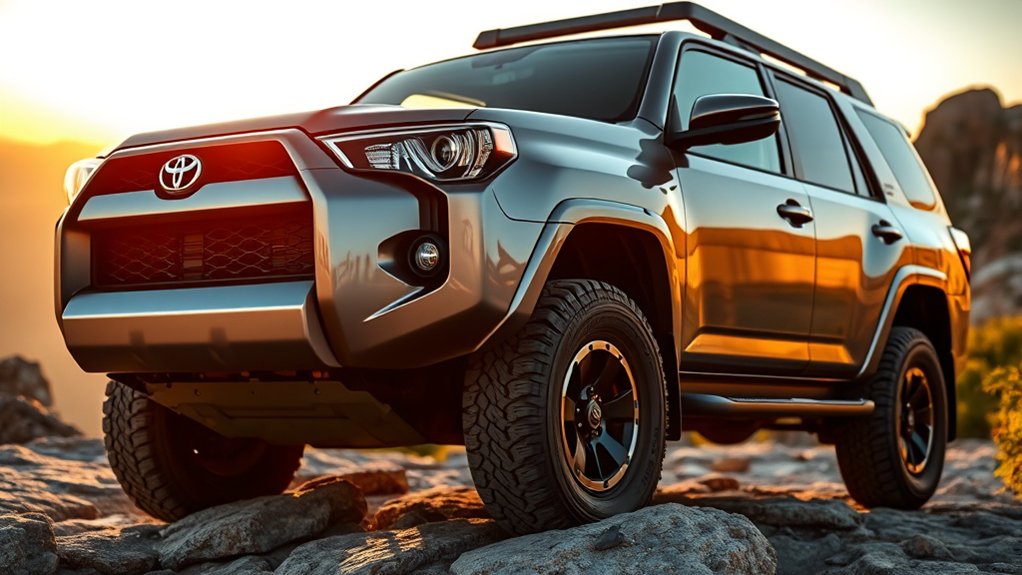
The 5th Gen Toyota 4Runner, produced from 2010 to 2023, combines rugged design with proven mechanical components to deliver reliable performance. You’ll appreciate its body-on-frame construction, which improves durability and off-road capability.
The 5th Gen 4Runner blends rugged design and durable mechanics for dependable off-road performance.
Under the hood, a robust 4.0-liter V6 engine provides 270 horsepower and 278 lb-ft of torque, ensuring strong performance on any terrain. The design balances toughness with functionality, making it ideal for adventurous drivers.
Key features include:
- Body-on-frame design for increased strength
- Powerful V6 engine suited for off-road challenges
- Specialized off-road trims like TRD Pro with KDSS and Crawl Control
- Interior updates focused on infotainment and optional third-row seating
This blend of design and mechanics makes the 4Runner a versatile SUV for both daily driving and rugged exploration.
2014 Midcycle Refresh Updates
Although the 5th Gen 4Runner already offered strong performance and rugged design, the 2014 midcycle refresh brought notable improvements that sharpened its appeal. You’ll notice updated styling with a more aggressive front fascia and redesigned headlights.
This refresh introduced the TRD Pro trim, boosting off-road capabilities through upgraded suspension and distinct styling. We’ll explore that in more detail later. The infotainment system also saw improvements, delivering enhanced navigation and audio options to make your driving experience more intuitive.
Safety didn’t take a backseat either. Rear parking sonar became standard to assist during tight maneuvers. Despite these updates, the midcycle refresh kept the reliable 4.0-liter V6 engine, maintaining its 270 horsepower and 278 lb-ft of torque. This ensures consistent performance you can depend on.
TRD Pro Trim Highlights and Off-Road Features
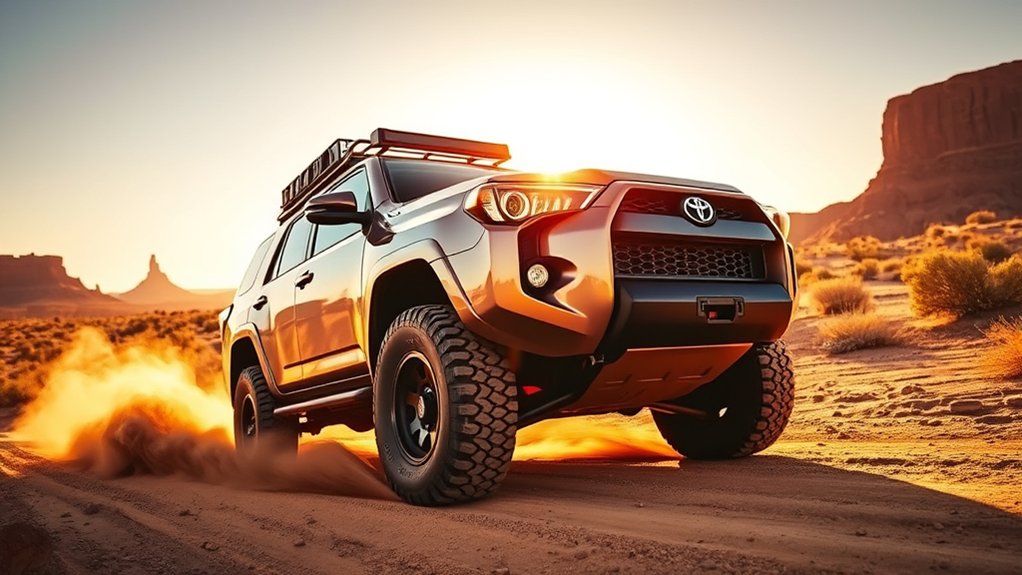
When you choose the TRD Pro trim for the 5th generation 4Runner, you get a vehicle equipped with a beefed-up suspension system designed specifically to improve off-road performance. The TRD Pro features the Kinetic Dynamic Suspension System (KDSS), enhancing wheel articulation for better handling on rugged terrain.
The TRD Pro’s enhanced suspension and KDSS deliver superior off-road handling and rugged terrain capability.
With Crawl Control and Multi-Terrain Select, it automatically manages throttle and braking to maintain traction across challenging surfaces. You’ll also appreciate the traditional body-on-frame construction, which adds durability and toughness.
Key TRD Pro highlights include:
- KDSS for superior wheel articulation
- Crawl Control for automated off-road driving
- Unique grille and skid plates for protection and style
- All-terrain tires optimized for rough landscapes
This trim balances capability with rugged aesthetics, making it a top choice for serious off-road enthusiasts.
What Makes the 5th Gen 4runner Different From Earlier Generations
If you’ve followed the evolution of the Toyota 4Runner, you’ll notice that the 5th generation, produced from 2010 to 2023, stands out for its extended production run and significant improvements. It features a more robust body-on-frame construction, boosting durability and off-road strength.
You’ll also find advanced off-road technologies like KDSS and Crawl Control, which enhance its capability beyond earlier models. Unlike previous generations with varied engines, this one sticks to a consistent engine lineup—a reliable 4.0 L V6 producing 270 horsepower.
Interior upgrades focus on refinement, including an improved infotainment system and optional third-row seating.
5th Gen Toyota 4runner Vs Competitor SUVS
When you compare the 5th Gen Toyota 4Runner to competitors like the Jeep Grand Cherokee and Ford Explorer, you’ll quickly notice that its truck-based body-on-frame design really sets it apart—especially for serious off-road adventures. The 4Runner’s TRD Pro trim takes things up a notch with specialized suspension and terrain management systems, giving it an edge over some of its unibody rivals. Knowing these platform differences makes it clearer why the 4Runner remains a favorite among off-road enthusiasts and has such a strong market presence.
Off-Road Capability Comparison
Although many modern SUVs focus on comfort and on-road performance, the 5th Generation Toyota 4Runner really shines with its off-road skills. Its body-on-frame design makes it sturdy and tough, unlike many unibody rivals.
With 9.6 inches of ground clearance, it handles rough terrain with ease, giving better approach and departure angles. Its advanced features boost its off-road game, making it a top pick for serious adventurers.
Key off-road features include Crawl Control and Multi-Terrain Select for better traction. The TRD Pro suspension offers excellent handling on uneven surfaces. Kinetic Dynamic Suspension System (KDSS) improves wheel articulation.
It also has higher ground clearance than competitors like the Ford Explorer and Honda Pilot. All these elements come together to give the 4Runner unmatched off-road capabilities in its class.
Platform and Construction Differences
The 5th Generation Toyota 4Runner stands out from many other SUVs because of its platform and construction. While most competitors moved to unibody designs for a smoother, more fuel-efficient ride, the 4Runner keeps its traditional body-on-frame setup.
This choice makes it more durable and better suited for off-road adventures, thanks to a reinforced chassis and higher ground clearance. You’ll notice its heavier build offers superior towing capacity and ruggedness, unlike lighter rivals that focus on city driving and saving fuel.
Its sturdy construction not only boosts off-road performance but also provides a spacious interior and plenty of cargo space. If you prioritize long-lasting durability and utility over compactness or car-like handling, the 4Runner’s platform and build really stand out in the SUV world.
Market Positioning Insights
Longevity and ruggedness define the 5th Generation Toyota 4Runner’s market position compared to its competitor SUVs. It stands out by maintaining body-on-frame construction, appealing directly to SUV enthusiasts who prioritize off-road durability. While rivals like the Honda Pilot and Ford Expedition focus on family-friendly features, the 4Runner caters to those seeking genuine adventure capability.
Key market positioning insights include:
- It’s the longest-running generation from 2010 to 2023, outlasting typical 5-7 year redesign cycles.
- The TRD Pro trim offers specialized off-road tech and suspension for serious off-road enthusiasts.
- With over 3 million units sold, it has a cult status that reflects trust among SUV fans.
- The 4Runner fills the gap left by competitors shifting to unibody, street-oriented designs.
This cements its reputation as a rugged, reliable choice built for off-road durability.
Reasons Behind the 5th Gen 4Runner’s 15-Year Lifespan
Several key factors have contributed to the 5th Gen Toyota 4Runner’s impressive 15-year production run. Its body-on-frame platform offers exceptional durability and off-road capabilities, which are perfect for adventure lovers.
Toyota’s decision to stick with a consistent design and a reliable 4.0 L V6 engine made production simpler while keeping performance strong.
Toyota’s consistent design and dependable 4.0 L V6 engine ensured simplicity and strong performance.
Regular updates, like the introduction of the TRD Pro trim and midcycle refreshes, helped keep buyers interested without a complete redesign.
This mix of proven engineering and timely improvements kept the 4Runner relevant and competitive over the years.
As a result, it remained a dependable, off-road-ready SUV throughout its long production span.
How to Identify 5th Gen 4Runner Models by Year and Features
Understanding how to identify different 5th Gen 4Runner models by their year and features can help you spot the subtle yet meaningful updates Toyota made over its long production run. The 5th Generation ran from 2010 to 2023, with each model year bringing key features that set it apart.
For example, the 2010 model kicked off the generation with a 4.0L V6 engine that produced 270 hp. In 2014, there was a midcycle refresh that included updated styling, new technology, and the introduction of the TRD Pro trim.
Later models added features like KDSS for improved wheel articulation. The 2020 version introduced Toyota Safety Sense, boosting safety without sacrificing the ruggedness the 4Runner is known for.
Frequently Asked Questions About 5th Gen Toyota 4Runners
What makes the 5th Gen Toyota 4Runner stand out in the SUV market? Its durability and exceptional off-road capabilities set it apart.
Produced from 2010 to 2023, this model features a robust 4.0L V6 engine delivering 270 horsepower. Unlike many SUVs that switched to unibody construction, it keeps a truck-based body-on-frame design, which enhances toughness and longevity.
Produced from 2010 to 2023, the 5th Gen 4Runner offers a powerful 4.0L V6 and durable body-on-frame design.
You’ll find various trims, including the TRD Pro, which boosts off-road performance with upgraded suspension and Crawl Control. Throughout its run, Toyota made small updates like infotainment improvements and a 2014 midcycle refresh, keeping the model fresh.
If you value ruggedness and reliable off-road ability, the 5th generation 4Runner is a solid choice that has proven its worth over more than a decade.
Frequently Asked Questions
What Are Common Maintenance Issues for the 5th Gen 4runner?
You’ll commonly face oil leaks from the rear main seal and valve cover gaskets with the 5th Gen 4Runner. Brake pads tend to wear faster, especially if you drive off-road or do a lot of heavy braking.
Expect the water pump to need replacement around 100,000 miles. Rust can develop on the frame and undercarriage, especially in salty winter climates.
Make sure you regularly change the transmission fluid to keep performance smooth and avoid costly repairs.
How Does the 5th Gen 4runner Hold Its Resale Value?
Like a sturdy oak weathering storms, the 5th gen 4Runner holds its resale value exceptionally well. You benefit from its renowned durability and off-road prowess, which keeps demand high.
Limited supply and regular updates, especially in trims like the TRD Pro, boost desirability. You’ll find it outperforms many midsize SUVs in resale percentage.
It’s a smart investment if you plan to sell or trade it down the line. Overall, the 5th gen 4Runner proves to be a reliable choice for long-term value.
Are There Any Known Recalls for the 5th Gen 4runner?
Yes, there are known recalls for the 5th gen 4Runner. You should watch out for airbag issues linked to Takata inflators, a fuel pump recall in 2017 due to possible leaks, and a 2018 recall for rear hatch window glass problems.
To stay safe, you can enter your vehicle’s VIN on the NHTSA website to check if your 4Runner is affected by any recalls and schedule repairs if needed.
What Aftermarket Upgrades Are Popular for the 5th Gen 4runner?
Over 70% of 5th Gen 4Runner owners upgrade their suspension to boost off-road performance and comfort. You’ll find popular kits from ICON and Old Man Emu that improve ride quality.
Many also add skid plates from RCI Offroad for undercarriage protection. Roof racks like BajaRack are popular for extra cargo space, and LED light bars from Diode Dynamics help with better night visibility.
Performance mods such as TRD cold air intakes are common too. These upgrades really enhance the vehicle’s capability and versatility.
How Fuel-Efficient Is the 5th Gen 4runner in Real-World Driving?
You can expect the 5th Gen 4Runner to deliver around 15-18 mpg in real-world city driving, slightly below its EPA estimates. Highway mileage usually sits near 20-21 mpg, but factors like load, terrain, and your driving style can lower efficiency.
Its 4.0L V6 engine balances power and fuel use, but the truck-based frame means it won’t match crossover SUVs in gas mileage. Off-road trips will further reduce your mpg.
Conclusion
Now that you know the 5th Gen 4Runner spans from 2010 to 2023, you might wonder which year suits you best.
Each model year brings subtle changes that impact performance, design, and off-road capability.
Want to uncover the hidden gems within those updates or decide if the TRD Pro trim is your perfect match?
Keep digging—you’ll find there’s more beneath the surface than just a long production run.