Is 76 Gas Good? A Complete Guide to Its Quality, Benefits, and Comparisons
Is 76 gas good? Yes, it is.
Its quality surpasses many other gas brands in keeping your engine clean and running smoothly. Using 76 gas could help your engine parts last longer thanks to its strong detergents.
76 gas exceeds the standard detergent by about 30%. It also has three times the EPA’s minimum detergent level.
This means it fights deposits better than most other fuels. It’s also unleaded, which is easier on both your car and the environment.
Phillips 66 owns the 76 brand, which ensures consistent quality across all stations. When you see a 76 gas station, you can generally trust the fuel inside. It’s smart to pick stations that maintain good quality control for your car’s health.
Key Takeaways
- Choose 76 gas to benefit from higher-quality detergents that keep your engine cleaner.
- Look for unleaded 76 gas to protect your engine and reduce emissions.
- Fill up at well-maintained 76 stations to ensure fresh and quality fuel.
- Using 76 gas could extend your vehicle parts’ life by reducing buildup.
- Phillips 66’s ownership means 76 gas meets consistent production and quality standards.
- Higher detergent levels in 76 gas help your engine avoid harmful deposits.
Is 76 Gas Good for Your Vehicle’s Engine?

76 gas meets and often exceeds the Top Tier Detergent Gasoline standards. It contains about 30% more detergent than the Top Tier minimum requirement. This higher detergent level helps reduce engine deposits far better than regular gasoline.
These detergents prevent harmful build-up on engine parts. Deposit-free engines run smoother and last longer. Testing shows Top Tier gas leaves 19 times fewer carbon deposits.
This protects your engine’s key parts. Cleaner fuel means your engine runs better and lasts longer.
Using 76 gas regularly keeps your engine cleaner and more efficient. All grades of 76 include Top Tier-approved additives, whether you buy regular or premium. This consistency makes it a quality choice compared to non-Top Tier brands.
Its high detergent content helps prevent rough idling. It also reduces engine knock. 76 gas keeps your engine powerful over time.
It’s especially beneficial if you drive frequently or in stop-and-go traffic. Clean engines also maintain better fuel economy and lower emissions.
While regular gasoline meets minimum federal standards, it usually has fewer detergents. That means more deposits can build up inside your engine and fuel system. Choosing 76 gas gives extra protection that can save you maintenance costs down the line.
The detergents in 76 gas fight deposits. These form in intake valves and fuel injectors. They also reduce buildup in combustion chambers.
You’ll notice your engine runs quieter and starts up more reliably. Keeping these parts clean can improve acceleration and reduce costly repairs.
76 gas often costs a few cents more than non-Top Tier brands. The extra cost helps protect your engine. This makes it a good value overall.
You avoid performance problems and expensive cleaning or repair jobs. For daily drivers and high-performance vehicles, 76 gas is a good investment.
What Octane Ratings Does 76 Gas Offer and Which Should You Use?
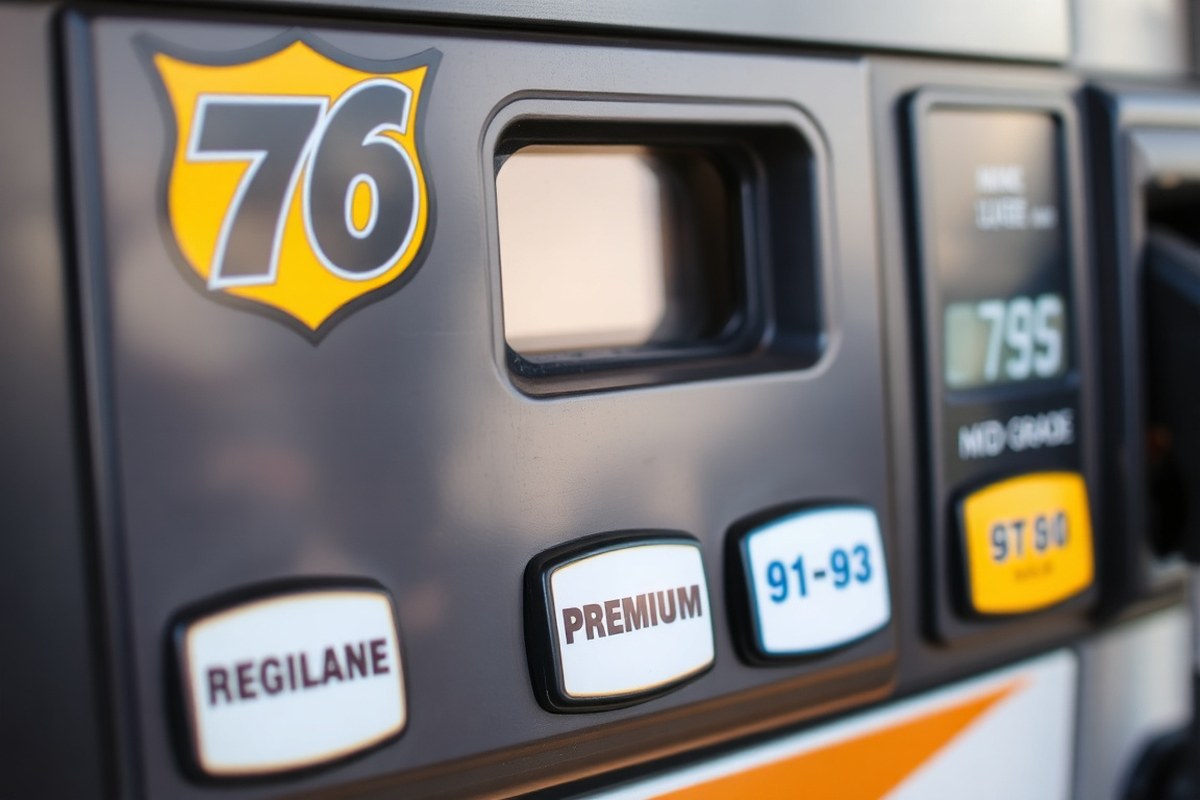
76 gas offers different octane levels to fit a range of vehicles. You’ll find 87, 89, 91-93, and even 100 octane in some stations. Choosing the right octane depends on what your car’s engine needs.
Regular (87) Octane Uses
Most vehicles run fine on 87 octane, which is the standard regular unleaded fuel. It works well for regular sedans, compact cars, and many SUVs. This octane level saves you money and meets engine requirements for most drivers.
Using 87 octane in your car won’t hurt it if that’s what the manual says. Lower octane fuels can cause knocking in engines designed for higher octane. That can reduce engine efficiency over time.
Mid-Grade (89) Octane Benefits
Mid-grade 89 octane sits between regular and premium. It’s often recommended for some SUVs, pickup trucks, and older performance vehicles. This fuel can make your engine run smoother.
It may also boost performance slightly. This happens if your car needs that octane level.
Choosing 89 octane when your car requires it protects the engine from pinging under loads. It also helps maintain power in hotter weather or when towing. Mid-grade costs a bit more than regular but less than premium.
Premium (91-93) Octane for High Performance
High-performance cars, turbocharged engines, and luxury vehicles usually need premium gas. Octane ratings from 91 to 93 stop combustion problems that can cause knocking. This helps your engine run clean, smooth, and efficiently when under stress.
Using premium octane in a vehicle that doesn’t need it won’t increase performance. It just raises your fuel cost without benefits. Always check your owner’s manual for the exact octane to avoid wasting money.
Here is a quick reference table showing octane types with typical AKI ratings and engine requirements:
| Octane Type | Typical AKI | Engine Requirement |
|---|---|---|
| Regular | 87 | Most standard vehicles |
| Mid-Grade | 89 | Some SUVs, trucks, or older performance cars |
| Premium | 91-93 | High-performance, turbocharged, or supercharged engines |
Check your car’s manual before filling up. You can also look inside the fuel door. It shows the octane rating your car needs.
Matching the octane rating helps your engine run correctly and lasts longer. Higher octane is not a fix for low-quality gas or mechanical issues.
Using octane lower than your vehicle’s recommendation can cause engine knocking and damage.
Who Owns 76 Gas and Does That Impact Its Quality?
76 Gas is owned by Phillips 66, a major energy company based in the USA. Phillips 66 is itself a subsidiary of ConocoPhillips, a large multinational energy corporation. This ownership means 76 benefits from a parent company with strong quality control and technical standards.
The history of 76 dates back nearly 100 years when it was known as Union 76. Phillips 66 took over ownership and management of 76. They made 76 part of their larger fuel brand lineup.
Phillips 66 keeps 76’s fuel quality consistent with strict rules. They use advanced additives at their stations.
Phillips 66’s control means 76 gas meets TOP TIER™ standards. These standards require more detergents for cleaner engines. This backing also brings investment in refining processes and supply chain quality.
Because of this, 76 gas offers better fuel economy. It also helps engines run smoother. It can cost a few cents more per gallon.
A 76 station with the “Superior Quality” label meets high performance standards. This label shows Phillips 66’s quality criteria are met.
Maintaining consistent additives and fuel formulation prevents common issues like engine pinging or loss of power. These problems usually happen when lower quality gas fails to control deposits or combustion efficiently.
Phillips 66’s corporate size and resources also support ongoing fuel testing and quality assurance. Independent labs test 76 fuel in real-world conditions. They simulate thousands of miles to check fuel stability.
This testing prevents problems like clogged injectors or poor ignition timing. These issues come from bad fuel quality.
Being owned by a big company, 76 gets steady product upgrades. You also get fuel that meets known standards. Ownership might change later, but now Phillips 66 runs 76.
Their management offers reliable quality at the pump. That makes 76 a trustworthy fuel option for drivers. It is supported by a respected energy company.
How Do Additives and Detergents in 76 Gas Benefit Your Engine?
76 gas includes detergent additives that clean engine parts and reduce buildup. These detergents are proprietary but comply with and exceed EPA minimum standards. 76’s detergent level matches or beats other top brands.
It meets Top Tier standards. This means good fuel quality.
The detergent in 76 gas cleans carbon deposits. It targets intake valves, injectors, and chambers. Your engine stays cleaner.
This cleaning happens gradually as you drive, stopping deposits from causing rough idling or reduced power. Cleaner engine parts burn fuel better.
This can boost your mileage by a few percent. Gas without detergent may lower efficiency.
These additives also lower emissions by promoting better combustion and reducing leftover fuel particles. Reduced deposits mean less exhaust pollution, which helps air quality and aligns with tightening emission standards. Using 76 gas often keeps your engine cleaner.
Cleaner engines last longer and cost less to fix. It helps avoid expensive repairs.
Here’s how detergent additives in 76 gas work step-by-step: first, they break down sticky carbon layers. Then, they dissolve the particles into the fuel stream to be burned off. Finally, this cleaning action prevents new deposits from forming quickly, maintaining a cleaner engine over time.
76 gas detergent is similar to other Top Tier brands. It holds between 150 and 450 ppm of additives. This protects your engine.
For example, Chevron and Shell also stay in this range. Lower-quality fuels typically have less than 150 ppm. Using gas with higher detergent content helps keep your engine cleaner and your emissions lower.
76’s additives not only clean but also protect engine parts. They cut down wear and stop injector clogs. This keeps your engine running well.
This can prevent engine knocking and keep your fuel economy steady. Drivers generally notice smoother running and fewer maintenance issues when using 76 regularly.
How Does 76 Gas Compare to Other Popular Gasoline Brands?
76 gas stands out as a solid choice among popular gasoline brands. It offers well-balanced quality, competitive pricing, and good detergent levels. Compared to Shell, Mobil, and Costco, 76 delivers good engine performance.
It offers solid fuel economy. Its additives are safe and reliable for your engine.
Detergent Levels and Certifications Comparison
76 gas meets TOP TIER™ standards, ensuring improve engine performance and cleaner engines. Shell and Mobil also carry this certification, proving their fuels include effective detergent additives. Costco gas typically comes from major refiners and meets similar standards but varies by location.
| Gasoline Brand | Improve Engine Performance | Cleaner Engine | Reduced Emissions | Improved Fuel Economy |
|---|---|---|---|---|
| 76 Gas | Yes | Yes | Yes | Yes |
| Shell | Yes | Yes | Yes | Yes |
| Mobil | Yes | Yes | Yes | Yes |
| Costco | Yes | Yes | Yes | Yes |
These brands all meet a high standard for additives. They help reduce deposits in your engine, improving longevity and emissions. A cleaner engine usually leads to better fuel economy over time.
Price and Fuel Economy Analysis
Costco tends to offer the lowest prices per gallon, making it attractive for budget-conscious drivers. 76 gas often costs slightly more than Costco but less than Shell or Mobil. You can expect 76 to deliver good fuel economy, balancing price and performance.
Shell, Mobil, and Chevron are sometimes pricier but focus on premium fuels that help high-performance engines. For daily driving, 76 delivers much of the same benefits without a premium price tag. This makes 76 a good middle ground if you want quality without overspending.
User Ratings and Reviews Summary
Many drivers rate 76 gas positively for consistent quality and engine smoothness. Shell and Mobil get high marks too, especially for premium fuel options. Costco users appreciate the price but sometimes note that fuel quality can vary by station.
Some drivers mention 76 gas feels “balanced” in price and performance, making it a dependable choice. Shell and Mobil attract users who want the best additives and are willing to pay more. Costco appeals to those who fill up large volumes and prioritize value.
Tip: Avoid filling up at stations with questionable fuel storage or poor maintenance, regardless of brand.
Does 76 Gas Contain Ethanol and Why Does It Matter?
Most 76 gas sold at regular stations includes ethanol, usually in a 10% blend called E10. This fuel mix is 90% gasoline and 10% ethanol. Many U.S. Gas brands use this blend.
It’s a common choice for regular pumps.S. Around 76 gas stations also offer flex-fuel blends like E85. E85 is for vehicles labeled flex-fuel vehicles (FFVs). Only specific cars can use E85 safely.
Ethanol helps reduce carbon emissions and burns cleaner than pure gasoline. It can lower the overall environmental impact, which benefits air quality. Ethanol has less energy per gallon than gasoline.
This can lower fuel efficiency by about 3%. The drop depends on how much ethanol is in the mix. This means you might notice needing to refill sooner compared to ethanol-free fuel.
Using ethanol-blended fuel has pros and cons. On the plus side, ethanol boosts octane ratings, helping prevent engine knocking. It also promotes better engine cleanliness by reducing buildup inside fuel systems and prolonging engine life.
Ethanol may harm rubber or plastic parts in older cars. Over time, this can cause leaks or corrosion. Newer cars usually handle ethanol better.
Your car might not run well on high-ethanol blends if not designed for it. This can cause lower performance or damage. Check your vehicle’s fuel recommendations.
Vehicles made before 2001 are more sensitive to ethanol’s effects. Keep an eye on your owner’s manual to confirm what fuel is recommended. Using ethanol-free gasoline once in a while may protect your engine.
It can cost more at the pump, though. It’s helpful for engines sensitive to ethanol.
Flex-fuel vehicles can use higher ethanol blends like E85. However, they usually get fewer miles per gallon with E85. The tradeoff is flexible fuel choice versus mileage.
Your flex-fuel vehicle needs you to follow the manufacturer’s ethanol blend advice. This ensures the best performance and avoids damage. Use the recommended fuel types.
If your car is not flex-fuel, stick to E10 or ethanol-free gas. This helps keep the engine running smoothly. It also avoids the risk of damage.
What Should You Look for When Choosing a 76 Gas Station?
Station cleanliness and pump maintenance directly affect gas quality. Dirty pumps or poorly maintained tanks can allow dirt or water to mix with the fuel. Look for clean, shiny pumps without sticky spills or cracked hoses to avoid contaminated fuel.
Fuel freshness depends on proper storage and quick turnover. Gasoline stored too long loses volatility and may degrade engine performance.
Stations near busy highways usually get frequent deliveries, keeping fuel fresh. Remote or rarely used stations may have older gas.
- Check that pumps and area around them are clean and free of debris
- Look for clear, undamaged fuel hoses and nozzle tips
- Watch for signs of fuel spills or leaks around storage areas
- Confirm the station displays certifications or inspection dates
- Pick stations with high customer traffic for fresher fuel
- Avoid gas stations with visibly rusty or poorly maintained tanks
- Choose well-lit, well-kept stations to ensure overall good maintenance
76 Gas follows strict testing and certification to maintain fuel quality. Those protocols extend to their stations. But your vigilance helps ensure you get the freshest gas.
Spending a little time spotting these signs helps protect your engine. It also improves fuel efficiency over time.
Who Should Use 76 Gas: Vehicle Types and Performance Expectations
76 gas suits many vehicles, from daily drivers to luxury cars. Regular cars run smoothly with its consistent fuel quality. It keeps your engine clean thanks to the Top Tier detergent additives.
Luxury and high-performance vehicles gain more from 76 gas. Their engines often require higher octane fuel to prevent knocking. Using 76’s premium fuels helps these cars deliver their full power safely.
Check your owner’s manual for the recommended octane rating before switching fuels. Listening to your engine helps spot any fuel-related issues early. If your engine knocks or hesitates, moving to a Top Tier fuel like 76 may solve it without harm.
Always use the octane rating your vehicle’s manufacturer specifies to avoid engine damage or poor performance.
How Often Should You Use 76 Gas to Maintain Engine Benefits?
Use 76 gas regularly, around every fill-up, to keep your engine clean and efficient. The detergents in 76 gas help reduce deposits and improve performance over time. For best results, avoid switching fuel brands too often.
Switching may reduce the benefits. Stick to one brand when you can.
Initial 1,000 to 4,000 Miles Usage Effects
Driving 1,000 to 4,000 miles with 76 gas shows clear engine cleanliness improvements. You will notice better performance in this time. Keep using it consistently.
This range matches a 1,000 hours engine test where carbon deposits were significantly reduced. Over this period, expect smoother acceleration and slight fuel economy gains as the engine stays cleaner.
Detergents in 76 gas break down engine buildup. Cheaper gas from unknown stations may leave deposits behind.
This buildup hurts your engine’s health. These initial improvements set the stage for lasting benefits as you continue using 76 gas consistently.
Ongoing Maintenance Strategy
After 4,000 miles, keep using 76 gas for every fill-up. Use it at least 70% of the time. That helps maintain engine cleanliness.
This frequency helps maintain a clean engine and prevents new carbon deposits from forming. Using 76 gas regularly lowers yearly maintenance costs.
It cuts down on needing engine cleaning by a mechanic. This saves you money over time.
Routine use also helps preserve your fuel economy gains. Do not wait for warning signs like rough idling or decreased performance to switch fuels. Consistent, ongoing use creates a smoother ride and protects your engine long term.
Follow these steps to maximize benefits from 76 gas:
- Fill your tank with 76 gas at every fueling or at least 70% of fillings.
- Use 76 gas during both city and highway drives for balanced engine cleaning.
- Avoid long periods without 76 gas to prevent buildup from other fuels.
- Combine discounts and rewards programs at 76 stations to save money.
- Monitor your vehicle’s performance during use to confirm smooth operation.
- Schedule regular maintenance as recommended, even with cleaner fuel.
Avoiding Dilution by Mixing Fuels
Mixing 76 gas with lower-quality fuels reduces detergent effects and lessens engine cleaning. The detergents need consistent levels to work well over time. Using cheaper gas often can make engine deposits build up faster.
This undo cleaning benefits done earlier. Keep fuel quality high to protect your engine.
Try to avoid switching brands fuel to fuel. Limit non-76 gas use to short times or emergencies only. Avoid mixing fuels if you can.
This keeps your engine cleaner longer. This approach keeps the engine cleaner and fuel economy steadier over the life of your vehicle.
Use these tips to minimize dilution effects:
- Choose 76 gas whenever possible to ensure detergent effectiveness.
- Limit cheap or unknown-brand gas use to emergencies or rare occasions.
- Refuel promptly with 76 gas after any lower-quality fuel use.
- Keep track of fuel sources and note any performance changes.
Your First Steps: Using 76 Gas for Best Results
Start with these simple steps to see how 76 gas fits your vehicle. Track your engine’s response for each step.
- Before Your Next Fill-Up: Choose the octane level recommended by your vehicle’s manual. This prevents engine knocking and improves fuel efficiency.
- At Your Next Fuel Stop: Pick a 76 station with lots of customers. Make sure the pumps look clean before you fill up. This helps keep your gas fresh. Your engine gets fresher fuel and fewer contaminants.
- After Two Fill-Ups: Check your vehicle for smoother acceleration or quieter idling. These signs show the detergents are working well.
- After 1 Month of Use: Compare your fuel economy to previous months. Better mileage suggests 76 gas is benefiting your engine.
- Every Fill-Up Going Forward: Stick with 76 gas to keep your engine cleaner long term. Consistency helps maintain deposit control and performance.
Frequently Asked Questions
Is 76 Gas Worth the Price Compared to Regular Gas?
Yes, 76 gas is worth the price because it offers higher detergent levels. This can help reduce engine deposits and improve long-term performance.
Can 76 Gas Improve Fuel Economy?
76 gas might slightly improve fuel economy due to its cleaner-burning additives. Keeping the engine cleaner helps maintain efficiency over time.
Does 76 Gas Help with Engine Knocking?
76 gas can reduce engine knocking by offering higher octane options. Choosing the right octane helps prevent knocking in sensitive engines.
Is 76 Gas Available Nationwide or Only in Some Regions?
76 gas stations are mainly found in the western U.S. And some other areas. Availability depends on your location and local distributors.
Can Using 76 Gas Void My Vehicle Warranty?
No, using 76 gas won’t void your vehicle warranty. It won’t happen if the gas meets your car’s octane needs. Always follow your owner’s manual for fuel recommendations.
Before You Go
76 gas offers reliable fuel quality with good additives that support your engine. Picking the right octane and trusted station gets the most from it. Try it on your next fill-up and notice how your car runs.