What Is The 4runner Iforce Max – What to Know
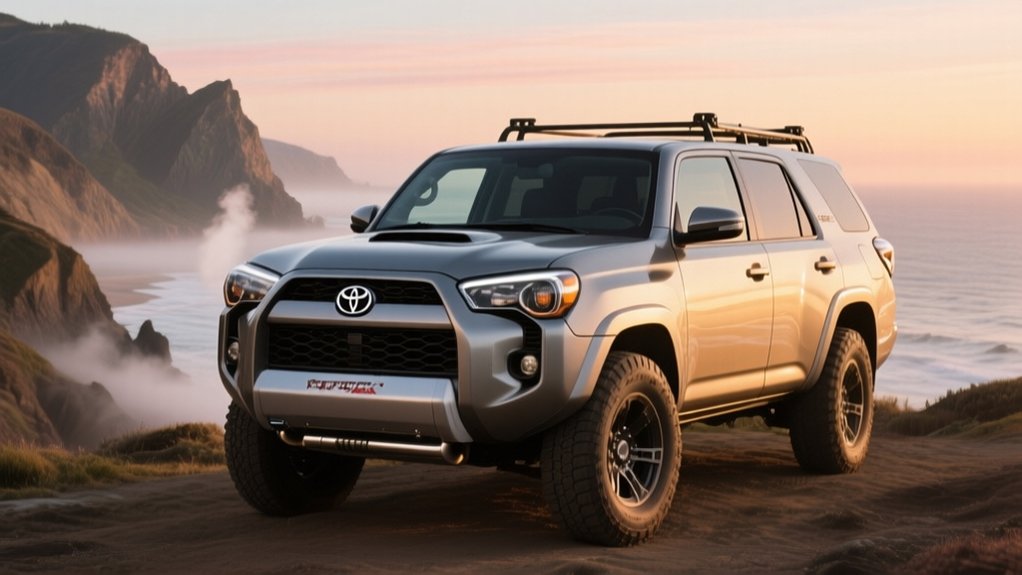
The 4Runner i-FORCE MAX pairs a turbocharged 2.4L engine with a 48-hp electric motor, delivering 326 horsepower and 465 lb-ft of torque for stronger acceleration and better fuel efficiency.
You’ll find it standard on higher trims like TRD Pro and Trailhunter, offering improved off-road performance and driving dynamics.
While it adds some weight and affects third-row seating, it boosts power and stability.
If you want to understand its reliability, features, and pricing, there’s more to investigate.
Key Takeaways
- The i-FORCE MAX is a hybrid powertrain combining a turbocharged 2.4L engine with a 48-hp electric motor, producing 326 hp and 465 lb-ft torque.
- It offers improved acceleration, responsiveness, and fuel economy at about 22–23 mpg combined compared to the non-hybrid version.
- The hybrid is standard on TRD Pro, Trailhunter, and Platinum trims, starting at $55,085, with enhanced off-road features like Crawl Control.
- Battery placement adds weight, limits third-row seating, but increases cargo space by 7.6 cubic feet and improves ride stability.
- Owner feedback is mixed on durability, with some reliability concerns and a preference split between hybrid and non-hybrid models.
The 4Runner i-FORCE MAX Hybrid Powertrain Explained
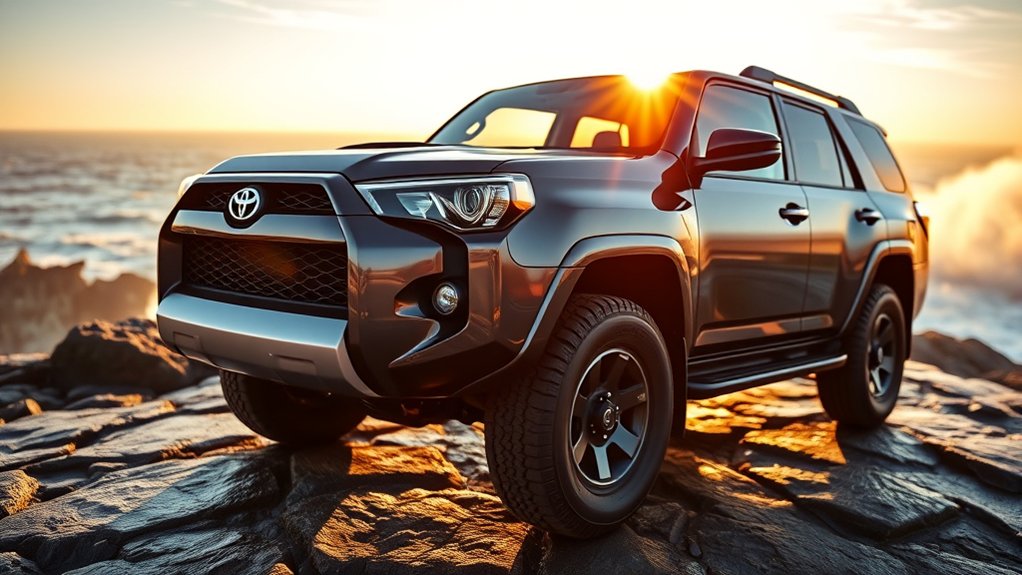
While the 4Runner has long been known for its rugged capability, the i-FORCE MAX Hybrid powertrain boosts its performance by combining a turbocharged 2.4-liter inline-4 engine with a 48-horsepower electric motor.
Together, they deliver 326 horsepower and 465 lb-ft of torque, providing strong acceleration and towing capacity. The system uses an integrated eight-speed transmission, which improves responsiveness and allows for quicker gear shifts compared to the non-hybrid variant.
Delivering 326 horsepower and 465 lb-ft torque with a responsive eight-speed transmission for enhanced performance.
Although the hybrid adds 300–400 pounds to the curb weight, it offers better fuel economy, around 22–23 mpg combined. A key feature of the i-FORCE MAX Hybrid is its ability to glide on electric power and shut off the engine at stops, helping to optimize efficiency during city driving.
This powertrain is standard on the TRD Pro, Trailhunter, and Platinum models.
Comparing the i-FORCE MAX Hybrid and Non-Hybrid Engines
Although both the i-FORCE MAX hybrid and non-hybrid engines share an 8-speed transmission, the hybrid combines a turbocharged 2.4-liter inline-4 with a 48-horsepower electric motor. This setup delivers a much higher output of 326 horsepower and 465 lb-ft of torque.
When comparing i-FORCE MAX Hybrid vs. non-hybrid engines, you’ll see the hybrid produces 48 more horsepower and 148 lb-ft more torque. This boost improves acceleration and responsiveness.
The hybrid also slightly outperforms in fuel efficiency, achieving 22–23 mpg combined compared to the non-hybrid’s 21–22 mpg. However, it adds 300–400 pounds to the vehicle’s curb weight, which can reduce cargo space and affect third-row seating.
Both engines provide smooth shifting, but the hybrid’s electric boost enhances gear changes and overall driving dynamics.
4Runner i-FORCE MAX Performance and Driving Impressions
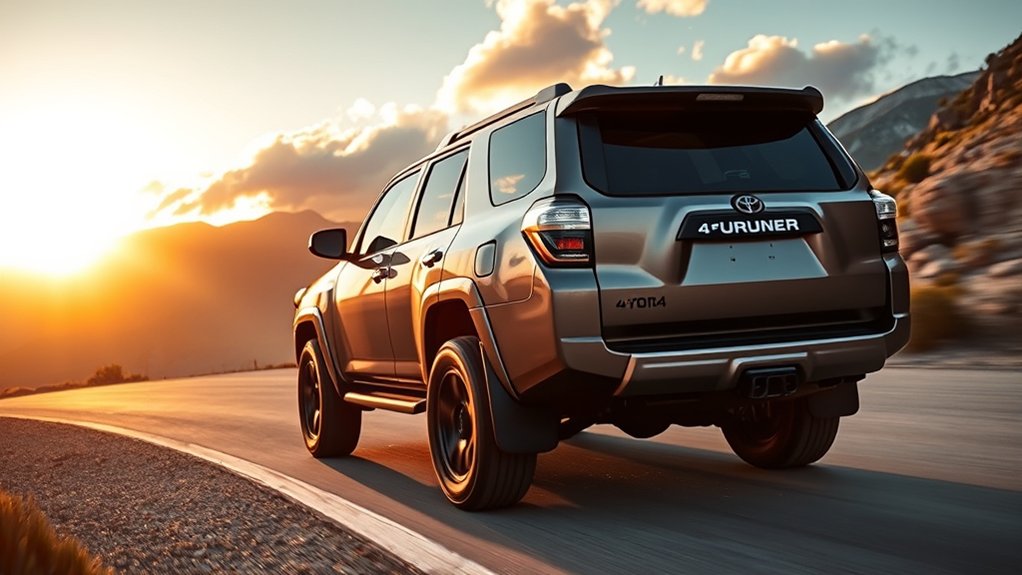
The 4Runner i-FORCE MAX hybrid combines a turbocharged 2.4-liter engine with a 48-horsepower electric motor. This combo doesn’t just improve numbers on paper—it really changes how the vehicle drives.
It pumps out 326 horsepower and 465 lb-ft of torque, making it faster than the non-hybrid turbo model. The 0 to 60 mph time drops to the mid-6 seconds, so it’s pretty quick off the line.
You’ll especially notice strong low-end torque, which makes city driving smoother and quicker in stop-and-go traffic. The engine shuts off at stops to save energy, adding to its efficiency.
On the highway, the hybrid’s instant power delivery cuts down on lag, giving you more confidence. The Sport mode ramps up the shifts and adds a sportier feel for both daily drives and off-road adventures.
How the Hybrid Affects Fuel Economy and Weight
Because the i-FORCE MAX hybrid system adds roughly 300 to 400 pounds to the 4Runner’s curb weight, you’ll notice a slightly different driving feel compared to the non-hybrid turbo model. This extra weight can make the vehicle feel more stable and improve ride quality, giving it a more planted feel on the road.
Even with the added weight, the hybrid powertrain slightly boosts fuel economy, achieving an estimated 22–23 mpg combined versus the non-hybrid’s 21–22 mpg. However, the battery placement needed for the hybrid reduces cargo space and limits third-row seating, which might matter if you need extra passenger room.
4Runner i-FORCE MAX Off-Road Performance
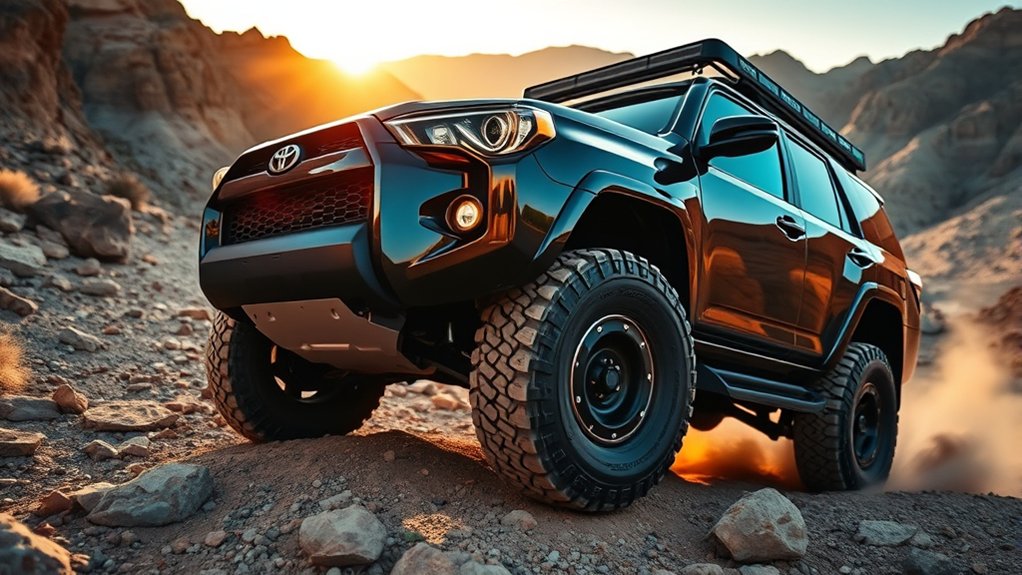
Turbocharged power combined with electric assistance gives the 4Runner i-FORCE MAX impressive off-road capabilities. The 4Runner Hybrid pairs a 2.4L turbocharged inline-4 engine with a 48-hp electric motor, generating 326 horsepower and 465 lb-ft of torque. This setup boosts traction and control on tough terrains.
Despite the added hybrid components, ground clearance and approach and departure angles stay the same, keeping its rugged performance intact. You can choose driving modes like Sport and Eco to suit either off-road adventures or fuel efficiency.
Advanced systems like Crawl Control and Multi-Terrain Select help the vehicle adapt to different landscapes. You also benefit from high torque output for quick throttle response, and adaptive modes for various conditions.
Cargo Space and Interior Differences in the i-FORCE MAX
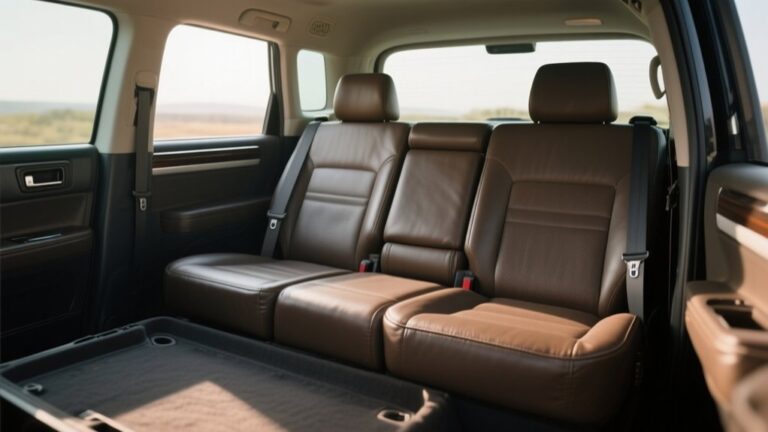
You’ll see that the i-FORCE MAX gives you about 7.6 cubic feet more cargo space compared to the non-hybrid version. That extra room can be pretty handy if you need to haul larger items or just want more storage overall.
However, it’s worth noting that the battery placement inside the hybrid model means the third-row seating options are a bit limited. So, if having a full third row is a priority for you, this is something to consider.
Getting a good grip on these interior differences can really help you decide whether the hybrid layout works best for your needs and how you want to set up your vehicle for passengers and cargo.
Cargo Capacity Comparison
Cargo capacity is a big factor when choosing between the i-FORCE MAX hybrid and its non-hybrid version. The hybrid offers 7.6 cubic feet more space for your gear and supplies.
However, the battery placement cuts into third-row seating options, which might limit passenger capacity. But it doesn’t affect the cargo floor usability, so your everyday loading stays straightforward.
The extra weight, around 300–400 lbs., helps improve ride stability without sacrificing cargo space.
Interior Layout Impact
While the i-FORCE MAX hybrid offers a bit more space compared to its non-hybrid version, the placement of its battery cuts down overall cargo capacity by 7.6 cubic feet. This change in interior layout also makes third-row seating less available, so it’s not the best choice for larger families or those needing more passenger space.
Even though it shares the same interior design as the non-hybrid, the added battery weight helps improve stability and gives a more planted ride. Users say that, despite less cargo space, the interior still works well for everyday needs.
Owner Feedback on Reliability and Build Quality
When you look at what owners are saying about the i-FORCE MAX, a lot of feedback focuses on how durable the engine is and the overall build quality. Some folks are happy with how reliable the engine seems, but there are also a few who are a bit concerned about how complex the hybrid system is.
It’s kind of a mixed bag—many owners trust the engine’s reliability, yet others worry about potential issues down the line with the hybrid setup. Getting a sense of these different opinions can really help you weigh the good and the not-so-good before making your decision.
Engine Durability Concerns
Engine durability remains a key concern among owners of the i-FORCE MAX, despite its four-year production run and widespread use in various Toyota models. While hundreds of thousands of these engines perform reliably, some users voice engine durability concerns, particularly regarding the hybrid system’s complexity.
You might find mixed feedback on reliability, with occasional reports of powertrain failures leaving drivers stranded. This points to a trade-off between advanced hybrid technology and traditional mechanical simplicity. Key considerations include:
- Proven durability across multiple Toyota models
- Hybrid system adds complexity and potential maintenance challenges
- Some owners prefer non-hybrid alternatives for peace of mind
- Isolated cases of powertrain-related breakdowns
- Community debates on long-term reliability versus innovation
Understanding these factors helps you weigh the i-FORCE MAX’s engine durability realistically.
Build Quality Perceptions
Concerns about the i-FORCE MAX’s hybrid powertrain naturally extend into broader perceptions of the 2026 Toyota 4Runner’s build quality and reliability. As you look into owner feedback, you’ll see mixed opinions.
Some owners appreciate the proven durability of the i-FORCE MAX engine, which has been used across Toyota models for four years, supporting positive reliability views.
Others report issues, including powertrain failures that caused inconvenient breakdowns, raising questions about overall build quality.
The added complexity of the hybrid system makes some drivers prefer non-hybrid 4Runners, valuing simplicity and dependable mechanics.
This divide in owner experiences highlights different perceptions of the 4Runner’s build quality, giving you a nuanced understanding rather than a clear-cut view on reliability and construction standards.
Long-Term Ownership Issues
Although the i-FORCE MAX hybrid engine has been in production for four years and generally earns praise for reliability, long-term owner feedback paints a mixed picture of the 2026 4Runner’s build quality and dependability.
Some owners have reported powertrain issues that have left them stranded, raising concerns about how well the hybrid system is integrated and how it performs over time.
There’s also a divide among owners—some prefer the simplicity of non-hybrid models, while others are happy with the hybrid’s performance.
While Toyota’s overall reliability remains strong, the shift to the i-FORCE MAX hybrid has brought new long-term ownership issues that are worth considering.
Reports of occasional powertrain malfunctions affecting reliability have surfaced.
Build quality concerns seem to be more noticeable compared to the previous fifth-generation models.
That said, many owners have had positive reliability experiences with other Toyota models using the same engine.
Preferences are split between those who favor hybrid and those who prefer non-hybrid configurations.
There’s some uncertainty about how well the hybrid system will hold up over the long run in terms of durability and integration.
Driving Modes and Benefits of the i-FORCE MAX
The i-FORCE MAX offers multiple driving modes—Sport, Eco, and Normal—that let you adapt your driving experience to different conditions and preferences.
In Sport mode, the hybrid i-FORCE MAX delivers aggressive shifts and improved low-end torque, boosting responsiveness and power for spirited driving.
Eco mode prioritizes fuel efficiency by softening throttle response and prompting earlier upshifts, making it ideal for city commutes and long trips.
Normal mode strikes a balance, providing smooth performance suited for everyday use.
Beyond these modes, the i-FORCE MAX upgrades off-road capability with features like Crawl Control and Multi-Terrain Select. These help you navigate challenging terrain confidently.
Together, these driving modes and technologies make the i-FORCE MAX versatile, efficient, and responsive across a wide range of driving scenarios.
Pricing, Trims, and Models of the 4Runner i-FORCE MAX
The 4Runner i-FORCE MAX comes in a variety of trims, like TRD Off-Road, Limited, TRD Pro, Trailhunter, and Platinum. One cool thing is that the hybrid powertrain is standard on the TRD Pro and Trailhunter models. So, if you’re looking for that hybrid boost, those are the trims to check out.
Price-wise, the hybrid version kicks off at $55,085. This price reflects its upgraded performance and the latest tech features. When you’re comparing these trims and prices, it’s helpful to think about the value you’re getting with the hybrid features versus the more traditional models.
Trim Levels Overview
Four distinct trims highlight the 2026 Toyota 4Runner i-FORCE MAX lineup, catering to various preferences and needs. You’ll find the TRD Off-Road, TRD Pro, Limited, and Platinum trims, each offering unique features and capabilities. The i-FORCE MAX hybrid powertrain comes standard on the TRD Pro, Trailhunter, and Platinum models, providing a notable power boost.
Here’s a quick overview of the trim levels:
- Starting price around $55,085 for the hybrid variants
- TRD Pro introduces the exclusive WaveMaker blue color
- Hybrid trims deliver 326 horsepower and 465 lb-ft torque
- Off-road prowess is maintained despite the hybrid setup
- Third-row seating is sacrificed in hybrid trims due to battery placement
Understanding these trim levels helps you choose the right 4Runner i-FORCE MAX for your needs and budget.
Hybrid Model Availability
When choosing the right 4Runner i-FORCE MAX trim for your needs, it’s important to understand the availability and pricing of hybrid models. The 2026 Toyota 4Runner i-FORCE MAX Hybrid comes in several trims, including TRD Off-Road, Limited, TRD Pro, and Trailhunter.
This hybrid pairs a 2.4-liter turbocharged engine with a 48-hp electric motor, producing 326 horsepower and 465 lb-ft of torque. Starting at $55,085, it offers a competitive powertrain option in the mid-size SUV segment.
However, the hybrid model doesn’t have a third-row seat because of the battery placement, which affects cargo space. It also features modern tech, such as an 8.0-inch or optional 14.0-inch infotainment display with wireless Apple CarPlay and Android Auto, making connectivity easy without sacrificing utility.
Pricing Differences Explained
Although the 2026 Toyota 4Runner i-FORCE MAX hybrid commands a price premium of about $10,000 over its non-hybrid counterparts, it offers a significant boost in power and torque that can make the extra cost worthwhile depending on what you value most.
Understanding these pricing differences can help you make a more informed choice between trims and models. The hybrid starts at $55,085 and delivers 326 horsepower.
It’s available on TRD Off-Road and Limited trims, while it’s standard on the TRD Pro, Trailhunter, and Platinum. The hybrid provides 48 more horsepower and 148 lb-ft more torque than non-hybrid versions.
However, the hybrid’s battery placement reduces cargo space and limits third-row seating, so practicality is affected. The $10,000 price gap balances improved performance against the extra cost and potential limitations.
Think about these factors carefully to choose the 4Runner that best fits your needs.
Should You Choose the i-FORCE MAX Hybrid?
Why consider the i-FORCE MAX Hybrid for your 4Runner? It offers the most powerful setup with 326 hp and 465 lb-ft torque, which improves both acceleration and fuel efficiency.
However, the hybrid’s battery removes the third-row seat, limiting passenger capacity. Your choice depends on whether you prioritize performance and efficiency or seating flexibility.
| Feature | i-FORCE MAX Hybrid |
|---|---|
| Engine Power | 326 hp |
| Torque | 465 lb-ft |
| 0-60 mph Time | Mid-6 seconds |
| Fuel Economy (mpg) | 22-23 combined |
| Seating Capacity | 5 (no third row) |
If you value power and slightly better fuel economy, the i-FORCE MAX Hybrid is a good fit. For larger families, the loss of seating could be a drawback.
Frequently Asked Questions
What Colors Are Available for the 4runner I-Force MAX?
You can choose from several colors for the 4Runner i-FORCE MAX, including the exclusive WaveMaker blue available only on TRD Pro models.
Other options include Super White, Midnight Black, and Magnetic Gray Metallic. The hybrid and non-hybrid versions share a consistent color palette.
Keep in mind, color availability depends on the trim level, with higher trims offering more exclusive shades.
You can examine all options at dealerships or Toyota’s online configurator.
Does the 4runner I-Force MAX Come With a Warranty on the Hybrid Components?
Yes, the 4Runner i-FORCE MAX comes with a solid warranty on its hybrid components. You get 8 years or 100,000 miles coverage for the hybrid battery, electric motor, and related parts.
This warranty shows Toyota’s confidence in their hybrid tech. Plus, a standard 3-year or 36,000-mile limited warranty and an 8-year or 100,000-mile powertrain warranty cover the engine and transmission.
Just make sure you follow Toyota’s maintenance guidelines to keep these warranties valid.
Are There Special Maintenance Requirements for the I-Force MAX Hybrid System?
Yes, the i-FORCE MAX hybrid system has some special maintenance needs. You’ll want to keep an eye on the hybrid battery’s health regularly because it directly affects how well the vehicle performs and how efficient it is.
Toyota recommends periodic inspections of the battery and electrical components to catch any issues early. Also, regenerative braking can cause brake pads to wear faster, so it’s a good idea to check those more often.
Routine oil changes with synthetic oil and timely transmission fluid replacements are essential to keep both the engine and hybrid system running smoothly.
Can the 4runner I-Force MAX Be Equipped With a Roof Rack or Aftermarket Accessories?
Yes, you can equip the 4Runner i-FORCE MAX with a roof rack and various aftermarket accessories. Many options, including those from Yakima and Thule, fit securely using existing mounting points so you won’t need major modifications.
Just remember, the hybrid system adds weight, so it’s a good idea to check weight ratings for any added gear. Upgraded suspension, skid plates, and off-road tires are also popular choices to boost your 4Runner’s capabilities.
What Infotainment Features Are Standard in the 4runner I-Force MAX?
You get an 8.0-inch infotainment display standard in the 4Runner i-FORCE MAX, which offers a user-friendly interface. If you want, you can upgrade to a 14.0-inch screen for better visibility.
Both screens support wireless Apple CarPlay and Android Auto, so you can easily connect your phone for music and navigation. Plus, USB-C ports let you charge devices conveniently, making your drive more connected and enjoyable.
Conclusion
Choosing the 4Runner i-FORCE MAX is like adding a turbocharger to your adventure. It combines hybrid efficiency with rugged capability.
You get better fuel economy without sacrificing power or off-road toughness. While it’s a bit heavier, the driving modes and reliability help balance performance and practicality.
If you want a versatile SUV that’s great for daily drives and weekend adventures, the i-FORCE MAX is a solid choice worth considering.