Is There A Hybrid 4runner – Here’s the Truth
Yes, there is a 2025 Toyota 4Runner Hybrid, called the i-FORCE MAX. It combines a 2.4-liter turbocharged engine with a 48-hp electric motor, giving you 326 horsepower and 465 lb-ft of torque.
This setup boosts fuel efficiency to around 22–23 mpg and offers strong towing capacity at 6,000 lbs.
The hybrid model reduces cargo space because of the battery but improves off-road performance with instant torque.
If you’re curious about trims, tech features, and trade-offs, keep exploring to get the full picture.
Key Takeaways
- Yes, the 2025 Toyota 4Runner Hybrid, called i-FORCE MAX, pairs a 2.4L turbo engine with a 48-hp electric motor for 326 hp total.
- The hybrid 4Runner offers improved torque, quicker acceleration, and better off-road throttle control compared to gas-only models.
- Fuel efficiency of the hybrid ranges from 22–23 mpg combined, slightly better than the gas model’s 21–22 mpg.
- Hybrid battery placement reduces cargo space and limits third-row seating practicality, unlike gas-only versions.
- Hybrid trims include TRD Off-Road/Premium, Limited, Platinum, TRD Pro, and Trailhunter, while some gas trims lack a hybrid option.
What Is the 4Runner Hybrid? Availability and Overview
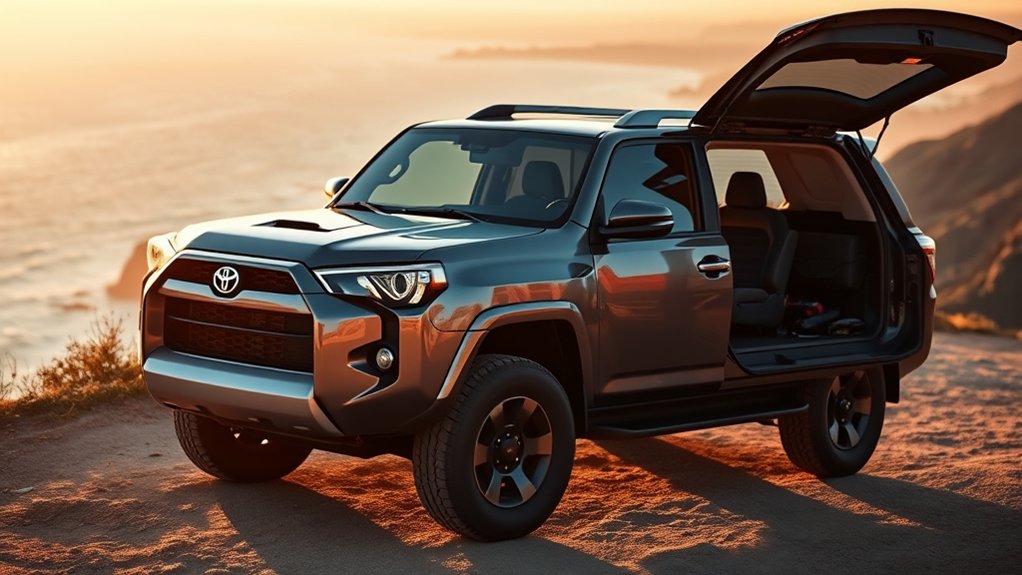
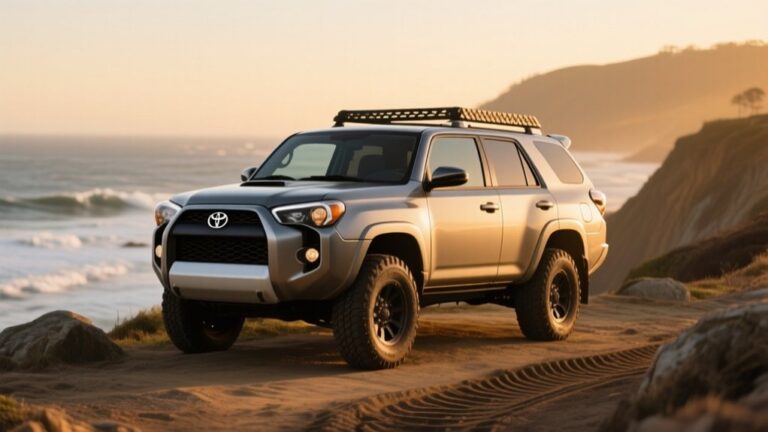
The 2025 Toyota 4Runner Hybrid, called the i-FORCE MAX, pairs a 2.4-liter turbocharged engine with a 48-horsepower electric motor. Together, they produce a strong 326 horsepower and 465 lb-ft of torque.
The 2025 4Runner Hybrid blends a 2.4L turbo engine with electric power for 326 hp and 465 lb-ft torque.
This hybrid offers much more power than the gas-only versions. It’s only available in certain trims: TRD Off-Road/Premium, Limited, Platinum, and TRD Pro.
Trims like SR5 and TRD Sport/Premium still come with traditional gasoline engines. The hybrid system also boosts fuel efficiency to about 22–23 mpg combined, a bit better than the 21–22 mpg of the non-hybrid models.
Even with extra weight reducing cargo space, the 4Runner Hybrid keeps its great off-road features. It includes Crawl Control and Multi-Terrain Select, ensuring it’s ready for rugged adventures.
How the 4Runner Hybrid i-FORCE MAX Powertrain Works
The 4Runner Hybrid’s i-FORCE MAX powertrain is pretty impressive. It combines a 2.4L turbocharged gasoline engine with an electric motor, giving you a total of 326 horsepower and 465 lb.-ft. of torque. That means you get plenty of power whether you’re on the highway or tackling tough trails.
It’s paired with an 8-speed automatic transmission, which helps optimize both performance and fuel efficiency. On average, you can expect around 22 to 23 miles per gallon combined. Plus, the electric motor really helps out with low-end torque, making off-road adventures smoother and giving you better overall driving dynamics.
Hybrid Powertrain Components
Although the 2025 Toyota 4Runner hybrid includes advanced technology, its i-FORCE MAX 2.4L turbocharged hybrid EV powertrain is straightforward in design.
The hybrid powertrain components include a gas engine and a 48-hp electric motor working together to deliver 326 net horsepower and 465 lb-ft of torque.
A battery pack supports quicker gear changes and smoother acceleration. The system also retains a traditional transfer case for 4×4 drive, preserving off-road capability.
However, the battery placement slightly reduces cargo space and affects third-row seating availability.
| Component | Description |
|---|---|
| Gas Engine | 2.4L turbocharged |
| Electric Motor | 48-hp assisting motor |
| Battery Pack | Supports acceleration and gear shifts |
| Total Output | 326 hp and 465 lb-ft torque |
| Transfer Case | Traditional 4×4 system |
Performance Benefits Explained
When you combine a 2.4L turbocharged engine with a 48-hp electric motor, the i-FORCE MAX powertrain delivers impressive performance gains in the 2025 4Runner hybrid. This hybrid model offers up to 326 net combined horsepower and 465 lb-ft of torque, boosting acceleration and responsiveness.
Here’s how it benefits you:
- Quicker gear changes and smoother acceleration, especially in stop-and-go traffic.
- 0–60 mph in the mid-6 seconds, outperforming the standard turbo.
- Improved fuel economy of around 22–23 mpg combined.
- Sport mode delivers aggressive shifts and strong low-end torque for better driving on various terrains.
All these features combine to give the hybrid a great balance of power, efficiency, and drivability.
Performance and Feature Differences Between Hybrid and Gas 4Runner
You’ll notice that the hybrid 4Runner packs a lot more punch in terms of power and torque compared to the gas model. That’s thanks to its turbocharged i-FORCE MAX powertrain, which really gives it an edge. Plus, it comes with features like Sport mode and electric boost, which can make a noticeable difference in driving dynamics—especially when you’re off-road.
Power and Torque Comparison
Power and torque shape the driving experience between the hybrid and gas 4Runner models. The hybrid’s i-FORCE MAX system clearly gives it the edge. Here’s what you should know:
The hybrid delivers 326 horsepower and 465 lb-ft of torque, outpacing the gas model’s 278 horsepower and 317 lb-ft. The 48-hp electric motor boosts low-end torque, making responses snappier in stop-and-go traffic.
Both have an 8-speed automatic transmission, but the hybrid’s electric boost allows for quicker gear shifts and acceleration. This results in a faster 0-60 mph time—mid-6 seconds for the hybrid compared to high-6 to low-7 seconds for the gas model.
This power and torque comparison highlights the hybrid 4Runner’s superior performance.
Hybrid Versus Gas Features
Beyond the impressive power and torque figures that set the hybrid 4Runner apart, several performance and feature differences influence your driving experience. In the Hybrid Vs. gas comparison, the hybrid’s i-FORCE MAX 2.4L turbocharged engine pairs with a 48-hp electric motor, boosting acceleration and providing smoother, quicker gear changes through the 8-speed automatic transmission.
You’ll notice improved fuel economy at around 22–23 mpg combined, slightly edging the gas model’s 21–22 mpg. However, the hybrid’s battery placement limits third-row seating and cargo space, unlike the gas 4Runner, which offers greater flexibility for passenger and cargo configurations.
While both models share the turbocharged engine and transmission, the hybrid’s electric boost delivers a sportier, more efficient drive. Choosing between the two depends on your performance priorities and how much interior space you need.
Impact on Off-Roading
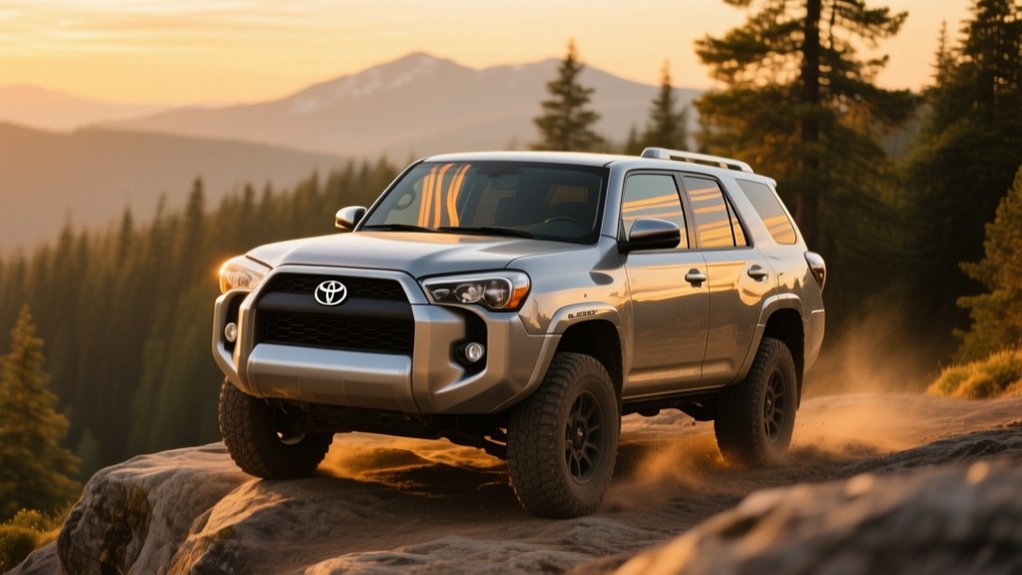
Although both the hybrid and gas 4Runner models share the same ground clearance and approach/departure angles, the hybrid’s i-FORCE MAX powertrain offers a big advantage in off-road performance. It delivers 326 horsepower and 465 lb-ft of torque compared to the gas model’s 278 horsepower and 317 lb-ft.
This extra power boosts throttle control, especially in 4-Lo mode, without affecting clearance or battery placement. When thinking about off-road impact, keep these points in mind:
- The hybrid’s electric boost provides instant torque for better traction.
- Both models have Sport and Eco modes to optimize terrain handling.
- Battery placement doesn’t limit off-road capability.
- The increased torque helps with climbing and towing on tough terrain.
How the 4Runner Hybrid Impacts Fuel Economy and Towing
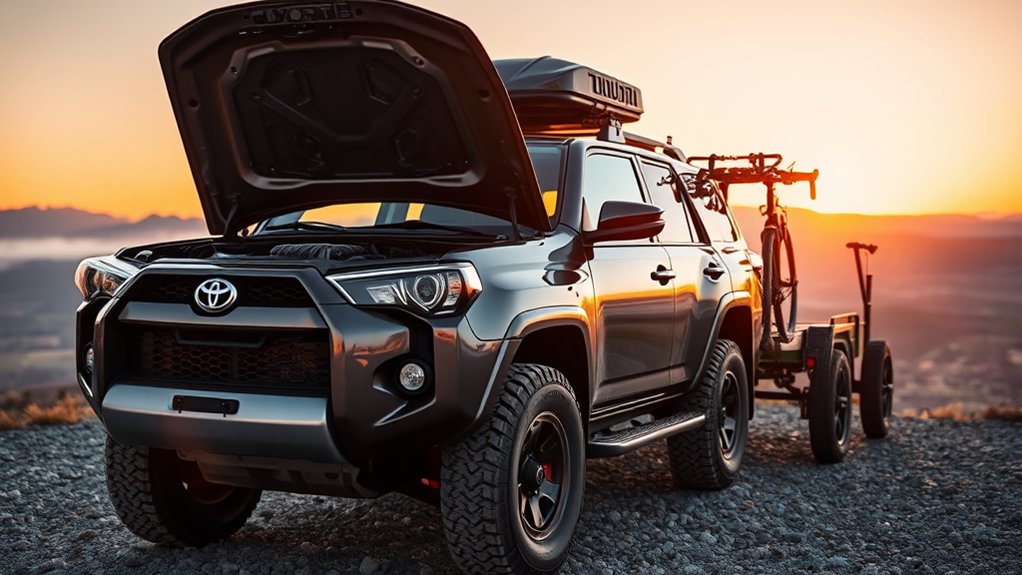
When you choose the 2025 Toyota 4Runner hybrid, you’ll notice a clear boost in fuel economy, reaching around 22–23 mpg combined compared to the non-hybrid’s 21–22 mpg.
The Toyota 4Runner Hybrid’s i-FORCE MAX 2.4L turbocharged engine delivers 326 horsepower and 465 lb-ft of torque, improving both efficiency and performance.
The 4Runner Hybrid’s i-FORCE MAX engine boosts power and torque for enhanced efficiency and performance.
Its 48-hp electric motor provides quicker acceleration and better low-end torque, which is especially helpful when towing.
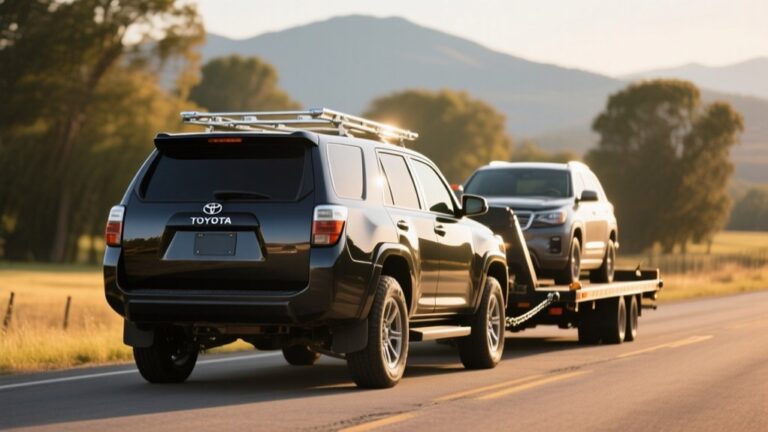
While the hybrid battery slightly reduces cargo space, the 4Runner Hybrid still offers the same robust towing capacity of 6,000 lbs as the gas-only version.
This mix of better fuel efficiency and strong towing power makes the Toyota 4Runner Hybrid a practical choice for drivers wanting both better mileage and hauling ability.
On- and Off-Road Performance Benefits of the Hybrid 4Runner
If you want to handle both city streets and rugged trails, the 2025 Toyota 4Runner Hybrid’s i-FORCE MAX 2.4L turbocharged hybrid powertrain offers up to 326 horsepower and 465 lb-ft of torque. It delivers strong low-end torque for quick acceleration and precise throttle control.
This hybrid setup enhances your on- and off-road experience by providing:
- Fast acceleration and responsive throttle in urban driving.
- Same ground clearance and approach/departure angles as non-hybrid models for consistent off-road capability.
- Driving modes like Sport and Eco to boost performance and save fuel.
- Advanced off-road features such as Crawl Control and Multi-Terrain Select for navigating different terrains confidently.
All these benefits make the hybrid 4Runner versatile and capable in various driving conditions.
How the Hybrid Battery Affects Cargo Space and Seating
Because the hybrid system includes major components like the battery pack, the 2025 Toyota 4Runner Hybrid affects your cargo space and seating options. The battery placement takes up trunk space, reducing the cargo area compared to non-hybrid models.
This design also limits the usefulness of the third-row seats, making it less practical if you need maximum passenger capacity. Plus, the hybrid system adds around 300–400 lbs, which slightly impacts the interior’s overall capacity.
While the hybrid 4Runner offers better performance, these changes mean you need to consider the trade-off between power and available space. If having a spacious cargo area and flexible seating is a priority, the hybrid’s battery placement could be a key factor in your decision.
4Runner Hybrid: Which Trims Offer the Hybrid Option?
Which trims of the 2025 Toyota 4Runner come with the hybrid option? If you’re eyeing the runner hybrid, you’ll find it available in these trims:
- TRD Off-Road/Premium
- Limited
- Platinum
- TRD Pro and Trailhunter
Each hybrid model features the i-FORCE MAX 2.4L turbocharged engine, delivering 326 horsepower and 465 lb-ft of torque. Note that the SR5 and TRD Sport/Premium trims are gas-only and don’t offer the hybrid option.
The hybrid trims often include advanced features like the JBL® Premium Audio system and improved off-road capabilities. Keep in mind that the hybrid battery placement can impact cargo space and third-row seating availability. Consider these factors when choosing your 4Runner hybrid.
What Owners Are Saying About the 4Runner Hybrid Experience
How does the 2025 Toyota 4Runner hybrid perform in real-world use? Owners say the hybrid delivers impressive power with 326 horsepower and 465 lb-ft of torque, boosting off-road capability and city acceleration thanks to strong low-end torque.
You’ll notice slightly better fuel economy, around 22-23 mpg combined, compared to the gas-only model. Many praise its seamless driving experience and ability to handle tough terrains effortlessly.
However, some owners mention the hybrid battery’s placement adds weight and reduces cargo space, limiting third-row seating options. If you’re thinking about this hybrid, it’s important to consider these practical factors along with its improved performance and fuel efficiency to see if it fits your driving and space needs.
Should You Choose the Hybrid or Gas 4Runner? Pros and Cons
Choosing between the hybrid and gas versions of the 2025 Toyota 4Runner depends on your priorities for power, efficiency, and practicality. The hybrid offers more horsepower (326 vs. 278) and torque (465 lb-ft vs. 317 lb-ft), making it better for off-road performance.
Deciding between the 2025 4Runner hybrid and gas models comes down to power, efficiency, and practicality.
It also delivers slightly better fuel economy, around 22–23 mpg combined, compared to 21–22 mpg for the gas model. However, the hybrid adds 300–400 lbs from its battery, which could reduce cargo space and affect third-row seating.
Consider these points:
- Choose hybrid for superior power and torque.
- Opt for gas if maximizing cargo and seating matters.
- Hybrid provides better fuel efficiency and quieter rides.
- Gas model offers simpler mechanics and possibly greater long-term reliability.
Your choice hinges on balancing these hybrid pros and cons.
Frequently Asked Questions
How Much Does Maintenance Cost for a Hybrid 4runner?
You can expect annual maintenance costs for a hybrid 4Runner to range between $400 and $600. Toyota offers a no-cost maintenance plan for the first two years or 25,000 miles, which helps reduce early expenses.
While hybrid powertrains can be more complex, regenerative braking lowers brake wear, balancing costs. Routine care includes oil changes and tire rotations, similar to non-hybrid models.
Your driving habits will ultimately influence your exact maintenance expenses.
Are Hybrid 4runners Eligible for Tax Incentives or Rebates?
Like traversing a winding road, eligibility for tax incentives on hybrid 4Runners depends on several factors. You might qualify for federal tax credits if the vehicle meets IRS battery and specification requirements.
State and local rebates vary widely, so you should check your area’s programs. Since laws change, staying updated and consulting a tax professional or dealership will help you understand current benefits and eligibility for hybrid 4Runner incentives.
What Is the Expected Battery Lifespan in a Hybrid 4runner?
You can expect the battery lifespan in a hybrid 4Runner to last between 8 to 15 years, depending on how you drive and maintain it.
Toyota backs their hybrid batteries with an 8-year or 100,000-mile warranty, showing their confidence in durability.
To get the most out of your battery, stick to regular maintenance and avoid extreme temperatures or frequent short trips, which can shorten its life.
How Does the Hybrid System Affect Long-Term Reliability?
You’ll find the hybrid system can boost long-term reliability by reducing engine strain, thanks to the i-FORCE MAX 2.4L powertrain, which improves efficiency. For example, regenerative braking extends brake life by decreasing wear on components.
However, hybrids add complexity, requiring specialized maintenance. Your vehicle’s durability will depend on how well you maintain it and adapt to hybrid technology, which Toyota builds with quality to guarantee lasting performance.
Can the Hybrid 4runner Be Serviced at Any Toyota Dealership?
Yes, you can get your Hybrid 4Runner serviced at any authorized Toyota dealership. They’re equipped and trained to handle both hybrid and non-hybrid models, including battery maintenance and regenerative braking.
Dealerships have the specialized tools and software needed for diagnosis and repairs. Just make sure to use genuine Toyota parts to keep your warranty intact and follow the recommended maintenance schedule for the best long-term performance.
Conclusion
You might expect the 4Runner hybrid to blend efficiency with rugged power seamlessly, but the reality is more nuanced.
While the i-FORCE MAX powertrain offers improved fuel economy and torque, it slightly reduces cargo space and adds complexity.
Choosing between hybrid and gas means balancing eco-conscious gains against traditional reliability and simplicity.
Ultimately, your decision hinges on whether you prioritize modern efficiency or proven off-road toughness in your adventure-ready SUV.