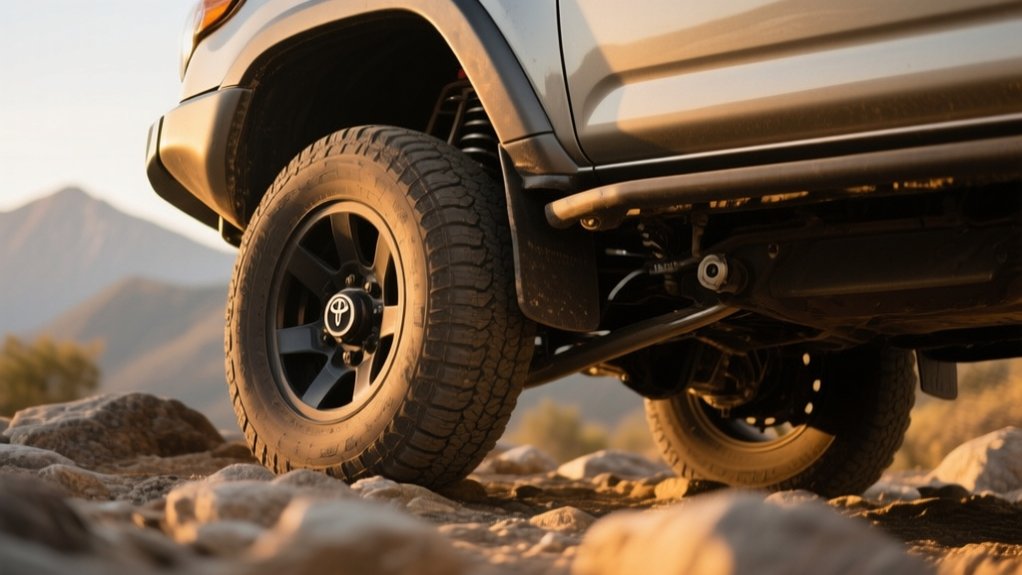
What Is The Ground Clearance Of A 4runner – Meaning & More
Ground clearance is the distance between your 4Runner’s lowest chassis and the ground. It’s key for handling rough terrain without damaging the underbody.
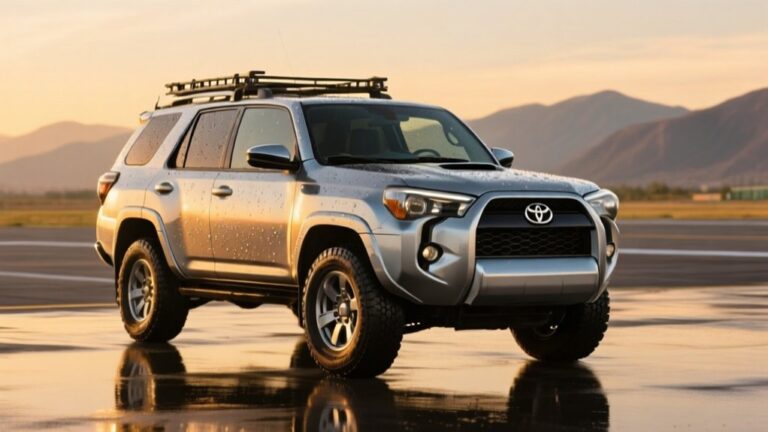
The 2026 Toyota 4Runner’s clearance varies by trim. The SR5 has about 8.1 inches, while the TRD Off-Road offers around 9.6 inches. The TRD Pro sits even higher.
A higher clearance means better obstacle handling and improved off-road ability.
Keep exploring to see how trims, hybrid models, and upgrades can affect your 4Runner’s off-road performance.
Key Takeaways
- Ground clearance is the distance between a vehicle’s lowest chassis part and the ground, crucial for off-road capability and obstacle navigation.
- The 2026 Toyota 4Runner SR5 4×4 has 8.1 inches of ground clearance, suitable for everyday driving and moderate off-road use.
- TRD Off-Road trim offers 9.6 inches of clearance, improving rough terrain handling and approach angles with optional front air dam removal.
- TRD Pro trim features about 10.6 inches of clearance with FOX suspension, enhancing off-road performance further.
- Hybrid 4×4 models have 9.6 inches clearance but lower battery placement may reduce off-road capability despite better stability.
What Is Ground Clearance And Why Does It Matter For 4Runners?
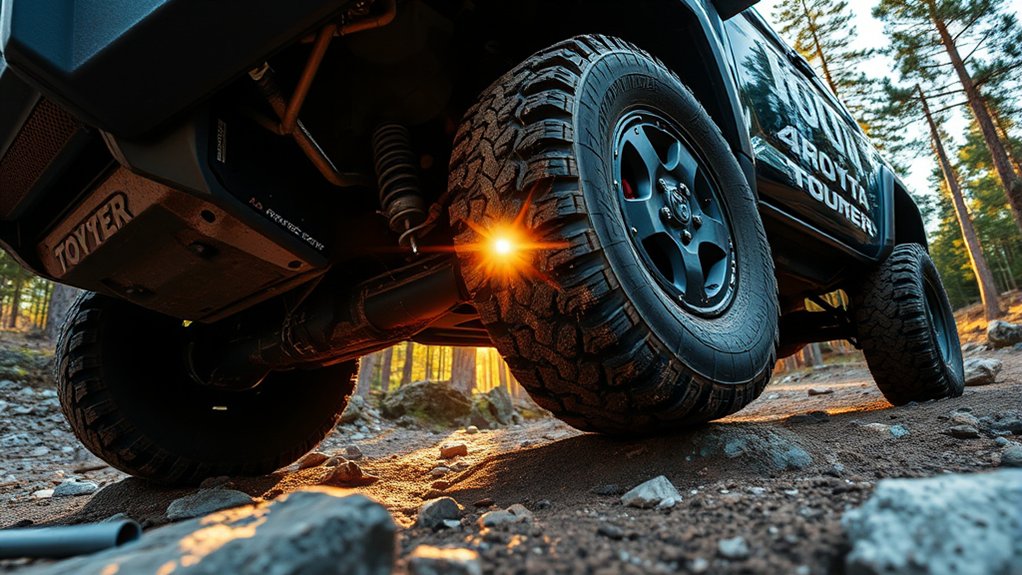
Ground clearance is the distance between the lowest part of your 4Runner’s chassis and the ground. It’s a key factor in how well your vehicle handles off-road conditions.
Ground clearance measures the space between your 4Runner’s lowest chassis point and the ground, crucial for off-road capability.
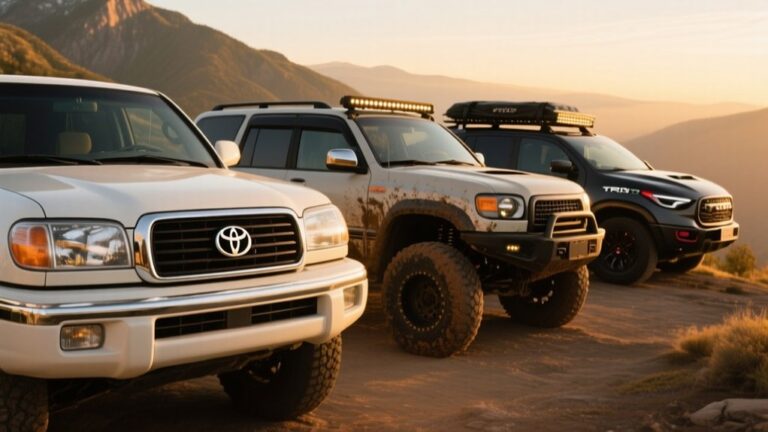
This clearance allows you to go over rocks, logs, and uneven terrain without damaging the undercarriage. Models like the TRD Pro and Trailhunter have optimized ground clearance combined with larger tires.
That extra height boosts their ability to handle steep inclines and rough trails. It also improves approach angles so you won’t scrape the bumper or chassis on obstacles.
If you want your 4Runner to perform well off-road, understanding ground clearance and how it works with tire size on trims like the TRD Pro and Trailhunter is crucial.
How Much Ground Clearance Does The 2026 Toyota 4Runner Have?
How much clearance does the 2026 Toyota 4Runner actually offer when tackling uneven terrain? The SR5 4×4 model comes with 8.1 inches of ground clearance, which is a bit lower than some rivals like the Tacoma’s 10.1 inches.
However, the TRD Pro and Trailhunter trims boost this with higher suspensions, enhancing off-road capability. These versions often feature Man Emu shocks, which are known for improving ride quality on rough trails.
The Sport Premium trim balances comfort with decent clearance, making it ideal if you want cargo space without sacrificing too much off-road ability. Toyota measures ground clearance from axle height, so you might notice differences compared to other SUVs that use running clearance.
Why Hybrid Systems Affect 4Runner Ground Clearance
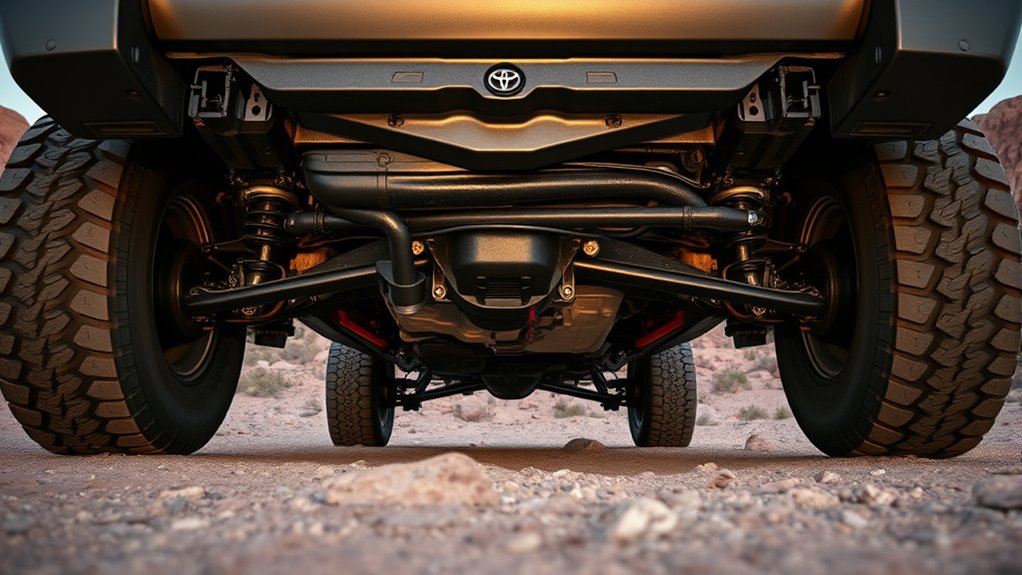
If you look at the 2026 4Runner with the hybrid system, you’ll see that the battery is placed pretty low. That’s because it helps lower the center of gravity, which makes the vehicle feel more stable on the road. But here’s the thing: this design also means the 4Runner sits a bit closer to the ground.
Battery Placement Impact
Because the hybrid battery placement directly impacts the 2026 Toyota 4Runner’s design, you’ll notice a difference in ground clearance compared to traditional models. The batteries’ weight and position lower the vehicle’s height, which affects how high it sits off the ground.
Here’s why it matters:
- The 9.6-inch ground clearance on 4×4 hybrids is less than some non-hybrid versions, so off-road capability is reduced.
- Placing batteries lower improves stability but sacrifices some clearance you’d expect for tackling rough terrain.
- The “low beltline” design focuses on comfort and handling but can increase the risk of scraping or damage in off-road conditions.
Understanding where the batteries are placed helps explain why hybrid 4Runners balance stability and ground clearance differently than conventional models.
Center Of Gravity
The placement of the hybrid battery doesn’t just affect ground clearance. It also shifts the 4Runner’s center of gravity.
By positioning the heavy hybrid components lower in the chassis, Toyota lowers the vehicle’s center of gravity. This aims to boost stability during off-road maneuvers.
This design reduces the risk of tipping or rolling, which is vital when traversing uneven terrain. However, it also adds weight and slightly lowers the overall height.
As a result, the 4Runner’s ground clearance is 9.6 inches for 4×4 models, which is lower than some competitors. While the hybrid system improves stability with a low beltline and center of gravity, it may limit traditional off-road capability.
This is especially true in comparison to non-hybrid 4Runners with higher ground clearance.
Stability Versus Clearance
While hybrid systems add valuable stability to the 2026 Toyota 4Runner, they also influence ground clearance in noticeable ways. The added weight of hybrid batteries lowers the vehicle’s clearance, which can affect its off-road ability.
However, this trade-off helps improve overall handling and safety. Here’s why:
- The hybrid system lowers the center of gravity, reducing the risk of rollover during sharp turns.
- Ground clearance drops slightly compared to traditional models, balancing stability with terrain adaptability.
- Design elements like the low beltline enhance comfort and vehicle dynamics, prioritizing stability over extreme off-road specs.
Comparing 4Runner Ground Clearance To Similar SUVs And Trucks
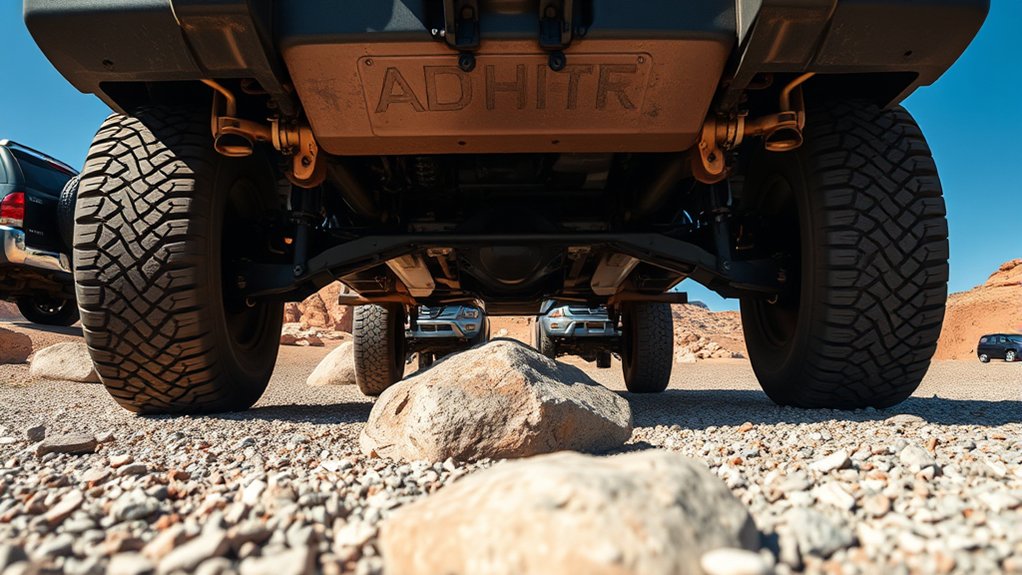
When comparing the 2026 Toyota 4Runner SR5 4×4’s 8.1-inch ground clearance to similar SUVs and trucks, you’ll see it falls short of models like the 2026 Tacoma SR5 4×4, which offers 10.1 inches. The 4Runner matches the Lexus GX460’s 8.1 inches but trails behind the 2023 Land Cruiser Prado’s 9 inches.
Both the Subaru Outback and Forester provide slightly better clearance at 8.7 inches. This means the 4Runner handles moderate off-road conditions well but might struggle with more demanding terrain compared to these competitors.
If higher ground clearance for serious off-roading is a priority, trucks like the Tacoma or SUVs like the Land Cruiser Prado could be better options than the 4Runner.
Understanding Different 4Runner Ground Clearance Measurements
Understanding how ground clearance is measured on the 2026 Toyota 4Runner can help you better assess its off-road capabilities. Ground clearance usually refers to the distance from the lowest point of the vehicle’s body to the ground, but the exact measurement can vary.
Here’s what you should know:
- The 4Runner’s 4×4 models offer about 9.6 inches of ground clearance, which is key for off-road driving.
- Some models, like the TRD Pro and Trailhunter, have higher suspensions, boosting their clearance.
- Measurement methods differ; some list “running clearance,” which excludes axle height, leading to variations in reported numbers.
Understanding these details helps you see how different 4Runner trims handle rough terrain and why ground clearance figures might not always match up.
How Ground Clearance Affects 4Runner Off-Road Handling And Safety
When you’re off-roading in your 4Runner, ground clearance really makes a difference. It helps you get over rocks and uneven surfaces more easily, so you’re less likely to get stuck. Basically, the higher your clearance, the better your traction on tricky trails.
But it’s not just about clearing obstacles. Ground clearance also affects how stable your vehicle feels on rough terrain. If your 4Runner sits too low, it might be more prone to tipping or losing control. So, finding the right balance is super important to handle those tough trails confidently and stay safe.
Off-Road Traction Benefits
Because the 2026 Toyota 4Runner offers a ground clearance of 9.6 inches on its 4×4 models, it’s easier to handle rough trails without worrying about damaging the underbody. This clearance boosts off-road traction in several key ways:
- Improved Approach and Departure Angles. You can confidently climb steep inclines and go over obstacles without scraping the bumpers.
- Better Suspension Articulation. The body-on-frame design combined with this ground clearance lets the wheels stay in contact with uneven terrain, which improves traction.
- Optimized Traction Systems. Features like Multi-Terrain Select and Crawl Control work smoothly with the clearance to maximize wheel grip and control.
All these factors help you stay in control and maintain traction, making your off-road adventures safer and more fun.
Clearance Impact On Stability
The 9.6-inch ground clearance on the 2026 Toyota 4Runner doesn’t just boost traction. It also plays a key role in how the vehicle handles and stays stable off-road.
This clearance lets you navigate obstacles without scraping the underbody, protecting important components. It also helps lower the center of gravity, making it easier to stay balanced on uneven terrain and reducing rollover risks during sharp turns.
Models like the TRD Pro and Trailhunter go even further with improved suspension and better approach angles, which boost stability and off-road ability. When you keep the ground clearance just right, you can confidently tackle steep inclines and declines.
Knowing your 4Runner will stay balanced and responsive makes challenging conditions safer and more manageable.
How Different 4Runner Trims Change Ground Clearance And Off-Road Ability
Three key 4Runner trims—SR5, TRD Off-Road, and TRD Pro—offer different ground clearances that directly impact their off-road performance. Knowing their differences can help you pick the right model for your adventures.
The SR5 has 8.1 inches of ground clearance. It handles everyday roads well but isn’t built for tough off-road terrain.
The TRD Off-Road lifts the suspension to raise clearance to 9.6 inches, making it better on rough terrains. Removing the front air dam also increases its approach angle from about 19° to nearly 30°, helping with off-road climbs.
The TRD Pro sits roughly 1 inch higher than the TRD Off-Road, thanks to its FOX suspension. This maximizes clearance and offers rugged performance for serious off-road adventures.
Each trim’s ground clearance directly affects how well your 4Runner can handle obstacles and uneven surfaces.
Tips To Maximize Your 4Runner’s Ground Clearance Off-Road
Maximizing your 4Runner’s ground clearance off-road starts with strategic upgrades and adjustments tailored to your terrain.
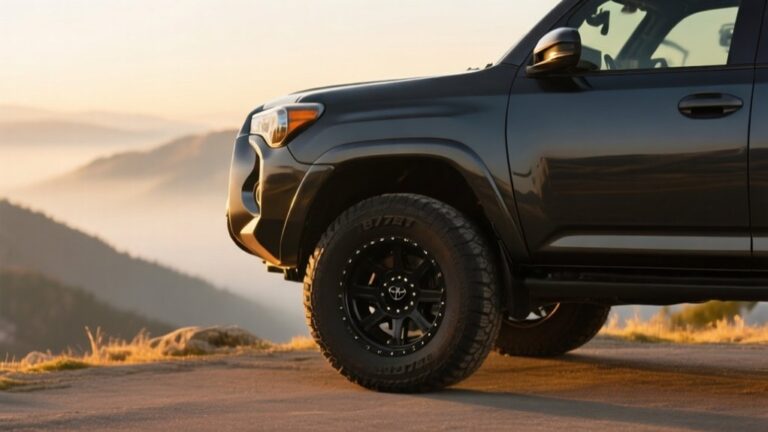
Start by upgrading to larger tires, like 33-inch ones, which boost both clearance and approach angles. If you have a TRD Off-Road, removing the front air dam can improve your approach angle from about 22° to nearly 30°, helping you tackle obstacles more easily.
Consider suspension upgrades, such as FOX shocks found on the TRD Pro, to increase lift and improve off-road performance. Don’t forget to use Multi-Terrain Select and Crawl Control for better traction and stability on rough surfaces.
Finally, regularly check and adjust your tire pressures to optimize clearance and handling. Proper inflation makes a significant difference off-road.
Choosing The Right 4Runner Trim For Ground Clearance
How do you choose the right 4Runner trim to match your ground clearance needs? It depends on the terrain you plan to tackle and your off-road ambitions. Here’s a quick guide:
Choosing the right 4Runner trim depends on your terrain and how far you want to push your off-road limits.
- SR5 4×4 offers 8.1 inches of ground clearance. It’s great for moderate off-road use and everyday driving.
- TRD Off-Road has a lifted suspension for better clearance and performance on rougher trails. Removing the front air dam can boost its approach angle.
- TRD Pro & Trailhunter deliver the highest ground clearance, about an inch more than the TRD Off-Road. They’re perfect for serious off-roading and rugged terrain.
Choose based on how aggressive your off-road adventures get, balancing clearance with your driving comfort.
Frequently Asked Questions
How Does Tire Size Impact 4runner Ground Clearance?
Tire size directly influences your 4Runner’s ground clearance by increasing the overall height of the vehicle. Larger tires lift the chassis, creating more space between the ground and the undercarriage.
This extra height helps you clear obstacles off-road more easily. For example, upgrading to nearly 33-inch tires on TRD Off-Road models significantly boosts clearance.
If you’re looking to improve off-road capability, swapping in bigger tires is a simple and effective way to enhance your 4Runner’s ground clearance.
Can Aftermarket Lifts Increase 4runner Ground Clearance?
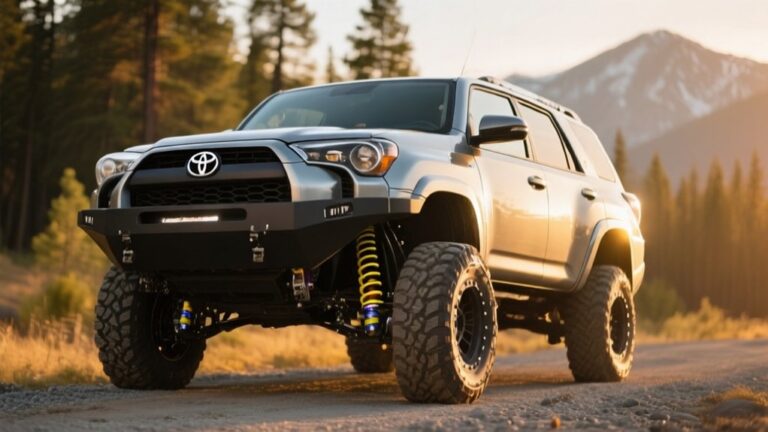
Absolutely, aftermarket lifts can really boost your 4Runner’s ground clearance. Installing lift kits, like coilover or spacer lifts, can lift your vehicle by 2 to 3 inches. This gives you better off-road capability and helps you clear obstacles more easily.
Pairing the lift with larger tires will further improve your vehicle’s stance and performance. Just keep in mind, proper installation and alignment are essential to keep your 4Runner safe and handling well after the upgrade.
What Maintenance Affects Ground Clearance Over Time?
You’ll want to regularly inspect your suspension system, especially shocks and struts, since worn parts can lower your 4Runner’s ground clearance. Keep an eye on tire wear and size because incorrect tires can reduce ride height.
Don’t forget to clean dirt and debris from wheel wells and suspension components to keep everything articulating properly. Any suspension modifications or repairs can also change your clearance.
Does Cargo Load Change the 4runner’s Ground Clearance?
Imagine driving your 4Runner loaded with gear, ready to tackle rough trails. Yes, cargo load does change your 4Runner’s ground clearance. When you add weight, the suspension compresses, lowering the vehicle closer to the ground.
This means obstacles you once cleared easily might now pose a challenge. To keep your clearance ideal, distribute cargo evenly and avoid overloading. That way, you’ll maintain better control and protect your 4Runner’s off-road capability.
How Does Ground Clearance Influence Fuel Efficiency?
Ground clearance affects your 4Runner’s fuel efficiency by changing airflow under the vehicle. Higher clearance means more air resistance, which can lower your MPG.
While it helps off-road performance, it increases drag on highways. Lower clearance reduces drag, improving fuel economy.
The 2026 4Runner’s hybrid option balances good ground clearance with better fuel efficiency, so you don’t have to sacrifice off-road capability for better mileage.
Conclusion
Think of your 4Runner’s ground clearance as its shoes. Higher clearance means it can step confidently over rocky paths without stumbling.
Just like choosing the right shoes for a hike, picking the right trim and understanding how hybrid systems affect clearance helps your 4Runner handle off-road challenges smoothly and safely.
Knowing these details equips your vehicle to conquer any terrain, turning every adventure into a confident, smooth journey.