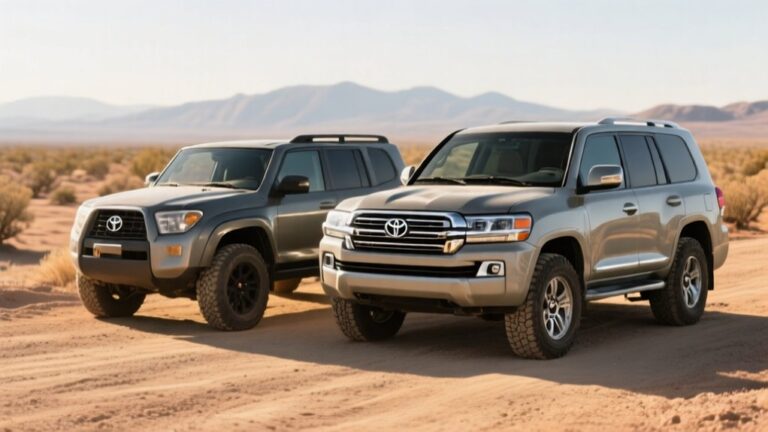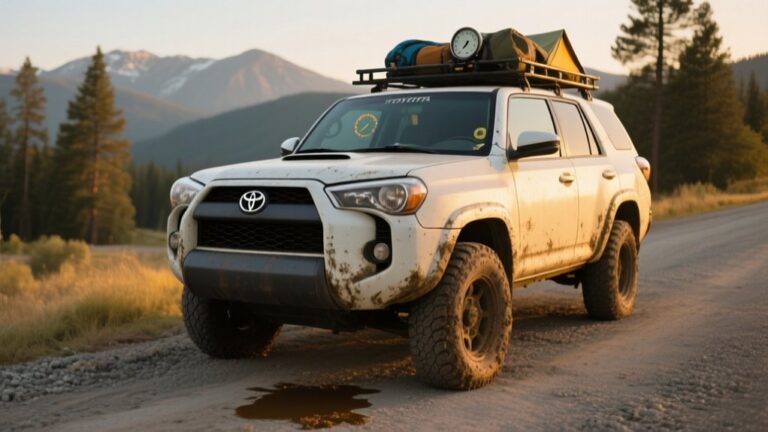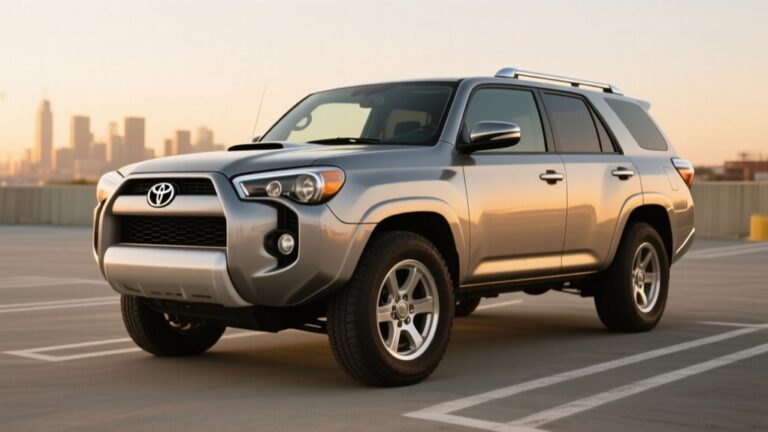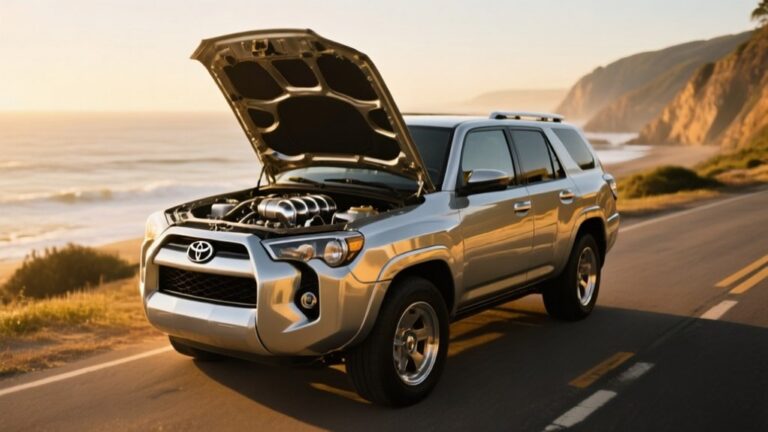
How Tall Is A Toyota 4runner – Overview
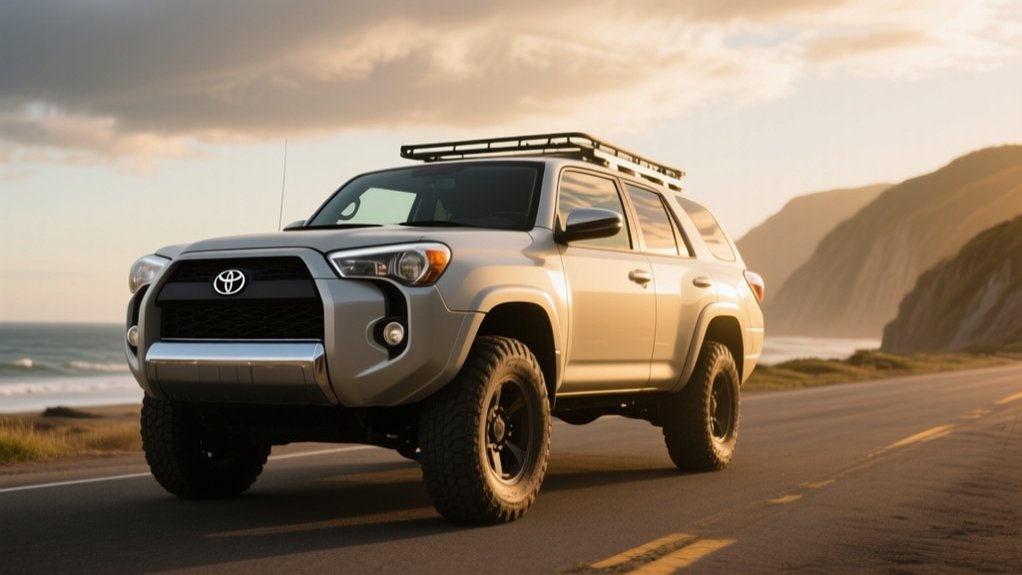
Your Toyota 4Runner’s height varies by generation, ranging from 65.4 inches in early models to 70.2 inches in the latest version.
This tall stance offers roughly 9.6 inches of ground clearance, which boosts off-road ability and gives you a commanding driving position.
While the increased height improves interior space and cargo room, it can also affect handling and fuel efficiency.
You’ll find how these factors compare with similar SUVs and what modifications might impact your vehicle’s height further on.
Key Takeaways
- The Toyota 4Runner’s height varies by generation, ranging from 65.4 inches (first gen) to 70.2 inches (fifth gen).
- The current 2023 4Runner stands 70.2 inches tall, taller than many midsize SUVs like the Jeep Grand Cherokee.
- Its height contributes to approximately 9.6 inches of ground clearance, enhancing off-road capability and visibility.
- Taller height affects stability, increasing body roll and wind resistance, which can reduce fuel efficiency to about 17-20 MPG.
- Interior headroom benefits from the taller design, offering 39.3 inches in front and 38.6 inches in the back for passenger comfort.
How Tall Is the Toyota 4Runner Across Its Generations
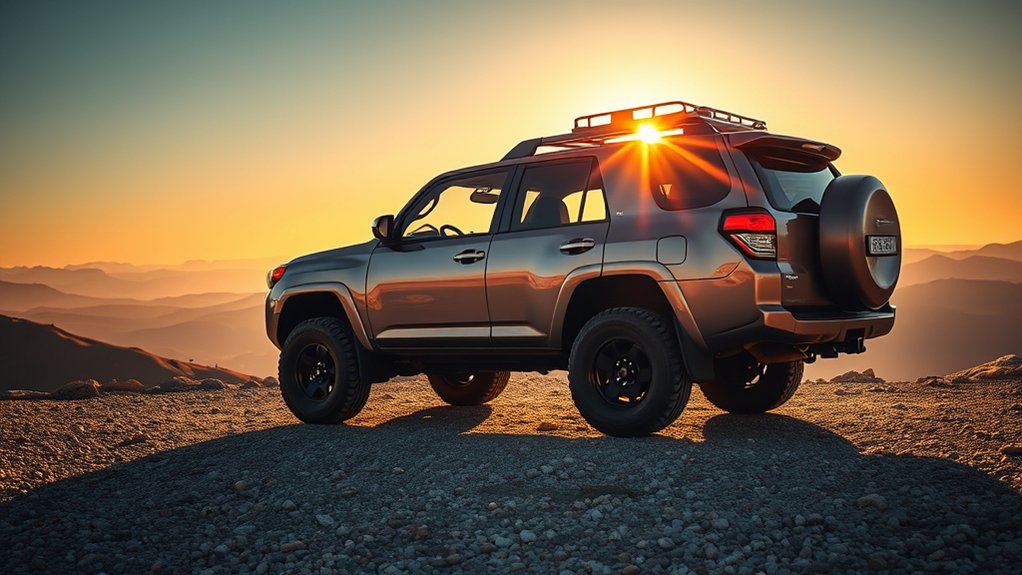
How tall is the Toyota 4Runner across its generations? You’ll notice the height has gradually increased with each iteration.
The first generation (1984-1989) stood at about 65.4 inches, setting the baseline for future models. By the second generation (1990-1995), the Toyota 4Runner’s height rose slightly to 66.5 inches, offering a taller profile.
The third generation (1996-2002) maintained a similar height at 66.3 inches, focusing more on design evolution than size change. The fourth generation (2003-2009) marked a more noticeable jump to 68.3 inches, giving it a robust and commanding presence.
Today’s fifth generation (2010-present) stands tallest at 70.2 inches, which boosts interior space and off-road readiness. Tracking the Toyota 4Runner’s height across generations reveals a clear trend toward increased size and capability.
How Much Ground Clearance Does the Toyota 4Runner Have for Off-Road Adventures?
With approximately 9.6 inches of ground clearance, the Toyota 4Runner is ready to handle tough off-road terrain. This height helps you confidently navigate rough paths without worrying about damaging the undercarriage.
The raised stance also offers a solid approach angle of about 33 degrees, making it easier to tackle steep inclines. If you choose a model with the Kinetic Dynamic Suspension System (KDSS), the suspension adjusts dynamically to improve traction and stability on uneven surfaces.
Plus, the body-on-frame construction adds durability, so the vehicle can withstand demanding off-road conditions. Overall, the 4Runner’s ground clearance and design features combine to give you the capability and confidence for adventurous trails.
How Vehicle Height Affects Driving Stability and Maneuverability
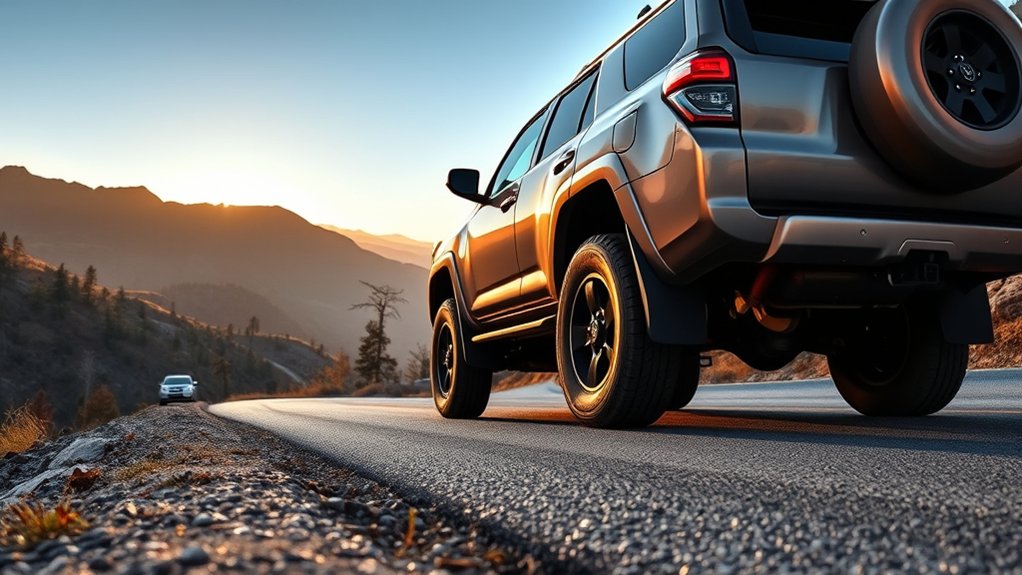
When you’re driving something taller like a Toyota 4Runner, you’ll notice that its higher center of gravity can change how it handles turns. Sharp corners might feel a bit less stable because of that extra height, so you’ll want to take turns more cautiously.
You might also feel more wind pushing against the vehicle when you’re cruising on the highway. This increased wind resistance can sometimes impact fuel efficiency and overall highway performance. Knowing these things can help you better understand how the height of your 4Runner influences its stability and how easy or challenging it is to maneuver on different roads.
Impact On Center Gravity
Although the Toyota 4Runner’s height typically ranges between 70 and 72 inches, this increase significantly impacts its center of gravity, influencing how you feel about driving stability and maneuverability.
A higher center of gravity, because of the vehicle’s height, can cause more body roll during quick turns, which affects overall stability. The raised driving position gives you better visibility, but it also means you need to be more cautious, especially at higher speeds.
Plus, increasing height also raises wind resistance, which can subtly affect handling and fuel efficiency. If you decide to modify your 4Runner’s height, remember that changing the center of gravity might impact stability even more.
It’s essential to adjust the suspension and choose tires carefully to keep your vehicle balanced and responsive on the road.
Effects On Cornering Ability
Because the Toyota 4Runner stands around 70 inches tall, its height really affects how it handles corners. The raised center of gravity causes more body roll during turns, which can make it harder to corner compared to lower-profile vehicles.
At higher speeds, this height also makes the 4Runner more prone to stability issues and tipping over. The suspension design helps manage weight distribution, but the taller ride height still limits grip in sharp maneuvers.
While the suspension setup boosts off-road performance, it can make the vehicle feel less planted on paved roads. Understanding how height, center of gravity, and suspension work together can help you anticipate how the 4Runner handles and drive more safely around corners.
Influence On Wind Resistance
The 4Runner’s height doesn’t just affect how it corners; it also impacts how wind affects its stability and handling. Standing about 70 inches tall, its raised height increases wind resistance, especially when you’re driving on the highway.
This added wind resistance changes the car’s aerodynamics, creating more drag compared to lower-profile SUVs. You might notice slightly lower fuel efficiency and have to make more steering adjustments in strong crosswinds.
While the higher ground clearance helps with off-road driving and gives you better visibility, it can also make on-road stability less steady in gusty conditions. Knowing how the 4Runner’s height influences wind resistance can help you drive more safely and comfortably in windy environments.
How Does the Toyota 4Runner’s Height Compare to Similar SUVs?
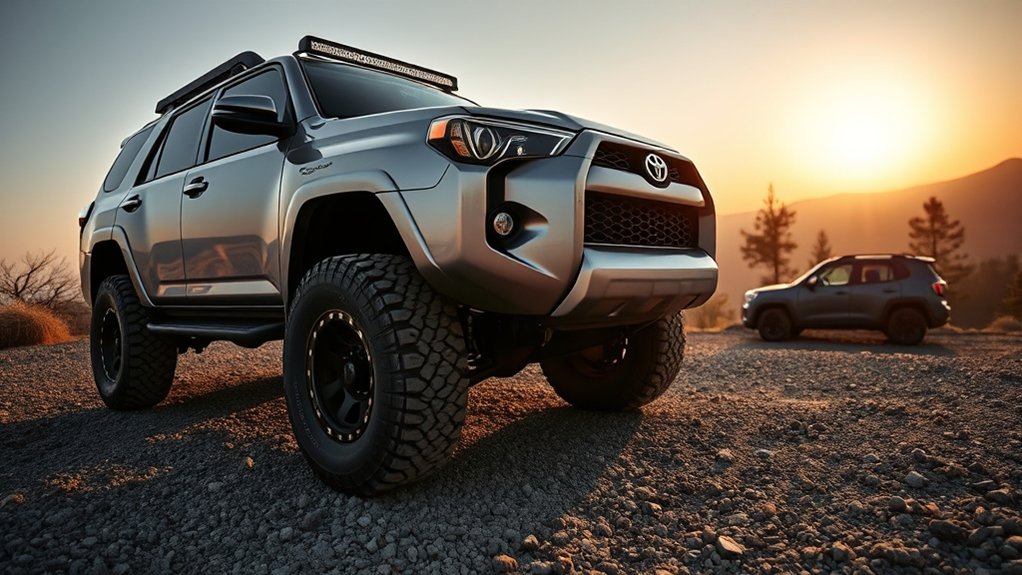
How does the Toyota 4Runner’s height stack up against similar SUVs? The 2023 Toyota 4Runner stands at about 70.2 inches, making it noticeably taller than the Jeep Grand Cherokee, which measures around 68.3 inches. This extra height gives the 4Runner a more commanding presence, especially if you value off-road capability.
Compared to the Ford Expedition’s 68.6 inches, the 4Runner maintains an advantage in height. It still sits below full-size SUVs like the Chevrolet Tahoe, which tops out near 74.4 inches. The Toyota 4Runner’s height strikes a good balance, offering better ground clearance and a rugged stance without the bulk of larger SUVs.
If you’re looking for a vehicle taller than the Jeep Grand Cherokee but not as big as a Tahoe, the 4Runner fits that niche well.
How Roof Height Impacts Interior Space and Cargo Capacity
You’ll see that the 4Runner’s roof height really influences how comfortable you feel inside, giving everyone plenty of headroom and legroom to stretch out. It’s one of those little things that makes a big difference on long trips or even just everyday driving.
Plus, that extra vertical space isn’t just for comfort—it’s super handy for cramming in more cargo, especially when you fold down the rear seats. And if you’re into outdoor adventures, a taller roof makes loading gear a breeze and opens up more options for storage accessories like roof racks. So, whether you’re packing for a weekend getaway or just trying to stay comfortable on the road, the roof height really has a big impact.
Roof Height And Comfort
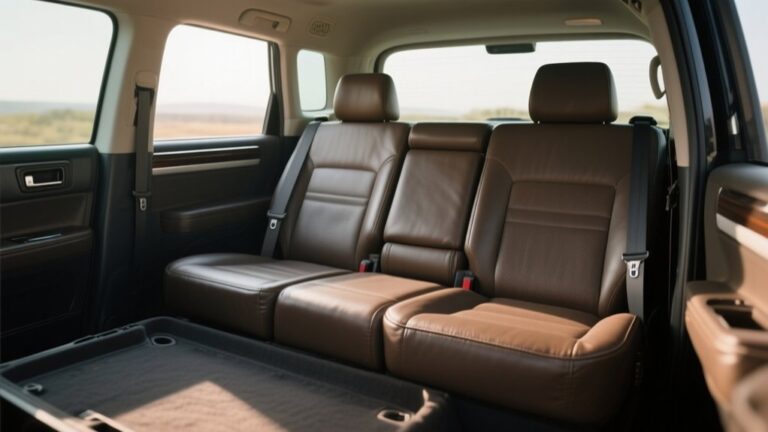
Because the 2011 Toyota 4Runner stands at about 70.2 inches tall, it offers a roomy interior that boosts passenger comfort and cargo capacity. This roof height provides plenty of headroom—around 41.3 inches in the front—so taller passengers won’t feel cramped.
The raised roof height also means more vertical space for cargo. Larger items fit easily when the seats are folded down, expanding cargo space up to 88.8 cubic feet. Plus, the rear hatch design, combined with this roof height, makes loading and unloading really convenient.
Cargo Space Optimization
The 2011 Toyota 4Runner’s roof height directly boosts its cargo space, giving you about 47.2 cubic feet behind the second row and expanding to 89.7 cubic feet with the rear seats folded down. This higher roof makes it easier to load larger items and helps you maximize your cargo area.
Having a taller roof improves your interior space, allowing you to fit bigger gear without hassle. Just keep in mind that the high cargo floor might take some effort to load heavy items onto.
Here’s how the roof height helps with cargo space:
- It maximizes vertical space for bulky items.
- It increases overall interior room for flexible storage.
- It allows for better organization without sacrificing passenger comfort.
- It supports outdoor adventures and travel needs with plenty of cargo capacity.
Impact On Headroom
Although the Toyota 4Runner’s roof height measures around 70.2 inches, it plays an important role in boosting headroom for both front and rear passengers. Passengers enjoy an average of 39.3 inches in the front and 38.6 inches in the back, making long drives much more comfortable.
This extra headroom also helps accommodate taller passengers without feeling cramped. Plus, the roof height directly affects cargo capacity by providing more vertical space. When the rear seats are folded down, you get up to 89.7 cubic feet of cargo room, which makes transporting taller or bulkier items easier.
The taller roof also makes entry and exit simpler, especially in rugged conditions where quick access is key. Overall, the 4Runner’s roof height strikes a good balance between passenger comfort and versatile cargo capacity.
What Modifications Can Change the Toyota 4Runner’s Height?
If you want to change your Toyota 4Runner’s height, there are several modifications that can help. These tweaks not only change how the vehicle looks but also affect its performance and off-road abilities.
Lift Kits are a popular option, raising your 4Runner by 2 to 6 inches. This boosts ground clearance and makes off-road adventures easier.
Switching to larger tires, like 33 to 35 inches, can add about 1-2 inches to your vehicle’s height. Plus, they give your ride a more aggressive look and better traction.
Upgrading your suspension with coilovers or air suspension lets you fine-tune your ride height and handling. That way, you can adjust for different terrains or preferences.
Finally, body lifts add 1 to 3 inches without changing your suspension. They increase tire clearance and can give your 4Runner a more rugged appearance.
Each of these modifications has its own benefits, so think about what fits your needs best before making any changes.
How Height Influences Fuel Efficiency and Aerodynamics
Changing your Toyota 4Runner’s height can improve its off-road performance, but it also impacts how the vehicle handles fuel efficiency and aerodynamics.
With a typical height between 70 and 72 inches, the 4Runner faces more wind resistance as its profile gets taller. This added height reduces aerodynamics and raises drag, which can lower fuel efficiency, especially when driving on the highway.
The ground clearance is around 9 inches, helping off-road ability but also adding weight and height. This further affects mileage, and you’ll notice the 4Runner averages 17-20 MPG, which is lower than many sedans.
Lower vehicles usually have better aerodynamics, cutting air resistance and improving fuel efficiency. So, height plays a key role in balancing off-road capability with economical driving performance.
Why Height Should Influence Your Choice of Toyota 4Runner Model
Since the height of a Toyota 4Runner varies by model and trim, you should think about how these differences impact your driving needs. Height directly affects the 4Runner’s off-road skills and your driving position, shaping your overall experience.
Consider how varying 4Runner heights influence your driving experience and off-road capability.
Taller models give you a commanding driving stance with better visibility, which is great for both on-road and off-road adventures. But keep in mind, increased height can raise the center of gravity, which might influence handling and stability.
Here’s why height should matter in your decision:
- Higher ground clearance improves off-road capabilities.
- Taller models make it easier to access cargo space.
- A raised driving position offers better visibility on roads and trails.
- There could be trade-offs in handling because of a higher center of gravity.
Pick a height that balances your off-road fun with everyday comfort.
Frequently Asked Questions
What Is the Official Curb Weight of the 2011 Toyota 4runner?
The official curb weight of the 2011 Toyota 4Runner ranges from about 4,400 to 4,700 pounds, depending on the trim and options you choose.
This weight gives you stability and ruggedness, especially off-road. It also impacts towing capacity, which is around 5,000 pounds.
Knowing this helps you understand your vehicle’s handling, payload limits, and overall performance so you can make informed decisions when buying or using your 4Runner.
How Does the 2011 Toyota 4runner’s Height Affect Parking Garage Access?
You’ll feel like a giant trying to squeeze your 2011 Toyota 4Runner into tight parking garages. Its 70.2-inch height often clashes with standard garage clearances, especially when you add roof racks.
You must always check clearance signs to avoid scraping or getting stuck. In urban areas, this height limits your parking options, so planning ahead is essential.
This way, you can prevent damage and frustration when hunting for suitable spots.
Are There Any Height Restrictions for Towing With the 2011 4runner?
Yes, you should be aware of height restrictions when towing with your 2011 4Runner. Its height is about 71.5 inches, and when you add your trailer’s height, it might go over clearance limits in some areas.
Always check local regulations and trailer height limits to avoid any issues. Adjusting the trailer coupler height can help keep everything level and safe.
This also helps prevent clearance problems and makes sure you’re within legal height restrictions while towing.
What Tire Size Comes Standard on the 2011 Toyota 4runner?
The 2011 Toyota 4Runner comes standard with 265/70R17 tires. These measure about 31.6 inches in diameter and strike a good balance between on-road comfort and off-road capability.
Their load index of 113 supports the vehicle’s towing and payload limits. If you decide to upgrade to larger tires, keep in mind it may affect handling, speedometer accuracy, and fuel efficiency. Be sure to consider those factors carefully before making any changes.
Does the 2011 Toyota 4runner’s Height Impact Insurance Rates?
Yes, the 2011 Toyota 4Runner’s height can impact your insurance rates. Taller vehicles like the 4Runner are more prone to rollover accidents, which insurers see as a higher risk.
This often leads to increased premiums. The height also affects safety ratings and repair costs, which insurers consider too.
Conclusion
When choosing your Toyota 4Runner, remember height isn’t just a number. It’s the backbone of your driving experience.
From ground clearance to interior space, each inch affects stability, fuel efficiency, and off-road capability.
Like a well-measured step on a hiking trail, the right height balances performance and comfort.
So, weigh your needs carefully because the 4Runner’s height can boost your adventures or keep you grounded in everyday driving.