4runner Clicking When Trying To Start – Overview
If your 4Runner clicks when trying to start, it’s probably because the starter isn’t getting enough power or isn’t engaging properly.
Electrical issues like corroded battery terminals, weak battery voltage, or faulty relays could be the cause.
Mechanical problems such as worn starter solenoids, misaligned gears, or a damaged flywheel can also lead to this clicking sound.
Using quality parts and doing precise testing can help you find the exact problem.
Knowing these factors will guide you in deciding the best next steps for repair.
Key Takeaways
- Clicking often indicates insufficient power to the starter or a faulty starter solenoid in a 4Runner.
- Corroded battery terminals or weak connections commonly cause restricted power flow and clicking sounds.
- Mechanical issues like worn flywheel teeth or misaligned starter gear can cause repeated clicking without engine turnover.
- Electrical problems are indicated by dim dashboard lights or battery voltage below 12.4 volts during starting attempts.
- Using quality OEM parts and regular maintenance prevents unexpected starter failures and ensures reliable engagement.
What Causes a 4Runner Starter to Click But Not Start?
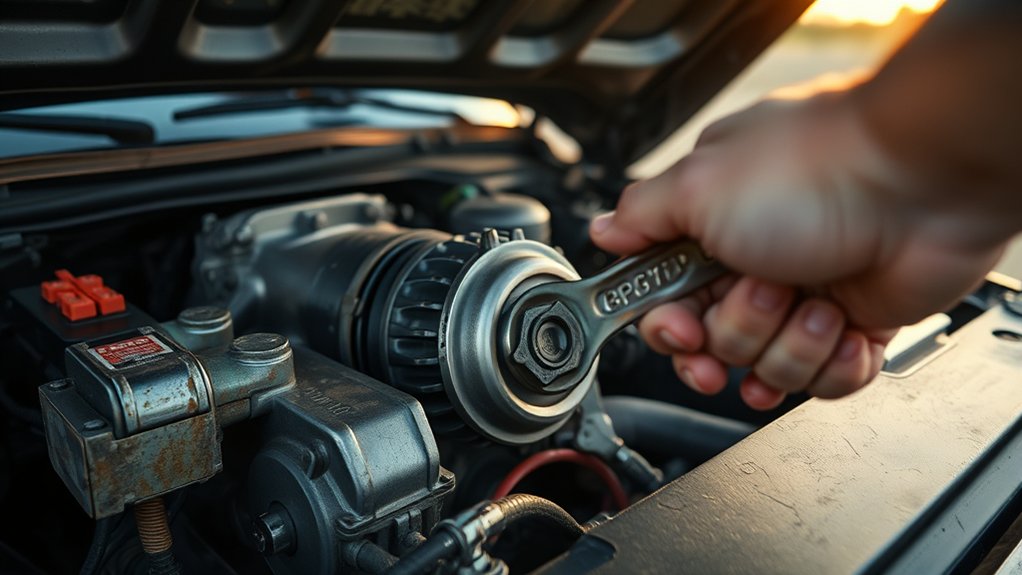
When your 4Runner’s starter clicks but doesn’t turn the engine over, it usually means the starter isn’t getting enough power or can’t engage properly. That clicking sound often points to faulty starter solenoids not transmitting current to the starter motor.
Electrical issues like corrosion on battery terminals or weak connections can restrict power flow, leading to insufficient voltage at the solenoid. Mechanical problems such as a worn flywheel or a misaligned starter can also prevent proper engagement, causing similar clicking noises without the engine starting.
To fix this, check the copper contacts inside the starter solenoid, as wear there can disrupt its operation. Regular maintenance and timely inspections help catch these electrical or mechanical issues early, so your starter stays reliable and avoids bigger problems down the line.
Diagnosing Electrical Problems in Your 4Runner Starter
Although a single click during startup often signals a weak battery or poor connections, diagnosing electrical problems in your 4Runner starter requires systematic testing of battery voltage, terminal corrosion, ignition switch output, and wiring integrity.
Start by inspecting for corrosion and cleaning the battery terminals to ensure peak electrical flow. Then, measure the battery voltage under load to rule out power supply issues.
Begin with checking and cleaning battery terminals, then test battery voltage under load to ensure reliable power delivery.
Next, test the ignition switch with a multimeter to verify it delivers the right voltage to the starter. Check wiring and connectors for damage, fraying, or looseness that could disrupt current.
Finally, evaluate the starter relay and solenoid, replacing them with high-quality OEM parts if needed. Focus on these key areas when diagnosing starter problems:
- Battery voltage and load capacity
- Terminal corrosion and cleanliness
- Ignition switch voltage output
- Wiring condition and connections
- Starter relay and solenoid functionality
What Mechanical Issues Cause Your Starter to Click But Not Turn Over?
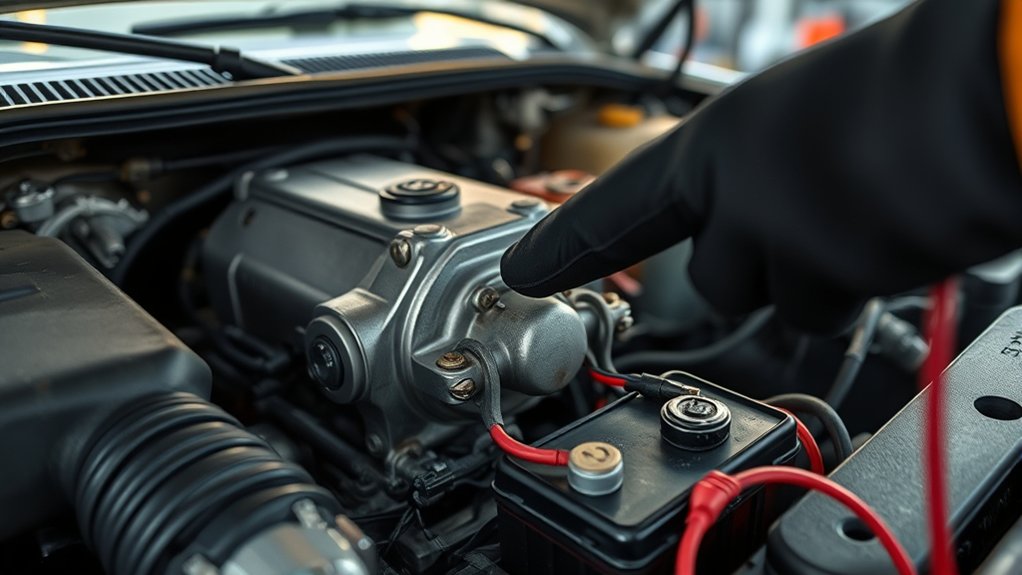
If your 4Runner’s starter is clicking but not actually turning over, it might be due to worn-out brushes or a faulty solenoid inside the starter motor. These parts can wear out over time, making it hard for the starter to do its job properly.
You’ll also want to check how well the starter gear engages with the flywheel. If there’s any misalignment or damage, the gears might not mesh correctly, which can prevent the engine from kicking over. Sometimes, dirt, debris, or corrosion around these components can get in the way and stop everything from moving smoothly.
Basically, if your starter just clicks but doesn’t turn the engine over, it’s a good idea to look at these areas and see if anything needs cleaning, repair, or replacement.
Starter Motor Wear
If your 4Runner makes a clicking noise but won’t start, worn internal parts inside the starter motor are often the culprit. This wear affects mechanical engagement, making the pinion gear fail to mesh correctly.
Key issues include worn brushes that reduce electrical contact, armature damage causing misalignment, solenoid wear limiting current flow, and insufficient lubrication increasing friction. Mechanical wear can often be spotted through inspection, catching problems early.
Regular checks can help identify these issues before the starter completely fails. The internal components degrade over time due to friction and electrical stress, making it harder for the starter to engage properly.
To avoid guesses or online misdiagnoses, rely on precise mechanical diagnostics. Addressing starter motor wear quickly ensures your vehicle starts reliably and helps prevent more costly repairs down the line.
Flywheel And Gear Issues
Since the starter motor relies on proper engagement with the flywheel to turn the engine over, any damage or misalignment in these components can cause the characteristic clicking sound without engine turnover.
If the flywheel has worn or missing teeth, the starter’s pinion gear won’t mesh correctly, resulting in engagement issues. Misalignment between the starter and flywheel makes this problem worse, preventing full gear engagement and causing the clicking sound when you turn the ignition.
Debris or insufficient lubrication on the flywheel teeth can also block smooth engagement, making the starter click without turning the engine. Check the flywheel for cracks, missing teeth, or contamination, and inspect the starter’s pinion gear for wear to find the root of these mechanical engagement problems.
How to Tell Electrical vs. Mechanical Starter Problems
Although a single click during ignition often signals a mechanical fault like a defective starter motor or solenoid, discerning electrical issues requires attention to specific symptoms such as dimming dashboard lights.
To differentiate between electrical and mechanical starter problems, focus on these key indicators:
- Dimming or flickering dashboard lights suggest electrical issues, often related to the battery or poor connections.
- A battery voltage below 12.4 volts indicates insufficient power for the starter.
- Failure of the starter relay to engage points to an electrical malfunction.
- Repeated clicking without engine turnover often means mechanical wear in the starter gear or flywheel.
- Complete silence or no click usually implies electrical failure or dead battery.
Battery and Relay Quality for Reliable Starting
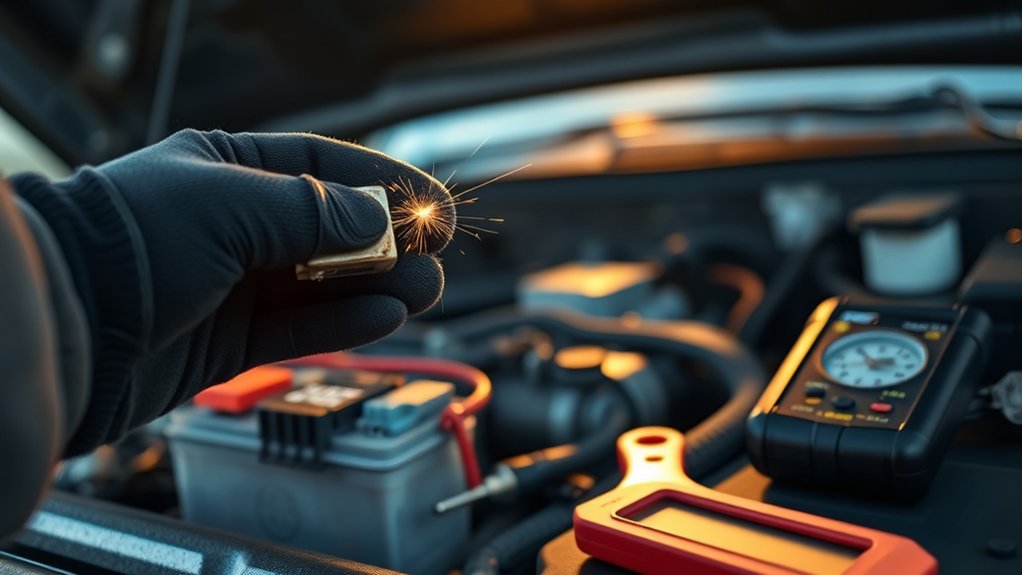
When your 4Runner’s starter clicks without engaging, it’s often a sign that the battery is weak or failing. The battery needs to provide enough voltage and current to power the starter, or else you’ll hear that clicking sound during startup.
The relay quality is just as important. Low-quality aftermarket relays can break down faster than OEM parts, leading to intermittent starting issues and repeated clicking noises. Corrosion on the battery terminals can also block electrical flow, making things worse.
This causes voltage drops and makes the clicking sound more likely. To keep your 4Runner starting reliably, regularly check the battery’s charge and test the relay’s function. Using OEM parts ensures better fit and durability, reducing unexpected failures.
Make sure your terminals are clean, and always opt for high-quality parts. This helps eliminate clicking sounds and keeps your vehicle starting smoothly every time.
When to Inspect and Replace Starter Solenoid Contacts
If your 4Runner makes a clicking noise but the engine doesn’t turn over, it’s time to check the starter solenoid contacts. These contacts can wear out, leading to poor electrical connection and that familiar clicking sound when you try to start the engine. Catching wear early helps prevent unexpected breakdowns.
You should consider inspecting and replacing the contacts if you notice:
- Repeated clicking without engine engagement
- Starting difficulties despite a good battery and relay
- Visible corrosion or pitting on the contacts
- Increased resistance or intermittent electrical flow
- Age or mileage indicating wear on starter parts
Replacing the starter solenoid contacts is usually inexpensive, around $20, and is a smarter choice than replacing the entire starter. Since they’re tucked away, inspection often needs special tools or techniques for proper diagnosis and repair.
How Aftermarket Starter Parts Affect 4Runner Performance
You’ll see that aftermarket starter parts can really differ a lot in quality. That’s important because it can directly impact how reliably your 4Runner starts up. If the materials in the solenoids and starters aren’t up to par, you might notice issues like intermittent engagement, which often shows up as clicking sounds when you turn the key.
Going with OEM parts is usually the safer bet. They’re designed to fit just right and work consistently, which means fewer worries about repeated failures or starting problems down the road.
Quality Differences Impact
Although aftermarket starter parts might seem like a budget-friendly option for your 4Runner, they often don’t match the quality and reliability of OEM parts. The difference in quality can really affect how well your starter performs and how long it lasts.
Lower-quality materials in aftermarket starters can lead to overheating, early wear, and starting issues like that annoying clicking sound when you try to start your vehicle. To keep things running smoothly, consider these points:
- OEM parts are made with higher-grade materials that last longer
- Aftermarket starters can have inconsistent manufacturing standards
- Using poor-quality parts raises the chance of starter failure
- Intermittent starting problems are more common with aftermarket options
- Buying from reputable manufacturers helps avoid performance issues
Choosing OEM components helps reduce these risks, ensuring steady starting performance and boosting your 4Runner’s overall reliability.
Reliability Concerns Raised
When you rely on aftermarket starter parts for your 4Runner, you risk encountering reliability issues that can compromise your vehicle’s performance. Aftermarket starters often lack the durability and quality of OEM parts, which can lead to premature mechanical failures.
Users frequently report that cheap aftermarket starters fail to engage the flywheel properly, causing repeated clicking noises during startup attempts. Low-quality relays may also struggle to handle the electrical load effectively, making starting problems worse.
Replacing critical components like solenoids or contacts with aftermarket parts can make mechanical failures worse and reduce reliability. To avoid these issues and cut down on repairs, investing in OEM parts is the way to go.
OEM components ensure consistent performance and durability, helping you steer clear of common reliability concerns linked to inferior aftermarket starters in your 4Runner.
OEM Versus Aftermarket
Understanding how starter parts influence your 4Runner’s performance means looking closely at OEM versus aftermarket options.
OEM starters are designed specifically for your 4Runner, which means they’re more reliable and match the electrical system perfectly. Aftermarket starters can be hit or miss, often causing issues like not engaging properly with the flywheel or making clicking sounds when starting.
When deciding between OEM and aftermarket starters, keep in mind that OEM parts tend to reduce electrical problems and early failures. Aftermarket options might void your warranty or affect your insurance coverage.
Using OEM components helps maintain your vehicle’s resale value and overall condition. On the other hand, the reliability of aftermarket starters can vary, increasing the risk of recurring starting troubles.
Research shows that OEM starters generally have fewer mechanical failures over time, making them a smarter choice for long-term performance. Prioritizing OEM parts helps keep your 4Runner running smoothly and avoids the common issues linked to cheaper aftermarket starters.
Simple Tests to Confirm If Your Starter or Solenoid Is Faulty
Start by measuring the voltage at the starter terminal with a multimeter as someone turns the ignition key. If no voltage appears, the problem is probably with the ignition switch or relay, not the starter or solenoid.
Next, listen for a single click. That usually means the solenoid is engaging, but the starter motor might be faulty. To narrow down the issue, bypass the solenoid by connecting the battery directly to the starter terminal.
If the motor spins when you do this, then the solenoid is likely defective. Also, check the battery voltage—it should be above 12.4 volts. A lower voltage can prevent proper engagement even if the starter or solenoid is fine.
| Test | Expected Result | Interpretation |
|---|---|---|
| Voltage at starter terminal | ~12 volts | Starter circuit is energized |
| Single click sound | Audible click | Solenoid engages |
| Direct battery to starter | Starter motor spins | Solenoid likely faulty |
| Battery voltage check | >12.4 volts | Battery is sufficient |
How to Access and Service Your 4Runner Starter
Confirming the solenoid or starter as the source of the clicking noise helps you know what to fix first. Servicing the starter on your 1996 4Runner starts with gaining access to it.
Lift the vehicle and remove the skid plate if your model has one. The starter is located on the passenger side near the transmission. Always disconnect the battery before working on any electrical parts to stay safe.
Use 12mm and 14mm sockets or wrenches to remove the mounting bolts and electrical connections. Carefully check the copper contacts inside the solenoid for wear, as these can often be replaced without replacing the entire starter.
After you finish servicing, reattach all components and make sure all electrical connections are secure before testing the starter to ensure everything works properly.
Key steps for servicing your starter include lifting the vehicle and removing the skid plate, disconnecting the battery, removing the mounting bolts, inspecting the copper contacts, and then reassembling everything before testing.
Frequently Asked Questions
Can Cold Weather Cause My 4runner to Click but Not Start?
Yes, cold weather can cause your 4Runner to click but not start. Low temperatures reduce battery efficiency, limiting power to the starter and causing that clicking sound.
Thickened engine oil increases resistance, making it harder for the engine to crank. Corroded or weak battery connections worsen in the cold, disrupting electrical flow.
Furthermore, a struggling starter solenoid may click without engaging the motor. Ensuring a fully charged battery and clean terminals helps prevent this issue.
How Often Should I Replace My 4runner’s Starter Motor?
You should replace your 4Runner’s starter motor roughly every 100,000 to 150,000 miles, depending on your driving conditions and maintenance.
Regular inspections every 30,000 miles help catch wear early. If you notice a single click when starting, that’s often a sign it’s time for replacement.
Using OEM parts guarantees better durability, especially if you face extreme temperatures that accelerate starter wear. Don’t wait too long to prevent further damage.
Does a Clicking Starter Drain the 4runner’s Battery Quickly?
Yes, a clicking starter can drain your 4Runner’s battery quickly. Each click means the starter solenoid engages, drawing a lot of current without actually cranking the engine.
If your battery’s already weak, these repeated attempts increase the load and cause the battery to lose energy fast. Continuous clicking can drain the battery within minutes.
To prevent this, it’s a good idea to diagnose starter issues promptly. Make sure your battery is fully charged before trying to start the vehicle again.
Can a Faulty Ignition Switch Cause Starter Clicking Sounds?
Yes, a faulty ignition switch can cause starter clicking sounds. When the switch fails, it interrupts the electrical flow to the starter relay, which prevents the starter solenoid from engaging fully.
This leads to the starter clicking but not turning the engine over. You can test the switch’s voltage output with a multimeter to check if it’s working properly.
Replacing a defective ignition switch often stops the clicking and gets your vehicle starting normally again.
Are Starter Issues Covered Under 4runner’s Warranty?
Yes, starter issues are covered under your 4Runner’s original Toyota warranty if it’s within the 3-year/36,000-mile limit and the problem is due to a manufacturing defect.
Extended warranties might also cover starter repairs, but it depends on your specific plan. Keep all maintenance and service records handy to support any claims.
If your warranty has expired, you’ll likely need to cover repair costs yourself unless you have additional coverage.
Conclusion
When your 4Runner’s starter clicks but won’t turn over, it’s like a heartbeat skipping—signaling an electrical or mechanical hiccup.
You’ll want to pinpoint if it’s a weak battery, faulty solenoid, or worn starter components. Using precise tests and inspecting quality parts can save you from guesswork.
Remember, addressing these issues promptly keeps your 4Runner’s engine firing reliably, ensuring your journeys start smoothly just like the vehicle is built to run.