How Much Does Engine Weight Impact Cars? A Complete Guide with Engine Types
Engine weight affects a car depending on its type and size. Most car engines weigh between 400 and 600 pounds.
Heavier engines slow acceleration and reduce fuel economy. Lighter ones boost performance and save gas.
The engine’s materials make a big difference. Aluminum blocks weigh about 100 pounds less than iron ones.
This weight drop can improve city fuel economy by 1 to 2 percent. Electric drive units weigh much less than gasoline engines, about one-third to half the weight.
Engine weight is just one part of the car’s total mass. Cutting 100 pounds from the engine drops the whole car’s weight by around 3 percent.
This change helps improve overall efficiency. Knowing your engine’s material and cylinders helps estimate its weight and effect.
Key Takeaways
- Most car engines weigh between 400 and 600 pounds depending on cylinder count.
- Using aluminum instead of iron blocks can reduce engine weight by around 100 pounds.
- Lighter engines help improve acceleration and fuel economy by reducing vehicle weight.
- Electric vehicle drive units weigh roughly 100 to 250 pounds, much less than gas engines.
- Reducing 100 pounds in engine weight lowers overall car weight about 3 percent.
- Truck engines can weigh up to 2,000 pounds, significantly heavier than sedan engines.
How Much Does a Typical Car Engine Weigh?
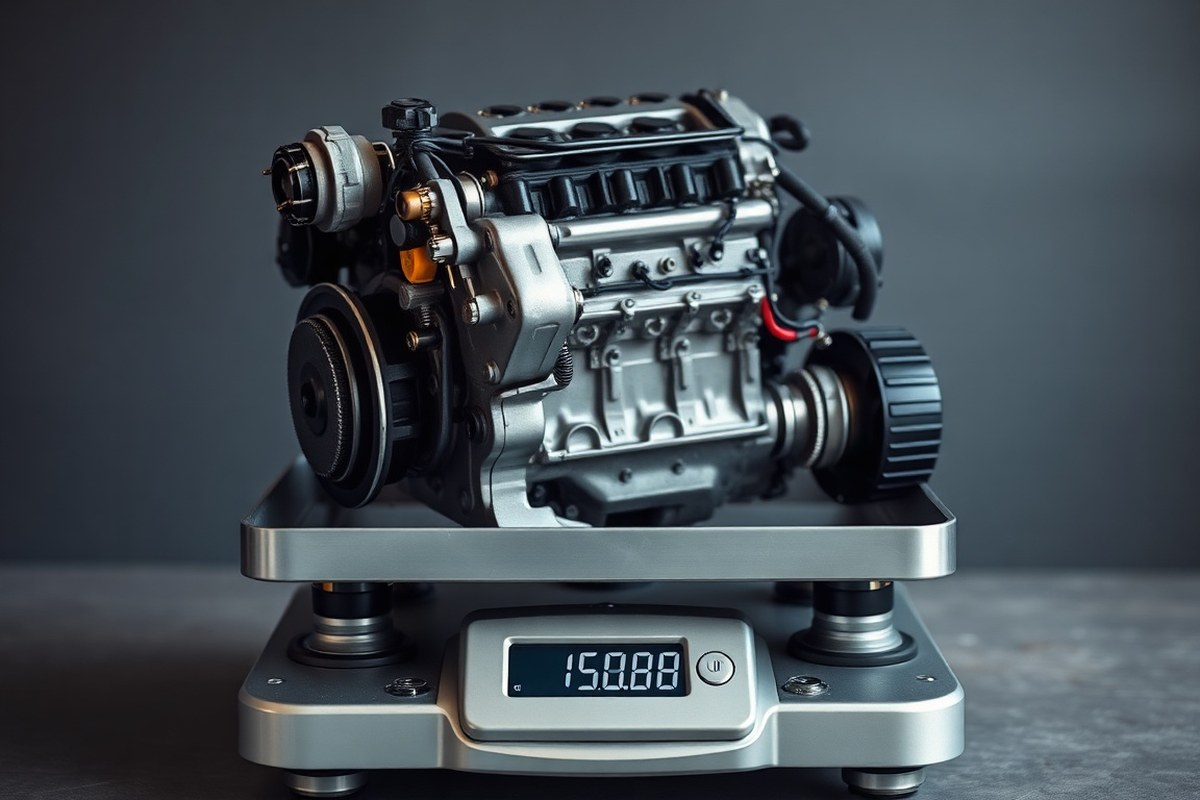
Car engines typically weigh between 200 and 1,200 pounds. Smaller engines in compact cars usually weigh around 300 to 400 pounds. These engines range from 1.0 to 2.0 liters and have fewer cylinders, which keeps the weight down.
Mid-size engines like inline-4 and V6 designs often weigh between 350 and 700 pounds. The V6 engine is popular for balancing power and weight well.
You often find it in midsize SUVs and sports coupes. Engines with more cylinders or larger displacement generally weigh more because they have more components.
Truck engines are heavier, usually weighing 600 to 1,200 pounds. Diesel models can weigh more than 2,000 pounds. These engines are built to provide high torque and last longer.
So they use heavier materials. Electric motors weigh around 100 to 300 pounds by themselves. But they need heavy battery packs, which add lots of weight.
Weight Differences Among Engine Configurations

Engine weights vary widely depending on the number and type of cylinders, arrangement, and fuel type. A V8 engine typically weighs significantly more than a V6.
But both can range based on materials and design. Diesel engines often outweigh gasoline engines because of heavier construction and components built for high compression.
Four-Cylinder Engine Weight Ranges
Modern four-cylinder engines weigh between 200 and 350 pounds. Most use aluminum blocks and heads, which keep weight down compared to older iron-block designs. Inline four-cylinder engines usually weigh between 300 and 400 pounds.
This includes accessories and full assembly. Most fall within this weight range.
Compact four-cylinders are common in economy cars for their light weight and efficiency. Their smaller size helps reduce total vehicle weight, improving fuel economy and handling. These engines weigh much less than V6 or V8 setups.
That makes them easier to modify or swap. They are lighter and simpler.
V6 and V8 Engine Weight Comparisons
V6 engines typically weigh from 300 to 450 pounds. These engines balance power output with moderate weight for most sedans and SUVs. V8 engines weigh from 400 to 700 pounds.
The weight depends on if they have aluminum or iron blocks. Older blocks tend to be heavier.
High-performance V8s made of lightweight materials might weigh less than a 1990s iron V6. However, traditional V8s and big-blocks become significantly heavier, especially when fully dressed with all components. This weight difference affects engine swaps and vehicle dynamics.
Diesel Engine Weight Characteristics
Diesel engines usually weigh more than their gasoline counterparts, from 300 to over 700 pounds. The main reason is their cast-iron construction, which is thicker to handle high compression pressures. Components are more strong and bulkier, resulting in added weight.
Diesel engines focus on torque and lasting durability. Gasoline engines aim for better fuel economy and lighter parts. They have different design goals.
Their heavier build means more weight under the hood, which impacts vehicle handling and suspension tuning. Some diesel engines can weigh about the same as heavy V8s or larger inline-six engines.
| Engine Type | Average Weight (lbs) | Average Weight (kg) |
|---|---|---|
| 4-cylinder | 200 – 350 | 90 – 160 |
| V6 | 300 – 450 | 140 – 200 |
| V8 | 400 – 700 | 180 – 320 |
| Diesel | 300 – 700+ | 140 – 320+ |
| Electric | 100 – 300 | 45 – 136 |
This table shows typical engine weights by configuration and fuel type. Use it to anticipate how engine choice affects your build. V8 and diesel engines can vary by more than 300 pounds.
This difference affects how you install them and car handling. Weight really matters here.
Always check the full ‘dressed’ weight if planning engine swaps. Parts significantly add weight beyond the block and head.
How Materials Affect Engine Weight
Aluminum engine blocks weigh about 40% less than cast iron ones. This drops hundreds of pounds in a typical four-cylinder or V6 engine. For example, an aluminum V6 might weigh around 350 to 450 pounds.
A cast iron V6 can push 450 to 600 pounds. The lighter aluminum helps reduce the overall engine weight, improving handling and fuel efficiency.
Cast iron is heavier because it’s denser and stronger, which makes it better at resisting wear. Its heat retention also means it handles steady, heavy-duty use well.
That’s why older engines and heavy-duty trucks often use cast iron blocks. However, this weight adds to front-heavy bias, affecting handling and increasing fuel consumption slightly.
Aluminum’s advantage lies in weight savings and heat dissipation. It cools faster, which can boost performance and engine longevity under normal driving.
The trade-off is aluminum isn’t as tough as cast iron and can wear faster over time. Manufacturers sometimes add alloys like cerium to aluminum blocks to improve strength without adding much weight.
Choose aluminum or lightweight alloys for engine builds when you want less weight. This works best in passenger cars and sports models focused on improved fuel mileage and handling.
Cast iron or strong materials last longer and handle heavy use well. They are heavier but often worth it.
Using aluminum or light alloys can cost $200 to $500 more for parts. These options raise upfront expenses. You should also check compatibility with other engine parts and cooling systems.
Lighter engines improve balance and throttle response, saving a little fuel. You still need to keep durability in mind.
Components That Add to Engine Weight
The intake manifold and exhaust manifold add noticeable weight to an engine. Intake manifolds usually weigh 10 to 20 pounds. They are made of aluminum or plastic.
The design and materials affect the weight. Exhaust manifolds weigh between 15 and 30 pounds.
They often use cast iron or steel. These materials add strength and durability.
Turbochargers boost engine power but also increase weight substantially. A typical turbocharger assembly can add 20 to 50 pounds, depending on size and materials used. Besides the turbo itself, additional plumbing, intercoolers, and mounting brackets contribute to this extra mass.
Engine accessories add about 50 to 90 pounds total. Items include oil pumps, starters, alternators, and A/C compressors. All these parts add extra weight.
These components may seem small alone. But together they significantly increase the engine’s total weight.
Performance parts can raise weight since they are often larger or more complex. An aftermarket intake manifold may weigh more than stock. It’s designed to improve airflow.
That extra performance can add weight. Aftermarket exhaust systems, including headers and larger pipes, typically add weight too.
Manufacturers use magnesium and composites to cut weights. These materials help lower the weight of intake manifolds and pistons. Lightweight parts improve efficiency.
Plastic intake manifolds can weigh 50% less than metal ones. Lower weight parts help offset the added components that come with modern engines.
Engine weight changes with added technologies, like turbochargers or hybrid components. Hybrid systems add battery packs and electric motors, increasing overall system weight despite smaller combustion engines. Turbocharging packs more power into smaller engines but still adds mass due to the hardware.
How Engine Weight Influences Performance and Fuel Economy
Engine weight directly affects how your car handles and accelerates. A heavier engine moves your car’s weight forward. This can make steering feel slower.
It may also feel less precise. A front-heavy setup changes how tires grip the road. It often causes understeer in tight corners.
Heavier engines also challenge acceleration. The extra mass means the engine needs more power to speed up your car. Two engines with the same torque but different weights perform differently.
The lighter engine accelerates faster. A 350-pound engine and a 500-pound engine can both make 300 lb-ft torque.
The lighter one has a better power-to-weight ratio. This helps it take off quicker.
Fuel economy usually worsens with heavier engines. More weight means your car’s engine works harder to move the entire vehicle. Automakers reduce engine weight by replacing steel parts with aluminum or composites.
This can cut engine weight by 10 to 60 percent, significantly improving fuel efficiency. Cutting 100 pounds off a mid-size car’s engine can improve gas mileage. Fuel economy might go up by 1 to 2 mpg.
The link between engine weight and torque is a trade-off. Diesel engines tend to be heavier because of stronger parts built for high torque output. While diesel’s extra weight drags fuel economy, it delivers better towing and hauling power.
Heavier engines with more torque are good if you need pulling strength. They often trade off speed and efficiency.
Keep engine weight in mind when upgrading parts. Changing to heavy components can hurt handling and gas mileage more than you expect.
For better handling and quicker acceleration, choose a lighter engine or lighter parts. Reducing engine weight improves how quickly your car responds and saves fuel over time.
Don’t give up durability or torque if you need strength. This is important for towing or off-road driving.
To decide on engine weight, think about your priorities. If you want fuel economy or nimble handling, go lighter. For towing or heavy jobs, heavier engines with more torque usually perform better.
How much engine weight to accept depends on your performance needs. Also consider fuel cost tradeoffs.
Typical Engine Weights by Vehicle Type
Engine weights vary a lot depending on the type of vehicle. Compact cars have lighter engines than trucks and SUVs, which need more power. Sports cars fall in between, with engines designed for performance but still quite heavy.
Compact Car Engine Weights
Compact cars usually have small engines, often between 1.0 and 2.0 liters. These smaller engines weigh around 300 to 400 pounds. The lighter weight helps improve fuel economy and handling for everyday driving.
These engines often use four cylinders and less heavy materials. That’s why they stay on the lower end of engine weight ranges. Their size and weight match the smaller vehicle body and lower power needs.
Sports Car Engine Weights
Sports cars carry bigger engines, often between 3.0 and 8.0 liters in size. These engines weigh between 600 and 900 pounds on average. The heavier weight reflects the higher power output and performance tuning.
Powerful V6 or V8 engines are common, giving sports cars speed and quick response. Many sports car designs try to balance engine weight with agility on the road. Still, these engines are much heavier than compact car engines.
Truck and SUV Engine Weights
Truck and SUV engines are typically larger and more strong. These engines weigh more than 600 pounds often, sometimes reaching up to 700 pounds or more. They need extra strength for towing and hauling heavy loads.
V8 engines are popular in trucks and large SUVs because they provide the needed torque. Their heavier weight comes from bigger components and stronger materials. This weight adds to the vehicle but supports tougher performance demands.
| Vehicle Type | Average Engine Weight (pounds) |
|---|---|
| Compact Cars | 300-400 |
| Sports Cars | 600-900 |
| Trucks and SUVs | 600-700+ |
| Sedans | 300-600 |
These numbers can shift depending on engine size and materials used. For example, some V6 engines weigh more than 550 pounds while still fitting smaller vehicles. The heavier engines in trucks and sports cars reflect the need for power and durability.
How to Find the Exact Weight of a Specific Engine
You can find exact engine weight by checking official specs or weighing the engine yourself. Manufacturer sheets or trusted online sources provide accurate data for specific models. Sometimes, weights vary because of added parts or measurement methods.
Using Manufacturer Specifications
OEM service manuals always list engine weights. They include details for different engine versions and materials. Manuals usually show weight in pounds for North American engines.
These specs cover long block and fully dressed engine weights separately. Knowing which you want makes a big difference in accuracy. You can find these manuals online or at auto parts stores.
Consulting Automotive Databases and Forums
Automotive databases collect weight info from multiple sources, including specs and user reports. Forums often share real-world data from engine swaps or rebuilds. Enthusiasts post exact weights after removing accessories or comparing options.
These places help confirm or update manufacturer numbers and catch changes for newer versions. Use sites known for reliability and cross-check data from more than one.
- Search by engine code or model year
- Look for user posts with photos or scales shown
- Check if the weight includes accessories or is bare block only
- Compare data from different databases and forums
- Note variations by engine material and displacement
Weighing the Engine Yourself: Tools and Safety
You can weigh an engine with a heavy-duty workshop scale. Another option is to use a crane scale. Both tools handle heavy loads safely.
The engine needs to be off the vehicle for weighing. Drain all fluids first to stop spills and extra weight.
This makes your measurement more accurate. Using lifting chains or slings rated for the engine’s weight keeps the process safe.
Remove accessories like alternators or exhaust manifolds if you want the core engine weight only. Remember, weights differ if you weigh a long block versus a fully dressed engine. Always calibrate the scale beforehand to get correct readings.
Common Misconceptions About Engine Weight
Engine weight numbers online can vary because of what’s included. Some lists show just the bare engine block. Others add accessories like the intake, exhaust manifolds, or the flywheel.
That can easily change the weight by 50 to 100 pounds. Always check if the weight includes all accessories.
Sometimes it only covers the core engine. This helps avoid surprises when planning a swap.
Heavier engines often mean more power, but that’s not a rule. Big V8s weigh between 500 and 700 pounds. They deliver strong torque.
This helps with towing or high-speed driving. However, weight adds to the car’s front end, which can cause more understeer and affect handling. Smaller, lighter engines balance power and weight well.
They make the car feel more agile. You might not see huge power numbers.
Lightweight engines often use aluminum and advanced designs to cut weight. They tend to require less maintenance. But incredibly light engines aren’t always the most durable.
Materials like aluminum wear differently than cast iron and may need more frequent checks. Picking an engine means choosing between power, weight, and how long the engine lasts. This tradeoff varies by your goals, like racing, daily driving, or hauling.
Don’t rely on a single engine weight figure. Always ask what parts are included for accurate comparisons.
Practical Tips for Reducing Engine Weight in Projects
To reduce engine weight effectively, start by choosing lightweight materials like aluminum, titanium, or carbon fiber. These materials cut weight without losing strength. Aluminum blocks typically weigh 30-50% less than cast iron.
So swapping to aluminum parts is a straightforward step. Carbon fiber composites can reduce weight even further but cost more and may suit high-performance builds.
When planning engine swaps for weight reduction, pick engines known for lighter construction. Modern inline-four engines often weigh less than older V6 or V8 engines of similar power. Check if lightweight versions of your desired engine exist, like aluminum heads or blocks.
Check mounts and wiring carefully to match or adapt them right. Custom brackets might add extra weight, so avoid them when possible.
Cost versus benefit matters a lot here. Aluminum engine swaps and parts usually cost 20-30% more than steel. They help improve handling and fuel economy by reducing weight.
Carbon fiber parts cost about twice as much as aluminum ones. Installing them needs special tools or skills to do the job well.
Most DIYers find using aluminum parts and ditching extra accessories saves weight and money. This balance works well for common engine swaps.
Focus on removing non-essential accessories while upgrading to lighter parts. For example, swapping steel pulleys for aluminum saves a few pounds. Removing heavy brackets or replacing intake manifolds with plastic ones also makes a difference.
These smaller changes add up. Each pound shaved off improves throttle response and braking slightly.
Keep in mind that different projects have different weight goals. Track cars might push for maximum weight cut using exotic materials despite costs.
Street cars benefit more from durable, moderately priced lightweight parts. Don’t trade off reliability and cost-efficiency just to save a few pounds for daily driving or long trips.
Testing before and after weight changes helps. Use a scale to weigh parts or calculate savings based on manufacturer specs. A 50-pound engine weight reduction can noticeably improve acceleration and cornering.
Don’t rush removing critical parts. This can cause reliability problems that cost more than the weight you save.
Step-by-Step Action Plan to Assess and Manage Engine Weight
Use this plan to check your engine’s weight and improve your car projects. Follow each step to see practical results quickly.
- Before you start: Locate your engine’s make and model number. Check the manufacturer’s website or manual to find weight specs.
- Day 1: Weigh your engine if possible, using a certified scale. Compare this with online data to confirm accuracy.
- Week 1: Identify engine materials like aluminum or cast iron. Note that lighter materials improve your vehicle’s handling and fuel use.
- Week 2: Examine engine components that add weight, such as turbochargers or heavy flywheels. Decide if any can be swapped for lighter parts.
- Week 3: Plan modifications that reduce engine weight safely, like switching to a lighter exhaust manifold. Check for improvements in acceleration or mileage afterward.
- Week 4: Monitor your car’s performance and fuel economy regularly after changes. This shows if weight reduction delivers expected benefits.
- After 1 month: Keep a log of all engine weight-related changes and their effects. Use it for future projects or upgrades.
Frequently Asked Questions
How Much Does a Typical Electric Vehicle Drive Unit Weigh?
An electric vehicle drive unit weighs between 100 and 250 pounds. This is about one-third to one-half the weight of a gasoline engine for similar cars.
What Is the Weight Range for Car Engines with Different Cylinder Counts?
Car engine weight usually ranges from 400 to 600 pounds. The number of cylinders has a big impact on this weight.
How Heavy Are IndyCar Engines Compared to Regular Car Engines?
IndyCar engines weigh about 248 pounds on average. This is lighter than typical car engines, which often weigh over 350 pounds.
What Fuel Economy Improvement Results from Reducing Engine Weight by 100 Pounds?
A 100-pound engine weight drop cuts vehicle weight by around 3 percent. That leads to a 1 to 2 percent boost in city fuel economy.
How Do Engine and Transmission Weights Compare When Scaled Together?
Engines weigh between 200 to 1,200 pounds, and transmissions average about 200 pounds. Combined, expect 300 to 1,500 pounds depending on types.
Wrapping Up
Engine weight affects how your car drives and how far it goes. Getting a precise weight helps with smart upgrades. Start by finding your engine’s specs today.