4runner Shakes When Braking – Here’s the Answer
Your 4Runner shakes when braking mainly because warped rotors or worn brake pads create uneven friction, causing vibrations.
Tire imbalances and misalignment make this shaking worse by disrupting smooth contact with the road.
Worn suspension or steering parts can also make brake vibrations more noticeable by affecting weight transfer and wheel stability.
Excessive heat on the rotors can create slick spots, which intensify the shudder.
Knowing these causes can help you address the problem effectively and keep your brakes working at their best.
Key Takeaways
- Warped brake rotors cause uneven friction, leading to shaking and pulsating when braking in a 4Runner.
- Worn brake pads or slick spots on rotors create inconsistent braking force, intensifying vibrations during stops.
- Unbalanced tires and misalignment increase vibrations and reduce braking stability in the 4Runner.
- Worn suspension or steering components cause uneven weight transfer and instability, worsening brake shaking.
- Persistent shaking or noises during braking require professional inspection to prevent further damage and ensure safety.
Why Does My 4Runner Shake When Braking?
When your 4Runner shakes while braking, it’s usually because of warped brake rotors causing uneven friction between the brake pads and rotors. This uneven contact creates vibrations that you feel as shaking, often through the steering wheel or brake pedal.
Warped rotors develop slick spots or uneven wear patterns, which disrupt smooth braking. Worn suspension components like bushings or ball joints can also make these vibrations worse, especially at lower speeds.
Improper installation, such as uneven torque on lug nuts, might misalign the rotors and increase shaking. Fixing warped rotors and related issues quickly is important for maintaining good braking performance, safety, and preventing further damage.
Regular inspections and maintenance can help catch rotor wear early, saving you from costly repairs caused by persistent shaking while braking.
How Warped Rotors Cause 4Runner Brake Shudder
Because warped rotors create uneven contact with the brake pads, you’ll feel a pulsating shudder through the steering wheel and brake pedal during deceleration. This shaking happens because the rotor’s surface deforms under high heat, creating slick spots that disrupt smooth braking.
When rotors warp, they cause inconsistent friction, leading to vibrations that get worse at lower speeds and can increase your stopping distance. Rotor thickness matters too—if they become too thin after resurfacing, they warp more easily under stress.
Improper installation, like uneven lug nut torque, can cause rotors to seat incorrectly. This increases shaking during braking and makes the shudder worse. Addressing warped rotors quickly is key to restoring smooth contact and eliminating that brake shudder in your 4Runner.
Why Worn Brake Pads Make Your 4Runner’s Steering Vibrate
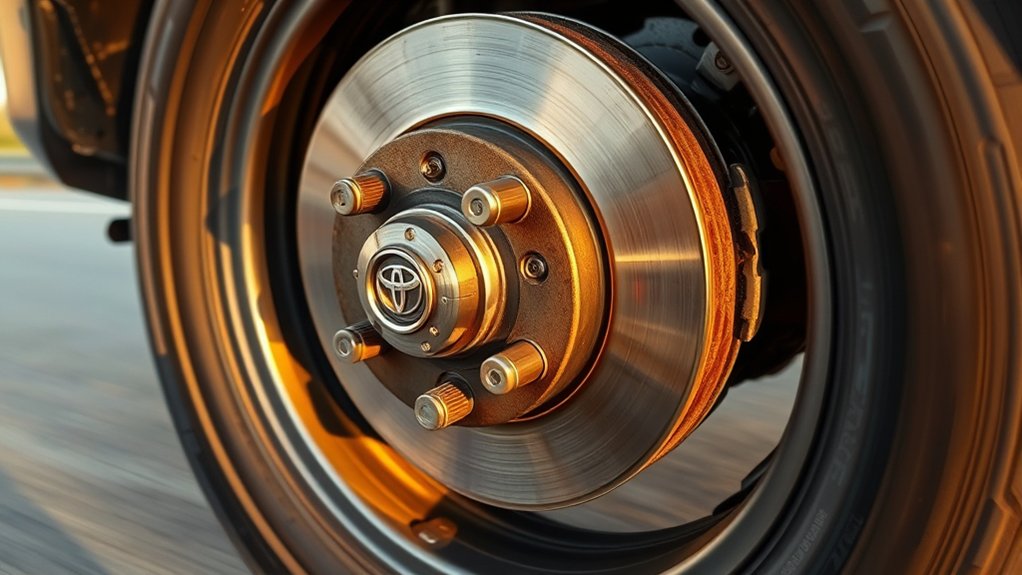
If your 4Runner’s steering wheel vibrates during braking, worn brake pads are often the culprit. As brake pads wear down, their friction surfaces can become uneven or glazed, causing inconsistent contact with the rotors.
This irregular contact generates fluctuating braking forces, which you feel as steering wheel shakes. Plus, uneven pad surfaces create a pulsing sensation when you apply the brakes.
Ignoring worn brake pads risks further rotor damage, which can make vibrations and steering instability worse. To prevent this, regularly check and replace brake pads before they wear out completely.
Also, make sure new brake pads are properly bedded in. This helps ensure even wear and smooth, consistent braking performance.
Doing this maintenance will keep your 4Runner braking smoothly and free of vibrations.
How Tire Balance and Alignment Affect Brake Shaking
If your 4Runner starts shaking when you hit the brakes, one of the main culprits could be unbalanced tires. Basically, when the tires aren’t evenly weighted, they create vibrations that get worse as the weight shifts forward during braking. It’s like the car’s trying to shake itself apart!
Now, misalignment can make things even more frustrating. When your wheels are out of alignment, it causes uneven contact with the road and uneven tire wear. That unevenness can make the brake shaking feel even more intense and uncomfortable.
Tire Balance Importance
Three key factors—tire balance, wheel alignment, and tire pressure—directly influence brake shaking in your 4Runner. Proper tire balance ensures even weight distribution around each wheel, reducing vibrations during braking.
When tires are out of balance, you’ll often feel shaking in the steering wheel, especially at lower speeds. This can signal uneven wear or issues with brake rotors, making braking less smooth.
Imbalance puts extra stress on braking components, which can worsen brake shaking. Regularly checking and fixing tire balance helps improve braking stability and extends the life of your tires and brake rotors.
Ignoring this maintenance not only compromises safety but can also lead to costly repairs. For better brake performance and smoother stops, make tire balancing a routine part of your vehicle care.
Alignment Impact on Braking
While proper tire balance is key to reducing brake shaking, wheel alignment also plays a big role in how your tires contact the road and share pressure during braking.
Alignment issues can cause uneven tire pressure, leading to vibrations that you might feel through the steering wheel when you brake.
These small misalignments become more noticeable at lower speeds because weight shifts forward.
Worn suspension parts like bushings and ball joints can make alignment problems worse, increasing shaking during braking.
Getting regular alignment checks helps catch and fix these issues early.
This prevents uneven tire wear and more intense braking vibrations.
Fixing alignment problems quickly ensures your tires stay in proper contact with the road and pressure is distributed evenly.
This greatly reduces shaking and boosts overall braking performance.
How Suspension and Steering Parts Cause Brake Vibrations
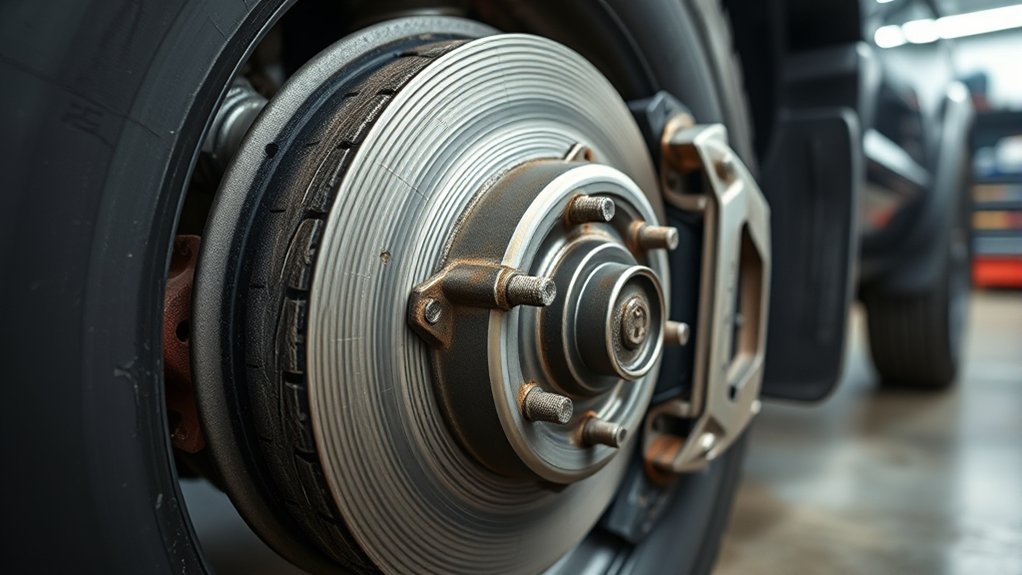
Because worn suspension and steering parts directly affect your vehicle’s stability, they play a significant role in causing brake vibrations. When suspension components like bushings and ball joints wear out, they create excessive play, which causes uneven weight transfer during braking and leads to vibrations.
Misaligned steering parts can make brake vibrations worse by changing the wheel’s contact angle. This results in uneven brake pad wear and rotor engagement. A failing steering dampener also amplifies road-induced vibrations through the steering system, making the shaking feel stronger.
Loose or damaged tie rods destabilize steering, making vibrations more noticeable, especially at lower speeds. To keep brake vibrations in check and ensure good handling, it’s important to regularly inspect and maintain your suspension and steering parts. Addressing wear or damage promptly helps keep your braking smooth and safe.
Why Tightening Lug Nuts Wrong Causes Brake Shudder
If you don’t tighten your lug nuts evenly, it can actually cause some serious issues, like warping the brake rotors. That warping often leads to that annoying shudder you feel when you hit the brakes.
To avoid this, it’s best to use a manual torque wrench. It helps you apply the exact torque specified by the manufacturer, so everything stays aligned properly. When you do it right, you prevent unnecessary vibrations and keep your brakes working smoothly.
Basically, following the correct torque techniques is key to making sure your rotors stay seated properly and your braking performance stays consistent.
Uneven Torque Effects
When you tighten lug nuts unevenly or go beyond the recommended torque, it can cause the brake rotors to not sit properly. This often leads to brake shudder, which is pretty annoying during stops.
Uneven torque puts inconsistent pressure on the rotor and wheel assembly, which can cause misalignment. Over time, this misalignment makes the rotors warp, leading to vibrations when you brake.
Using an impact gun without a torque wrench makes it easier to tighten unevenly. This increases the risk of issues like rotor warping. It’s really important to follow your vehicle’s specific torque specs to avoid these problems.
Proper torque prevents rotor distortion and helps ensure smooth braking. Regularly checking lug nut torque after tire changes or rotations keeps the pressure even and extends the rotor’s lifespan.
Neglecting to tighten lug nuts properly can lead to brake shudder and reduced braking stability. Taking the time to tighten everything correctly keeps your brakes working smoothly.
Proper Torque Techniques
Although it may seem straightforward, tightening lug nuts incorrectly often causes brake shudder by preventing proper rotor seating. When lug nuts aren’t evenly torqued, the front brake rotors can sit unevenly, causing vibrations when you brake.
To avoid this, use a manual torque wrench and tighten each lug nut to the manufacturer’s specification—usually between 80 and 100 foot-pounds for your 4Runner. Uneven torque allows the rotor to move slightly under braking pressure, leading to uneven wear and shudder.
Regularly check and maintain the correct torque on lug nuts to keep the front brake rotors securely seated. This helps preserve brake system integrity and prevents costly rotor warping or uneven pad wear.
Proper torque techniques are essential for smooth, safe braking performance.
How Heat and Slick Spots Damage 4Runner Rotors
Because excessive heat builds up during braking, your 4Runner’s rotors can develop hardened slick spots that disrupt consistent friction. These slick spots form as localized areas where the rotor surface hardens unevenly due to heat exposure, creating texture differences that prevent uniform contact with the brake pads.
This irregular contact leads to vibrations and a noticeable shudder when braking. Heat can also cause rotor crystallization, which worsens surface inconsistency and amplifies these effects.
To fix this, regular inspection is essential. If the rotor thickness allows, machining or turning the rotors can restore a flat surface, eliminating slick spots and improving brake performance. If resurfacing isn’t possible, replacing the rotor is necessary to keep your braking safe and smooth.
Brake Upgrades to Stop 4Runner Shaking
If your 4Runner is shaking when you brake, one way to smooth things out is by upgrading your rotors. Switching to slotted or cross-drilled rotors can really help because they improve heat dissipation and are less likely to warp under heavy braking.
Another good upgrade is installing larger calipers or even converting to Tundra brake components. These changes can give you more stopping power and make your brakes feel more stable. When you combine these upgrades, they work together to improve overall braking performance and help eliminate those annoying vibrations during stops.
Slotted And Drilled Rotors
When upgrading your 4Runner’s braking system, slotted and drilled rotors are a great way to reduce shaking during braking. They help dissipate heat more effectively thanks to their grooves and holes.
These features vent gases and moisture, preventing slick spots that can cause brake shudder. This keeps the brake pads in better contact with the rotor for smoother stops.
By maintaining consistent pad contact, these rotors improve response and reduce fade, especially when you’re off-road or braking hard. They’re built to handle heavy use.
Installing slotted and drilled rotors often means bedding in new brake pads properly. This step is key to getting the best performance and durability from your upgrade.
Many 4Runner owners notice less brake shudder and more reliable stopping power after switching to these rotors. It’s a precise upgrade that tackles the root causes of shaking.
Upgraded Caliper Options
Complementing slotted and drilled rotors with upgraded calipers can really boost your 4Runner’s braking performance and reduce shaking. Upgrading to larger calipers, like those from Tacoma or Tundra models, helps improve clamping force and tackles shuddering issues directly.
High-quality, performance calipers also do a better job at dissipating heat, which prevents rotor warping that causes shaking. To get the best results, you should:
- Choose calipers made from top-quality materials to extend their lifespan and ensure safety.
- Pair your calipers with compatible rotors and pads to optimize braking and prevent vibrations from coming back.
- Make sure you install and bed in the calipers properly for smooth, vibration-free braking.
Taking this precise approach to caliper upgrades is key to eliminating shaking and making your 4Runner’s brake system more reliable.
Tundra Brake Conversion
Although upgrading calipers and rotors can reduce braking shake, the Tundra brake conversion takes this further by swapping in larger, more capable components from the Toyota Tundra.
This upgrade replaces your 4Runner’s front rotors with bigger Tundra rotors, improving heat dissipation and helping prevent rotor warping.
Tundra calipers match these larger rotors by fitting the increased diameter, ensuring the brake pads stay in maximum contact for better braking.
You’ll notice less brake shudder and a firmer feel, especially in different driving conditions.
Keep in mind, this conversion might need modifications like upgraded brake lines or wheel spacers to fit your 4Runner properly.
How to Diagnose Brake Shudder Yourself
A thorough diagnosis of brake shudder starts with a close inspection of your 4Runner’s brake system and related parts. Begin by checking for brake pulsing when you brake, which often indicates warped rotors. Then, visually look at the brake rotors for slick spots or heat marks that show uneven wear.
Don’t forget to check the brake pads for uneven wear, as this can also cause shaking. It’s a good idea to examine suspension parts like ball joints and bushings for any looseness or excessive play that could contribute to the problem.
Uneven brake pad wear and loose suspension parts like ball joints can cause brake shudder.
Follow these steps:
- Inspect rotors and pads for warping and uneven wear.
- Use a torque wrench to make sure lug nuts are tightened to the manufacturer’s specifications.
- Check ball joints and bushings for wear or looseness that might affect stability.
This step-by-step approach will help you find the cause of brake shudder more effectively.
When to Get Professional Help for Brake Vibrations
Whenever you experience persistent shaking or pulsating during braking in your 4Runner, it’s important to get professional help promptly. If your brake pedal shakes when braking, it could be a sign of warped rotors, worn brake pads, or caliper issues that need expert diagnosis.
A qualified mechanic will inspect brake components like rotors, pads, and calipers to find the root cause of the problem. Don’t ignore brake vibrations, as they can speed up wear on suspension parts and lead to costly repairs.
If you notice strange noises, pulling to one side while braking, or a soft brake pedal, get your vehicle checked immediately. Timely professional help and regular maintenance ensure optimal braking performance and prevent further damage to your 4Runner’s braking system.
Frequently Asked Questions
Can Brake Fluid Quality Affect My 4runner’s Shaking When Braking?
Yes, brake fluid quality can affect your 4Runner’s shaking when braking. Contaminated or old fluid absorbs moisture, which lowers its boiling point and can cause vapor lock. This leads to spongy brakes and vibrations during braking.
Low fluid levels can also introduce air into the brake lines. That reduces hydraulic pressure and increases shaking when you stop. Regularly checking, flushing, and replacing brake fluid every 2-3 years helps keep your brakes working smoothly.
Keeping on top of brake fluid quality helps prevent vibrations and ensures consistent braking performance when you need it most.
Does Driving Style Influence Brake Shudder in a 4runner?
Yes, your driving style really impacts brake shudder in a 4Runner. Studies show that aggressive braking can raise rotor temperatures by up to 30%, leading to uneven wear and warping.
When you brake hard or accelerate quickly, it causes heat buildup that distorts the rotors, which can make vibrations happen. Braking smoothly and evenly helps keep the rotors in good shape and lowers the chance of shudder.
Using proper technique and slowing down gradually ensures better contact between the brake pads and rotors. This not only reduces shudder but also helps your braking system last longer.
Are Certain 4runner Models More Prone to Brake Shaking?
Yes, certain 4Runner models, especially those pre-2003 with V6 engines, are more prone to brake shaking. You’ll notice this is often due to smaller, less robust rotors that can overheat and warp under stress.
If you drive one of these models, upgrading to larger or slotted rotors can help reduce the shaking. Regular maintenance also plays an essential role in keeping everything smooth.
Make sure to don’t skip brake inspections or servicing. Staying on top of these can really help minimize issues and keep your 4Runner running comfortably.
Can Cold Weather Cause Temporary Brake Vibrations?
Yes, cold weather can cause temporary brake vibrations. When temperatures drop, brake components contract, and moisture or ice can form on rotors, creating uneven surfaces that lead to shaking.
The brake fluid thickens in the cold, which reduces hydraulic efficiency, and hardened brake pads can lose their ideal contact with the rotors. These issues can make your brakes feel weird or shaky.
Cold temperatures also cause tire pressure to drop, which can lead to uneven wear and make vibrations worse. Luckily, these problems usually go away as the components warm up during driving.
How Often Should Brake Components Be Inspected to Prevent Shaking?
You should inspect your brake components at least every 12,000 miles or during routine oil changes to prevent shaking. It’s a good idea to check rotors and pads visually during tire rotations, which usually happen every 5,000 to 7,500 miles.
Don’t forget to keep an eye on brake fluid quality and levels regularly because contaminated fluid can cause braking issues. Also, getting an annual alignment check helps ensure even wear and smooth braking, which can reduce vibrations effectively.
Conclusion
So, your 4Runner shakes when braking. Surprise, it’s not just your imagination or a ghost in the machine. Warped rotors, worn pads, or even tire issues are usually the culprits causing that unsettling vibration.
Ironically, ignoring these signs won’t make them disappear. It only makes the problem worse. You’ve got the know-how now, so don’t let a simple brake shake turn into a costly repair.
Take action before your 4Runner’s quiver becomes a full-on shudder.