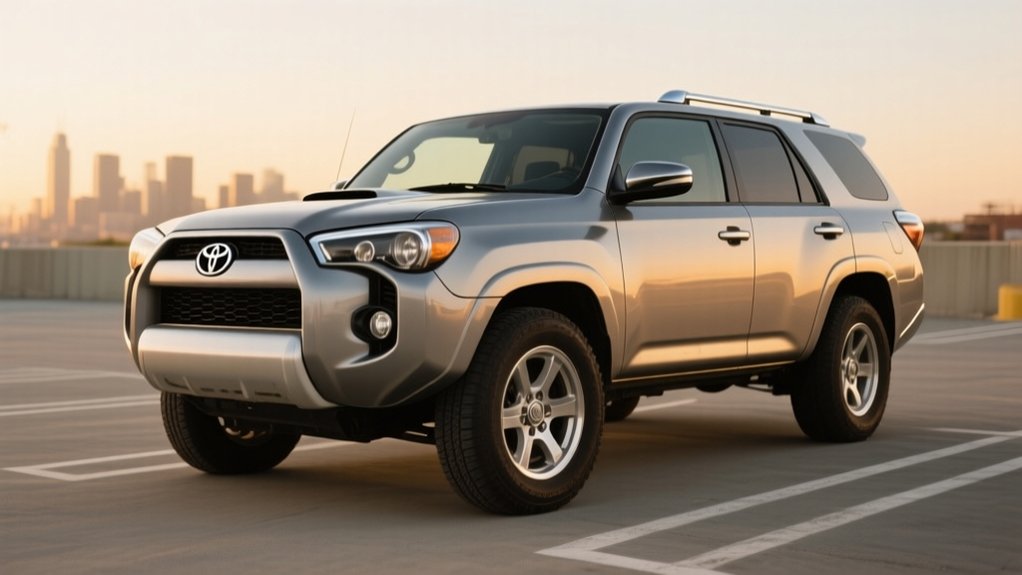
How Wide Is A Toyota 4runner – Guide
The Toyota 4Runner is about 75.8 inches wide, which strikes a good balance between stable handling and spacious seating for up to seven passengers.
This consistent width across recent trims means you’ll need enough parking space and garage clearance, especially in tight or urban areas.
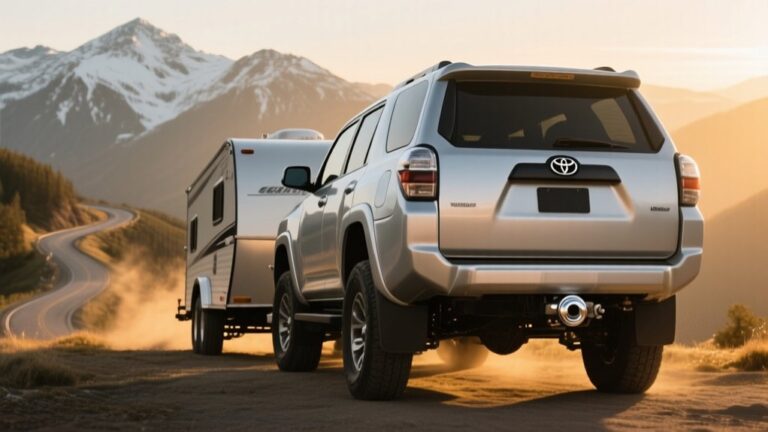
It also boosts off-road stability and traction, making it a reliable choice for rugged adventures.
Knowing this measurement can help you avoid maneuvering challenges and ensure comfort inside.
Keep exploring for more details on variations, interior space, and parking considerations.
Key Takeaways
- The Toyota 4Runner width is approximately 75.8 inches in the 5th generation (2010-present).
- Older 4Runner models, like the 4th generation, are slightly narrower at about 74.6 inches.
- Width remains consistent across different trims, including SR5 and TRD Off-Road, in recent models.
- The vehicle’s width improves stability and off-road traction but requires ample parking space, ideally 8 to 9 feet wide.
- Interior width supports comfortable seating for five to seven passengers with spacious legroom and cargo capacity.
Toyota 4Runner Width and Why It Matters
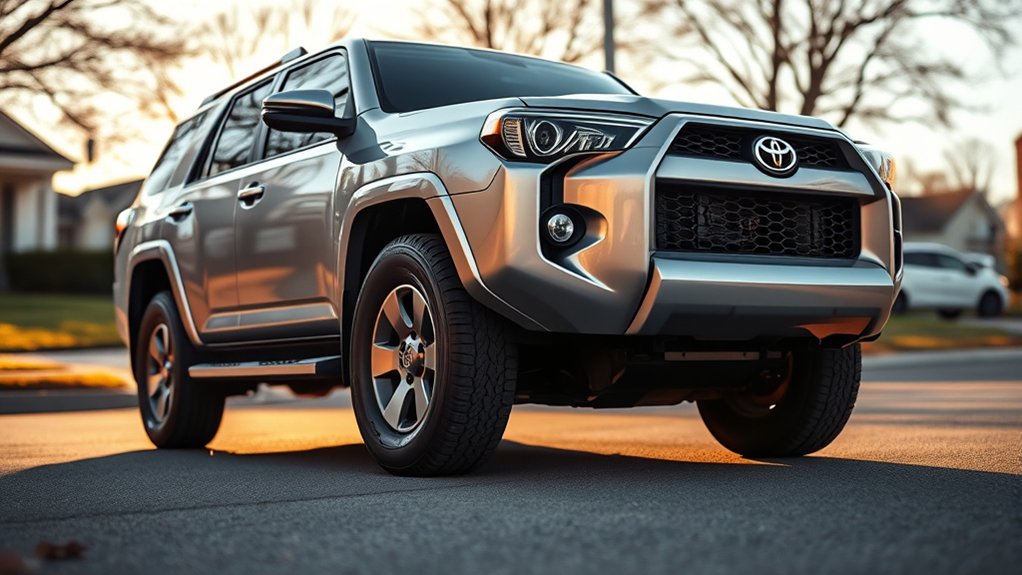
Although the Toyota 4Runner measures about 75.8 inches in width, this size really impacts how it performs and how practical it is. That width helps with stable handling and boosts off-road traction on uneven terrain.
It also makes the interior more spacious, fitting up to seven passengers in some models with plenty of legroom and headroom. But keep in mind, the width can make parking and maneuvering tricky, especially in tight urban spots.
So, it’s smart to check if your garage or parking spaces can handle the 4Runner’s width. When visiting a Toyota dealer, knowing this helps you decide if it suits your lifestyle and environment.
This knowledge ensures you pick a vehicle that balances rugged performance with everyday usability.
Toyota 4Runner Width Variations by Trim and Generation
You’ll notice that the width of the Toyota 4Runner doesn’t really change much across different trims. For example, models like the SR5 and TRD Off-Road typically measure around 75.8 inches wide in recent years.
Older generations, like the fourth one, were a bit narrower, but the size difference isn’t huge. Knowing these dimensions is pretty handy, especially when you’re figuring out parking or storage options. It’s also good to compare it to other mid-size SUVs that might be a bit narrower.
Width Differences By Trim
Several trim levels of the Toyota 4Runner show slight variations in width, typically measuring around 75.8 inches. You’ll find that the SR5 and TRD trims stay consistent in width, making them easier to predict when parking or maneuvering.
The Limited trim level might include extra exterior features that slightly increase its overall width. These small differences don’t drastically change the vehicle’s profile but can impact stability and handling, especially off-road.
Knowing the width differences by trim helps when parking in tight spaces or garages, especially in urban areas. While these variations are minor, they ensure each trim meets specific style and functional needs without changing the 4Runner’s familiar look and performance.
Generational Width Changes
When comparing different generations of the Toyota 4Runner, you’ll notice subtle changes in width that reflect evolving design priorities. The 4th generation (2003-2009) measured about 74.6 inches wide, while the 5th generation, from 2010 to today, increased to approximately 75.8 inches.
This small increase in width supports better stability and off-road capability. The 2023 4Runner keeps this width of 75.8 inches, showing that the design focus remains consistent.
Trim levels don’t affect width within a generation since all trims share the same chassis dimensions. Understanding these width changes helps you see how the 4Runner’s size adjustments contribute to its strong presence and dependable handling.
It’s a great choice for those who value both road stability and rugged adventure.
Impact On Parking
Although the Toyota 4Runner’s width stays pretty consistent across trims and generations, its size can affect how easy it is to park, especially in tight spots. Most models are about 75.8 inches wide, which can make maneuvering in narrow parking lots or garages a bit tricky.
The 5th generation’s slightly wider stance offers better stability but also means you’ll need more space to park comfortably. Trim options like the TRD Pro keep the same width but add off-road features that might require extra room around the vehicle.
When parking, it’s also important to consider the 4Runner’s height, which often exceeds 76 inches. This means you’ll need enough vertical clearance to avoid issues. Overall, knowing the 4Runner’s size helps you park more confidently and avoid tight spots that could cause damage or inconvenience.
How 4Runner Width Affects Interior Space and Seating
You’ll see that the width of the 4Runner really impacts how spacious the interior feels and how many people it can comfortably seat. Some models can even fit up to seven passengers, which is great if you’ve got a bigger family or like to carpool.
That extra width isn’t just about fitting more bodies inside — it also helps make the storage space more efficient and makes moving around inside the cabin a lot easier. All in all, this means passengers can enjoy a more comfortable ride with easier access to seats and controls throughout the vehicle.
Seating Capacity Impact
Because the Toyota 4Runner measures about 75.8 inches wide, it offers a spacious interior that directly impacts seating comfort and capacity. This width allows you to comfortably seat five or seven passengers, depending on the model, with plenty of shoulder and legroom.
The wider cabin helps reduce crowding, making long drives much more enjoyable. Some models feature three rows of seating, where the front and middle rows benefit the most from the generous width.
| Seating Rows | Passenger Capacity | Comfort Level |
|---|---|---|
| 2 rows | 5 passengers | Ample shoulder space |
| 3 rows | 7 passengers | Adequate legroom |
| Cargo folded | N/A | Up to 89.7 cu ft cargo |
This design ensures a balanced mix of seating capacity and comfort.
Interior Space Optimization
The Toyota 4Runner’s 75.8-inch width directly influences how its interior space is arranged and utilized. This width allows the 4Runner to achieve effective interior space optimization, offering generous shoulder room—57.8 inches in the front and 57.3 inches in the rear.
You’ll find that this spacious design supports comfortable seating arrangements for up to seven passengers, especially in the optional third row. The interior balances width with functionality, providing easy access to controls and storage compartments without compromising space.
Moreover, the optimized width contributes to cargo capacity, enabling up to 89.7 cubic feet of storage when the second and third rows fold down. Overall, the 4Runner’s width plays a vital role in maximizing interior space and seating flexibility for varied needs.
Passenger Comfort Considerations
Three key aspects of the Toyota 4Runner’s 75.8-inch width directly improve passenger comfort: spacious seating arrangements, ample legroom, and improved ride stability. You’ll find that the wide cabin supports seating for up to seven passengers in models with a third row, allowing everyone to enjoy sufficient personal space.
The generous legroom—41.7 inches in front and 32.9 inches in the middle row—lets you stretch out during longer trips. Furthermore, the 4Runner’s broad stance boosts stability, reducing body roll on rough terrain and contributing to a smoother ride.
This stability directly benefits passenger comfort by minimizing discomfort from uneven surfaces. The width also accommodates user-friendly interior features like storage bins and accessible controls, ensuring convenience for all occupants throughout your journey.
Comparing Toyota 4Runner Width to Other Mid-Size SUVs
How does the Toyota 4Runner’s width compare to other mid-size SUVs? At about 75.8 inches wide, it fits comfortably within the typical range for the segment.
Compared to the Honda Passport, which measures 78.6 inches, the 4Runner is noticeably narrower. This makes it easier to maneuver in tight city streets or crowded parking lots.
At 75.8 inches wide, the 4Runner is narrower than the Honda Passport, enhancing maneuverability in tight spaces.
The Ford Bronco is very close in size, at 75.9 inches wide, suggesting similar handling and on-road feel. Meanwhile, the Toyota Land Cruiser, a larger SUV, is wider at around 78 inches.
This more compact design means the 4Runner offers enough passenger space without feeling bulky. It’s a practical choice for those wanting a balanced mid-size SUV.
How Width Influences Off-Road Stability and Handling

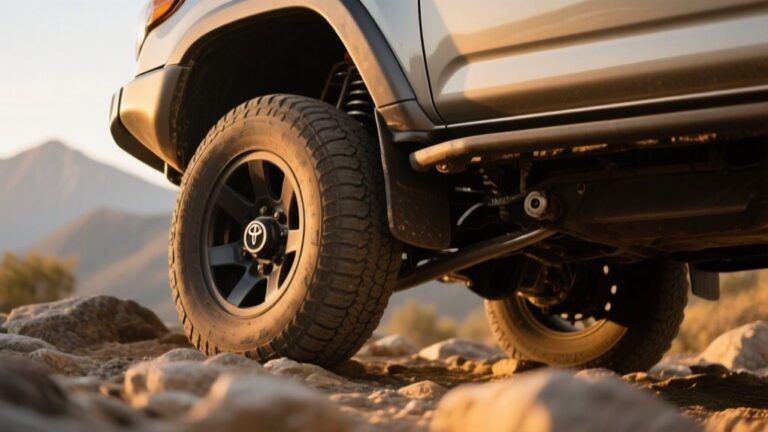
A width of about 75.8 inches gives the Toyota 4Runner a stable stance, which boosts its off-road performance. This wider stance helps with lateral stability, reducing the risk of tipping on uneven or steep terrain.
It also ensures better tire contact with the ground, increasing traction and control on rough surfaces. Plus, the wider wheelbase helps distribute weight more evenly, so you can handle sharp turns confidently without losing stability.
Even with its substantial width, the 4Runner is still capable of maneuvering narrow trails effectively. Overall, the vehicle’s width plays a key role in balancing off-road agility with stability, making it a reliable choice for tough and varied terrains.
Parking and Garage Fit: What 4Runner’s Width Means for You
Because the Toyota 4Runner is about 75.8 inches wide, you’ll want to think about its size when parking in city areas or fitting it into your garage. Its width impacts how much space you need and how easy it is to maneuver, especially in tight spots.
To park comfortably, try to select spaces wider than usual when you can. Make sure your garage has at least 8 to 9 feet of clearance for smooth entry and exit.
Be extra careful when parking in urban environments to avoid scraping or blocking other vehicles.
And if you’re using a car cover or accessories, choose ones designed to fit the 4Runner’s width perfectly.
How to Measure 4Runner Width Before You Buy
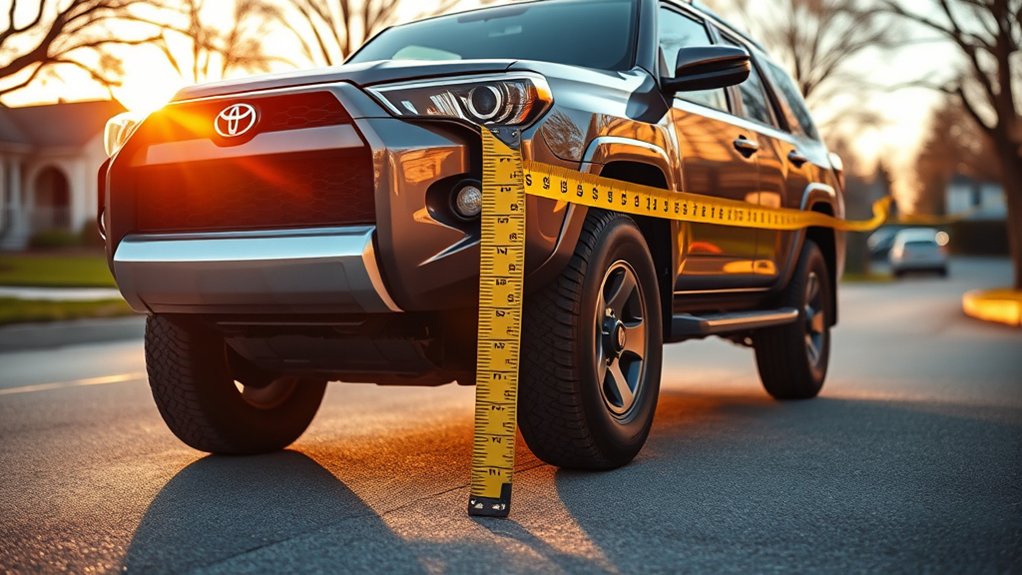
Before you decide to buy a Toyota 4Runner, it’s smart to measure its width accurately. This helps ensure it will fit comfortably in your parking spaces and suit your driving needs.
To find the exact width, use a tape measure from the vehicle’s widest points, usually the side mirrors or fenders. Be sure to include any accessories or modifications that might add to the width.
Don’t forget to check the manufacturer’s website or owner’s manual for the official specifications. This confirms the dimensions for your specific model year.
Knowing how to measure the 4Runner’s width before you buy helps you avoid parking or maneuvering issues later. It’s a simple step that saves headaches down the road.
| Step | Action |
|---|---|
| 1. Identify widest points | Usually mirrors or fenders |
| 2. Use tape measure | Measure width between widest points |
| 3. Include modifications | Account for added accessories |
| 4. Verify specs | Check manufacturer’s official data |
| 5. Assess fit | Compare width with parking space size |
Frequently Asked Questions
What Is the Towing Capacity of a Toyota 4runner?
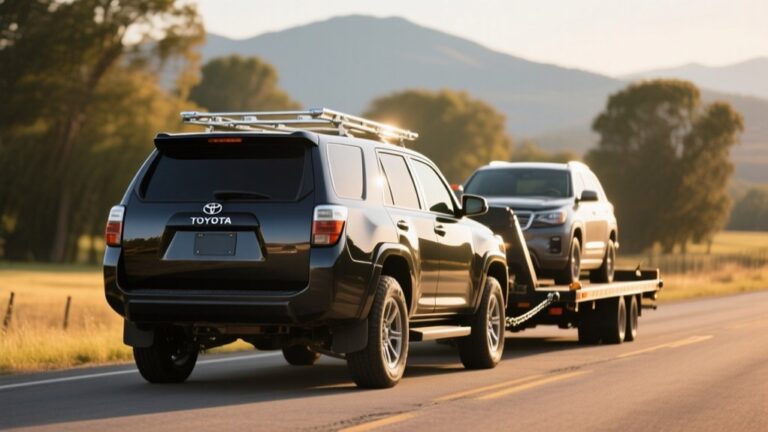
The towing capacity of a Toyota 4Runner is up to 5,000 pounds. You’ll find this consistent across all trim levels, including SR5, TRD Off-Road, and Limited models.
To reach this maximum, you’ll need to equip your 4Runner with the available tow package. Its body-on-frame construction helps you tow with stability, but you should always follow proper weight distribution and towing guidelines to guarantee safety while hauling trailers, boats, or camping gear.
How Fuel-Efficient Is the Toyota 4runner?
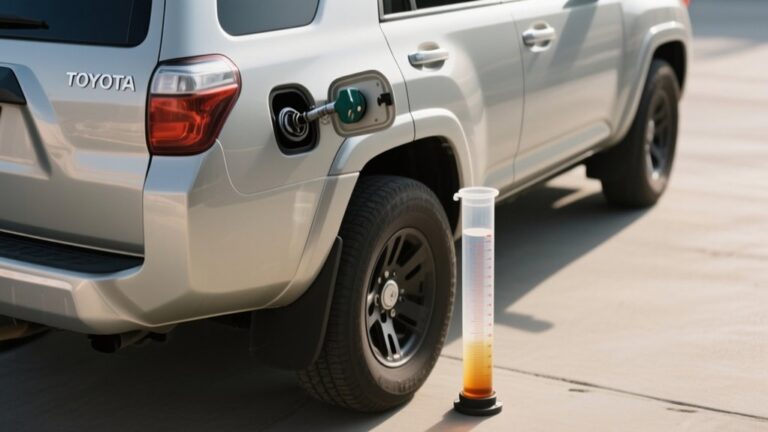
You might expect stellar fuel efficiency from an SUV like the 4Runner, but it clocks around 16 mpg city and 19 mpg highway.
With a 23-gallon tank, you’ll get roughly 368 miles per fill-up. While it’s not the most fuel-conscious in its class, it balances power and off-road capability well.
What Safety Features Come Standard on the 4runner?
The Toyota 4Runner comes standard with Toyota Safety Sense P, which includes pre-collision warning with pedestrian detection, lane departure alert, and adaptive cruise control.
You’ll also get eight airbags covering front, side, curtain, and knee protection. It features a reinforced body structure, vehicle stability control, traction control, ABS, a rearview camera, and parking sensors.
All these systems work together to keep you safer on the road and during parking maneuvers.
Does the 4runner Have Advanced Driver-Assist Technologies?
Yes, the 4Runner comes with advanced driver-assist technologies. You’ll find features like adaptive cruise control, lane departure alert, and a pre-collision system with pedestrian detection on select trims.
It also offers blind-spot monitoring and rear cross-traffic alert to keep you aware of your surroundings. Higher trims include dynamic radar cruise control, which adjusts your speed based on traffic, making your drive safer and more convenient.
What Are the Common Maintenance Costs for a Toyota 4runner?
You might be surprised at how manageable Toyota 4Runner maintenance costs can be. On average, you’ll spend $400 to $600 annually.
Routine oil changes cost between $50 and $100, while brake replacements run $300 to $700. Tire rotations and alignments come around $75 to $150 every 5,000 to 7,500 miles.
Major services like timing belt replacements may cost up to $1,000, but overall, the 4Runner’s reliability helps keep expenses reasonable.
Conclusion
Think of the Toyota 4Runner’s width as the bridge between comfort and capability. It shapes your ride, fits your space, and supports your adventure.
Whether you’re squeezing into a tight garage or conquering rugged trails, its dimensions matter. Knowing this width helps you make a confident choice, balancing interior room with off-road grip.
In the end, understanding the 4Runner’s breadth is your key to revealing a versatile, reliable driving experience.