Will 285/70r17 Fit Stock 4runner – Find Out
You won’t fit 285/70R17 tires on your stock 4Runner without some rubbing on the front upper control arms and fender liners.
You’ll need at least a 2-3 inch lift and proper wheel offset to create enough clearance for safe, comfortable driving.
Minor trimming might help, but it rarely solves all the fitment issues.
Keep in mind, these larger tires also slightly raise your vehicle’s height and could impact ride quality and speedometer accuracy.
It’s a good idea to look into how modifications and wheel choices can affect your upgrade.
Key Takeaways
- 285/70R17 tires cause significant rubbing on stock 4Runner front components without modifications.
- A 2-3 inch lift is generally required for proper clearance and to prevent rubbing issues.
- Wheel offset adjustment, especially negative offset, helps improve fitment with larger tires.
- Minor trimming of fender liners or metal casing cuts may be necessary for smooth operation.
- Stock spare tire carriers often do not accommodate 285/70R17 tires without aftermarket modifications.
285/70R17 Tire Fitment on a Stock 4Runner
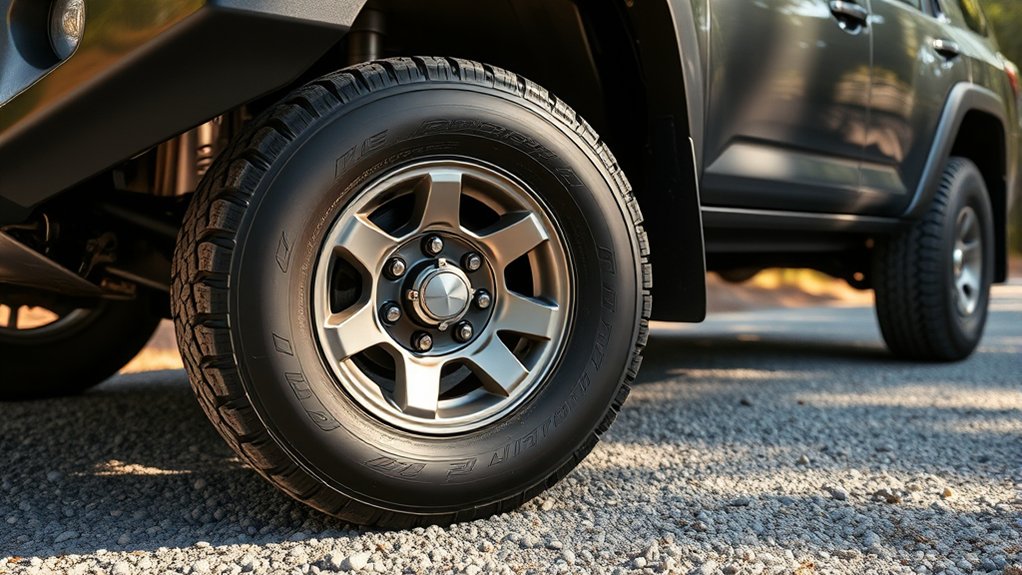
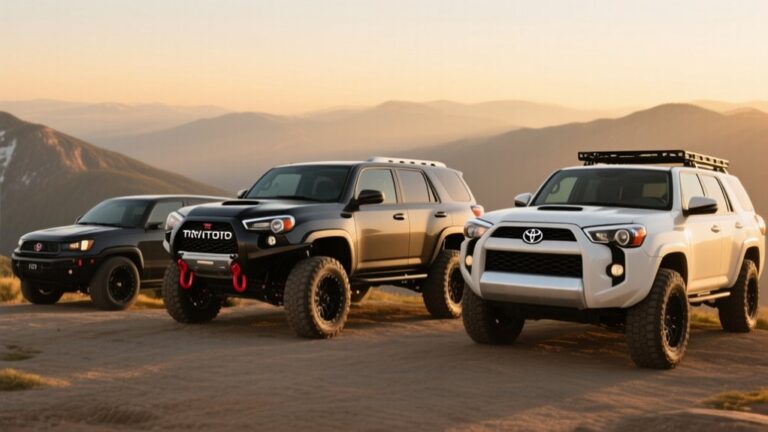
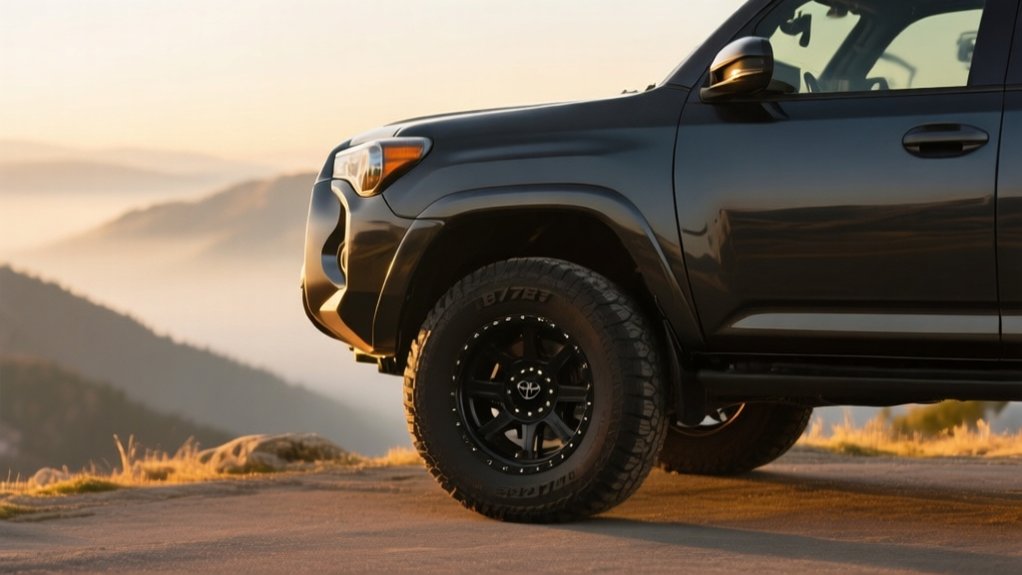
How well do 285/70R17 tires fit a stock 4Runner? Generally, these tires cause significant fitment issues without any modifications. Stock 4Runners often experience major rubbing, especially on the front, because of limited clearance around the Upper Control Arms and fender liners.
To fit 285/70R17 tires properly, most people need to lift their vehicle by 2-3 inches, perform metal casing cuts (CMC), and adjust the wheel offsets. Some owners report minimal rubbing after trimming fender flaps, but those are exceptions.
Rear tires usually require fewer adjustments, but front tire fitment remains a challenge. If you want to avoid fitment issues altogether, consider smaller sizes or be ready for the modifications needed to run 285/70R17 tires safely and effectively.
What Does 285/70R17 Mean for Your 4Runner’s Size?
So, when you see 285/70R17 on a tire, here’s what it actually means for your 4Runner’s size. The “285” is the width of the tire in millimeters—so it’s about 285 mm wide. The “70” is the aspect ratio, which tells you that the sidewall height is 70% of the tire’s width. That means the sidewall is roughly 199.5 mm tall. And “R17” indicates it fits on a 17-inch wheel.
All these measurements add up to an overall diameter of about 32.7 inches. That’s a pretty significant size increase, which will make your 4Runner sit a bit higher and look beefier. But keep in mind, this also means your vehicle’s width will increase, and the ground clearance will go up too.
Before you go ahead with this size, it’s a good idea to double-check how these changes might affect your 4Runner’s performance. You’ll want to make sure there’s enough clearance in the wheel wells and that your speedometer remains accurate. Basically, it’s all about balancing that rugged look and improved capability with the practical aspects of your vehicle’s fit and function.
Tire Dimensions Explained
Because tire size directly impacts fitment and performance, understanding what 285/70R17 means for your 4Runner is essential. This size indicates a width of 285 mm (about 11.2 inches), an aspect ratio of 70, and a 17-inch rim diameter.
The aspect ratio shows that the sidewall height is 70% of the width, which is roughly 7.9 inches. Together, these dimensions give an overall tire diameter of about 32.7 inches.
Compared to stock tires, this size is wider and taller, which can affect clearance and fitment on your 4Runner without modifications. Since larger tires may rub on a stock setup, you’ll need to consider lifts or wheel offset adjustments.
These modifications help maintain proper clearance and performance, ensuring your vehicle handles the bigger tires smoothly.
Impact On Vehicle Height
When you upgrade to 285/70R17 tires on your 4Runner, you’ll notice a subtle increase in vehicle height because of the larger overall diameter. This size, with a 285 mm width, 70% aspect ratio, and 17-inch rim, makes the tire taller compared to stock tires.
While these tires can fit on stock 4Runner models, the added height slightly boosts ground clearance. This can improve off-road ability and approach angles. But fitting them might cause minor rubbing during turns or suspension compression.
To ensure a proper fit without sacrificing ride quality, you might need to trim fender liners or adjust wheel offsets. Overall, the 285/70R17 tires slightly but effectively increase your 4Runner’s height when installed on stock setups.
Width And Clearance Effects
One key factor to consider with 285/70R17 tires on your 4Runner is their increased width of 285 mm. This directly impacts the clearance around the wheel wells and suspension parts.
Because of this wider profile, rubbing can happen, especially at full steering lock or during suspension movement. Some users say these tires fit fine without modifications, but others run into contact with fender liners or upper control arms.
In those cases, trimming the fenders or making suspension adjustments might be necessary. The tire’s 70% aspect ratio also adds to overall width and height, affecting fitment.
To make these tires work, you might need to consider changing wheel offset or adding a slight suspension lift. Proper evaluation is crucial to avoid clearance issues and keep good traction and stability without damaging your vehicle components.
Common Fitment Issues With 285/70r17 Tires on Stock 4runners
If you’re thinking about putting 285/70R17 tires on your stock 4Runner, be prepared for some rubbing issues. These bigger tires can often bump into the front suspension components or fender areas, especially when you’re turning or going over bumps.
Without a lift or some trimming, you might notice the tires making contact with the upper control arms or fender liners during steering or suspension compression. To avoid these problems, many people go for a slight lift — like 2 to 3 inches — or tweak the wheel offset a bit. These adjustments can give you the extra clearance you need and help prevent any rubbing or damage.
Rubbing Challenges Without Lift
Although 285/70R17 tires offer better off-road ability, fitting them on a stock 4Runner often causes rubbing issues, especially around the upper control arms and fender liners.
Without a lift, the front tires are more likely to rub during suspension compression and when turning fully.
Many users find that even slight flex or body roll can lead to contact, which can damage tires and vehicle parts.
Fender liners and flaps often need trimming or adjusting to reduce interference.
While some have managed to run these tires without rubbing, that’s pretty rare and depends heavily on wheel offset and suspension condition.
If you want to run 285/70R17s, expect clearance problems unless you install at least a 2-3 inch lift.
The stock suspension and wheel well size usually aren’t enough to prevent rubbing altogether.
Necessary Vehicle Modifications
When fitting 285/70R17 tires on a stock 4Runner, you’ll need to address common clearance issues by modifying suspension components and bodywork. A 2-3 inch lift is often necessary to prevent rubbing on the upper control arms and fender liners.
Without enough lift, these tires can interfere with suspension travel and fender clearance. You’ll also want to cut or trim the metal casing (CMC) and carefully massage fender flaps to create more space around the wheel wells.
Keep in mind that wheel offset and tire width greatly influence fitment, so choosing the right offsets is key for good clearance and ride quality. Some owners manage without modifications, but most need these adjustments to ensure safe, reliable operation.
These changes help maintain suspension geometry when running 285/70R17 tires on a stock 4Runner.
Front Tire Clearance
Addressing front tire clearance is a key step after considering suspension lifts and fender modifications for fitting 285/70R17 tires on a stock 4Runner. These larger tires often rub against the upper control arms and fender liners, especially during sharp turns or when the suspension compresses.
To prevent this, a 2-3 inch lift is usually recommended to create enough clearance. Some owners manage without a lift by carefully trimming or massaging the fender flaps. Adjusting wheel offset can also help by repositioning the tire inward and reducing rubbing.
Keep in mind, front clearance issues are more common than the rear because of suspension geometry and steering components. Your experience might vary depending on your wheel choice and driving conditions.
It’s important to do thorough clearance checks before and after installation to avoid damage and keep your vehicle safe.
How a Lift Kit Helps With 285/70r17 Tire Clearance
If you want to run 285/70R17 tires on your stock 4Runner without rubbing issues, installing a 2.5 to 3-inch lift kit is often necessary to provide enough clearance. This lift increases the space between the tires and the fender wells, stopping contact with suspension parts and bodywork during turns and articulation.
Beyond just clearance, the lift improves suspension travel and articulation, making off-road driving easier with larger tires. But keep in mind, installing a lift might mean doing some extra adjustments, like trimming fender liners or tweaking wheel offsets, to fully avoid rubbing.
Since compatibility varies depending on the lift brand and tire size, it’s a good idea to research specific kits and talk to experts. They can help you find the best fit for your setup. Plus, a lift gives your 4Runner a more aggressive look that complements the larger 285/70R17 tires.
Wheel Offset and Rim Choices for 285/70R17 Tires
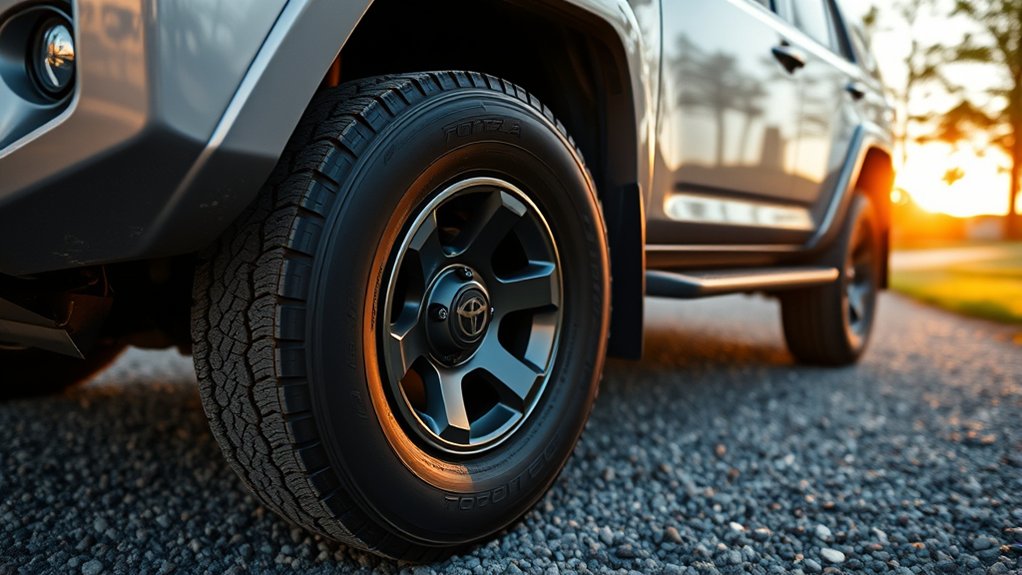
After installing a lift kit to fit 285/70R17 tires, you’ll want to choose wheels with the right offset and width to avoid rubbing. Wheel offset is really important; a negative offset is often recommended because it pushes the wheel outward for better clearance.
Stock 4Runner wheels usually don’t have enough offset for these larger tires, which can cause clearance issues. Many people go with TRD Pro rims because they offer a good balance of offset and width, helping the tires fit without hitting anything.
Stock 4Runner wheels often lack sufficient offset, making TRD Pro rims a popular choice for proper tire fitment.
FN wheels are another option, but they tend to stick out more, which could make fitment trickier. Always think about both offset and rim width together to make sure the tires sit properly without rubbing on suspension parts or fenders.
Getting the right wheel setup is key for safe, reliable performance with 285/70R17 tires.
Additional Modifications Required for 285/70R17 Tires
While fitting 285/70R17 tires on a stock 4Runner, you’ll probably need a 2-3 inch lift to avoid rubbing, especially in the front wheel wells. Beyond the lift, other modifications might be necessary.
You may have to trim the metal casing (CMC) or modify the fender flaps to get enough clearance. The stock setup often causes Upper Control Arm (UCA) rub, so upgrading or adjusting UCAs can be important.
Wheel offset also matters; choosing rims with the right offset helps reduce rubbing during turns and suspension movement. Some users fit these tires without major mods, but since setups vary, be prepared for these adjustments to ensure proper clearance and safe driving.
What Larger Tires Mean for Ride Comfort and Noise

Although upgrading to 285/70R17 tires can improve your 4Runner’s look and off-road ability, it might slightly impact ride comfort and noise levels. The E load rating means stiffer sidewalls, which can make the ride a bit rougher.
Road noise tends to increase only minimally, so daily driving remains pretty comfortable. Tires with a C load rating usually offer better comfort than E-rated ones.
Balancing the look with ride quality is key, especially on rough roads or potholes. Check the chart below to see how different load ratings affect comfort and noise.
| Tire Load Rating | Ride Comfort | Noise Level |
|---|---|---|
| E (Heavy Duty) | Slightly stiffer | Minimal increase |
| C (Standard) | More compliant | Low |
| Stock 4Runner | Baseline comfort | Baseline noise |
Choose your tires based on what suits your driving needs best.
Managing Your Spare Tire After Upgrading to 285/70R17
When you switch to 285/70R17 tires, it’s a good idea to make sure your spare tire is the same size. That way, you’ll know it’ll fit properly and work well if you ever need it. Take a look inside the spare tire compartment and check the space carefully—bigger tires might not fit as snugly or could make it harder to access the spare when you need it.
If your stock mount doesn’t seem to have enough room for the larger spare, don’t worry. There are aftermarket carriers and other storage options out there that can help you keep your spare accessible and secure. It’s all about making sure you’re prepared without any surprises down the road.
Spare Tire Compatibility
If you upgrade to 285/70R17 tires, you’ll need to check if your stock spare can handle the larger size without any modifications. The factory spare is often smaller and might not fit the wheel well or mounting bracket designed for the original tire size.
Many people suggest keeping the stock spare for emergencies, but it’s important to make sure it’s securely mounted and easy to access. Alternatively, you can get a matching 285/70R17 spare to ensure everything stays uniform and compatible with your upgraded tires.
Before you buy a new spare, measure the space under your 4Runner or in the cargo area to see if the larger spare will fit properly. Some owners have successfully installed bigger spares, while others had to make minor adjustments to ensure a proper fit and secure mounting.
Storage And Accessibility
Since upgrading to 285/70R17 tires increases your spare’s size, you’ll want to check how this impacts storage and accessibility on your 4Runner. Larger spares often don’t fit the stock undercarriage mount, so measuring clearance is important.
You might consider keeping the stock spare for emergencies or upgrading to a matching larger one. But a bigger spare may require different mounting options like a tire carrier or external mount to keep it accessible and secure.
Many users find it tricky to access the spare after upgrading without making modifications. To avoid issues, measure your space, check for enough clearance, and choose a mounting system that fits the 285/70R17 size.
This way, your spare stays accessible and safe, making tire changes easier and preventing potential problems.
4runner Owner Experiences With 285/70r17 Tires
Although experiences vary, many 4Runner owners have successfully fitted 285/70R17 tires on stock setups without lifts, while others report minor rubbing that usually just needs simple fender adjustments. You might find no rubbing at all, but some owners have just massaged fender flaps or tweaked wheel offsets to gain clearance.
Key points from owner reports include:
- A 2-3 inch lift often prevents rubbing, especially on front tires.
- Wheel offset plays a big role; choosing the right offset can reduce or eliminate rubbing.
- Many owners notice improved ride quality and looks, with little impact on fuel efficiency or noise.
If you’re planning this upgrade, expect minor tweaks but generally positive results with 285/70R17 tires on a stock 4Runner.
Choosing Tires and Wheels for Your 285/70R17 Upgrade
When choosing tires and wheels for a 285/70R17 upgrade on your 4Runner, it’s really important to get the right wheel offset. This helps ensure a good fit and prevents rubbing issues. A proper offset keeps the tires clear of the Upper Control Arm and fender liners, especially on the front.
Some people can fit these tires on stock suspension without problems, but many will need a 2-3 inch lift or fender flares to avoid interference. It’s a good idea to plan for these potential adjustments.
For tires, go with reputable models like BFG AT KO2 or Nitto. They’re known for durability and performance both on and off-road. Also, think about any future suspension or lift upgrades so your wheels and tires stay compatible long-term and your vehicle handles well.
Frequently Asked Questions
How Does 285/70r17 Affect Fuel Efficiency on a Stock 4runner?
Installing 285/70R17 tires on your stock 4Runner usually causes a 1-2 MPG drop in fuel efficiency because of increased rolling resistance and tire weight.
You’ll notice a slight decrease in gas mileage, especially with more aggressive tread patterns. But keeping your tire pressure right can help lessen this effect.
Can 285/70r17 Tires Impact My 4runner’s Braking Performance?
Yes, 285/70R17 tires can impact your 4Runner’s braking performance. Their larger size increases rotational mass, which might make stopping take a bit longer.
The extra width boosts traction, but it can also cause more aggressive brake inputs. Heavier tires change how weight is distributed, possibly affecting brake balance during hard stops.
You should check if your braking system is compatible with these tires to keep things safe and running smoothly.
Are There Specific Tire Brands Recommended for 285/70r17 on a 4runner?
Yes, you’ll want to consider brands like BFG All-Terrain KO2, Nitto Terra Grappler, and Falken Wildpeak AT3W for 285/70r17 tires on your 4Runner.
BFG offers strong off-road traction with a good balance of road comfort. Nitto’s aggressive tread design works well both on and off-road.
Falken provides excellent versatility for all weather conditions. Picking tires that match your driving style ensures you get the best performance and durability in different environments.
How Often Should I Rotate 285/70r17 Tires on My 4runner?
You should rotate your 285/70R17 tires every 5,000 to 7,500 miles. Tires don’t magically wear evenly on their own, so rotation is important.
Rotating them regularly helps ensure balanced wear, better traction, and longer tire life—especially with those big tires on your 4Runner.
If your tires are non-directional, follow a front-to-rear and side-switch pattern. Don’t skip this step—it’s key for safe, reliable driving both off-road and on pavement.
Will 285/70r17 Tires Affect My 4runner’s Speedometer Accuracy?
Yes, 285/70R17 tires will affect your 4Runner’s speedometer accuracy because their larger diameter causes the speedometer to underreport your actual speed.
For every inch increase in tire diameter, expect about a 3% error. This means you could be going 5-10 mph faster than what your speedometer shows at highway speeds.
To fix this, you’ll need to recalibrate the speedometer. You can do this with aftermarket modules or professional services to ensure your speed and mileage readings are accurate.
Conclusion
Upgrading to 285/70R17 tires on your stock 4Runner isn’t just a size change. It’s a transformation.
While fitment challenges like rubbing can happen, a lift kit and proper wheel offset make all the difference. Bigger tires boost off-road capability but can affect ride comfort and noise.
Think of your 4Runner as a canvas. With the right choices, you’ll create a perfect balance of performance and style, elevating every adventure with confidence and control.