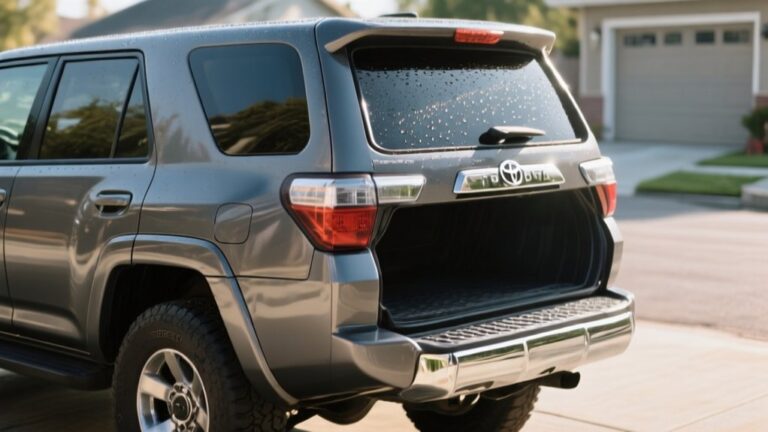
Can You Fit 4×8 Plywood In Toyota 4runner – What to Know
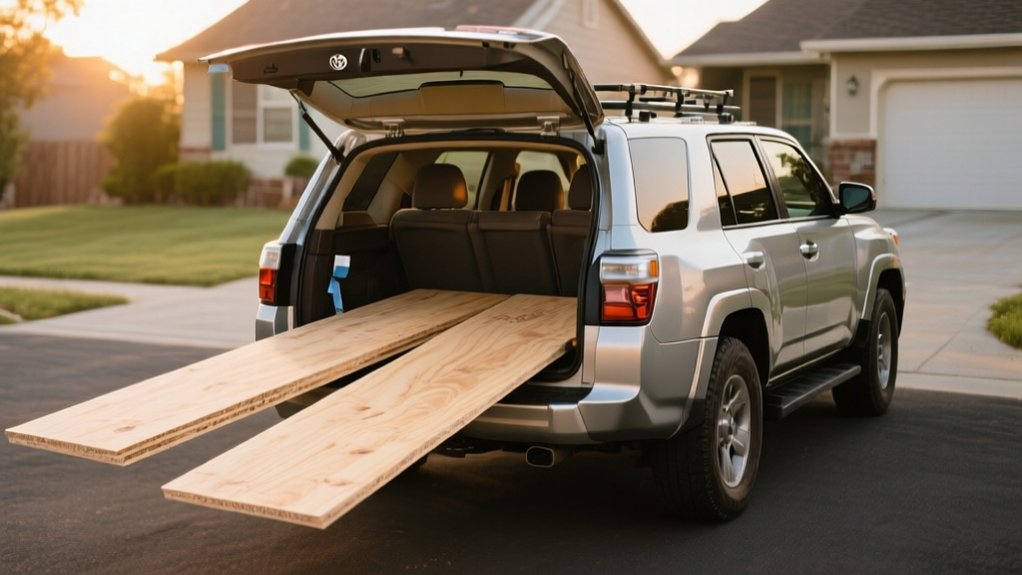
You can fit 4×8 plywood in your Toyota 4Runner only by folding the rear seats and angling or tilting the sheet, as the interior width is limited by wheel wells and tailgate design.
You’ll likely need to keep the tailgate down and secure the plywood with ratchet straps to prevent shifting during transport.
Driving below 35 mph improves safety.
For detailed loading tips, potential risks, and alternative hauling solutions, keep exploring how to manage plywood transport effectively in your 4Runner.
Key Takeaways
- A full 4×8 plywood sheet cannot lie flat inside a Toyota 4Runner due to interior width limitations and wheel well intrusions.
- Angling or tilting plywood with the tailgate down is usually necessary for safe transport of full sheets.
- Use multiple ratchet straps front-to-back and side-to-side to securely fasten plywood and prevent shifting during transit.
- Driving at speeds below 35 mph is recommended to reduce risk of load detachment or shifting while hauling plywood.
- Consider alternatives like pickup truck beds, utility trailers, or delivery services for easier and safer plywood transport.
How Much Cargo Space Does a Toyota 4Runner Really Have?
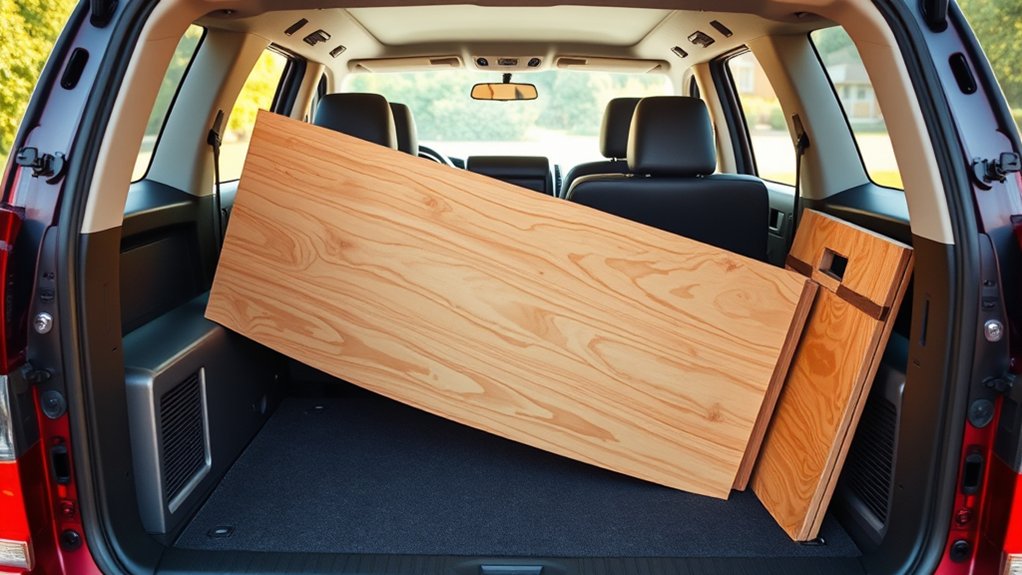
How much cargo space does a Toyota 4Runner really offer for hauling large items like plywood? With the rear seats folded down, you get up to 89.7 cubic feet of cargo space, giving you plenty of room for bulky materials.
However, the tailgate opening width is about 48.5 inches, which limits the width of items you can load without them protruding. When the rear seats are upright, cargo space drops to around 46.3 cubic feet, so your hauling capacity is significantly reduced.
The cargo area’s height allows for some stacking, but wheel well intrusions can make securing oversized loads like plywood sheets tricky. Overall, the 4Runner offers versatile cargo space, but its dimensions mean you’ll need thoughtful loading strategies for large construction materials.
Can a Full 4×8 Plywood Sheet Fit Inside a 4Runner With Seats Folded?
You probably won’t be able to fit a full 4×8 plywood sheet flat inside your 4Runner, even with the seats folded down. The main issue is that the interior width gets limited by the wheel wells, so there’s just not enough room side to side.
Even though folding the seats helps maximize the length, it still falls short of the full 8-foot length you’d need to fit the sheet perfectly. So, to get the plywood in safely, you might need to angle it a bit or use the tailgate down method. Just make sure to secure it well so it doesn’t shift during the drive!
Interior Dimensions Limits
Fitting a full 4×8 plywood sheet inside a Toyota 4Runner is tricky because of the interior width, which measures about 48.5 inches at the tailgate. That’s just a bit narrower than the 48-inch width of the plywood.
The wheel wells also cut into the usable cargo space, making it even harder to lay the sheet flat inside. Folding down the rear seats helps extend the cargo length, but the width still stays tight.
Usually, you’ll need to keep the tailgate open to carry the sheet outside the vehicle safely. This setup lets you transport the plywood but doesn’t fully enclose it inside the 4Runner.
Knowing these interior size limits is key for planning how to carry a full sheet without damaging it or risking safety.
Seat Folding Configurations
Although folding down the rear seats in a Toyota 4Runner greatly expands the cargo area, the vehicle’s interior width and wheel well intrusions still prevent a full 4×8 plywood sheet from fitting flat inside.
The 4Runner’s seat folding configurations create a larger, mostly continuous cargo floor, but the 48.5-inch tailgate opening and wheel well protrusions impose strict dimensional limits.
These constraints mean that standard 4×8 sheet goods cannot lay flat without overhang or tilting. While folding seats maximizes available length and height, it doesn’t resolve width restrictions caused by wheel wells.
To transport full sheets, you’ll often need to combine seat folding with external options such as roof racks or tailgate support, since the interior alone doesn’t accommodate full 4×8 plywood sheets flat and fully enclosed.
Plywood Sheet Maneuvering
Expanding the cargo area by folding down the rear seats opens up more space, but hauling a full 4×8 plywood sheet inside a Toyota 4Runner is still tricky because of width constraints and wheel well intrusions.
The maximum width at the tailgate is about 48.5 inches, which is narrower than the 48-inch plywood when you take into account the wheel wells that stick into the cargo area.
These wheel wells prevent you from laying the sheet flat, increasing the risk of bending or snapping it if you don’t have proper support.
You can carry the plywood with the tailgate down, but you’ll need to carefully balance and secure the load, often using ratchet straps.
If you frequently transport full sheets, it might be better to consider options like a utility trailer or a pickup truck to ensure safety and avoid damage.
What Challenges Do Wheel Wells and Tailgate Design Create When Hauling Plywood?
Since the Toyota 4Runner’s wheel wells are narrower than a standard 4×8 plywood sheet, you can’t load the plywood flat without significant overhang. The wheel wells intrude into the cargo area, reducing usable width and making you angle or tilt the plywood to fit.
The tailgate design also presents height constraints. With an opening around 48.5 inches wide, it limits stacking or vertical placement of plywood when closed. This often means plywood extends beyond the tailgate boundary, so you have to handle it carefully.
These design factors make hauling more complicated because of the reduced interior width and limited tailgate clearance. Knowing these challenges helps you plan loading strategies that minimize damage or shifting caused by the wheel wells and tailgate restrictions.
How Do You Safely Load and Secure Plywood Inside a Toyota 4Runner?
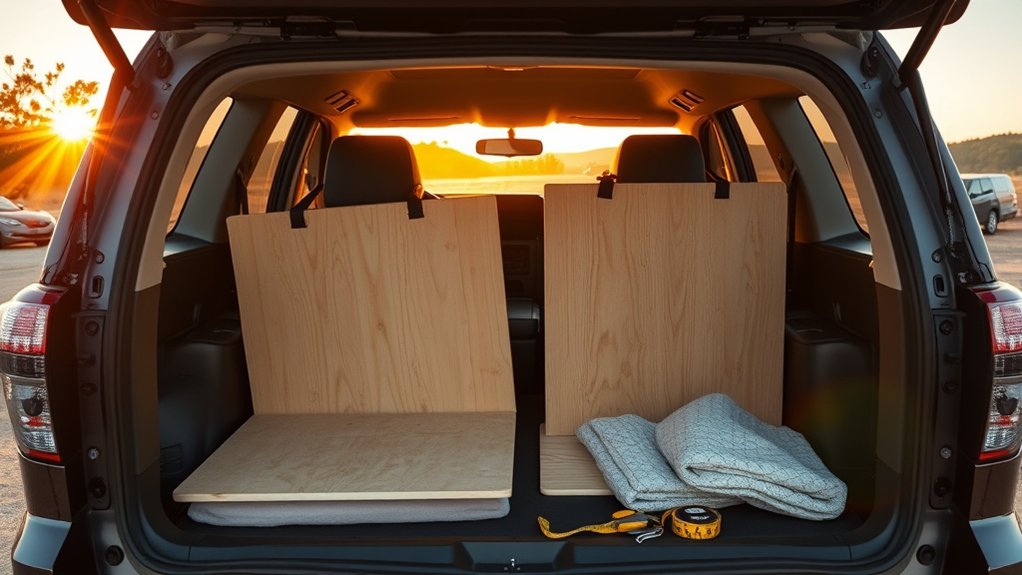
First, it’s a good idea to measure the inside of your 4Runner carefully. Make sure to check the width of the tailgate opening—it’s about 48.5 inches—so you know the plywood will fit without sticking out too much.
Once you have your measurements, place the plywood inside, making sure it lies flat. To keep everything secure and prevent any shifting during the drive, use ratchet straps. Attach them both front-to-back and side-to-side, tightening them snugly but not so tight that you damage the plywood or the vehicle.
It’s also smart to add some support materials like moving blankets or pieces of lumber around the plywood. This helps protect your vehicle’s interior from scratches or dents. And remember, for safety, try to keep your speed at or below 35 mph while transporting the plywood. That way, everything stays secure and you get to your destination safely.
Interior Space Measurements
Loading full 4×8 sheets of plywood inside a Toyota 4Runner requires careful attention to the vehicle’s interior dimensions. The maximum interior width between the wheel wells is about 48.5 inches, which is narrower than the 48-inch plywood width, making a flat, full-width fit tricky.
You’ll need to angle or slightly overlap the sheets to fit them in. When placing the plywood, make sure it lies flat against the cargo floor with the tailgate fully closed to avoid bending or damage.
Using supports like notched 2x6s helps spread the weight evenly and reduces stress on the plywood. Always measure your specific model’s interior space before loading, since variations can happen.
Getting the right fit is key for safe transport and preventing damage.
Securing Methods And Tools
Although fitting full 4×8 plywood sheets inside a Toyota 4Runner can be tricky because of its limited tailgate width of 48.5 inches, securing the plywood properly is really important for safe transport. Use ratchet straps as your main securing method—one running lengthwise and two crossing side to side—to prevent any shifting.
Place moving blankets or L-brackets underneath the plywood to protect your interior and help distribute the weight evenly. For extra stability, think about building a wooden support frame with 2x4s to stop the plywood from bending or snapping during the trip.
Always double-check that everything is secure before you start driving. This way, you can be confident your load won’t shift or cause any issues on the way.
Safety Precautions And Tips
Securing plywood inside your Toyota 4Runner starts with properly positioning the sheets. Make sure the tailgate is lowered to fit the full 4×8 size since interior space is limited by the wheel wells. To follow essential safety precautions, take these steps:
- Use ratchet straps running front to back and side to side to firmly secure the plywood and prevent movement during transit.
- Place moving blankets underneath the sheets to protect both the vehicle’s interior and the plywood from scratches or dents.
- Check the load stability before driving, and limit your speed to around 35 mph to reduce the risk from the heavy, shifting plywood.
Implementing these safety precautions guarantees stable transport and helps preserve your vehicle and materials.
Can You Safely Haul Plywood on a 4Runner Roof Rack?
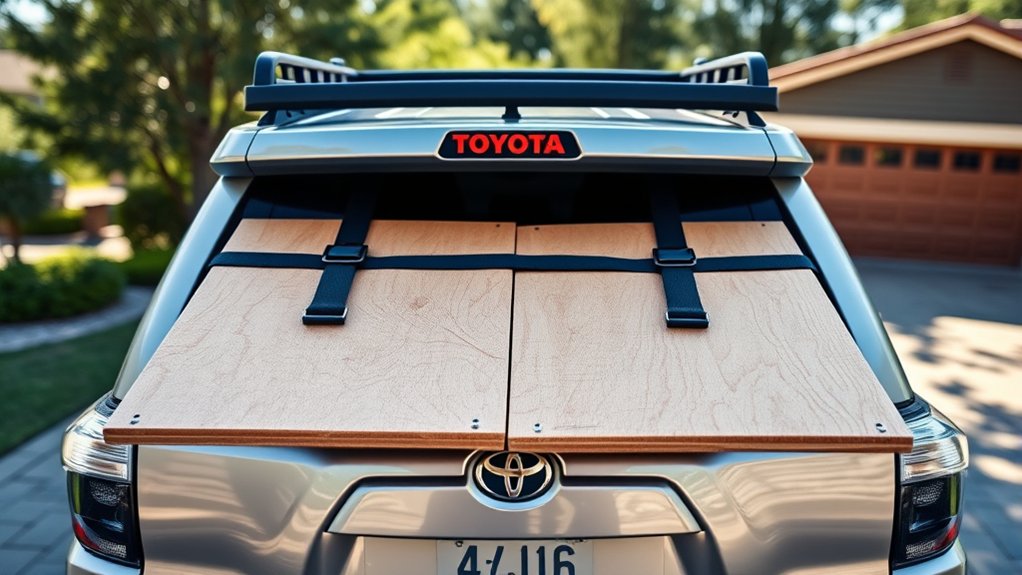
How can you safely transport 4×8 plywood sheets on a Toyota 4Runner roof rack without compromising stability or exceeding weight limits? First, keep in mind that a 3/4-inch plywood sheet weighs about 60 pounds, and the roof rack’s recommended capacity is between 200 and 300 pounds.
Distribute the weight evenly to avoid overloading. Secure the plywood with ratchet straps—one in the front to back and two on the sides—to prevent shifting during the drive. Placing 2x4s on top of the sheets adds extra support, making everything more stable.
Avoid high speeds; stay under 35 mph to reduce the risk of the plywood coming loose. While hauling plywood on the roof rack is possible, always check your specific model’s weight limits before loading up.
If you’re planning to transport heavy loads often, consider using a trailer or truck bed for a safer and more practical option.
What Are the Risks of Hauling Plywood on the Roof or Tailgate?
When you haul plywood on the roof or tailgate of your Toyota 4Runner, there are several risks that can affect safety and vehicle control. Going over the 200-300 lbs roof rack limit or not securing the load properly makes these risks much worse.
One big concern is detachment. Plywood can come loose at speeds above 35 mph, which can be dangerous for you and others on the road.
Another issue is load shift. If the sheets aren’t secured well, they may move during braking, leading to a loss of control or accidents.
Structural stress is also a risk. Uneven weight or poor strapping can bend the plywood and strain the rack, risking damage to your vehicle.
To help prevent these problems, use multiple ratchet straps and make sure the weight is balanced. Ignoring these tips can increase danger and liability while driving.
What Are Better Alternatives to Hauling Plywood Inside or on the Roof?
Considering the hazards and limitations of hauling plywood on your Toyota 4Runner’s roof or tailgate, it’s smart to look for safer and more efficient ways to transport it. Renting a utility trailer gives you plenty of space for 4×8 sheets, reducing the risk of damage or instability.
Alternatively, box store truck rentals are an affordable option for local transport of full sheets. If you don’t want to drive, many lumber yards offer delivery services, bringing sheets directly to your location and ensuring they’re handled properly.
Using a pickup truck bed is another great choice. It can fit full sheets comfortably without compromising safety or stability. These methods lower the chances of plywood falling off or getting damaged, making them safer and more practical than rooftop or tailgate hauling.
How Do Toyota 4Runner Owners Haul Plywood Successfully?
Successfully hauling 4×8 plywood sheets in a Toyota 4Runner requires some planning and good securing techniques. Many owners use the tailgate-down method, similar to what you see in Tacoma trucks, but you need to adjust and secure the load properly.
Here’s how you can do it:
First, place moving blankets under the plywood to prevent damage. Support the sheets with 2x4s to boost stability and keep everything in place.
Next, use ratchet straps to tightly secure the plywood. Attach them to the roof rack or tailgate area, making sure the weight is evenly distributed.
Finally, drive carefully and keep your speed below 35 mph. This helps prevent load shifting and reduces the risk of anything coming loose.
Frequently Asked Questions
What Tools Are Recommended to Protect Plywood From Scratches During Transport?
You’ll want moving blankets or foam padding to cushion the plywood and prevent scratches. These soft materials help protect the surface during transport.
Use structural lumber like 2x4s to distribute weight evenly and reduce direct contact with your vehicle. It’s a simple way to keep the plywood safe.
L-brackets with adjustable holes can secure the plywood without causing friction. They’re great for holding the sheets steady without scratching.
Wrap the edges with protective tape to avoid abrasions. This extra layer helps keep the corners and edges intact.
Finally, employ ratchet straps with soft tie-downs to firmly hold the load while safeguarding the surface from damage during transport.
How Does Weather Affect Plywood Transport in a 4runner?
Weather can be a wild beast when transporting plywood in your 4Runner. Rain and snow soak plywood, causing warping unless you cover it well.
High winds can rip unsecured sheets right off the roof rack, so make sure to strap everything tight. Heat breaks down adhesives, weakening plywood, while cold makes it brittle and prone to cracking.
Use tarps or weather-resistant covers to shield plywood from moisture and temperature extremes. This way, it arrives in perfect shape.
Can Plywood Damage the Interior Upholstery of a 4runner?
Yes, plywood can damage your 4Runner’s interior upholstery if you’re not careful. The weight and sharp edges might cause scratches, tears, or dents, especially on the carpet and seats.
To keep your interior safe, use moving blankets or tarps and secure the plywood tightly so it doesn’t shift during transit. These steps help prevent scuff marks and pressure damage.
Taking these precautions will help keep your upholstery in good shape while transporting plywood.
Are There Aftermarket Accessories to Improve Plywood Hauling in a 4runner?
Like adding rocket boosters to your car, aftermarket accessories can really boost your plywood hauling in your 4Runner. You might want to check out Sherpa Crestone roof racks for more support.
Using L-brackets to customize the rack width and securing your load with ratchet straps can make a big difference. Inside, adding milk crates or structural lumber helps prevent bending.
Specialized tie-down systems and load stabilizers also help keep everything secure. Overall, these upgrades make your plywood transport safer, more stable, and damage-free.
How Often Should You Inspect Straps and Supports When Hauling Plywood?
You should check straps and supports before every use to make sure there’s no fraying or damage that could weaken them.
After each long trip or when hauling heavy plywood loads, take a moment to inspect for wear or instability.
Don’t forget to regularly assess your roof rack and attachment points too.
Staying vigilant with these checks helps keep your load secure and prevents accidents caused by equipment failure during transport.
Conclusion
Hauling a 4×8 plywood sheet in your Toyota 4Runner can be like fitting a square peg in a round hole. It’s tight but not impossible. You’ll need to fold seats flat, navigate wheel wells, and secure the load carefully to prevent damage.
Roof racks are an option but come with risks, especially at high speeds. For safer and more efficient transport, consider using a trailer or professional delivery services. This helps protect both your plywood and your 4Runner.