How Much Does It Cost To Wrap A 4runner – Numbers to Know
You can expect to spend between $2,500 and $4,500 to fully wrap your Toyota 4Runner, with premium options reaching up to $5,000.
Labor usually makes up 40-60% of the total cost, depending on the design complexity and surface prep needed.
Material quality also affects the price—going for premium vinyl can add an extra $500 to $1,000.
Extras like paint protection will add to the overall cost.
Knowing these different components can help you plan your budget better, and exploring further can show you what impacts your wrap’s final price.
Key Takeaways
- Full vinyl wrap for a Toyota 4Runner typically costs between $2,500 and $4,500 depending on material and design complexity.
- Premium vinyl wraps, including high-quality films like 3M 2080, can increase costs up to $5,000.
- Labor accounts for 40-60% of total cost, ranging from $1,000 to $2,400 based on installation difficulty and surface prep.
- Complex designs and multi-color graphics can add 25-35% more labor time and $150-$300 in pre-production fees.
- Additional services like paint protection film add $500 to $1,000, increasing the overall wrap budget.
How Much Does It Cost to Wrap a Toyota 4Runner?
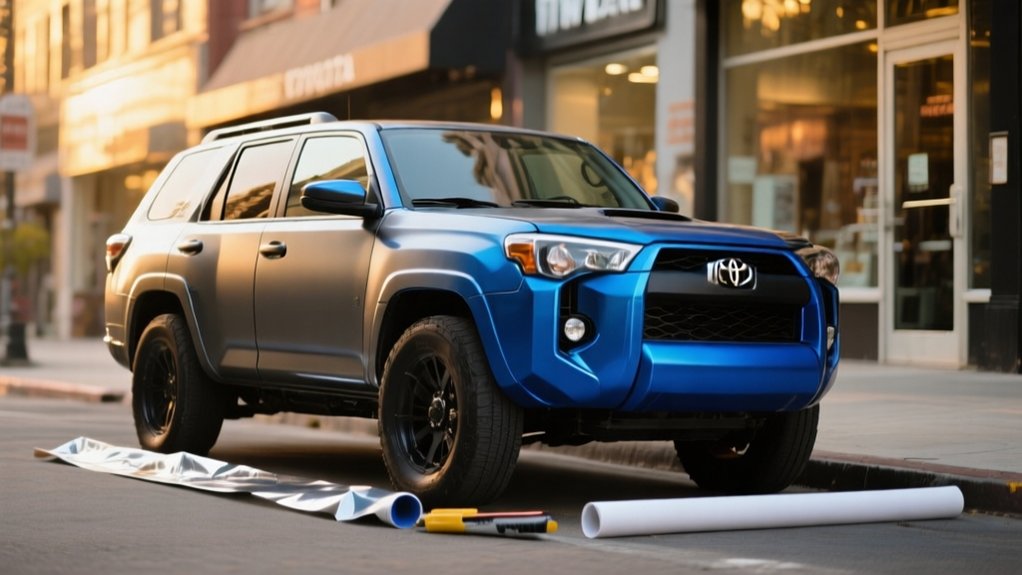
How much does it cost to wrap a Toyota 4Runner? Typically, you’ll spend between $2,500 and $4,500 for a full vinyl wrap on a 4Runner, depending on the material and finish quality. Standard cast vinyl costs about $2.50 to $4.00 per square foot, and since the 4Runner’s surface area is roughly 250 to 300 square feet, labor and installation fees add to the total.
Premium wraps like matte, chrome, or textured finishes cost more, sometimes pushing the total up to $5,000. Installation usually takes 2 to 4 days, which impacts labor charges. You should also consider warranty coverage, which varies by installer but generally lasts from 3 to 7 years.
This cost range reflects current market pricing and professional standards.
Key Factors That Affect 4Runner Vinyl Wrap Costs
When you’re looking at vinyl wrap costs for your 4Runner, one of the big things that can bump up the price is the quality of the vinyl itself. Premium films, for example, can be up to 40% more expensive than the standard options. So, if you’re going for the highest quality, be prepared for that extra cost.
Another factor to keep in mind is the complexity of your wrap design. If you’re thinking about intricate patterns or multiple color shifts, it can really add to the labor time—sometimes by 25-35%. That means more hours for the installer, which translates to higher expenses. Knowing these technical details can help you better predict and manage your overall wrap budget for your 4Runner.
Material Quality Variations
Although the overall cost to wrap your 4Runner depends on multiple factors, material quality plays a key role in the final price. Higher-grade vinyl offers better durability, color retention, and ease of installation, which affects both the initial cost and long-term value.
Cheaper materials might save you money upfront but often need replacement or repairs sooner, increasing your total cost over time. Important variables include:
- Thickness: Premium films usually range from 3 to 4 mils, making them more resistant to tears and UV damage.
- Adhesive Technology: Advanced adhesives ensure a better surface fit and longer-lasting bonds.
- Finish Options: Matte, gloss, satin, and textured finishes influence the material cost and how complex the application is.
Choosing the right material is about balancing your initial investment with how long it will last and the look you want.
Design Complexity Impact
Material quality sets the foundation for your 4Runner wrap, but design complexity greatly influences labor time and overall cost. Intricate patterns, multi-color gradients, and custom graphics require precise alignment and additional cutting, increasing installation hours by 20-40% compared to solid colors.
Complex designs also demand advanced software for accurate layout mapping, which raises pre-production costs by about $150-$300. Elements like logos or text must be carefully positioned to avoid distortion on curved surfaces, adding more labor time.
If your design involves partial wraps or layered vinyl, expect extra charges ranging from $200 to $600 due to the additional material handling and surface prep. The more detailed and customized your design, the higher the labor and total expense, often making up 30-50% of the final wrap price.
How Vehicle Size and Condition Influence Wrap Prices
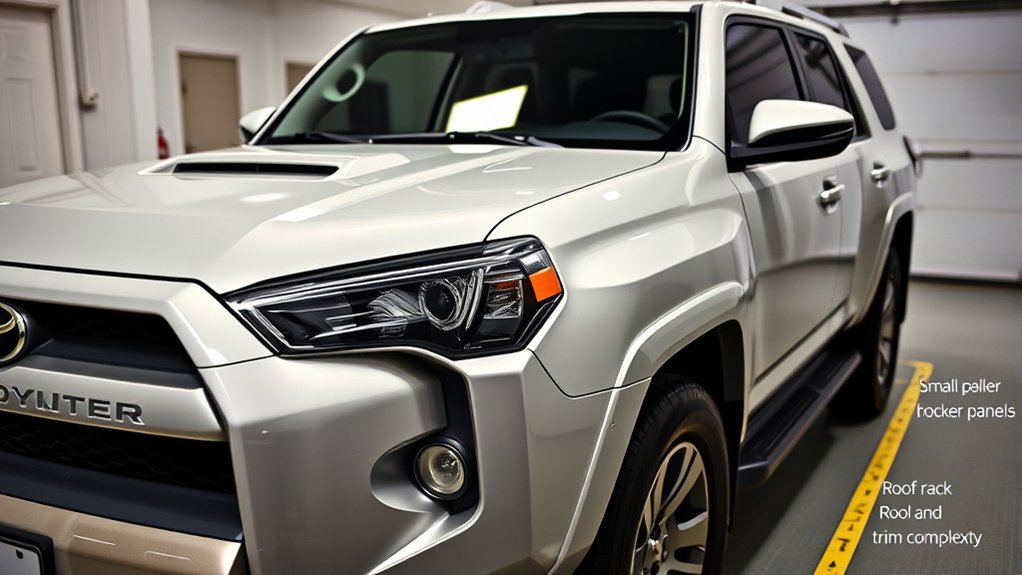
When you’re wrapping your 4Runner, the size of the vehicle really matters because it directly impacts how much vinyl you’ll need. Bigger vehicles mean more material, which can bump up the cost.
Plus, you’ve got to think about the condition of the surface. If there are dents or rust, it’ll require some extra prep work to get everything smooth and ready, and that means more labor.
All these things—size and surface condition—come together to influence the overall cost of the wrap, since they affect both the amount of material used and the time it takes to do the job.
Vehicle Dimensions Impact
The dimensions and condition of your 4Runner directly affect the total cost of a vehicle wrap. Larger surface areas require more vinyl material, which increases expenses proportionally. Your 4Runner’s length, height, and width determine the square footage to cover, impacting labor time and material use. For example, a standard 4Runner’s surface area usually falls between 150-180 square feet, influencing wrap costs accordingly.
Key dimension factors include:
- Overall vehicle size: Bigger SUVs like the 4Runner need more vinyl than smaller cars, raising material costs.
- Complex contours: Curves and edges can increase installation time and labor expenses.
- Panel count and accessibility: More panels mean more seams, requiring precise cuts and extra work.
Understanding these dimension-based factors helps you estimate your wrap budget more accurately.
Surface Condition Effects
Although vehicle size matters, the surface condition of your 4Runner directly impacts wrap costs by affecting preparation and installation complexity. A smooth, well-maintained surface minimizes labor time and reduces repair needs, keeping costs close to the usual $2,500 to $3,500.
If your 4Runner has dents, scratches, or rust, expect extra fees from $200 to $800 for surface restoration. These issues require sanding, filling, or priming to ensure good vinyl adhesion and durability.
Uneven surfaces also make installation trickier, increasing labor hours by 10-25%. This can add another $300 to $700 to the final price.
Assessing your vehicle’s condition beforehand helps you anticipate the necessary prep work and avoid surprises in costs.
Wrap Material Requirements
Since your 4Runner’s size and surface condition directly determine the amount and type of vinyl needed, wrap material costs fluctuate accordingly. Larger SUVs like the 4Runner require more square footage—typically 50 to 70 square feet of high-quality cast vinyl—to cover all panels.
Surface imperfections can necessitate specialty films or additional layers, which will increase material expenses. You’ll also pay more if you choose textured or specialty finishes, such as matte or carbon fiber, which cost 20-30% more than standard gloss vinyl.
Key factors influencing material costs include vehicle dimensions, surface condition, and the type and finish of vinyl you select. Understanding these details helps you budget accurately for your wrap project.
Vinyl Quality and Its Impact on 4Runner Wrap Costs
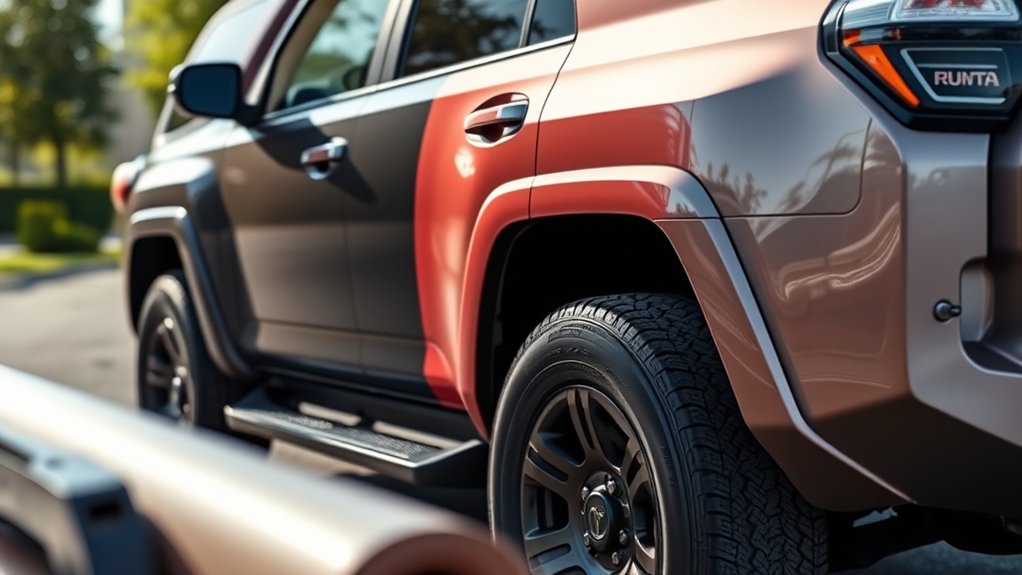
Vinyl quality directly influences both the durability and cost of wrapping your 4Runner. Premium cast vinyl, like 3M 2080 or Avery Dennison Supreme Wrapping Film, costs between $500 and $1,000 more than calendared vinyl. But it offers better conformability and a lifespan of 7 to 10 years.
In contrast, calendared vinyl costs less upfront but usually lasts only 3 to 5 years and can crack on complex curves. Thickness also matters: thicker films, around 3.5 to 4 mils, give better protection and longevity but increase material costs by about 15-20%.
High-quality vinyl features advanced adhesive technology, which helps reduce installation time and lowers the risk of failure. This can save you money on labor in the long run. Choosing the right vinyl helps you balance your initial investment with long-term value and durability for your 4Runner wrap.
Design Complexity and Wrap Cost Factors
When you choose a complex design for your 4Runner wrap, the cost can go up significantly due to more labor and material needs. Intricate patterns need precise cutting, alignment, and multiple overlay layers, which adds to the installation time. Plus, specialty finishes like matte, satin, or chrome can make the process even more expensive.
Complex 4Runner wraps increase costs with detailed cuts, overlays, and specialty finishes like matte or chrome.
The size of the wrap’s surface area and the shape of the curves also affect how much labor is involved. More complex contours require special techniques to avoid bubbles and creases, making the installation trickier.
Key design complexity factors that impact cost include detailed graphics and multi-color layers. These require careful printing and application, which can boost labor hours by up to 30%. Curved and irregular body panels also need advanced skills to ensure a smooth look.
Specialty vinyl finishes, like matte or chrome, tend to cost 20 to 50 percent more than standard gloss films. This is due to both the higher material cost and the extra effort needed during installation.
Understanding these factors helps you plan better and budget accurately for your 4Runner wrap project.
DIY vs. Professional 4Runner Wrap: What Costs More?
Understanding how design complexity impacts material and labor costs helps compare DIY versus professional 4Runner wraps.
When you do it yourself, you mainly pay for vinyl material—usually $300 to $700—and tools. There’s no labor cost if you handle it on your own.
But keep in mind, mistakes can be costly. Errors might lead to vinyl waste or damage, which adds to the overall expense.
Professional wraps cost between $2,000 and $4,000. This includes premium vinyl, expert installation, and a warranty.
Pro installers handle complex designs efficiently, reducing waste and making sure the wrap lasts longer.
If you don’t have experience, saving on labor with a DIY might not be worth the risk. Quality and durability could suffer.
Extras That Increase 4Runner Wrap Costs
Although the base cost of wrapping your 4Runner covers the essential materials and labor, several extras can greatly increase the total price. These additions often involve specialized materials, extra labor, or intricate detailing, which push costs beyond the standard $2,000–$4,000 range.
For example, complex color-shifting or textured wraps need premium vinyl and careful application, which increases both material and labor costs. Custom graphics or logos also require extra design time and precise cutting.
Surface preparation, like paint correction or dent removal, adds to the overall labor hours.
Key extras that impact your 4Runner wrap cost include premium or specialty vinyl films such as carbon fiber or matte chrome. Extensive surface prep, including sanding, cleaning, or repairs, can also add up.
Custom graphics, logos, or layered designs are additional costs that can run several hundred to over a thousand dollars more.
Budgeting Tips for Your Toyota 4Runner Vinyl Wrap
Three key factors can help you effectively budget for your Toyota 4Runner vinyl wrap: material selection, labor costs, and additional services. Choosing high-quality vinyl like 3M or Avery Dennison affects durability and price, typically ranging from $2,500 to $4,000 for a full wrap.
Labor expenses vary based on the installer’s expertise and your location. They often make up 40-60% of the total cost. Additional services such as paint protection film or custom designs will also add to your budget.
| Factor | Budget Range |
|---|---|
| Premium Vinyl | $1,200 – $2,000 |
| Labor Costs | $1,000 – $2,400 |
| Paint Protection | $500 – $1,000 |
| Custom Graphics | $300 – $800 |
Plan ahead by focusing on vinyl quality and choosing experienced installers to get the best results within your budget.
Frequently Asked Questions
How Long Does a Vinyl Wrap Last on a Toyota 4runner?
A vinyl wrap on your Toyota 4Runner usually lasts about 5 to 7 years if you take good care of it.
Things like sun exposure, weather, and how you maintain it can influence how long it stays looking great.
Using high-quality vinyl and having it professionally installed can help it last longer.
Regularly washing with mild soap and avoiding rough scrubbing keeps the wrap in good shape.
Parking in shaded spots is also a smart move to cut down on sun damage.
This helps the wrap keep its look and stickiness over time.
Can a Vinyl Wrap Protect the 4runner’s Paint From Scratches?
Sure, if you want your 4Runner to withstand a toddler’s tantrum or a ninja squirrel attack, a vinyl wrap isn’t magic armor.
However, it does add a thin, durable layer—typically 3-4 mils thick—that can reduce minor scratches and UV damage.
It’s not bulletproof but offers measurable protection against abrasions, preserving your paint’s integrity.
Just don’t use it as an excuse to go off-roading like a demolition derby champ.
What Maintenance Is Required for a Vinyl-Wrapped 4runner?
You’ll need to wash your vinyl-wrapped 4Runner regularly with a mild detergent and a soft cloth or sponge to avoid scratching the wrap.
Avoid using pressure washers over 1200 psi, and keep the water temperature below 140°F to prevent damage to the adhesive.
Stay away from waxes or solvents that contain petroleum distillates, as they can harm the vinyl.
Check the wrap for lifting edges every month, and fix any damage quickly to keep it looking good.
Proper maintenance can help your wrap last 5 to 7 years under ideal conditions.
Is It Possible to Remove the Wrap Without Damaging the Paint?
Absolutely, you can remove a vinyl wrap without damaging your 4Runner’s paint. It’s like performing a delicate surgery. Using heat guns and proper peeling techniques, professionals ensure the vinyl lifts cleanly, especially if the wrap hasn’t been on longer than 3-5 years.
Paint protection films and high-quality OEM paint also help reduce the risk. But keep in mind, improper removal or older wraps might leave adhesive residue or cause minor paint issues.
How Does Weather Affect the Durability of a 4runner Vinyl Wrap?
Weather really impacts how long your 4Runner’s vinyl wrap lasts. UV rays speed up fading and make the vinyl more brittle, cutting its lifespan by up to 30%.
Extreme temperatures cause the wrap to expand and contract, which can lead to bubbling or adhesive failure. High humidity can weaken the glue, especially if moisture gets underneath.
To keep your wrap looking good longer, clean it regularly, apply UV-resistant coatings, and park in the shade whenever you can. These tips can help extend its life beyond the usual 5 to 7 years.
Conclusion
Wrapping your 4Runner is like fitting a custom suit—it’s all about precision, quality materials, and expert skills. Costs can vary a lot depending on the vehicle size, vinyl quality, design complexity, and if you’re doing it yourself or hiring pros.
Typically, you’ll spend between $2,000 and $5,000, but extras can bump that number up. Understanding these factors and planning ahead will help ensure your wrap turns out durable and looks professional.
This way, you get a high-quality finish without any surprise costs along the way.