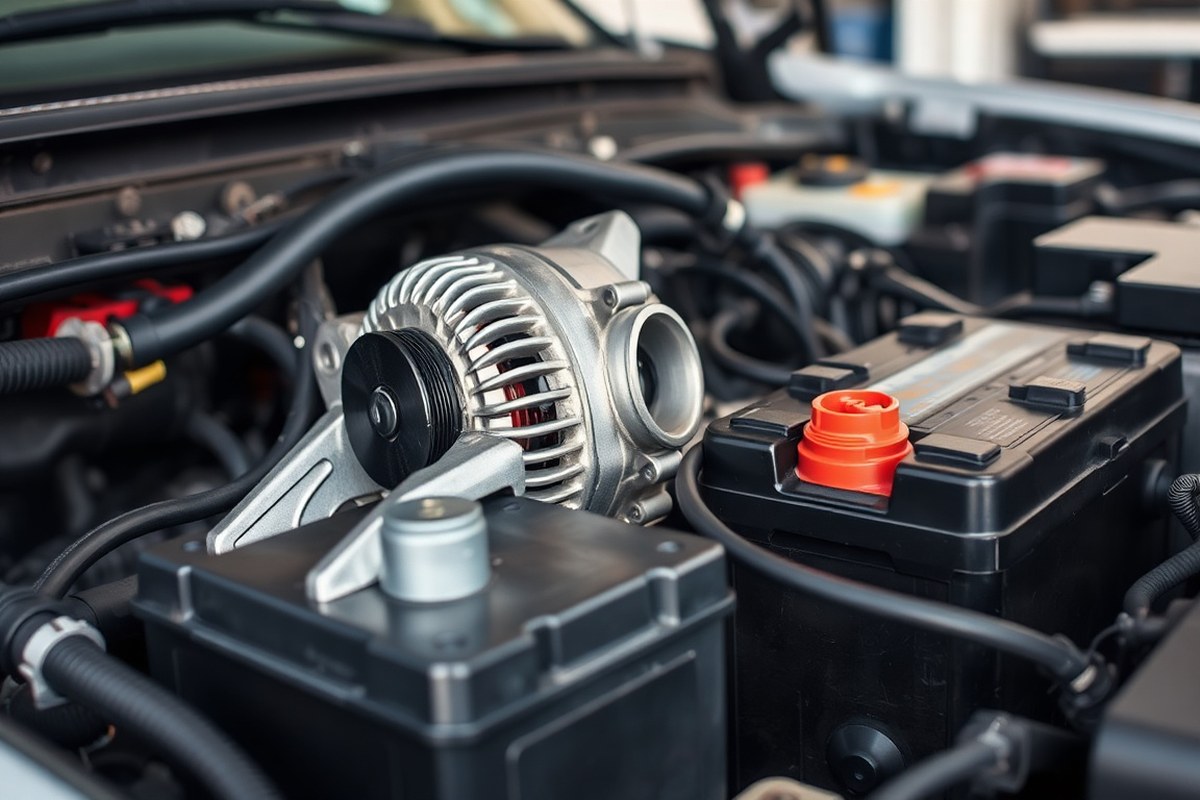
Can an Alternator Drain a Battery? A Complete Guide with Tests & Prevention
A bad alternator can drain your car battery. It might not recharge the battery properly.
At times, your vehicle draws power with the engine turned off. This unwanted draw can fully drain the battery, leading to issues.
Usually, a bad alternator drains batteries due to backward current flow. This happens because of bad diodes or regulator problems. These faults let current flow the wrong way and waste power.
When this happens, your battery loses charge overnight or even while driving. You should watch your voltage meter closely. Below 13.7 volts often points to alternator trouble.
Start by testing your alternator’s output voltage with a multimeter. Checking for parasitic draw while the engine is off also helps pinpoint the problem. Catching a faulty alternator early prevents frequent battery replacements and unexpected breakdowns.
Key Takeaways
- Check alternator voltage; readings below 13.7 volts suggest poor charging.
- Test for parasitic draw to spot current drain when the car is off.
- Bad diodes in the alternator cause reverse current that drains the battery.
- Alternator regulator faults can make the alternator draw power instead of supply it.
- Replace worn alternator belts between 50,000 and 100,000 miles to avoid issues.
- Recalibrate the battery management system after replacing the alternator to prevent sulfation.
Can an Alternator Drain a Battery? What You Need to Know

A faulty alternator can cause your car battery to drain quickly. This happens when the alternator doesn’t recharge the battery while the engine runs. Without enough charge, the battery loses power and dies over time.
Another way a bad alternator drains the battery is through its diodes. Diodes are supposed to stop current from flowing backward. When alternators fail, they can leak electricity from the battery.
This drain occurs even when the engine is switched off. That wasted current weakens the battery. This causes a slow but steady battery drain.
The voltage regulator inside the alternator may also fail. The alternator may get stuck in the “on” position. It then keeps drawing power nonstop from the battery.
The battery drains faster when the alternator pulls power with the engine off. This constant draw wears down the battery’s charge quickly. It cuts into your battery life.
Battery drain due to a faulty alternator not charging while driving is easier to spot. You might find the car struggles to start after some short trips.
But the drain while the engine is off can take longer to notice. The battery weakens overnight or after a few days of not driving.
Fixing this requires careful electrical testing. Use a multimeter to check battery drain after turning off the car. This tests if current is leaking from the battery.
It helps spot a faulty alternator or other electrical issues. Another test measures the alternator’s charging voltage while running.
Normal charging is between 13.5 and 14.8 volts. Anything consistently below or above could mean trouble.
Replacing diodes or the voltage regulator can often stop the drain. In some cases, the whole alternator must be swapped out.
Costs vary but expect anywhere from $150 to $500 depending on parts and labor. Catching the problem early saves a battery’s life and avoids being stranded with a dead battery.
How the Alternator and Battery Work Together in Your Car

Basic Role of the Alternator and Battery
The alternator and battery share the job of powering your car’s electrical system. The battery stores electricity and starts the engine. Once running, the alternator supplies electricity to the car and recharges the battery.
This teamwork ensures you have power for lights, radio, and engine controls. Without the alternator charging the battery, the battery will drain and eventually die.
How the Alternator Charges the Battery
The alternator gets power from the engine through a belt. It converts engine power into electrical energy. This current flows to the battery to recharge it while the car runs.
A voltage regulator inside the alternator controls the output to avoid overcharging or undercharging. Good charging keeps the battery healthy and prevents early failure.
What Voltage to Expect from a Healthy Alternator
A properly working alternator produces between 13.8 and 14.4 volts at idle. Measuring voltage at the battery terminals while the engine runs shows this. Voltages below 13.7 volts suggest the alternator is not charging fully.
Values over 15 volts can also harm the battery and electrical parts. Use a multimeter or battery tester to check charging voltage.
Do this when the engine idles around 1500 RPM. Make sure the reading is steady and accurate.
Charging’s Effect on Battery Lifespan
Keeping your battery fully charged extends its life by preventing sulfation and power loss. A battery left undercharged will drain slowly and weaken. Over time, this leads to dead cells and starter problems.
Charging issues caused by a failing alternator can cause frequent battery replacements and unexpected breakdowns. Consistent voltage between 13.8 and 14.4 volts protects the battery and car electronics.
Monitor and Maintain the Charging System
Testing your battery voltage with the engine on and off helps spot issues early. Resting voltage below 12 means the battery is weak or failing. Test the battery further to confirm this condition.
Consider replacing the battery if it can’t hold charge.4 volts or charging voltage falls outside the proper range, your alternator may need inspection. Routine checks cost little and save you in repair costs.
Keep alternator wiring secure and belts tight. Loose connections or worn belts reduce alternator output, harming battery health. A basic voltage test can reassure you the system works well.
Use a quality multimeter to check battery voltage with the engine running at 1500 RPM. This confirms your alternator’s health.
Common Causes of Battery Drain from a Faulty Alternator
The alternator has several parts that can cause battery drain if they fail. The diodes inside the rectifier are a common culprit.
They convert AC to DC current and should only allow current one way. Bad diodes let current flow backward, which drains the battery even when the engine is off.
The voltage regulator also plays a role. It controls the charging voltage sent to the battery. A faulty regulator can undercharge the battery.
It can also overcharge it. Both cause battery damage and eventual drain. Usually, a bad regulator causes charging voltage outside the 13.5 to 14.6 volts range at idle.
Loose or corroded wiring can create resistance and shorts, which also contribute to battery drain. A broken ground wire can lower the alternator’s charge. Loose battery cables hurt charging too.
Corroded terminals also reduce the battery’s charge. These poor connections can cause the alternator to work harder and overheat.
- Bad diodes allow reverse current flow to the battery.
- Voltage regulator faults cause improper charging voltage.
- Loose battery cables prevent proper charging.
- Broken ground wire disrupts electrical flow.
- Corroded terminals increase resistance and cause drain.
- Wrong battery terminal connections can blow alternator diodes.
- Wiring shorts produce parasitic draw on the battery.
Testing the alternator for AC ripple voltage can identify bad diodes. A healthy alternator produces low millivolts AC ripple. Higher AC ripple means diode failure, which needs alternator replacement.
Checking for charging voltage at idle reveals regulator problems, with a good range between 13.5 and 14.6 volts. Tightening and cleaning terminal connections is a simple yet effective fix.
Repairing or replacing these parts usually requires a mechanic’s tools and experience. Alternator replacements cost $300 to $500, depending on the vehicle. Minor wiring repairs and cleaning terminals might cost under $100 at a shop.
Fixes reduce battery drain and improve starting reliability. So it’s important to address these issues promptly.
Key Signs Your Alternator Is Causing Battery Problems
Watch for dashboard warning lights like the battery symbol or “ALT” light. These lights often signal your alternator isn’t charging the battery properly. They glow soon after you turn on the ignition or while driving.
Early electrical signs include dim or flickering headlights and slow engine cranks. The headlights may brighten when you rev the engine, then dim again at idle. This happens because the alternator voltage drops when it’s failing.
Check if the battery is weak by how the engine starts. Do this after the car sits overnight. Slow or no start can mean trouble.
The battery likely drained when the engine cranks slowly or doesn’t start. This happens when the alternator can’t keep up with your car’s power needs.
- Dimming or flickering headlights during normal driving
- Dashboard battery warning light or “ALT” light illuminated
- Engine starts slowly or struggles to turn over
- Electrical accessories (radio, power windows) act erratic
- Strange noises like whining or grinding from the alternator area
- Car stalls or hesitates to start after engine warm-up
These signs matter because they point to alternator failure before the battery dies completely. When your car runs, the alternator recharges the battery. A faulty alternator undercharges it, causing slow battery drain or immediate start failure.
You can find bad alternators by testing the battery charge. Check it after a long drive. A low charge suggests alternator trouble.
Use a multimeter to read around 13.5 to 14.5 volts at the battery terminals. Anything below 12.5 volts after driving usually means the alternator isn’t charging the battery right.
How to Test Alternator Output Voltage Correctly
Testing your alternator’s output voltage helps spot charging problems before your battery dies. Use a multimeter to check voltage at the battery terminals. Do this with the engine off first.
Then, check voltage again with the engine running. This check confirms if the alternator properly charges the battery or causes drain.
Required Tools for Testing Voltage Output
You’ll need a digital multimeter with a DC voltage range of at least 20 volts. Most auto parts stores sell basic multimeters for around $15 to $30. Gloves and safety glasses are good additions to protect yourself while working near the battery.
Make sure the multimeter’s test leads are in good condition and fully insulated. Loose or frayed wires can give inaccurate readings or create sparks.
Step-By-Step Voltage Measurement Process
Follow these steps carefully to check voltage safely and accurately. Turn off the engine to get a baseline battery voltage. Next, start the engine to check the charging system.
- Set your multimeter to DC voltage, on the 20V range if manual scale is needed.
- Put the black probe on the battery’s negative terminal. Then, attach the red probe to the positive terminal.
- Record the voltage with the engine turned off. Healthy batteries show about 12.4 to 12.7 volts.
- Start the vehicle and keep the engine at a steady idle around 1,000 RPM.
- Measure the voltage again at the battery terminals and note the reading.
- Observe the multimeter for voltage fluctuations, which can indicate diode or regulator issues.
- Turn off the engine and disconnect the probes safely, avoiding contact with metal parts.
Do not touch the metal tips of the multimeter probes together while testing. This can short the battery and cause sparks or damage.
Interpreting Voltage Readings and Common Voltage Ranges
A resting battery voltage between 12.4 and 12.7 volts usually means it’s fully charged. Below 12.4 volts, the battery may be undercharged or failing.
With the engine running, healthy alternators typically produce a charging voltage from 13.7 to 14.7 volts. This range ensures enough charging current without overcharging.
Voltage below 13 means the battery may not be charging well. Your alternator or battery might need a look.5 volts when running, the alternator may be failing or the drive belt could be loose. Voltages over 15 volts suggest a faulty voltage regulator, risking battery damage.
Performing a Parasitic Draw Test to Identify Alternator Drain
Setting Up the Multimeter for Parasitic Draw
Use a multimeter that can measure current in milliamps or amps. The test checks how much power drains from your battery when the car is off. This drain is called parasitic draw.
Start by turning off all car accessories and locking the doors. The engine and electronics must be completely off to get an accurate reading.
Step-By-Step Alternator Isolation During the Draw Test
To find out if the alternator is causing the drain, isolate it during the test. This means measuring current with and without the alternator connected. Follow these steps to isolate the alternator:
- Turn off the ignition and remove the key.
- First, set your multimeter to the highest amp setting. Then switch to a lower range if you need more accuracy. This helps protect your meter and gets better readings.
- Disconnect the negative battery cable to prevent current flow.
- Connect the multimeter leads in series between the negative battery post and cable.
- Record the baseline current draw with all systems off.
- Disconnect the alternator’s electrical connector or remove its fuse if accessible.
- Check the current draw again with the alternator isolated.
- Reconnect everything in reverse order after testing.
Thresholds for Acceptable Versus Excessive Draw
Normal parasitic draw varies, but it typically stays below 50 milliamps in modern cars. Values above this level suggest something is draining the battery strongly.
A failing alternator often shows values between 0.8 and 2.3 amps. Such high drain usually points to a bad rectifier or diode allowing current to leak back. Draw significantly lower with the alternator disconnected means the alternator causes the problem.
Preventing Battery Drain by Proper Alternator and Battery Maintenance
You should check your alternator and battery at least twice a year. Inspections catch issues like worn belts, loose connections, and corrosion early. Catching these problems saves you money by avoiding bigger repairs later.
Driving habits affect battery and alternator health more than most people realize. Frequent short trips don’t give the alternator enough time to fully recharge the battery. This can cause the battery to weaken and drain faster.
Proper maintenance helps prevent alternator-caused battery drain and keeps parts working longer. Here’s a checklist of practical steps to follow:
- Inspect alternator belts for cracks or wear every 6 months.
- Clean battery terminals and cable connections to avoid corrosion.
- Turn off electrical components like lights and radios when parked.
- Drive your car at least 20 minutes on the highway weekly to recharge fully.
- Repair or replace any damaged wiring as soon as you notice issues.
- Disconnect the battery if the vehicle won’t be used for over a month.
- Check and update ECU firmware on newer GM trucks to avoid electronic faults.
Checking alternator belts takes about 10 minutes and costs nothing if you do it yourself. Cleaning terminals needs a wire brush. You also need baking soda or a cleaner.
These cost just a few dollars. These small tasks improve electrical flow and prevent parasitic draw on the battery.
Good maintenance means stable voltage from the alternator, usually between 13.5 and 14.5 volts with the engine running. The battery won’t charge right without steady voltage from the alternator.
This can cause the battery to drain. Faulty wiring or connectors often cause voltage drops and need quick repair.
Following these steps can extend battery life by months or even years. Skipping maintenance risks your battery suddenly dying. You’ll get stranded.
Replacing it costs about $100 to $200. Regular care is low cost, low effort, and keeps your car reliable.
Common Diagnostic Mistakes and How to Avoid Them
Diagnosing battery drain often trips people up because several issues can cause similar symptoms. A weak ground connection or problems in the infotainment system often mimic alternator or battery faults. Checking these first can save you time and avoid replacing good parts unnecessarily.
Sulfated batteries and failing alternators often appear alike. Testing voltage while the battery faces a load helps spot the difference. A sulfated battery shows low voltage even after charging.
With the engine on, the alternator should produce 13.7 to 14.7 volts. Readings below this range suggest the alternator isn’t charging properly.
Sometimes, wiring issues or parasitic draws are the real culprits, not the alternator or battery. A broken wire can cause the charging to stop. Some parts might use too much power when the car is off.
These issues can drain your battery fast. Normal parasitic draw stays under 50 milliamps. Anything higher means you should investigate further.
- Check battery terminals and grounds for corrosion or looseness.
- Measure battery resting voltage after the car sits for an hour (should be about 12.6 volts).
- Run the engine and test alternator output voltage (between 13.7 and 14.7 volts is good).
- Use a multimeter to measure current draw with the car off. Values over 50 milliamps suggest a parasitic leak.
- Inspect wiring between alternator and battery for visible damage.
- Look for aftermarket electronics or infotainment mods that could draw power improperly.
These steps help you rule out common misdiagnoses. They’re easier and cheaper than replacing parts at random.
A voltmeter and multimeter usually cost under $20 each. This testing takes around 30 minutes for most cars.
Always disconnect the battery before testing wiring or components to avoid shorts or shocks.
Be ready to check each part carefully. Alternator function depends on good wiring and battery health. Skipping these checks leads to mistakes that cost more time and money.
When to Call a Professional for Alternator and Battery Issues
Persistent battery drain despite basic checks signals a need for expert diagnostics. A mechanic will thoroughly test the alternator, battery, and wiring to pinpoint hidden faults. Complex electrical issues or wiring shorts require specialized tools and skills beyond typical DIY.
Alternator replacement usually costs between $400 and $600, including parts and labor. Labor costs can go over $420 for some car models. The install is tricky and risks damaging parts.
This drives up the time and cost needed. Opting for professional installation often prevents extra costs from bolts snapping or axle damage.
Jumpstarting a car with alternator faults may temporarily get it running but risks more harm. A bad alternator might cause voltage spikes. It can also fail to keep your battery charged.
This can harm your battery or other electronics. Avoid repeated jumpstarts and schedule a professional check to prevent worsening electrical problems.
Step-by-Step Action Plan to Handle Alternator Battery Drain
Follow these steps to check if your alternator is draining the battery and fix it. Check results at every phase before moving on.
- Day 1: Check battery voltage with a multimeter. A fully charged battery reads about 12.6 volts. Below 12, you should take extra care with battery handling and use.4, recharge or replace the battery first.
- Day 2: Test alternator output voltage while the engine runs. It should be between 13.8 and 14.5 volts. Lower or higher means alternator problems.
- Day 3: Perform a parasitic draw test. Disconnect the negative battery cable and measure current draw. Draw over 50 milliamps suggests a problem.
- Week 1: Inspect alternator belt and connections. Tighten or replace the belt if loose or cracked. Clean any corroded terminals for a solid connection.
- Week 2: If issues persist, remove and have the alternator bench-tested at an auto parts store. This confirms internal faults not seen externally.
- Week 3: Replace the alternator if tests show failure. Use a unit matching your car’s specifications for proper charging.
- After 1 month: Monitor battery voltage regularly. Normal voltage at rest and running means the charging system works fine.
Frequently Asked Questions
Can a Bad Alternator Drain a Fully Charged Battery?
Yes, a bad alternator can drain your battery. It might let current flow backward.
Or, it may fail to charge the battery at all. Check the alternator diodes and regulator for faults to avoid this issue.
How Long Can a Battery Last If an Alternator Is Failing?
A battery may last only a few days to a week if the alternator fails completely. The battery then powers everything without getting recharged, leading to a quick drain.
Can a Partially Working Alternator Damage the Battery over Time?
Yes, a partially working alternator may undercharge the battery, causing it to weaken over time. This can lead to shorter battery life and difficulty starting the car.
Why Does the Alternator Cause Battery Drain Only When the Engine Is Off?
Some alternator faults let current flow when the engine is off, draining the battery. This often happens through bad diodes or a regulator that fails to cut power.
Can Replacing Just the Alternator Fix Persistent Battery Drain Issues?
Sometimes, but not always. Battery drain can also come from wiring or accessory faults. Inspect the whole charging and electrical system before replacing the alternator alone.
Before You Go
Your alternator can drain the battery if it has internal faults or wiring issues. Start by testing voltage and current draw to pinpoint the problem.
Unsure? Get a professional’s help to prevent battery damage and repeats.